Health
What's the biggest controllable bloat risk factor?
Fast eating and large single meals; slowing down mealtime and feeding smaller, more frequent portions are the most actionable changes.

Quick answer
What's the biggest controllable bloat risk factor?
Fast eating and large single meals; slowing down mealtime and feeding smaller, more frequent portions are the most actionable changes.
The single biggest lever an owner has over bloat risk isn't genetics or breed, it's how fast, how much, and under what conditions your Labrador eats each meal.
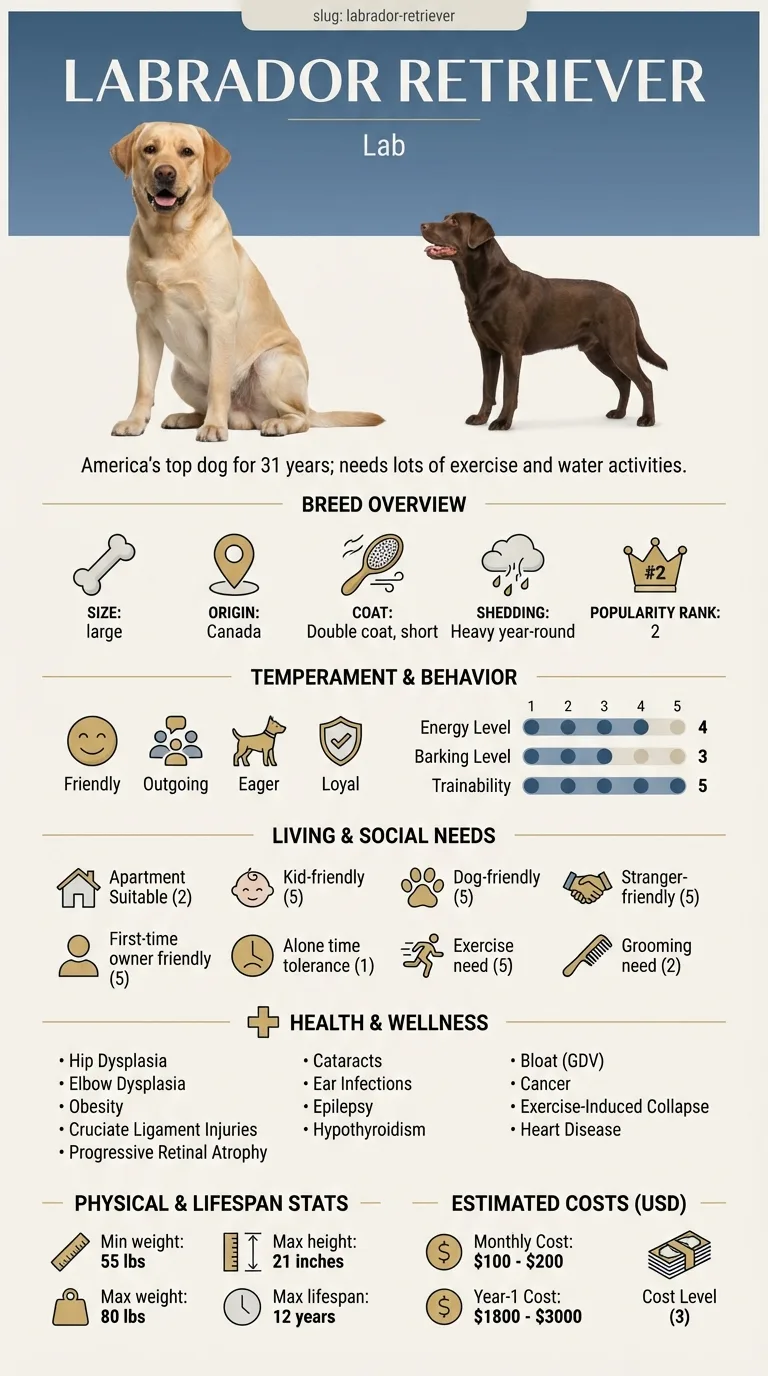
Owners of large, deep-chested Labradors, especially fast or anxious eaters, and owners weighing whether a preventive gastropexy makes sense during an already-scheduled spay or neuter, are the ones for whom this prevention-focused guidance matters most.
This guide is not medical advice. If your dog shows pain, sudden behavior change, or worsening symptoms, consult a licensed veterinarian.
Some links may be affiliate links. We may earn a commission at no extra cost to you. We only suggest products we believe are helpful for dog owners.
We research and check what we publish, but we do not warrant that any figure, date, price, or statement is accurate, complete, or current, and we accept no liability for any loss, cost, injury, or other harm arising from the use of this site. Use it as one reference among several. You remain responsible for your own decisions and for your dog's care - confirm anything that matters with a licensed veterinarian or another qualified professional before you act on it. Full disclaimer.
Preventing bloat (gastric dilatation-volvulus) in a Labrador Retriever centers mainly on feeding practices, the one major risk factor owners genuinely control. Smaller, more frequent meals, slowing down fast eaters, and avoiding exercise right around mealtimes are the evidence-informed changes most consistently recommended. Preventive gastropexy, often paired with a spay or neuter, is a real surgical option worth discussing given this breed's documented risk.
Bloat is specifically documented as a real risk for this large, deep-chested breed, making proactive prevention a genuinely worthwhile, actionable priority rather than an unlikely scenario to set aside.
As a large, deep-chested breed, Labrador Retrievers carry documented elevated bloat risk, which is exactly why feeding practices, the main controllable risk factor, deserve real, deliberate attention rather than being left to chance in this breed specifically.
Fast eating, large single meals, exercise too close to feeding time, and stressful or competitive mealtime environments are the main environmental risk factors within an owner's control, distinct from genetic or breed-based risk that can't be changed.
Discuss preventive gastropexy with your vet well before any emergency, especially if your dog has a family history of bloat or is already scheduled for a spay or neuter. This is a proactive conversation, not one to have during a crisis.
See all Labrador Retriever health problems, which breeds are prone to gastric dilatation volvulus gdvbloat, or the full Labrador Retriever breed guide for temperament, exercise needs and ownership costs.
Feeding practice changes can be implemented immediately and provide ongoing risk reduction indefinitely. A preventive gastropexy, if chosen, is typically scheduled alongside a spay or neuter and involves the same recovery timeline as that procedure.
Success is meaningfully lowering your dog's bloat risk through consistent, controllable feeding practices and an informed decision about preventive surgery, understanding that risk reduction, not elimination, is the realistic goal given genetics still play a role.
These specific feeding-related changes are the most consistently recommended, evidence-informed ways to reduce bloat risk in a large breed like this:
A preventive gastropexy, tacking the stomach to the body wall to prevent it from twisting, is a real option for at-risk breeds, often performed at the same time as a spay or neuter to avoid a second anesthesia event. It's worth an honest conversation with your vet: this surgery prevents the volvulus (twisting) component specifically, though the stomach can technically still dilate with gas. For a Labrador, a large, deep-chested breed with documented bloat risk, many vets consider the smaller, planned cost of a preventive gastropexy a reasonable trade against the much larger, unpredictable cost and danger of emergency GDV surgery later, though it remains a personal decision weighing surgical risk against future risk reduction.

Clover's owner learned about bloat risk in Labradors while researching the breed before adoption, and decided early on to build prevention into her daily routine from the start: two measured meals a day fed in a slow-feeder bowl, no exercise within an hour of eating, and a calm feeding spot away from the household's other dog. When Clover was scheduled for her spay at seven months old, her owner asked about adding a preventive gastropexy, and her vet agreed it was a reasonable choice given the breed's documented risk. Now five years old, Clover has never shown any signs of bloat, and her owner considers the modest extra surgical cost at the time of her spay one of the best preventive decisions she made as a new Labrador owner.
Key takeaway: Bloat prevention in a Labrador comes down mostly to feeding habits within an owner's direct control, and a preventive gastropexy is a reasonable, evidence-informed option worth a real conversation with your vet.
Feeding smaller, more frequent meals and slowing down a fast eater with a slow-feeder bowl are the feeding practices with the most consistent support for reducing bloat risk in a large breed like this.
No, and this is a common misconception. Some research has actually linked elevated bowls to increased bloat risk rather than decreased risk, so raised feeders aren't recommended as a preventive measure for this breed.
Many vets consider it a reasonable option for a large, deep-chested breed with documented bloat risk, especially when combined with an already-planned spay or neuter, trading a smaller planned surgical cost against a much larger unpredictable emergency risk later.
It prevents the stomach from twisting (volvulus), which is the most dangerous component, though the stomach can technically still dilate with gas afterward, so it significantly reduces but doesn't entirely eliminate risk.
Yes, avoiding vigorous exercise for at least an hour before and after eating is a widely recommended precaution, giving the stomach time to settle and reducing one plausible contributing factor.
Yes, a family history of bloat in close relatives is a real risk factor beyond feeding practices, which is part of why some owners with a strong family history lean toward preventive gastropexy specifically.
Yes, if you got your Labrador from a breeder, asking about bloat history in close relatives can help inform how proactively you approach prevention, including whether preventive gastropexy feels worth prioritizing.
Fast eating and large single meals; slowing down mealtime and feeding smaller, more frequent portions are the most actionable changes.
No, some research actually links elevated bowls to higher bloat risk, so they aren't recommended as a preventive tool for this breed.
It's a reasonable option many vets recommend for this breed, especially combined with an already-planned spay or neuter, worth discussing directly with your vet.
Good feeding habits meaningfully reduce risk but don't guarantee prevention entirely, since genetics and other factors also play a role.
Generally a moderate added cost when performed alongside a spay or neuter, considerably less than the cost of emergency GDV surgery later.
A one-page prep sheet for this condition: the signs, the questions to ask, what to get priced. Unlocks here.
You get: Vet visit prep sheet
No spam. One-click unsubscribe. See our privacy policy.
Preview page 1 before you decide.