Health
Can a Mastiff bloat again after gastropexy surgery?
The stomach can still distend with gas, but gastropexy should prevent it from rotating into the life-threatening twist of full GDV.

Quick answer
Can a Mastiff bloat again after gastropexy surgery?
The stomach can still distend with gas, but gastropexy should prevent it from rotating into the life-threatening twist of full GDV.
Surviving GDV surgery isn't the finish line - it's the start of a different, quieter kind of vigilance that lasts the rest of the dog's life.
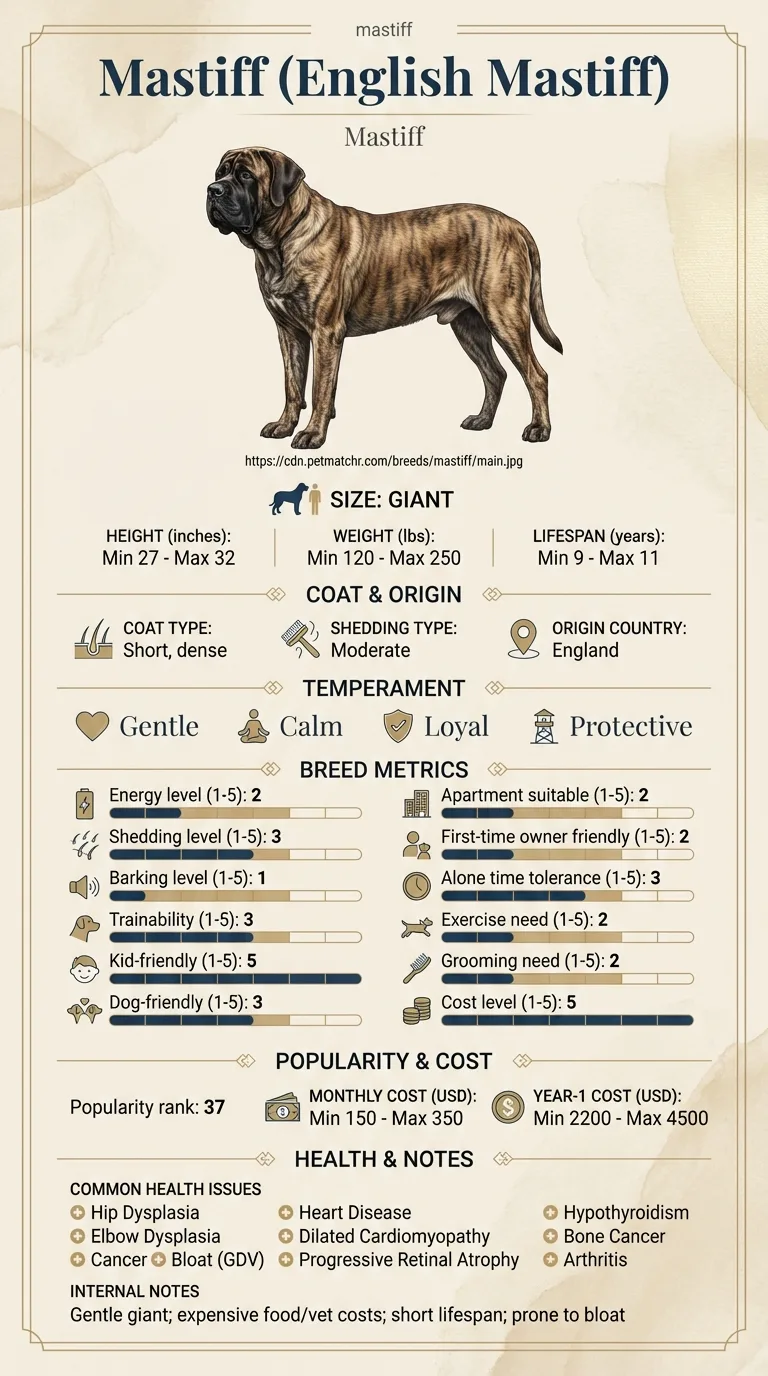
This is most relevant for owners whose Mastiff has already been through gastropexy surgery, whether planned or emergency, and who are navigating recovery, feeding changes, and the lingering fear that it could happen again.
This guide is not medical advice. If your dog shows pain, sudden behavior change, or worsening symptoms, consult a licensed veterinarian.
Some links may be affiliate links. We may earn a commission at no extra cost to you. We only suggest products we believe are helpful for dog owners.
We research and check what we publish, but we do not warrant that any figure, date, price, or statement is accurate, complete, or current, and we accept no liability for any loss, cost, injury, or other harm arising from the use of this site. Use it as one reference among several. You remain responsible for your own decisions and for your dog's care - confirm anything that matters with a licensed veterinarian or another qualified professional before you act on it. Full disclaimer.
For a Mastiff who has survived gastric dilatation-volvulus, the story doesn't end with a successful surgery. Recovery has its own timeline, gastropexy has real limits on what it protects against, and ongoing feeding management stays relevant for the rest of the dog's life rather than becoming unnecessary once the surgical repair is done.
GDV itself is a well-documented risk in giant breeds, and gastropexy - whether emergency or preventive - is common enough in this breed that many long-term Mastiff owners will face this recovery period at some point.
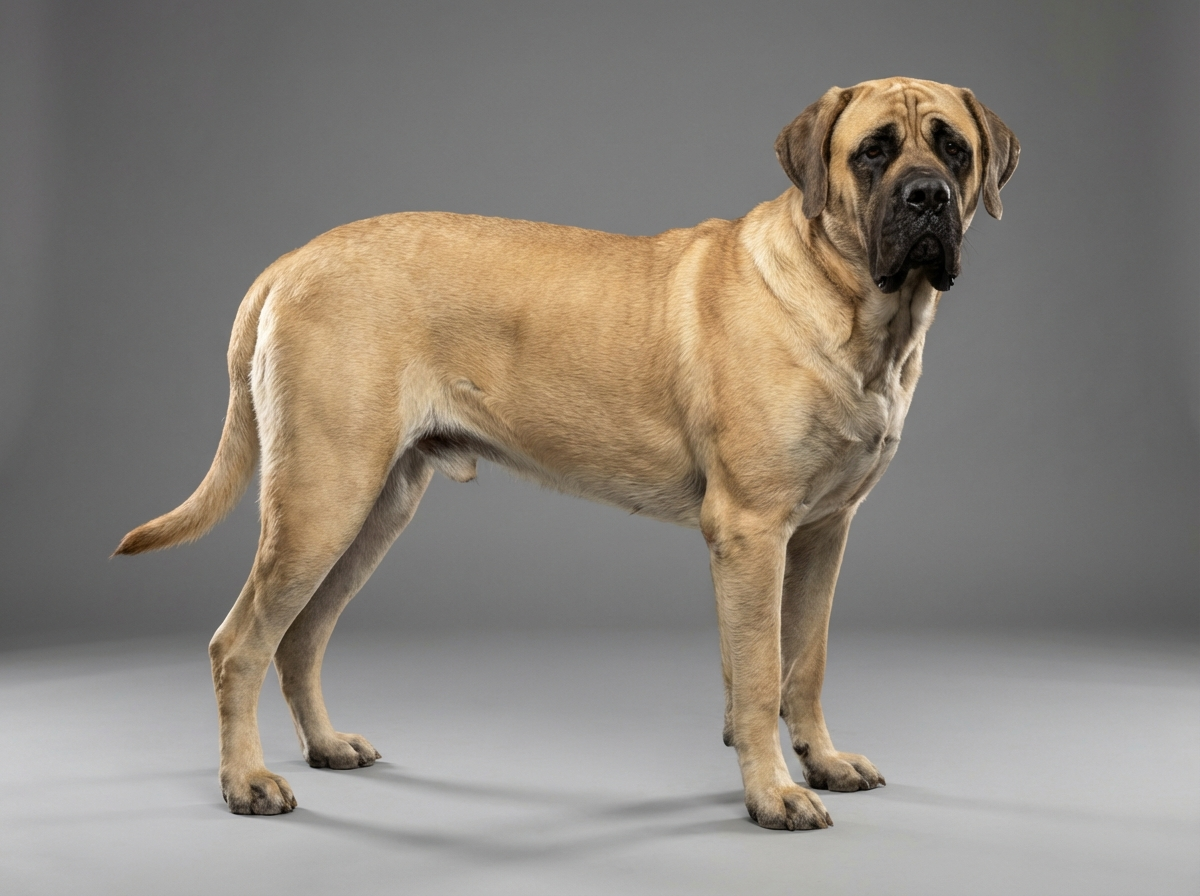
The deep, narrow chest cavity typical of a large Mastiff creates room for the stomach to shift position, which is the anatomical basis for GDV in the first place. Gastropexy addresses that specific vulnerability by fixing the stomach in place, but it doesn't change the breed's chest conformation or its tendency to bloat with gas under the wrong feeding conditions.
Feeding practices established before surgery - large meals, fast eating, activity too close to mealtimes - remain relevant afterward. A household that returns fully to pre-surgery habits, assuming the pexy makes them irrelevant, misses part of what continued prevention actually requires.
Contact your vet if the dog shows reduced appetite beyond the first day or two after surgery, any vomiting, visible discomfort at the incision, or lethargy that doesn't steadily improve. These can indicate a surgical complication rather than normal recovery.
See all Mastiff health problems, which breeds are prone to gastric dilatation volvulus gdvbloat, or the full Mastiff breed guide for temperament, exercise needs and ownership costs.
Most dogs are back to a full normal routine within four to six weeks of surgery, with the first two weeks being the most restricted. Feeding adjustments made afterward are typically permanent rather than temporary.
Success is a dog back to its normal appetite, energy, and activity level, with a feeding routine adjusted for the long term rather than a return to pre-surgery habits that contributed to the original episode.
Gastropexy surgically tacks the stomach to the body wall so it can no longer rotate on its axis, which is the mechanism that turns simple bloating gas into the life-threatening twist of full GDV. This is a meaningful and durable fix for the volvulus, or twisting, part of the condition.
What it does not do is prevent the stomach from bloating with gas or food in the first place. A pexied dog can still bloat - the stomach can still stretch and cause discomfort - it simply shouldn't be able to rotate into the surgical emergency anymore. That distinction matters because it means ongoing feeding management is still worthwhile even after surgery, not a formality left over from before.
The weeks immediately after surgery have their own set of things to watch for, separate from the long-term routine.

If you think your Mastiff has gastric dilatation-volvulus (gdv/bloat), the plan is three steps: write down what you have seen and when it started, book a veterinary appointment rather than waiting for the next flare, and take video of the behaviour or symptom before you go — the thing you are worried about rarely happens in the consulting room. Screening in the parents covers hip dysplasia, elbow dysplasia, cancer.
What the vet visit should produce is a diagnosis and a written plan, not just reassurance: what is being ruled out, what the monitoring interval is, and which signs mean you come back sooner. Ask what the treatment costs across a year rather than per visit, because that is the number that decides whether you are managing this condition or reacting to it.
Between appointments, keep a short log — dates, what you saw, what changed. It is the single most useful thing an owner brings to a follow-up, and for gastric dilatation-volvulus (gdv/bloat) it is often what separates a clear pattern from a guess.
Faye's Mastiff Winston survived an emergency GDV surgery at six years old, and the two weeks that followed were, in her words, more nerve-wracking than the emergency itself had been. Every change in his energy or appetite felt like a potential warning sign. Her vet talked her through what to actually watch for versus normal post-op grogginess, and by week three Winston was eating well and moving comfortably again. What changed permanently was his feeding routine: three smaller meals a day instead of two large ones, a slow-feed bowl, and a strict rule about no play for an hour after eating. Two years on, Winston hasn't had another bloating episode. Faye still checks in on his appetite and stool every day out of habit, but the anxious vigilance of those first few weeks has settled into something closer to routine care.
Key takeaway: Surgery fixes the twist, not the tendency to bloat - the feeding habits that matter before GDV surgery keep mattering just as much afterward.
It prevents the stomach from twisting, which is the life-threatening part of GDV, but the stomach can still fill with gas or food and cause bloating discomfort. Feeding management remains worthwhile even after the surgery.
Most dogs need about two weeks of restricted activity and incision care, with a gradual return to normal feeding and exercise over that period, though your vet's specific instructions should guide the timeline.
Yes, in the sense that the stomach can still distend with gas. What the pexy prevents is the rotation that turns bloating into the emergency twist of GDV, which is the part that's usually fatal without surgery.
Many vets recommend smaller, more frequent meals, slower eating, and avoiding vigorous activity right around mealtimes, continuing many of the same practices used to reduce bloat risk before surgery.
Many owners of giant breeds choose to discuss this with their vet given the documented risk of GDV in the breed, often timing it alongside a spay or neuter procedure to avoid a second anesthesia event.
Loss of appetite beyond the first day or two, vomiting, lethargy that doesn't improve, or visible discomfort at the incision site all warrant a call to your surgical vet rather than waiting it out.
The stomach can still distend with gas, but gastropexy should prevent it from rotating into the life-threatening twist of full GDV.
Typically around two weeks of restricted activity, with feeding and exercise gradually returning to normal under vet guidance.
Yes - most vets recommend continuing smaller, calmer meals even after surgery, since bloating discomfort can still occur.
It's a common discussion for giant breeds given documented GDV risk, often scheduled alongside another routine surgery.
Lethargy, vomiting, or loss of appetite beyond the first couple of days should prompt a call to your vet rather than waiting.
A one-page prep sheet for this condition: the signs, the questions to ask, what to get priced. Unlocks here.
You get: Vet visit prep sheet
No spam. One-click unsubscribe. See our privacy policy.
See a sample page before you decide.
Early access list
The free prep sheet covers the same-day warning signs, a symptom log and the questions to ask. We are considering a fuller kit that adds a cost worksheet for the usual tests and treatments (US price ranges with their sources) and a plain-English guide to ways of covering the bill. It is not built yet; this list tells us whether it is worth building.
One email, no spam, unsubscribe anytime. Information only, not veterinary advice.