Health
What are the clearest signs of bloat a stranger can learn quickly?
Repeated retching that produces nothing, a visibly swelling or tight abdomen, and restlessness that will not settle.

Quick answer
What are the clearest signs of bloat a stranger can learn quickly?
Repeated retching that produces nothing, a visibly swelling or tight abdomen, and restlessness that will not settle.
An owner who has lived with a Chow for years reads subtle changes instantly. A boarding kennel, a house sitter or a groomer meeting the dog for the first time has no baseline to compare against, and that gap can cost the hours that matter most.
Owners who board their Chow, use pet sitters, or leave the dog with family during travel, especially around a recent meal or a change of routine.
This guide is not medical advice. If your dog shows pain, sudden behavior change, or worsening symptoms, consult a licensed veterinarian.
Some links may be affiliate links. We may earn a commission at no extra cost to you. We only suggest products we believe are helpful for dog owners.
We research and check what we publish, but we do not warrant that any figure, date, price, or statement is accurate, complete, or current, and we accept no liability for any loss, cost, injury, or other harm arising from the use of this site. Use it as one reference among several. You remain responsible for your own decisions and for your dog's care - confirm anything that matters with a licensed veterinarian or another qualified professional before you act on it. Full disclaimer.
This is bloat viewed from the caretaker's side of the problem rather than the dog's anatomy. Gastric dilatation-volvulus is a documented risk in the Chow Chow, and while chest conformation sets the physical odds of a stomach rotating, whoever is present when it happens determines whether the warning signs are caught in the first thirty minutes or missed for hours.
Documented as a genuine risk in the breed. How often it is caught late specifically because of unfamiliar caretaking is not separately tracked, but veterinary emergency staff commonly report boarded or sitter-supervised dogs arriving further along in the episode than owner-supervised ones.
The Chow's stocky, barrel-shaped build and profuse mane and coat make early abdominal distension visually subtle even to an attentive stranger. Layered onto that is a naturally self-contained, undemonstrative temperament, so a dog quietly withdrawing rather than making an obvious fuss does not read as alarming to someone who has no baseline for how he normally behaves.
Boarding facilities, unfamiliar sitters, family members helping out during travel, and any setting where the dog is fed and observed by someone without history with him all remove the single fastest detection tool available: an owner who instantly knows something looks wrong.
This is an emergency, not a wait-and-monitor situation: any caretaker who sees repeated unproductive retching, a visibly swelling or tight abdomen, or restlessness that will not settle should call an emergency vet immediately, and get the dog there without delay.
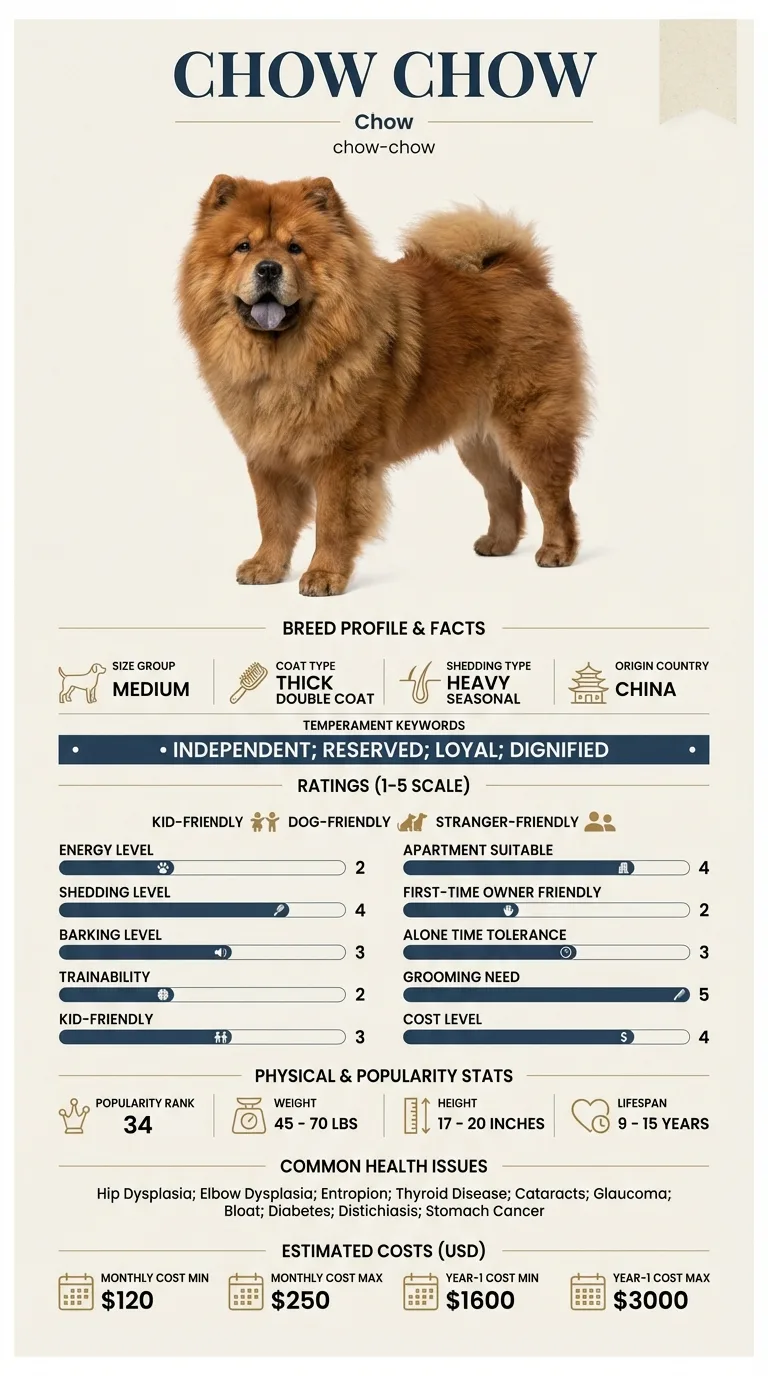
See all Chow Chow health problems, which breeds are prone to gastric dilatation volvulus gdvbloat, or the full Chow Chow breed guide for temperament, exercise needs and ownership costs.
There is no management timeline for an active GDV episode, since it is a surgical emergency measured in hours, not days; the planning described here is entirely about reducing detection delay before that point.
Success is a caretaker who recognizes the warning signs within the first sign or two and gets the dog to emergency care immediately, rather than waiting to see if things improve.
None of these signs are subtle to someone who knows the dog well. To a first-time sitter, kennel attendant or relative, every one of them can look like nothing in particular, which is exactly the window during which GDV needs to be caught.
A short, specific briefing closes most of this gap. Tell the caretaker plainly that bloat is a documented risk in this breed, describe what your dog looks and acts like normally after eating, and give three concrete red flags: repeated unproductive retching, a visibly swelling or tight abdomen, and restlessness that will not settle into normal rest.
Give the address and phone number of the nearest emergency veterinary clinic in writing, not from memory, since a panicked search for directions costs minutes that matter. Make clear that any one of those three signs means calling that clinic immediately, not waiting to see if it passes.
This is a five-minute conversation before you leave, and it is the single highest-leverage thing you can do for a dog left in someone else's care.

If you think your Chow has gastric dilatation-volvulus (gdv/bloat), the plan is three steps: write down what you have seen and when it started, book a veterinary appointment rather than waiting for the next flare, and take video of the behaviour or symptom before you go — the thing you are worried about rarely happens in the consulting room. Screening in the parents covers hip dysplasia, elbow dysplasia, entropion.
What the vet visit should produce is a diagnosis and a written plan, not just reassurance: what is being ruled out, what the monitoring interval is, and which signs mean you come back sooner. Ask what the treatment costs across a year rather than per visit, because that is the number that decides whether you are managing this condition or reacting to it.
Between appointments, keep a short log — dates, what you saw, what changed. It is the single most useful thing an owner brings to a follow-up, and for gastric dilatation-volvulus (gdv/bloat) it is often what separates a clear pattern from a guess.
Zara was left at a boarding kennel for a four-day trip, and her owner Ravi gave the standard paperwork but no specific warning about bloat. On the second evening, kennel staff noted she seemed quieter than usual after dinner but assumed she was simply settling in, since they had no baseline for her normal behavior. By the next morning she was retching without producing anything and pacing rather than resting. A staff member who happened to have handled a bloat case before recognized the pattern and called the on-call vet immediately, and Zara went into emergency surgery within the hour. She survived, but the attending vet noted that the episode had likely started the previous evening, and that a specific warning to staff might have prompted a call twelve hours earlier.
Key takeaway: The chest and the coat set the physical risk, but the person watching the dog determines how much time is lost before anyone acts. A written, specific briefing is cheap insurance against that gap.
Yes. Tell them plainly that it is a documented risk in this breed, describe your dog's normal post-meal behavior, and name the three signs that mean calling an emergency vet immediately.
A dense mane and coat obscure the outline of the abdomen, and a stocky build already looks somewhat full through the middle, so early swelling is less visually obvious than in a leaner, shorter-coated dog.
Give them the emergency clinic's address and phone number in writing, describe how your dog normally behaves after meals, and ask them to call you and the clinic immediately for repeated retching or a visibly swelling abdomen.
Send his usual food, ask that meals be split rather than given as one large portion, and request a calm period after eating rather than immediate group play or activity.
Many owners describe their Chow as undemonstrative by nature, which means withdrawal or quietness that would alarm an owner of a more vocal breed can look unremarkable to someone unfamiliar with the dog.
Changes in feeding schedule, stress, and unfamiliar surroundings are commonly cited risk factors generally, which is part of why travel and boarding periods deserve extra caution rather than less.
That repeated retching without producing anything, combined with a visibly tightening or swelling abdomen, means an emergency vet call right away, not a wait-and-see approach.
Repeated retching that produces nothing, a visibly swelling or tight abdomen, and restlessness that will not settle.
Yes, in writing, including the address and phone number of the nearest emergency clinic, not left to memory.
Emergency surgery for a twisted stomach commonly runs from around fifteen hundred to several thousand dollars depending on complications.
Yes, a dense mane and coat make the abdomen's outline harder to read for anyone not already familiar with the dog's normal shape.
A short verbal briefing on normal versus abnormal post-meal behavior is more useful than assuming general dog experience will cover it.
A one-page prep sheet for this condition: the signs, the questions to ask, what to get priced. Unlocks here.
You get: Vet visit prep sheet
No spam. One-click unsubscribe. See our privacy policy.
Preview page 1 before you decide.