Health
Are raised bowls actually bad for bloat risk?
Research has associated raised bowls with a higher rate of bloat in large breeds, the opposite of the old advice. Floor-level feeding is the safer default.

Quick answer
Are raised bowls actually bad for bloat risk?
Research has associated raised bowls with a higher rate of bloat in large breeds, the opposite of the old advice. Floor-level feeding is the safer default.
Some of the advice owners have followed for decades to prevent bloat, including raising the food bowl, has been directly contradicted by the research it was supposedly based on.
Owners doing everything they were told to prevent bloat, and unsettled to learn some of that advice may not hold up, or worse, may work against them.
This guide is not medical advice. If your dog shows pain, sudden behavior change, or worsening symptoms, consult a licensed veterinarian.
Some links may be affiliate links. We may earn a commission at no extra cost to you. We only suggest products we believe are helpful for dog owners.
We research and check what we publish, but we do not warrant that any figure, date, price, or statement is accurate, complete, or current, and we accept no liability for any loss, cost, injury, or other harm arising from the use of this site. Use it as one reference among several. You remain responsible for your own decisions and for your dog's care - confirm anything that matters with a licensed veterinarian or another qualified professional before you act on it. Full disclaimer.
A meaningful share of the bloat prevention advice that circulates among dog owners is outdated, unproven, or contradicted by the research it claims to rest on. For a breed where gastric dilatation-volvulus is a documented risk, sorting the supported feeding habits from the inherited myths is worth doing carefully rather than following tradition.
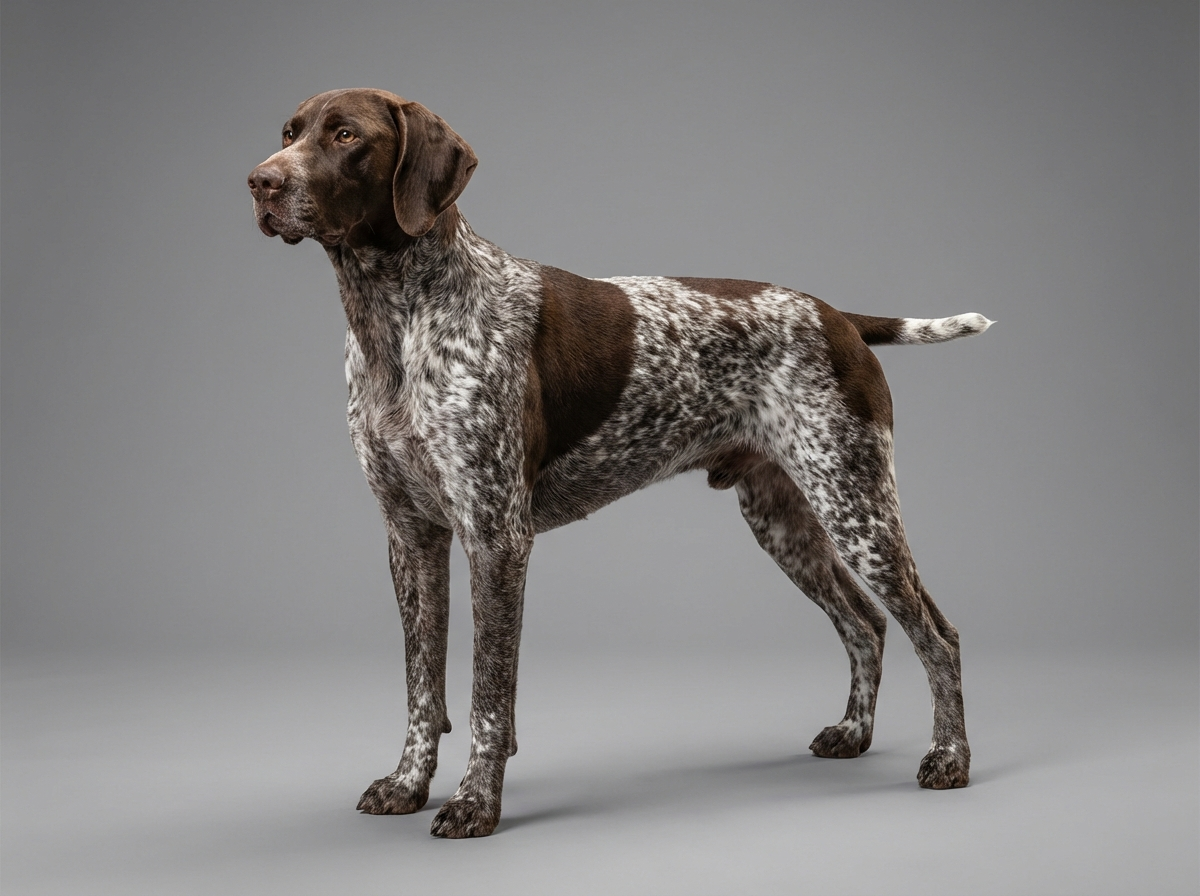
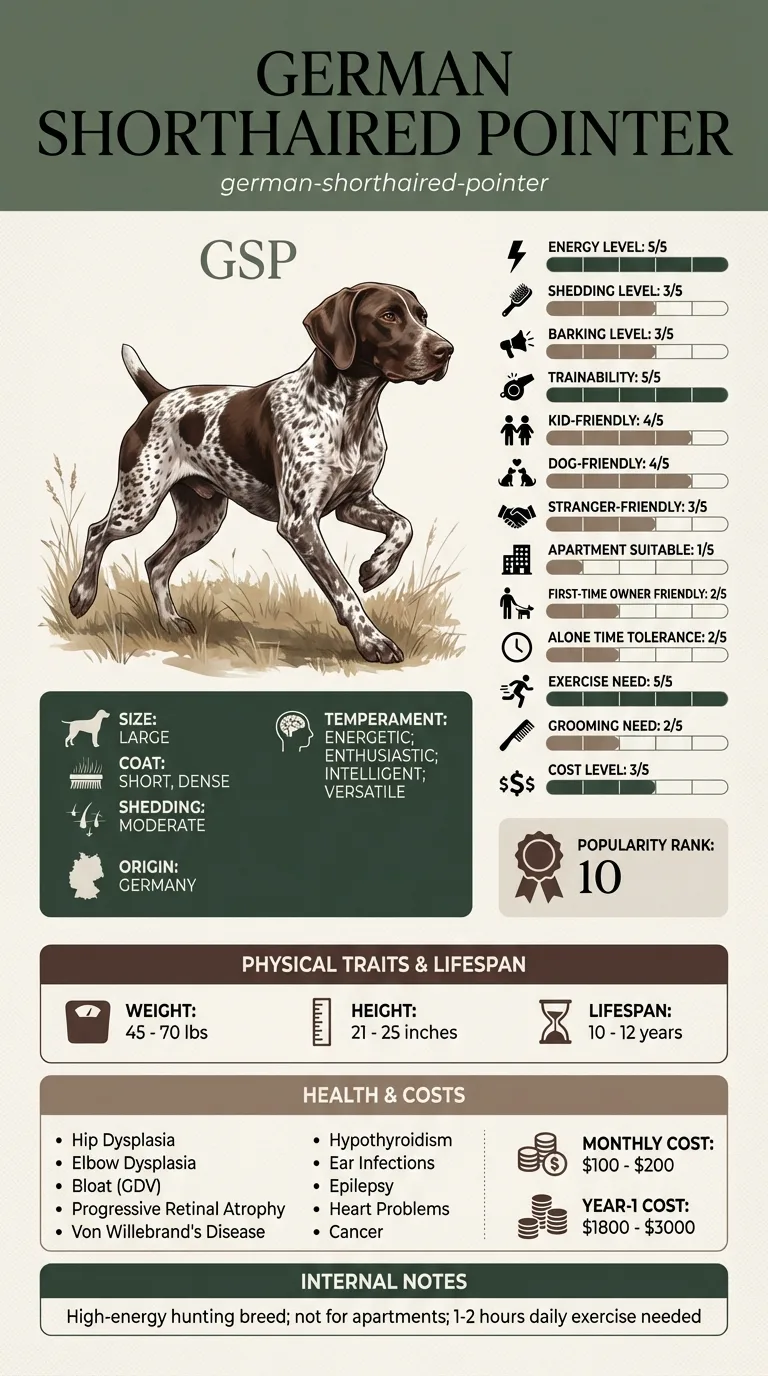
Bloat itself appears on the German Shorthaired Pointer's documented health list. The specific feeding myths addressed here are widespread across large and giant breed ownership generally, and this breed's owners are exposed to the same outdated advice as everyone else managing a deep-chested dog.
The underlying anatomical risk, a deep chest that gives a distended stomach room to rotate, is unrelated to feeding habit and is covered elsewhere. What the breed contributes here is simply being in the at-risk category at all, which makes the difference between evidence-based and outdated feeding advice matter more than it would for a barrel-chested or small breed largely outside this risk group.
Household habits formed from decades-old advice, breeder recommendations that have not been updated, and product marketing for raised feeders that predates the contradicting research are the main environmental drivers of continuing to follow disproven practices. A vet who has not revisited the topic recently may also still be repeating older guidance.
Discuss a prophylactic gastropexy if your dog has a first-degree relative with a bloat history, or if you want the strongest available protection beyond feeding adjustments. Go to an emergency vet immediately for a distended, hard abdomen, unproductive retching, restlessness and pacing, or collapse, regardless of what feeding routine you follow, since these signs mean the emergency itself is already underway.
See all German Shorthaired Pointer health problems, which breeds are prone to gastric dilatation volvulus gdvbloat, or the full German Shorthaired Pointer breed guide for temperament, exercise needs and ownership costs.
Feeding changes can be implemented immediately and their effect on eating speed and calmness is usually visible within days. Their effect on actual bloat risk cannot be measured in an individual dog, since it is a population-level statistical association rather than a guarantee for any one animal.
A feeding routine grounded in current evidence rather than inherited habit: floor-level feeding, split meals, a slowed-down eater, calm mealtimes, and a considered decision about gastropexy, none of which eliminate risk but all of which move it in the right direction.
This is not a complete list of prevention strategies, but it covers the pieces of advice most likely to be wrong, unproven, or overstated.
None of this replaces the two interventions with the strongest evidence behind them: knowing a first-degree relative's bloat history, and discussing a prophylactic gastropexy with a vet for a dog considered high risk. Feeding practice sits underneath those two, as the daily habits that shift risk up or down at the margins rather than the decisions that change the underlying anatomy.
The practical version for a German Shorthaired Pointer is straightforward even if it contradicts advice an owner may have followed for years: feed from the floor, split the day's food into two or three meals, slow down a fast eater with a puzzle bowl, keep mealtimes calm rather than exciting, and give the stomach time to settle before hard exercise rather than immediately after eating. None of these guarantee anything, since bloat can still occur in a dog doing everything right, but they are the pieces of the picture that current evidence actually supports, rather than habits that were never tested or that turned out to point the wrong way.

If you think your GSP has gastric dilatation-volvulus (gdv/bloat), the plan is three steps: write down what you have seen and when it started, book a veterinary appointment rather than waiting for the next flare, and take video of the behaviour or symptom before you go — the thing you are worried about rarely happens in the consulting room. Screening in the parents covers hip dysplasia, elbow dysplasia, bloat (gdv).
What the vet visit should produce is a diagnosis and a written plan, not just reassurance: what is being ruled out, what the monitoring interval is, and which signs mean you come back sooner. Ask what the treatment costs across a year rather than per visit, because that is the number that decides whether you are managing this condition or reacting to it.
Between appointments, keep a short log — dates, what you saw, what changed. It is the single most useful thing an owner brings to a follow-up, and for gastric dilatation-volvulus (gdv/bloat) it is often what separates a clear pattern from a guess.
Ingrid had raised Pike's food and water bowls on a stand since he was a puppy, on the advice of a breeder who described it as standard bloat prevention for a deep-chested dog. Pike bloated anyway at age six, a straightforward gastric dilatation without rotation caught early because Ingrid recognised the restlessness and unproductive retching within an hour of his evening meal. He recovered with decompression and did not need emergency surgery that night, but the scare prompted Ingrid to look into the research behind the raised-bowl advice for the first time. She found the opposite of what she expected: the practice associated with higher risk, not lower. She switched Pike to floor feeding, split his ration into two meals, and scheduled an elective gastropexy the following month rather than waiting for a second scare.
Key takeaway: Following prevention advice in good faith does not guarantee it is correct. Some long-standing habits have been directly contradicted by the research behind them, and it is worth checking rather than assuming tradition equals evidence.
The evidence base leans toward floor-level feeding being the safer default for a breed already at elevated bloat risk. If your dog has a neck or joint issue that made a raised bowl necessary for comfort, discuss the trade-off with your vet rather than changing it unilaterally.
The research associates a single large daily meal with higher risk than two or more smaller ones, which is consistent with reducing how much volume the stomach handles at once. It is a low-cost change with a reasonable rationale behind it.
For a dog that gulps its food quickly, yes. Rapid eating and air-swallowing is one of the more consistently supported risk factors, and slowing it down addresses that mechanism directly.
Some studies have found an association between a nervous or fearful temperament and higher bloat risk. It is not something you can simply train away, but calm, unhurried, low-stress mealtimes are a reasonable and low-cost precaution.
No. These are risk-modifying habits, not guarantees, and bloat still occurs in dogs managed carefully. The intervention with the strongest evidence for meaningfully changing outcome is a prophylactic gastropexy, which is a conversation for your vet rather than a feeding tweak.
Avoiding vigorous exercise for a period before and after a meal is reasonably well supported, separate from the water-restriction advice which has weaker backing. Give the stomach time to settle either side of a meal rather than working the dog on a full stomach.
The early signs are set out in the sections above, and they are the reason to book a veterinary appointment rather than wait. Gastric Dilatation-volvulus (GDV/BLOAT) in GSPs is diagnosed by a vet, not from a symptom list, and the sooner it is on record the more options remain open.
The early signs are set out in the sections above, and they are the reason to book a veterinary appointment rather than wait. Gastric Dilatation-Volvulus (GDV/Bloat) in German Shorthaired Pointers is diagnosed by a vet, not from a symptom list, and the sooner it is on record the more options remain open.
Research has associated raised bowls with a higher rate of bloat in large breeds, the opposite of the old advice. Floor-level feeding is the safer default.
Yes, studies link a single large daily meal to higher bloat risk than splitting the same food into two or three smaller meals.
Yes, this is one of the better-supported risk factors, which is why slow-feed bowls are worth using for a dog that gulps.
A prophylactic gastropexy discussed with your vet, especially with a family history of bloat, has stronger evidence behind it than any feeding adjustment.
Yes, giving the stomach time to settle before and after vigorous exercise is a reasonable precaution supported by current understanding of the condition.
A one-page prep sheet for this condition: the signs, the questions to ask, what to get priced. Unlocks here.
You get: Vet visit prep sheet
No spam. One-click unsubscribe. See our privacy policy.
Preview page 1 before you decide.