Labrador Retriever vs Schnauzer (Standard): Which Suits Your Home?
Quick answer
Which should you pick overall?
Go Lab if you want an easygoing, highly social dog and don't mind shedding or need daily high-volume exercise. Go Schnauzer if you want low shedding, better apartment tolerance, and don't mind more grooming and a slightly more independent personality.
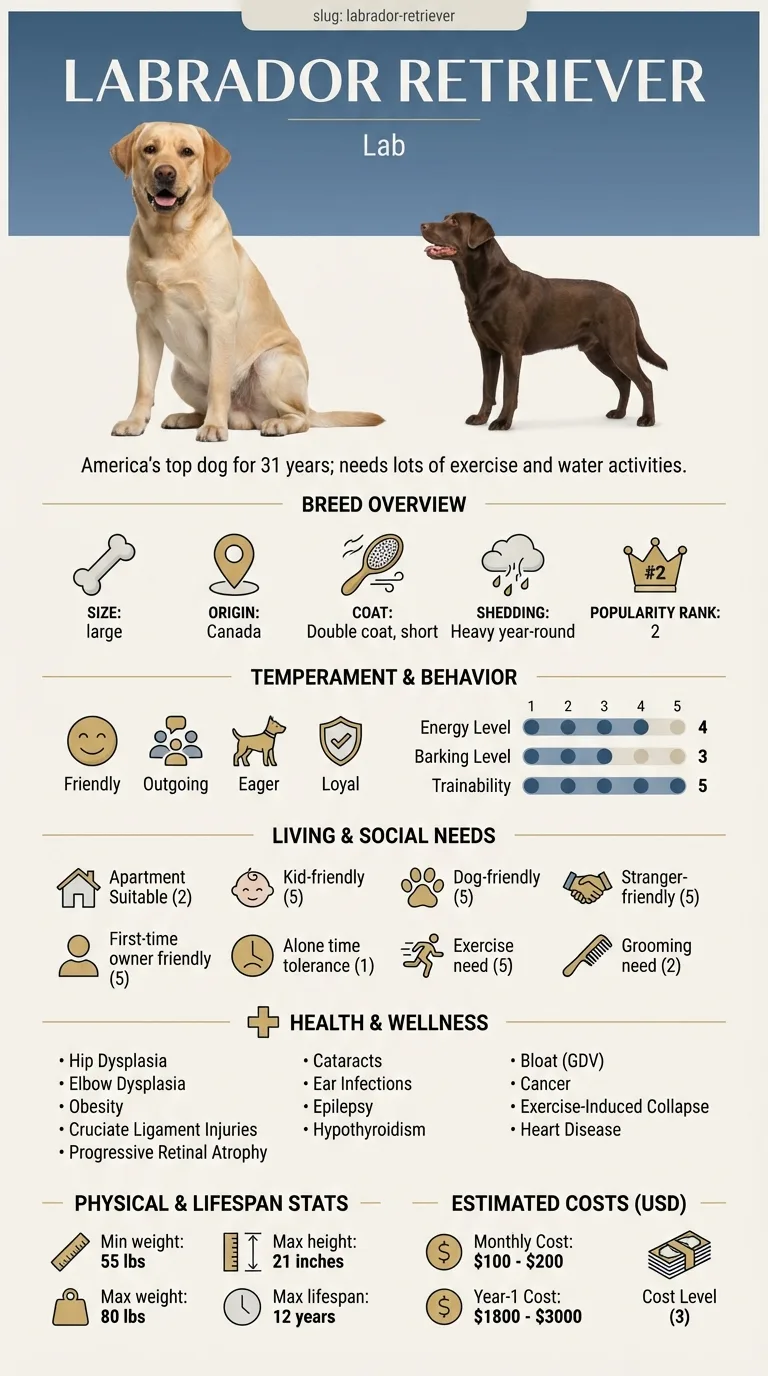
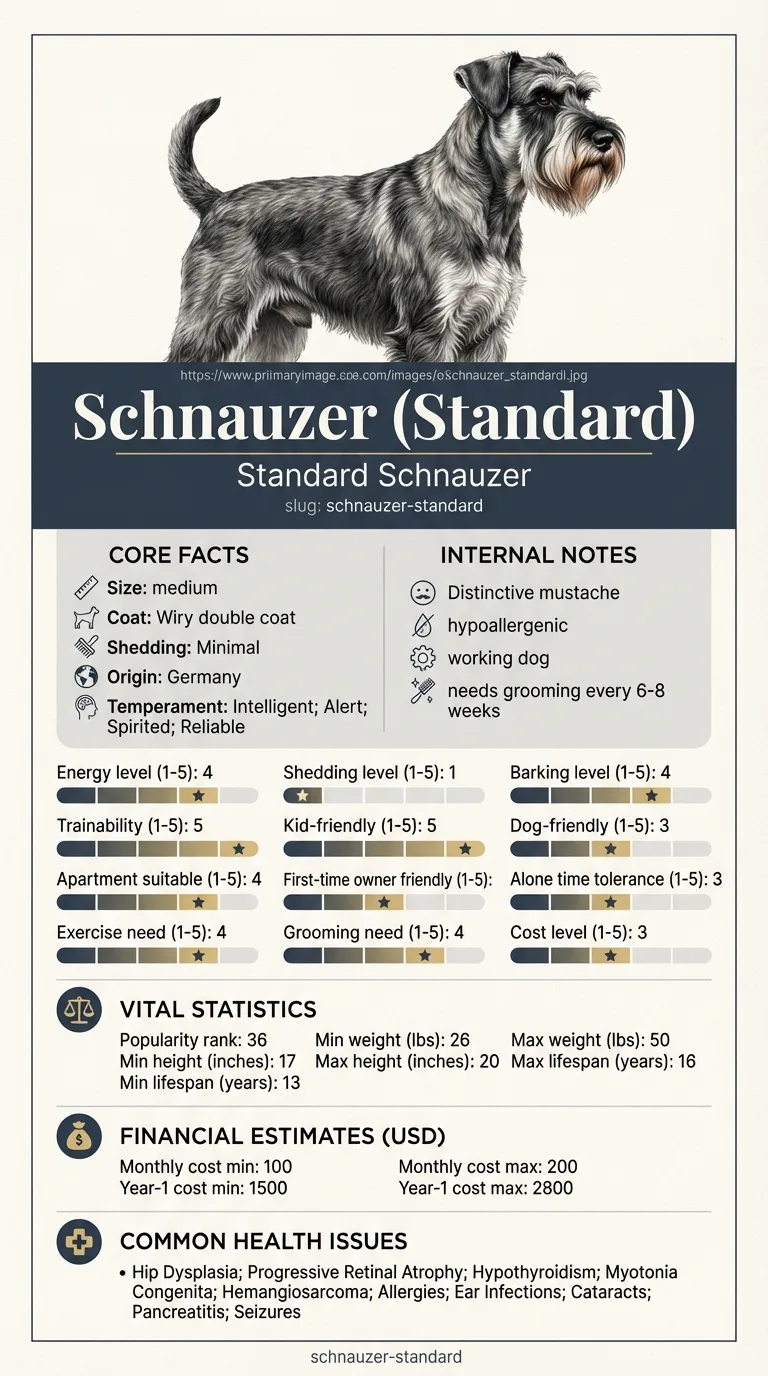
Labrador Retriever or Schnauzer (Standard)? On paper they differ most on shedding, and on the scales Labrador Retriever is the heavier at 55–80 lbs. Here is how the two compare on everything that shapes an ordinary week.
This is for someone already down to Labrador Retriever and Schnauzer (Standard) and deciding between them. For this pair the decision usually turns on shedding and grooming need, so those are covered first and in most detail. Anyone choosing from a flat has a clear answer here: Schnauzer (Standard) rates 4/5 against 2/5. Breed history is left out; what follows is what you will actually live with.
Quick verdict
Between Labrador Retriever and Schnauzer (Standard), shedding is what separates them, and Schnauzer (Standard) is the lower-effort dog of the two to keep.
Choose labrador retriever if...
Choose Labrador Retriever if this is your first dog, you do not want a standing grooming appointment and you already have another dog.
Choose schnauzer standard if...
Choose Schnauzer (Standard) if you are in a flat or a smaller home, shedding is a problem in your house and your walking routine is modest.
Head-to-head comparison
Feature
labrador retriever
schnauzer standard
Winner
Size class
large
medium
Equal
Weight
55–80 lbs
26–50 lbs
Equal
Height
21–24 in
17–20 in
Equal
Lifespan
10–12 years
13–16 years
schnauzer standard
Exercise need
Very high (5/5)
High (4/5)
schnauzer standard
Grooming need
Low (2/5)
High (4/5)
labrador retriever
Shedding
High (4/5)
Very low (1/5)
schnauzer standard
Energy level
High (4/5)
High (4/5)
Equal
Barking
Moderate (3/5)
High (4/5)
labrador retriever
Apartment suitability
Low (2/5)
High (4/5)
schnauzer standard
Good for first-time owners
Very high (5/5)
Moderate (3/5)
labrador retriever
Tolerates being alone
Very low (1/5)
Moderate (3/5)
schnauzer standard
Trainability
Very high (5/5)
Very high (5/5)
Equal
Good with kids
Very high (5/5)
Very high (5/5)
Equal
Good with other dogs
Very high (5/5)
Moderate (3/5)
labrador retriever
Friendly to strangers
Very high (5/5)
Moderate (3/5)
labrador retriever
Cost level
Moderate (3/5)
Moderate (3/5)
Equal
Coat
Double coat, short
Wiry double coat
Equal
Origin
Canada
Germany
Equal
Typical monthly cost
$100–$200
$100–$200
Equal
Typical first-year cost
$1,800–$3,000
$1,500–$2,800
Equal
Deep dive
Size and build
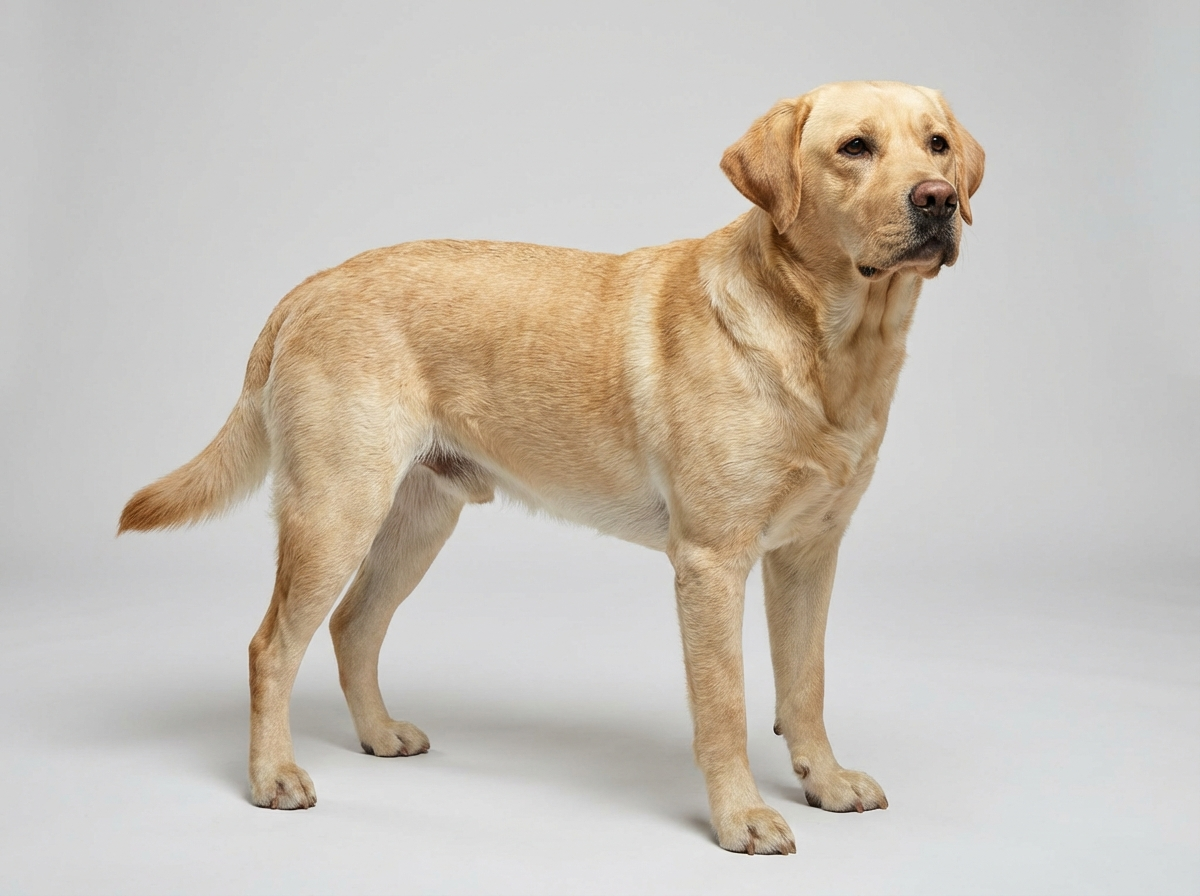
A full-grown Labrador runs 55 to 80 pounds and stands 21 to 24 inches at the shoulder, noticeably bigger than the Standard Schnauzer's 26 to 50 pounds and 17 to 20 inches. Both count as sturdy, athletic breeds rather than fragile ones, but the Schnauzer is the one that fits more easily into a smaller car or a narrow hallway. If floor space and furniture wear matter to you, the weight gap alone is worth sitting with before you decide.
Energy and exercise
The Labrador rates a full 5 out of 5 for exercise need, edging out the Schnauzer's still-considerable 4 out of 5. Both are working-line dogs that want a real job, not a token walk around the block. In practice that means daily runs, fetch sessions, or off-leash time for either breed. The Lab just tends to want a bit more volume and can get destructive faster if it doesn't get it.
Grooming and shedding
Here the two breeds trade places. The Lab's coat needs only occasional brushing (2 out of 5), but that ease comes with heavy shedding (4 out of 5) that turns up on clothes and furniture year-round. The Schnauzer flips the equation: its wiry double coat demands regular stripping or clipping (4 out of 5 grooming need) but sheds almost nothing (1 out of 5), which some owners find the better trade if a clean couch matters more than salon bills.
Apartment living, noise and time alone
On paper the Schnauzer is the better apartment tenant, rated 4 out of 5 for apartment suitability against the Lab's 2 out of 5. A big dog with very high exercise needs just doesn't do small spaces well. The catch is noise: the Schnauzer barks more (4 out of 5 versus the Lab's moderate 3). Neither dog handles being left alone especially well, though the Lab is worse at it, rated a stark 1 out of 5 to the Schnauzer's moderate 3.
Training and owner experience
Both breeds are rated very high for trainability (5 out of 5), so obedience work won't be the deciding factor. Where they split is overall first-timer friendliness: the Lab scores a full 5 out of 5 for new owners, while the Schnauzer sits at a more moderate 3. That gap tracks with temperament. Schnauzers are described as spirited and alert, and that alertness can tip into stubbornness without a confident handler.
Kids, other dogs and visitors
Both breeds score a perfect 5 out of 5 with kids, so that part's a wash. Everything else favors the Lab: it rates very high with other dogs and strangers (5 out of 5 each) against the Schnauzer's moderate 3 out of 5 on both counts. If your household includes a lot of dog-park visits or a steady stream of guests, the Lab's easygoing, outgoing temperament will make those interactions simpler.
Health and lifespan
The Schnauzer is the longer-lived dog here, typically reaching 13 to 16 years against the Lab's 10 to 12. The Lab also carries a longer list of documented conditions, including bloat, cancer, heart disease, and exercise-induced collapse alongside the usual hip and elbow dysplasia. The Schnauzer's own list includes hemangiosarcoma and myotonia congenita. Fewer entries, but still worth discussing with a breeder or vet rather than assuming either dog is in the clear.
Cost to keep
Money-wise these two land in nearly the same bracket: both carry a moderate 3 out of 5 cost rating and a typical monthly spend of $100 to $200. First-year costs run slightly lower for the Schnauzer ($1,500-$2,800) than the Lab ($1,800-$3,000), a gap that mostly reflects the Lab's larger size. Bigger dog, bigger food bill. Neither is a budget breed, but neither is an outlier either.
Labrador Retriever vs Schnauzer (Standard) at a glance
Labrador Retriever weighs 55–80 lbs and lives 10–12 years; Schnauzer (Standard) weighs 26–50 lbs and lives 13–16 years. The two diverge most on shedding, grooming need and apartment suitability and 4 other rated axes. They are level on cost level, energy level and good with kids, so those cannot decide it. The comparison marks an easier option only where one exists. Facts like weight and country of origin are not scored. Both dogs are rated from the same dataset, which is what makes the numbers comparable with each other even though any individual dog sits somewhere inside its breed's range.
Labrador Retriever vs Schnauzer (Standard): Which Suits Your Home? - Labrador Retriever vs Schnauzer (Standard) at a glance
Frequently asked questions
Which breed is bigger?
The Labrador is substantially larger, 55 to 80 pounds and 21 to 24 inches tall, compared to the Standard Schnauzer's 26 to 50 pounds and 17 to 20 inches. Expect the Lab to eat more, need more space, and require a bigger crate.
Which sheds more?
The Lab, by a wide margin. It rates 4 out of 5 for shedding against the Schnauzer's 1 out of 5. If you want a dog that doesn't coat your black jeans, the Schnauzer's wiry coat is the better bet, even though it needs more trimming.
Is either good for a first-time owner?
The Lab is rated very high (5 out of 5) for first-time owners; the Schnauzer is moderate (3 out of 5). Both are highly trainable, but the Schnauzer's alertness and independent streak ask a bit more of a new handler.
Which fits an apartment better?
The Schnauzer, rated 4 out of 5 for apartment suitability against the Lab's 2 out of 5. The Lab's very high exercise need makes it a tougher fit for small spaces, even though it's the bigger dog.
What will either cost me monthly?
Both land in the same $100 to $200 monthly range, with a moderate 3 out of 5 overall cost rating. First-year costs run a bit higher for the Lab given its larger size.
Do they share health risks?
Some overlap. Both lists include hip dysplasia, hypothyroidism, and ear infections. But the Lab's list also carries bloat, cancer, and exercise-induced collapse, while the Schnauzer's includes hemangiosarcoma and myotonia congenita. Neither list is a guarantee, just a heads-up on what to screen for.
Which barks more?
The Schnauzer, rated 4 out of 5 for barking against the Lab's moderate 3 out of 5. If noise complaints are a concern in close quarters, factor that in alongside its better apartment-suitability score.
Go Lab if you want an easygoing, highly social dog and don't mind shedding or need daily high-volume exercise. Go Schnauzer if you want low shedding, better apartment tolerance, and don't mind more grooming and a slightly more independent personality.
Costs
How much will monthly costs run?
Both breeds typically cost $100 to $200 a month to keep, landing at a moderate 3 out of 5 cost rating each.
Behavior
How much exercise do they need?
A lot either way. The Lab rates a full 5 out of 5 for exercise need; the Schnauzer isn't far behind at 4 out of 5. Plan on daily vigorous activity for both.
Health
Which one lives longer?
The Schnauzer, typically 13 to 16 years versus the Lab's 10 to 12. That three-to-four-year gap is worth weighing if lifespan matters to your decision.
Related DogBreedCompass guides
Labrador Retriever breed guide – Readers comparing the two usually want the full profile of Labrador Retriever before deciding.
Labrador Retriever vs Golden Retriever – Golden Retriever is the closest breed to Labrador Retriever on the measured axes, so it is the natural next comparison.
Health information here is general and is not veterinary advice. If your dog shows pain, sudden behaviour change, or worsening symptoms, consult a licensed veterinarian.
Some links on this site are affiliate links. We may earn a commission at no extra cost to you, and we only suggest products we believe are helpful for dog owners.
We research and check what we publish, but we do not warrant that any figure, date, price, or statement is accurate, complete, or current, and we accept no liability for any loss, cost, injury, or other harm arising from the use of this site. Use it as one reference among several. You remain responsible for your own decisions and for your dog's care - confirm anything that matters with a licensed veterinarian or another qualified professional before you act on it. Full disclaimer.