Health
Does prevention eliminate bloat risk entirely?
No — even with prevention steps and gastropexy, some risk remains, so emergency sign recognition stays essential.

Quick answer
Does prevention eliminate bloat risk entirely?
No — even with prevention steps and gastropexy, some risk remains, so emergency sign recognition stays essential.
Because bloat is one condition an Akita owner can't simply treat their way out of once it starts, prevention is where the real leverage is.
Owners setting up a long-term care routine for a young or newly adopted Akita are the ones who benefit most from thinking through prevention now, before any emergency ever happens.
This guide is not medical advice. If your dog shows pain, sudden behavior change, or worsening symptoms, consult a licensed veterinarian.
Some links may be affiliate links. We may earn a commission at no extra cost to you. We only suggest products we believe are helpful for dog owners.
We research and check what we publish, but we do not warrant that any figure, date, price, or statement is accurate, complete, or current, and we accept no liability for any loss, cost, injury, or other harm arising from the use of this site. Use it as one reference among several. You remain responsible for your own decisions and for your dog's care - confirm anything that matters with a licensed veterinarian or another qualified professional before you act on it. Full disclaimer.
Check this first
Even with every prevention step in place, bloat can still occur, which is why prevention and emergency preparedness need to coexist rather than one replacing the other. A distended or tight abdomen, unproductive retching, restlessness, drooling, or labored breathing always means immediate emergency veterinary care, regardless of how carefully you've been managing feeding and exercise.
Prophylactic gastropexy meaningfully reduces the danger of bloat by preventing the stomach from twisting even if it does fill with gas, but it doesn't prevent gas buildup itself, so some mild bloating episodes can still occur in a gastropexied dog and should still be evaluated promptly.
The practical mindset here is that prevention lowers the odds and lowers the danger if it does happen, but it never fully removes the need to know the warning signs and act on them immediately.
If any of these apply, call your vet or an emergency clinic now. The rest of this page is for the cases that are not an emergency.
Preventing gastric dilatation-volvulus in an Akita means combining fixed anatomical risk — the breed's deep chest shape — with modifiable habits like feeding schedule, exercise timing, and, for many owners, a proactive gastropexy surgery. None of these eliminate risk completely, but together they meaningfully reduce both the odds of an episode and its danger if one occurs.
Because the Akita's chest shape is a fixed, documented risk factor for the breed, prevention-focused guidance is a standard part of responsible ownership discussions, distinct from breeds where bloat risk is comparatively rare.
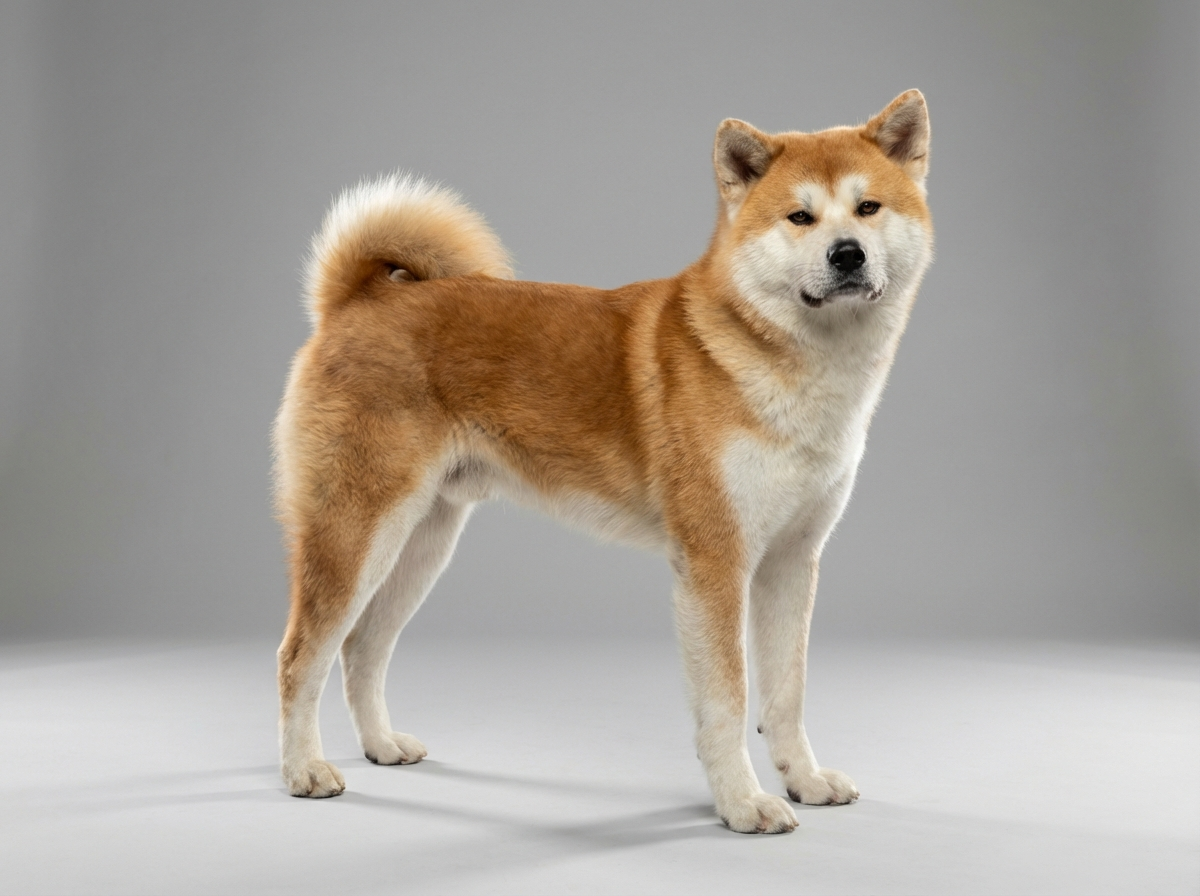
The deep, narrow chest that defines the Akita's silhouette is the same anatomical feature that gives the stomach room to twist. Because this is structural rather than behavioral, no amount of careful feeding fully removes the underlying risk — which is exactly why gastropexy exists as a direct surgical solution to the twisting mechanism itself.
Meal size, feeding frequency, eating speed, and activity timing around meals are the environmental factors owners can actually influence. None of them change the chest conformation, but together they reduce how often the stomach becomes acutely distended, which is generally the precipitating event before twisting occurs.
Bring up gastropexy proactively at a wellness visit rather than waiting for a crisis. Regardless of prevention steps taken, any signs of bloat — distension, unproductive retching, restlessness, drooling, labored breathing — always require immediate emergency care.
Prevention only works if it's applied consistently. These common gaps quietly reduce its effectiveness.
See all Akita health problems, which breeds are prone to gastric dilatation volvulus gdvbloat, or the full Akita breed guide for temperament, exercise needs and ownership costs.
Prevention is an ongoing lifestyle commitment rather than something with an end date. Gastropexy itself is typically a same-day or overnight surgical procedure with a recovery period of about two weeks before full activity resumes.
Success is a feeding and exercise routine that consistently follows the modifiable prevention steps, combined — for many owners — with a completed gastropexy that removes the most dangerous part of the risk equation.
When Andre adopted his Akita puppy, Rye, in Sacramento, his vet mentioned the breed's documented bloat risk at the very first puppy visit. Andre decided early on to plan for a prophylactic gastropexy timed with Rye's neuter surgery around six months old. In the meantime, Andre switched Rye to two smaller daily meals, used a slow-feed bowl since Rye tended to inhale his food, and kept a consistent no-exercise window around mealtimes. After the combined surgery, Andre felt considerably more at ease knowing the most dangerous part of bloat risk had been directly addressed.
Key takeaway: Prevention works best as a layered approach — modifiable habits plus, for many owners, a proactive gastropexy — rather than relying on any single step alone.
Prophylactic gastropexy is the most effective single intervention because it prevents the life-threatening twisting component of bloat, even though it doesn't prevent gas buildup itself.
Feeding smaller, more frequent meals and avoiding rapid eating are consistently associated with lower risk in veterinary research on deep-chested breeds, even though they don't eliminate risk entirely.
Many owners choose to combine it with a planned spay or neuter surgery to avoid a second anesthesia event, though it can also be performed as its own standalone procedure at any age.
It's a surgical procedure with the associated costs and anesthesia risks of any surgery, and it doesn't prevent gas-only bloating episodes, but it removes the twisting component that makes bloat fatal in many cases.
Evidence on raised feeding bowls is mixed, and some studies have actually associated them with slightly higher risk in certain breeds, so this isn't a strategy to rely on without discussing it with your vet.
Not entirely, but avoiding vigorous exercise for roughly an hour before and after meals is a commonly recommended, low-cost precaution.
Not currently a reliable standalone genetic test; family history of bloat in close relatives is the more practical piece of information to gather when assessing an individual dog's risk.
No — even with prevention steps and gastropexy, some risk remains, so emergency sign recognition stays essential.
Prophylactic gastropexy, since it prevents the dangerous twisting component of bloat.
It adds some cost, but combining procedures is generally more cost-effective than two separate surgeries.
Yes — switching to smaller, more frequent meals is a simple, immediate change that helps reduce risk factors.
Yes — using a slow-feed bowl or basic training to reduce gulping is a practical, low-cost prevention step.
A one-page prep sheet for this condition: the signs, the questions to ask, what to get priced. Unlocks here.
You get: Vet visit prep sheet
No spam. One-click unsubscribe. See our privacy policy.
Preview page 1 before you decide.