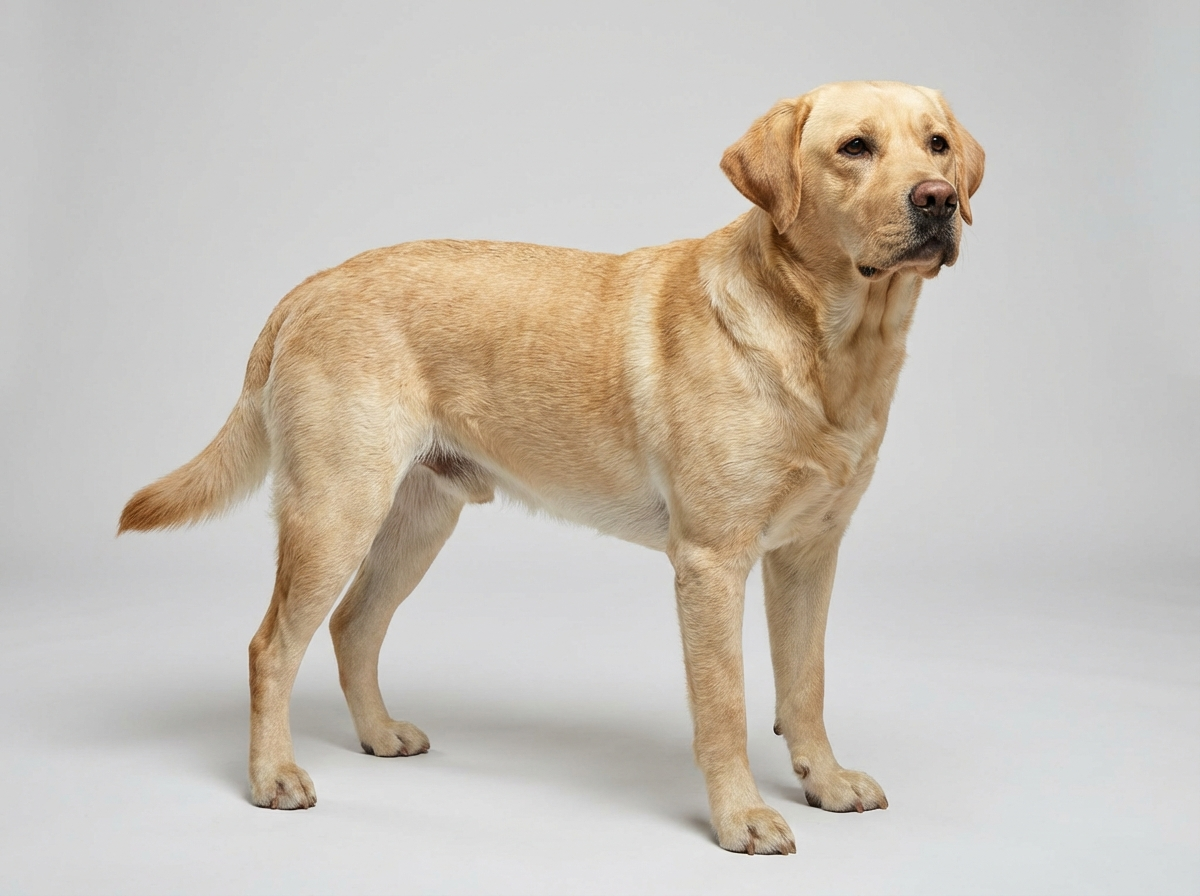
Health
Do Labs get skin infections in facial folds?
No — their smooth coat has no deep wrinkles to trap moisture, unlike wrinkly-faced breeds.

Quick answer
Do Labs get skin infections in facial folds?
No — their smooth coat has no deep wrinkles to trap moisture, unlike wrinkly-faced breeds.
The moisture-trapping mechanism that causes skin infections in a wrinkly-faced breed doesn't apply to a Lab's smooth coat — but a Lab's floppy, low-airflow ears create a strikingly similar moist, warm environment that's just as friendly to bacteria and yeast.
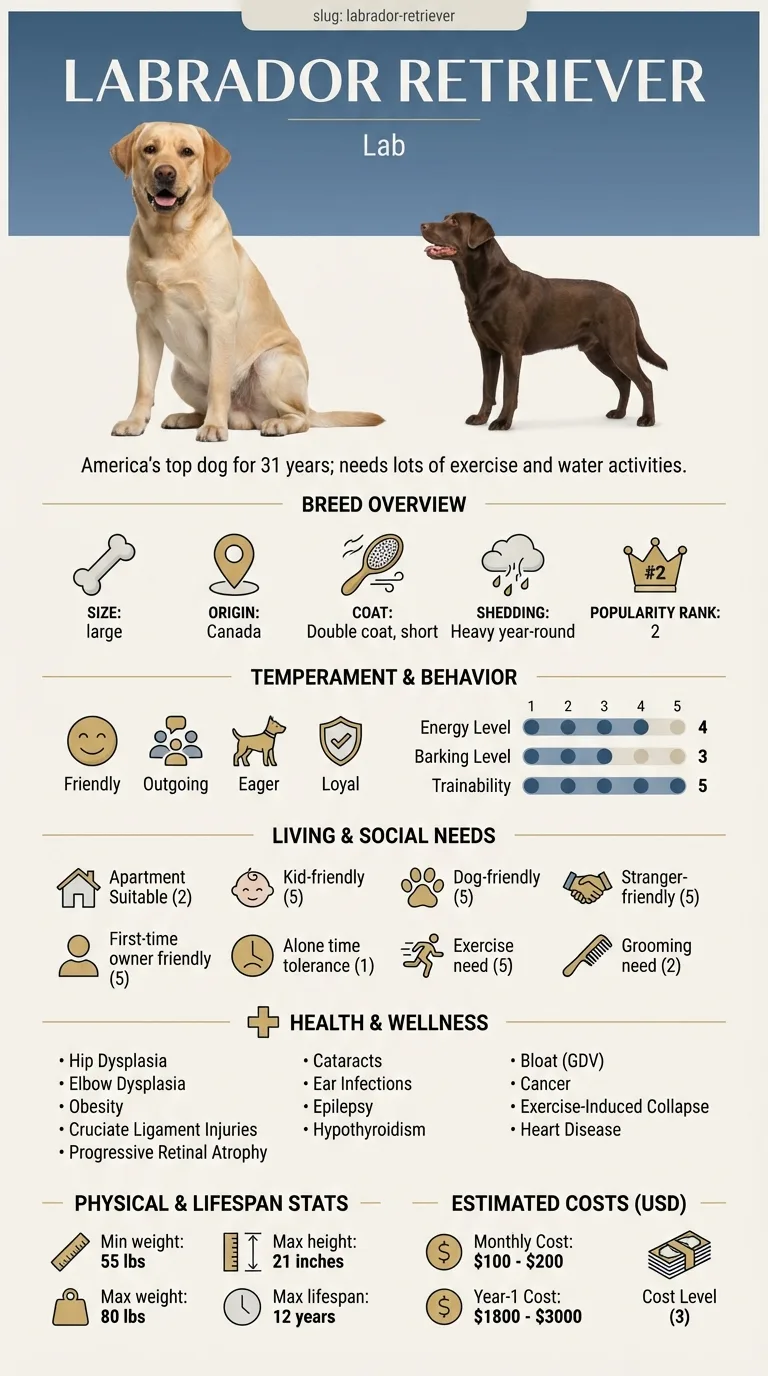
Owners dealing with a Lab that shakes its head frequently or scratches at its ears, and owners managing recurring hot spots that seem to appear overnight after a day of swimming or an allergy flare.
This guide is not medical advice. If your dog shows pain, sudden behavior change, or worsening symptoms, consult a licensed veterinarian.
Some links may be affiliate links. We may earn a commission at no extra cost to you. We only suggest products we believe are helpful for dog owners.
We research and check what we publish, but we do not warrant that any figure, date, price, or statement is accurate, complete, or current, and we accept no liability for any loss, cost, injury, or other harm arising from the use of this site. Use it as one reference among several. You remain responsible for your own decisions and for your dog's care - confirm anything that matters with a licensed veterinarian or another qualified professional before you act on it. Full disclaimer.
Skin infections in Labrador Retrievers concentrate in two specific areas rather than the facial-fold pattern seen in wrinkly-faced breeds: the ears, due to floppy-ear anatomy trapping moisture especially after swimming, and hot spots, which develop secondary to allergy-driven self-trauma from licking and scratching. Both are well-documented, genuinely breed-relevant concerns with their own distinct prevention and treatment approaches.
Ear infections are common enough in Labrador Retrievers to be explicitly documented among this breed's typical health issues, and hot spots are a frequently seen secondary complication of this breed's well-established allergy tendency, making both genuinely relevant concerns despite the breed's otherwise smooth, low-maintenance coat.
A Labrador's floppy ear structure, combined with an intense enthusiasm for swimming that this water-loving breed rarely turns down, creates repeated opportunities for moisture to become trapped in the ear canal, distinct from any facial-fold anatomy this breed simply doesn't have. Their well-documented predisposition toward skin allergies also sets up the self-trauma cycle that leads to hot spots.
Frequent swimming or bathing without thorough ear drying, humid climates, and untreated seasonal allergies are the main environmental contributors to both infection types, alongside flea exposure in areas without consistent year-round prevention.
See a vet for ear odor, discharge, redness, or frequent head-shaking, and seek prompt same-day or next-day care for a new hot spot, since these can rapidly expand and become quite painful if not addressed early.
See all Labrador Retriever health problems, which breeds are prone to skin infections, or the full Labrador Retriever breed guide for temperament, exercise needs and ownership costs.
A straightforward ear infection typically resolves within one to two weeks of appropriate topical treatment, though chronic or allergy-driven cases can recur without addressing the underlying trigger. Hot spots often improve within a few days of treatment once the self-trauma cycle is interrupted.
Success means infrequent, quickly resolved episodes rather than a permanent absence of any infection risk, since both ear anatomy and allergy tendency are ongoing breed characteristics — consistent preventive habits, not a one-time fix, are what keep frequency down long-term.
Ear infections are, by a wide margin, the more common and more breed-relevant skin infection concern for Labradors, and 'Ear Infections' appears directly on this breed's documented list of common health issues. The mechanism is straightforward: a Lab's floppy ear flap covers the ear canal, restricting airflow and trapping warmth and moisture, especially after swimming, which this water-loving breed does enthusiastically and often. That warm, moist, low-oxygen environment is exactly what yeast and certain bacteria thrive in, leading to recurring otitis externa — inflammation and infection of the outer ear canal.
Hot spots (acute moist dermatitis) are the second major infection-prone pattern, and they're almost always secondary to something else — an underlying allergy, a flea bite, or even a minor scrape that the dog then licks and scratches obsessively, breaking the skin barrier and allowing bacteria to rapidly colonize the area. These can appear and worsen within hours, going from a small irritated patch to a raw, weeping, expanding sore by the next day, driven largely by the dog's own self-trauma rather than the original trigger itself.
Both of these are meaningfully different from the deep-fold infections seen in wrinkly-faced breeds — there's no anatomical fold trapping debris against the skin here, just ear canal anatomy and behavior-driven self-trauma, which changes both prevention (drying ears after swimming, addressing allergies early) and treatment (topical ear medication, addressing the underlying itch trigger for hot spots) compared to fold-related infections.

Since the underlying mechanisms are distinct — ear anatomy versus self-trauma from itching — prevention strategies for each are genuinely different.
Every summer for three years, owner Diego's Lab, Chief, developed at least one ear infection, always after weeks of near-daily lake swimming. Diego initially treated each episode individually with vet-prescribed drops but never connected the pattern to swimming frequency until his vet pointed it out directly. The following summer, Diego started thoroughly drying Chief's ears with a towel after every swim and used a vet-recommended drying cleaner twice a week during peak swimming season. Chief had zero ear infections that entire summer, the first swimming season in years without one.
Key takeaway: A recurring seasonal pattern tied to a specific activity, like swimming, is worth naming explicitly to your vet — prevention aimed at that specific trigger works far better than treating each episode as an isolated, unrelated event.
No — Labs have a smooth coat without the deep facial wrinkles that trap moisture in breeds like Bulldogs or Shar-Peis, so skin-fold infections aren't a relevant concern for this breed's anatomy.
Their floppy ear flap restricts airflow into the ear canal, trapping warmth and moisture, especially after this water-loving breed's frequent swimming, creating an environment where yeast and bacteria thrive. Ear infections are specifically documented as a common health issue in this breed.
Hot spots are almost always secondary to an underlying trigger — commonly an allergy flare or a flea bite — that causes the dog to lick or scratch obsessively, breaking the skin barrier and allowing rapid bacterial colonization of the area.
Thoroughly dry ears after every swim or bath, check them weekly for odor or discharge, and address any underlying allergy promptly, since chronic allergic inflammation also contributes to ear infection risk.
Very fast — a hot spot can go from a small irritated patch to a large, raw, weeping sore within hours to a day or two, driven mainly by the dog's own licking and scratching rather than the original trigger alone.
A basic ear infection visit with cytology and topical medication typically runs $100–$200, though chronic or recurring cases needing more extensive workup can cost more.
Not directly, though both often trace back to an underlying allergy in this breed — treating the root allergy can reduce the frequency of both problems even though they occur in different locations and involve different mechanisms.
No — their smooth coat has no deep wrinkles to trap moisture, unlike wrinkly-faced breeds.
Their floppy ears trap warmth and moisture, especially after swimming, creating conditions where yeast and bacteria thrive.
Usually an underlying allergy or flea bite that causes obsessive licking or scratching, breaking the skin barrier.
Typically $100–$200 for a basic exam with cytology and topical medication.
It can expand from a small patch to a large, raw sore within hours to a day or two if untreated.
A one-page prep sheet for this condition: the signs, the questions to ask, what to get priced. Unlocks here.
You get: Vet visit prep sheet
No spam. One-click unsubscribe. See our privacy policy.
Preview page 1 before you decide.