Health
What's the single biggest growth-phase risk for a Lab puppy?
Overfeeding combined with too much high-impact exercise before joints and growth plates have matured, which together stress developing hips and elbows.

Quick answer
What's the single biggest growth-phase risk for a Lab puppy?
Overfeeding combined with too much high-impact exercise before joints and growth plates have matured, which together stress developing hips and elbows.
What you feed and how much you exercise your Lab puppy in its first year matters more for its joints at age seven than almost anything you'll do after that.
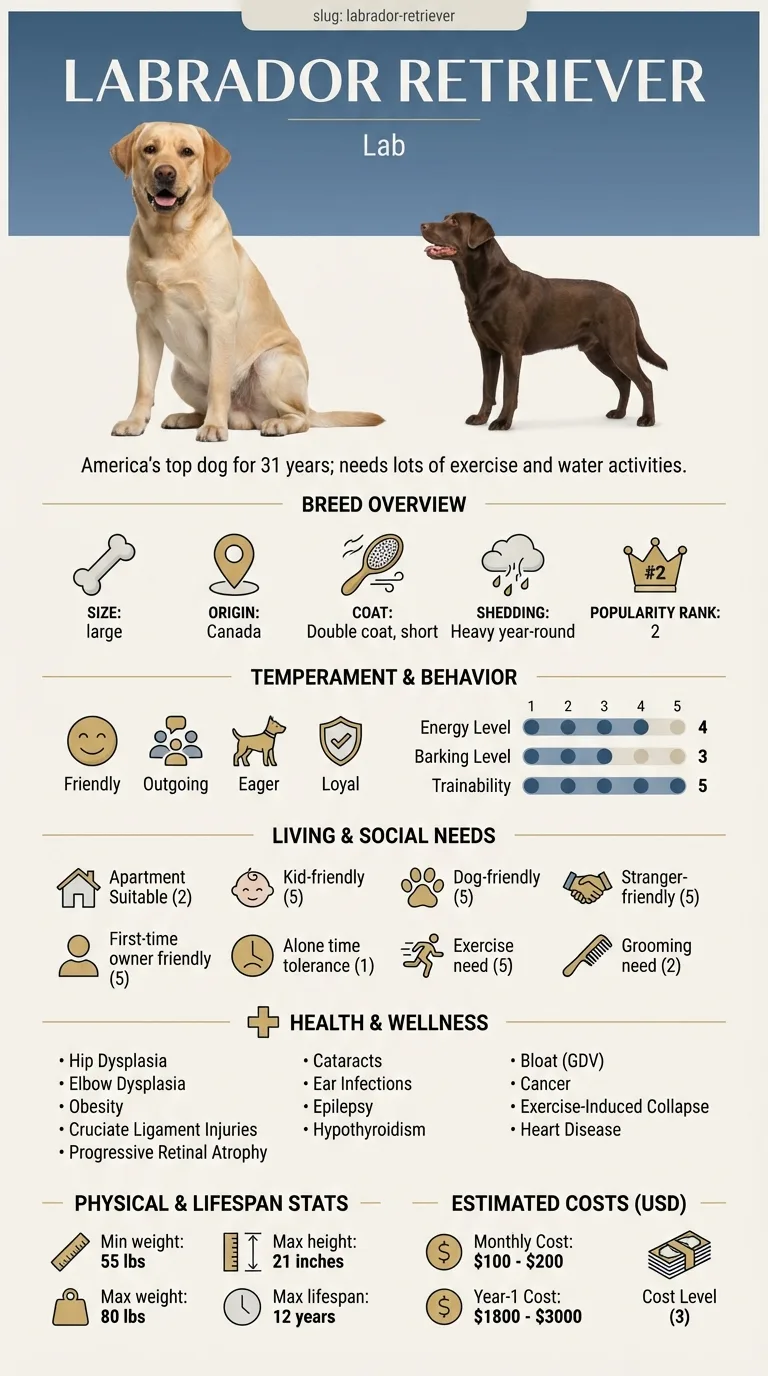
Owners of Labrador puppies under eighteen months old, particularly those choosing food and exercise routines without realizing how directly those choices connect to adult joint health, are the ones this affects most directly.
This guide is not medical advice. If your dog shows pain, sudden behavior change, or worsening symptoms, consult a licensed veterinarian.
Some links may be affiliate links. We may earn a commission at no extra cost to you. We only suggest products we believe are helpful for dog owners.
We research and check what we publish, but we do not warrant that any figure, date, price, or statement is accurate, complete, or current, and we accept no liability for any loss, cost, injury, or other harm arising from the use of this site. Use it as one reference among several. You remain responsible for your own decisions and for your dog's care - confirm anything that matters with a licensed veterinarian or another qualified professional before you act on it. Full disclaimer.
"Bone and growth issues" isn't a standalone diagnosis for Labrador Retrievers, but the rapid growth this large breed goes through in its first year to eighteen months is the critical window shaping how severely its two documented developmental joint conditions, hip dysplasia and elbow dysplasia, ultimately develop. Nutrition and exercise choices made during puppyhood have a real, lasting influence on adult joint health.
Not documented as its own condition, but given that hip dysplasia and elbow dysplasia are well-established Labrador health risks, the growth period that shapes their severity is relevant to essentially every Labrador puppy, not just a subset.
As a large breed with a documented predisposition to hip and elbow dysplasia, Labrador Retrievers go through a growth period where joint and skeletal development is genuinely vulnerable to outside influence in a way smaller, slower-growing breeds are less affected by.
Overfeeding, inappropriate food formulation, unnecessary supplementation, and too much high-impact exercise before growth plates close are the main environmental factors that can worsen how a genetic joint predisposition ultimately expresses itself.
Talk to your vet if your growing puppy shows any limping, reluctance to rise, a bunny-hopping gait, or asymmetric movement at any point during its first two years. These signs warrant an orthopedic evaluation rather than being dismissed as normal puppy clumsiness.
See all Labrador Retriever health problems, which breeds are prone to bone growth issues, or the full Labrador Retriever breed guide for temperament, exercise needs and ownership costs.
The critical growth window runs roughly from birth to twelve or eighteen months, with skeletal maturity generally reached by age two. Choices made during this window influence joint health for the rest of the dog's life, though effects aren't usually visible until years later.
Success is a dog that reaches adulthood with the best joint health its genetics allow, achieved through appropriate nutrition and moderated exercise during growth, not a guarantee against hip or elbow dysplasia, which genetics still influence regardless of management.
There's no distinct "bone and growth issue" listed as its own condition in Labrador health data. What is well documented is hip dysplasia and elbow dysplasia, both developmental joint conditions where the puppy growth period is the critical window. Rapid, uneven growth, especially when combined with excess calories or high-impact exercise before joints and growth plates have matured, is a recognized contributor to how severely those conditions develop. In other words, "bone and growth issues" in this breed isn't its own disease category, it's the developmental period during which the breed's real, documented joint risks are most influenced by what an owner does.
The practical guidance for this period is well established in veterinary nutrition and orthopedic research on large-breed puppies:

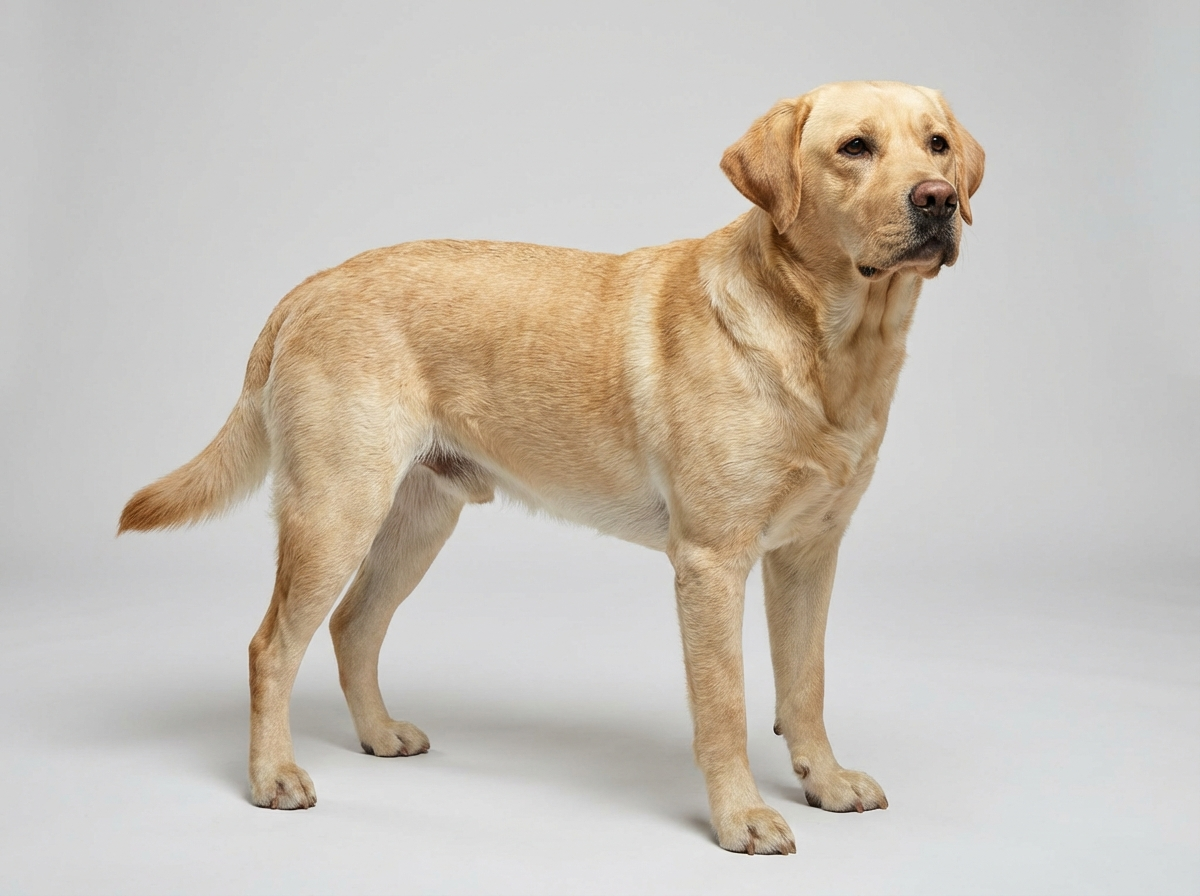
Wren's owner did her homework before bringing home her Labrador puppy, switching to a large-breed puppy formula from day one and resisting her instinct to let Wren run full-speed alongside her bike as soon as the puppy seemed capable. Instead, Wren got short, frequent play sessions and controlled leash walks through her first year, with jogging introduced gradually only after her vet confirmed her growth plates had closed around fourteen months. At her two-year hip and elbow screening, Wren's joints came back with excellent scores. Her owner can't know for certain how much of that came from good genetics versus good management, but she's glad she didn't leave it to chance.
Key takeaway: Growth-phase nutrition and exercise choices are one of the few genuinely controllable factors in how a Labrador's documented joint risks turn out, even though genetics still play a real role.
No single condition is documented under that name. The real, well-documented risks are hip dysplasia and elbow dysplasia, and the puppy growth period is the critical window during which nutrition and exercise choices influence how those conditions ultimately develop.
Very fast. A Lab puppy can reach much of its adult height within the first year and continue filling out in muscle and bone density through about age two, a growth rate that puts real strain on developing joints.
Yes. Large-breed puppy formulas are specifically calibrated to slow calcium absorption and control calorie density, which reduces the uneven, too-rapid growth linked to worse developmental joint outcomes.
Yes, repetitive high-impact activity like forced running or repeated jumping before growth plates close can stress still-forming joints; controlled, moderate play and short walks are the safer approach during this period.
Generally between twelve and eighteen months, though it varies by individual dog; until then, high-impact repetitive exercise carries more developmental risk than it would in an adult.
No, not beyond what a properly formulated large-breed puppy food already provides. Excess calcium during rapid growth can actually worsen developmental joint problems rather than help them.
Not entirely, since genetics play a real role too, but appropriate nutrition and exercise during growth can meaningfully influence how severely a genetic predisposition actually expresses itself.
Overfeeding combined with too much high-impact exercise before joints and growth plates have matured, which together stress developing hips and elbows.
Yes, most vets consider it a worthwhile investment given how directly growth-phase nutrition connects to this breed's documented adult joint risks.
Not yet; hold off on forced long-distance running until growth plates close around twelve to eighteen months, favoring short, unstructured play instead.
Yes, a lean growth trajectory is one of the most effective, controllable ways to reduce the severity of any underlying joint predisposition.
Formal hip and elbow screening is typically done around two years old once growth is complete, though your vet can discuss earlier monitoring if you notice any signs of discomfort.
A one-page prep sheet for this condition: the signs, the questions to ask, what to get priced. Unlocks here.
You get: Vet visit prep sheet
No spam. One-click unsubscribe. See our privacy policy.
Preview page 1 before you decide.