Is bloat dangerous in Chihuahuas the way it is in large breeds?
The classic emergency, stomach torsion, is not a documented risk here due to this breed's shallower chest shape. Fast-eating gas buildup is the more likely and less dangerous version.
Quick answer
Is bloat dangerous in Chihuahuas the way it is in large breeds?
The classic emergency, stomach torsion, is not a documented risk here due to this breed's shallower chest shape. Fast-eating gas buildup is the more likely and less dangerous version.
A swollen belly after dinner in a Chihuahua is rarely a stomach twisting on itself. It is far more often a dog who inhaled a meal in twenty seconds and swallowed a stomach full of air along with it.

Owners feeding multiple dogs together where competition speeds up eating, rescued or previously food-insecure dogs with an ingrained habit of gulping meals, and anyone who has read about deep-chested breed bloat and is now watching for a risk this breed's anatomy makes unlikely.
This guide is not medical advice. If your dog shows pain, sudden behavior change, or worsening symptoms, consult a licensed veterinarian.
Some links may be affiliate links. We may earn a commission at no extra cost to you. We only suggest products we believe are helpful for dog owners.
Gastric dilatation-volvulus, true stomach torsion, is a disease of deep-chested large and giant breeds and is essentially not documented as a realistic risk in this breed's comparatively broad, shallow chest. What owners here most often encounter under the general term bloat is straightforward gas distension from eating too quickly or competing with another dog for food, which is uncomfortable and worth preventing through feeding changes but does not carry the same rotational-emergency risk.
Mild post-meal gas and distension from fast eating is a frequently reported, generally low-risk occurrence in small, food-motivated breeds. True volvulus, by contrast, is not established as a meaningful risk in this breed given its chest conformation, unlike its well-documented status in large, deep-chested breeds.
This breed's chest is proportionally broad and shallow rather than deep and narrow, which physically limits how much room the stomach has to rotate even under significant gas distension, in contrast to the deep-chested large breeds where true volvulus is a well-established risk. Fast, food-motivated eating, common in small dogs that have experienced competition or food insecurity, drives air swallowing that produces gas buildup independent of any rotational risk.
Multi-dog households where bowls are placed close together encourage competitive, rushed eating. A single large daily meal, rather than smaller frequent portions, increases the volume swallowed quickly in one sitting. Excitement or play immediately around mealtimes increases the rate of air swallowing further.
Book an appointment if fast eating and post-meal distension are a frequent, ongoing pattern, so feeding strategies can be tailored and any contributing digestive issue ruled out. Seek same-day emergency care for a hard, persistently distended abdomen, repeated unproductive retching without producing anything, visible distress, or pale gums, since these signs warrant prompt assessment regardless of how unlikely true volvulus is in this breed.
See all Chihuahua health problems, which breeds are prone to gastric dilatation volvulus gdvbloat, or the full Chihuahua breed guide for temperament, exercise needs and ownership costs.
Feeding changes such as a slow-feeder bowl or separated mealtimes typically show a visible reduction in eating speed and post-meal distension within one to two weeks of consistent use.
Success is a dog who eats at a measured pace, shows a normal, non-distended abdomen within an hour of a meal, and no longer produces unproductive retching or restlessness after eating.
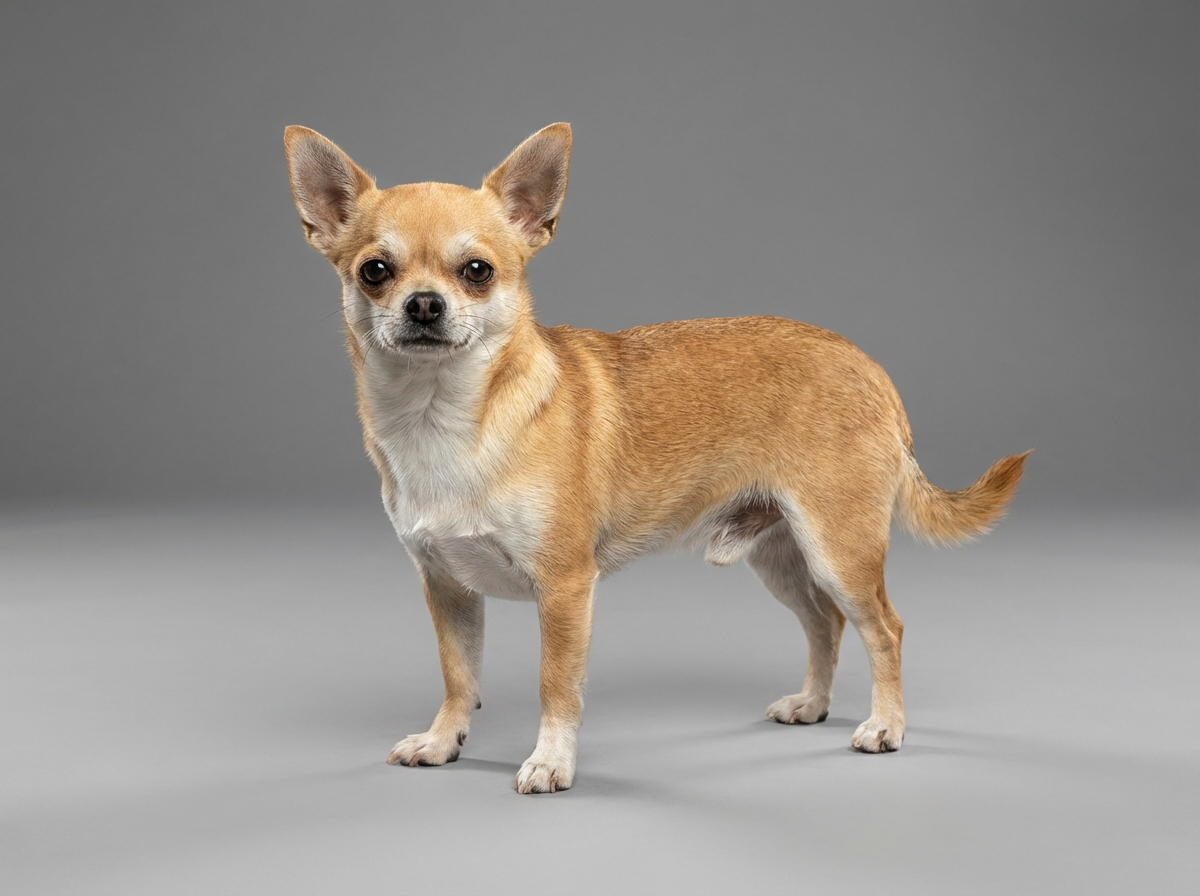
True volvulus requires the stomach to physically rotate within the abdominal cavity, and that rotation is made possible by a deep, narrow chest that allows the stomach room to swing on its supporting ligaments. A Chihuahua's chest is comparatively broad and shallow relative to its size, which leaves the stomach far less room to rotate even if it does fill with gas. This is the anatomical reason the classic emergency associated with the word 'bloat' in giant and large breeds is not a realistic expectation here in the way it is for a Great Dane or a Weimaraner.
What does happen in this breed is aerophagia, air swallowing, most commonly from eating too quickly, competing with another dog for a shared bowl, or gulping food after a period of hunger. The stomach distends with swallowed air rather than through any rotation, producing a visibly rounded, sometimes uncomfortable abdomen, occasional unproductive retching, and general restlessness for an hour or two after a meal. This resolves on its own far more often than not as the gas passes.
The genuinely useful skill for an owner is not memorizing giant-breed bloat protocols that do not transfer cleanly to this anatomy, but recognizing when a swollen abdomen has crossed from ordinary post-meal gas into something that needs same-day veterinary attention: persistent unproductive retching, visible distress, a hard rather than merely rounded abdomen, or any of it happening alongside pale gums or weakness.

Because the real driver here is eating speed and air swallowing, prevention is almost entirely about how meals are delivered.
If you think your Chi has gastric dilatation-volvulus (gdv/bloat), the plan is three steps: write down what you have seen and when it started, book a veterinary appointment rather than waiting for the next flare, and take video of the behaviour or symptom before you go — the thing you are worried about rarely happens in the consulting room. Screening in the parents covers collapsing trachea, heart disease, patellar luxation.
What the vet visit should produce is a diagnosis and a written plan, not just reassurance: what is being ruled out, what the monitoring interval is, and which signs mean you come back sooner. Ask what the treatment costs across a year rather than per visit, because that is the number that decides whether you are managing this condition or reacting to it.
Between appointments, keep a short log — dates, what you saw, what changed. It is the single most useful thing an owner brings to a follow-up, and for gastric dilatation-volvulus (gdv/bloat) it is often what separates a clear pattern from a guess.
Huesos joined a two-dog household as a rescue with a history of food scarcity, and he ate every meal in what his owner Selena described as under thirty seconds flat, often finishing before the resident dog had taken more than a few bites. One evening, about twenty minutes after dinner, his belly looked visibly rounded and he retched twice without bringing anything up, then paced restlessly for a while. Selena had read extensively about bloat in large breeds before getting Huesos and drove to an emergency clinic that same night, expecting to hear the word torsion. The vet examined him, noted a soft rather than tense, hard abdomen, normal gum color and a normal heart rate, and explained that true volvulus essentially does not occur in a chest shape like his. The working diagnosis was simple gas distension from how quickly he ate. The actual fix has been in place for over a year now: Huesos and the resident dog eat in separate rooms, and Huesos uses a slow-feeder bowl with raised ridges. His post-meal restlessness disappeared within the first week of the new routine.
Key takeaway: Reading up on a large-breed emergency before bringing home a small one is not wasted worry, but it is worth updating once you actually see a vet, because the anatomy that makes volvulus possible in a deep-chested dog simply is not present in this one, and the real fix here lives in the feeding bowl, not the emergency room.

It is not documented as a realistic risk for this breed given its comparatively broad, shallow chest, which does not give the stomach the room to rotate that a deep-chested large breed's anatomy allows. Simple gas distension from fast eating is the far more likely explanation for a swollen abdomen here.
Ordinary post-meal gas is uncomfortable but the dog is usually still willing to move, drink and settle within an hour or two. Persistent unproductive retching, a hard rather than soft rounded abdomen, visible distress, or pale gums all warrant same-day veterinary assessment rather than waiting it out.
This advice is aimed at preventing volvulus in deep-chested breeds and does not transfer cleanly to this breed's different risk profile. For a Chihuahua, focus on slowing eating speed itself rather than restricting water, and ask your vet if you have specific concerns.
Fast eating in this breed is more a comfort and digestive-upset issue, sometimes producing gas, restlessness or occasional vomiting shortly after meals, than a precursor to the emergency associated with giant-breed bloat. It is still worth addressing through slower feeding methods.
For dogs whose bloating is driven by fast eating, they are one of the more effective and low-cost interventions available, since they mechanically force smaller bites and more pauses regardless of how motivated the dog is to eat quickly.
A mildly rounded belly for an hour or so after a full meal, especially one eaten quickly, is common and usually resolves on its own. A persistently hard, distended abdomen, or one accompanied by other signs of distress, is not something to treat as routine.
The classic emergency, stomach torsion, is not a documented risk here due to this breed's shallower chest shape. Fast-eating gas buildup is the more likely and less dangerous version.
Usually swallowed air from eating too fast, often worsened by competing with another dog for the same bowl.
A slow-feeder bowl, separated mealtimes from other pets, and splitting one large meal into two or three smaller ones all help.
Persistent unproductive retching, a hard abdomen, visible distress or pale gums all mean same-day veterinary care rather than waiting.
A one-page prep sheet for this condition: the signs, the questions to ask, what to get priced. Unlocks here.
You get: Vet visit prep sheet
No spam. One-click unsubscribe. See our privacy policy.
Preview page 1 before you decide.