How often should I clean an allergic Lab's ears?
Follow your vet's specific plan, but many allergy-prone Labs need a gentle ear-drying rinse after every swim and a full cleaning weekly during flare periods, tapering off once symptoms are controlled.
Quick answer
How often should I clean an allergic Lab's ears?
Follow your vet's specific plan, but many allergy-prone Labs need a gentle ear-drying rinse after every swim and a full cleaning weekly during flare periods, tapering off once symptoms are controlled.
If your Lab's ears smell yeasty by Friday no matter how often you clean them, or its paws are stained pink from constant licking, you're likely looking at chronic allergies rather than a one-time irritation.

Owners of Labradors with a documented history of ear infections often discover, after the second or third round of ear drops, that allergies are the underlying driver rather than water exposure alone. It also affects owners who've already ruled out fleas and switched foods once without lasting improvement.
This guide is not medical advice. If your dog shows pain, sudden behavior change, or worsening symptoms, consult a licensed veterinarian.
Some links may be affiliate links. We may earn a commission at no extra cost to you. We only suggest products we believe are helpful for dog owners.
Chronic allergies in a Labrador Retriever are an ongoing, low-grade immune overreaction to something in the diet or environment, showing up as itchy skin, recurring ear infections, and paw licking rather than a single dramatic event. It's not listed as a hallmark Labrador condition on its own, but it's a major driver behind one that is: this breed's well-documented tendency toward chronic ear infections.
Ear infections are one of the more consistently reported health concerns in this breed, and allergies are widely considered a leading contributor to that pattern. So while "allergies" isn't its own headline entry in breed health summaries, its fingerprints are all over one of the breed's genuine, documented weak points.
The connection runs through the ears rather than a uniquely reactive immune system. Labradors have naturally pendulous, low-airflow ears, and this breed's love of water means those ears stay damp far more often than a drier-coated, upright-eared breed's would. Allergic inflammation on top of that moisture is what tips many Labs into recurring infections rather than the occasional one-off.
Households in high-pollen regions, homes with dust or mold issues, and diets that haven't been evaluated for a specific dog's sensitivities all raise the baseline irritation level. Frequent swimming without thorough ear drying afterward compounds whatever allergic inflammation is already present.
Bring your vet in if ear infections recur more than two or three times a year, if skin redness spreads or thickens, or if your dog's scratching disrupts sleep or daily activity. Persistent symptoms despite home management usually mean it's time for allergy testing or a supervised elimination diet rather than another round of over-the-counter treatment.
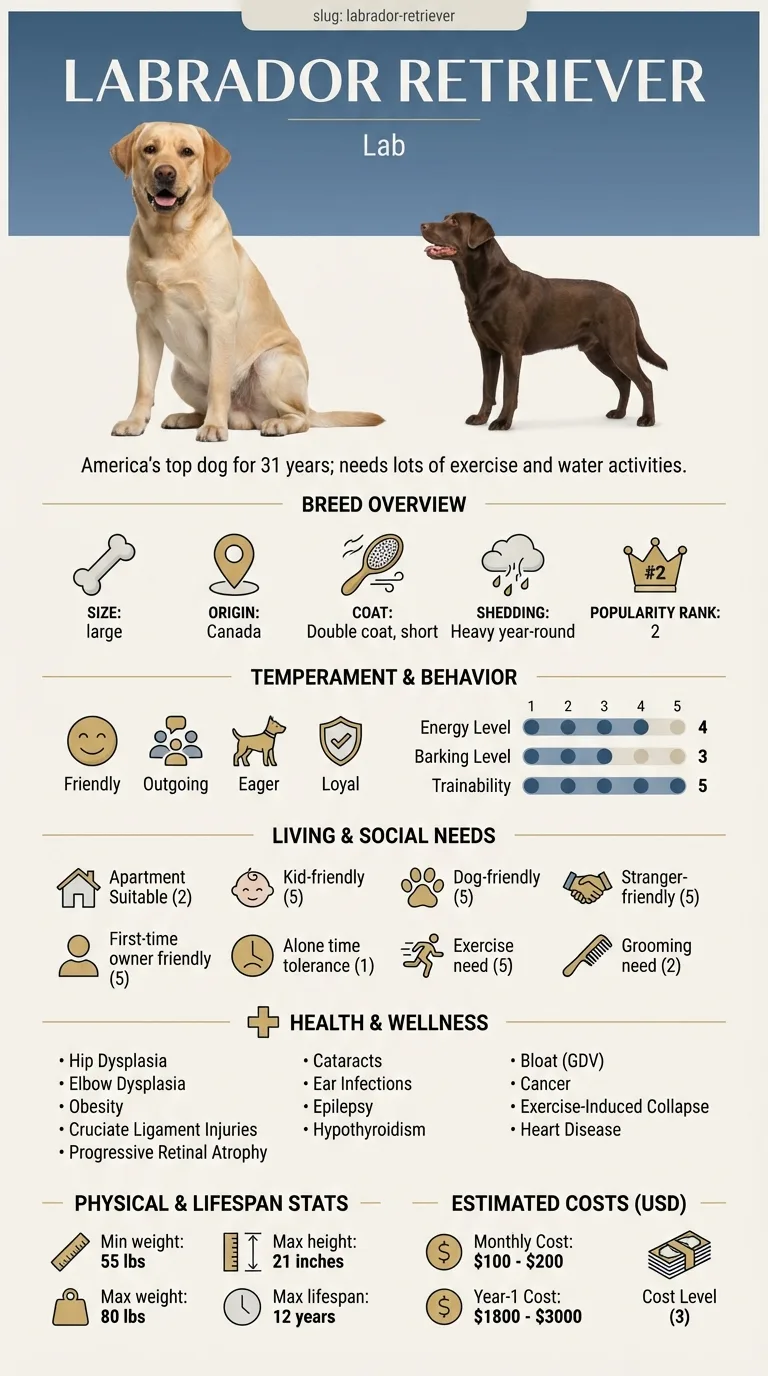
See all Labrador Retriever health problems, which breeds are prone to allergies, or the full Labrador Retriever breed guide for temperament, exercise needs and ownership costs.
Expect a slow process: an elimination diet trial alone takes eight to twelve weeks to read reliably, and identifying environmental triggers can take a full year of tracking seasonal patterns. Meaningful improvement in day-to-day comfort is usually visible within a month or two once a management plan is in place, even before the full picture is confirmed.
Success looks like infrequent, mild flare-ups instead of a near-constant cycle of ear infections and itching, not a dog that never has another allergy symptom. Most Labs with well-managed allergies live comfortably with an ongoing but predictable maintenance routine.
Ear infections are one of the health issues most consistently documented in Labrador Retrievers, and allergies are the single biggest reason why. This breed's pendulous ears already trap moisture after swimming or bathing, creating a warm, damp environment yeast and bacteria thrive in. Add an allergic skin reaction, which inflames the lining of the ear canal and changes its normal defenses, and you get a breed that's mechanically set up for ear trouble and then given an extra push by allergic inflammation. A Lab that gets recurring ear infections despite drying its ears properly after every swim is very often dealing with allergies as the underlying cause, not just water exposure.
The two categories look similar on the skin but behave differently over time, and telling them apart shapes what you do next:

By the time Marlow, a five-year-old Lab who swam every day at the local lake, had her third ear infection in six months, her owner suspected something beyond bad luck. The vet noted mild redness in her armpits and groin too, not just her ears, and suggested allergies were likely driving the recurring infections rather than water exposure on its own. A twelve-week elimination diet ruled out her old chicken-based food, and switching to a novel-protein diet combined with a strict post-swim ear-drying routine cut her infections from six times a year to one mild flare the following spring. Her owner still budgets for a seasonal vet check each spring, when Marlow's symptoms tend to reappear briefly before settling again.
Key takeaway: Recurring ear infections in a Labrador are often an allergy symptom in disguise, and addressing the allergy is what actually breaks the cycle, not another round of ear drops alone.

Breed health data doesn't single out allergies as a hallmark Labrador condition the way hip dysplasia or ear infections are, but because ear infections are so consistently documented in the breed, and allergies are a leading cause of them, many owners end up managing an allergy component indirectly.
Recurring ear infections, paw licking or chewing, red or thickened skin in the armpits and groin, a duller or greasier coat than normal, and occasional loose stool if food is involved. Symptoms tend to build gradually rather than appear overnight.
Seasonal patterns point to environmental allergies. Symptoms that persist year-round, especially combined with digestive upset, point more toward food. A supervised elimination diet trial is the only way to confirm it.
No, chronic allergies are managed rather than cured. The realistic goal is identifying triggers well enough that flare-ups become infrequent and mild instead of constant.
If the underlying allergy driving the inflammation isn't addressed, treating the infection alone only resets the clock until the next flare. Ear drops clear the current infection; managing the allergy is what actually reduces how often it comes back.
Swimming itself isn't an allergy trigger, but it does compound ear moisture on top of any existing allergic inflammation, which is why thorough ear drying after every swim matters more for this breed than for a drier-coated one.
Your vet may start with ruling out fleas and mites, then move to an elimination diet trial for suspected food allergy, or intradermal or blood allergy testing for environmental triggers if symptoms are severe enough to justify targeted immunotherapy.
Follow your vet's specific plan, but many allergy-prone Labs need a gentle ear-drying rinse after every swim and a full cleaning weekly during flare periods, tapering off once symptoms are controlled.
Chicken, beef, dairy, and wheat are the most commonly implicated proteins and grains, though any ingredient can theoretically be the trigger for an individual dog.
They often intensify through early adulthood and then stabilize once triggers are identified and managed, though a dog can develop new sensitivities at any age.
Regular brushing and periodic hypoallergenic baths help remove allergens sitting in the coat, which measurably reduces skin irritation between vet-directed treatments.
It's a reasonable starting point if food allergy is suspected, but a true elimination trial with a novel or hydrolyzed protein under vet guidance is more reliable than switching between over-the-counter limited-ingredient bags.
A one-page prep sheet for this condition: the signs, the questions to ask, what to get priced. Unlocks here.
You get: Vet visit prep sheet
No spam. One-click unsubscribe. See our privacy policy.
Preview page 1 before you decide.