Health
What's the difference between food and environmental allergies in dogs?
Food allergies cause year-round symptoms often with GI signs; environmental allergies are typically seasonal and affect paws, face, ears, and belly first.

Quick answer
What's the difference between food and environmental allergies in dogs?
Food allergies cause year-round symptoms often with GI signs; environmental allergies are typically seasonal and affect paws, face, ears, and belly first.
Environmental allergies, food allergies, and flea allergy dermatitis can all produce the same itchy, red, sometimes infected skin — but they're managed completely differently, which is exactly why guessing at home so often leads nowhere.
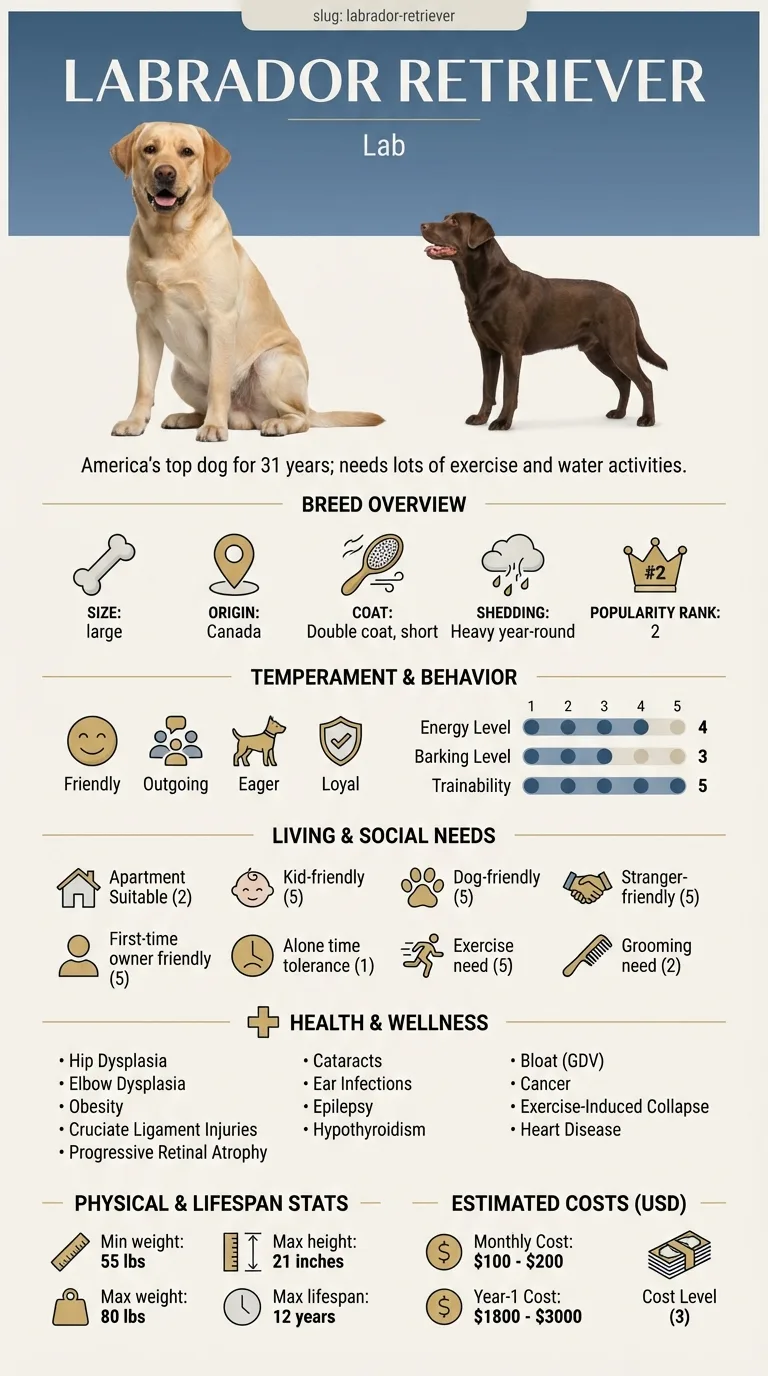
Owners who've tried switching dog food repeatedly without improvement, and owners managing a Lab's seasonal itching that seems to come back every spring or fall no matter what they try.
This guide is not medical advice. If your dog shows pain, sudden behavior change, or worsening symptoms, consult a licensed veterinarian.
Some links may be affiliate links. We may earn a commission at no extra cost to you. We only suggest products we believe are helpful for dog owners.
We research and check what we publish, but we do not warrant that any figure, date, price, or statement is accurate, complete, or current, and we accept no liability for any loss, cost, injury, or other harm arising from the use of this site. Use it as one reference among several. You remain responsible for your own decisions and for your dog's care - confirm anything that matters with a licensed veterinarian or another qualified professional before you act on it. Full disclaimer.
Skin allergies in Labrador Retrievers typically fall into three overlapping categories — environmental, food, and flea allergy dermatitis — each producing similar-looking itchy, inflamed skin but requiring different diagnostic and management approaches. Correctly identifying which trigger (or combination of triggers) is involved through a systematic vet-guided process matters far more for long-term control than random food or product switches.
Skin allergies are one of the most frequently diagnosed chronic conditions in Labrador Retrievers, common enough that this breed is often specifically cited in veterinary dermatology discussions of atopic and allergic skin disease.
Labradors carry documented genetic predisposition toward atopic dermatitis and related allergic skin conditions, and their active, outdoor-oriented lifestyle — swimming, retrieving, exploring — increases exposure to environmental allergens like pollen, grass, and standing water compared to a less active breed. Their heavy year-round shedding double coat can also trap allergens and moisture against the skin.
Seasonal pollen exposure, indoor dust mite levels, inconsistent flea prevention, and diet composition all directly influence which specific allergy triggers become clinically relevant for an individual dog, making environmental and household management a meaningful part of overall control.
See a vet for persistent itching, redness, hair loss, or recurring ear infections, and seek prompt care for signs of a secondary skin infection like odor, discharge, or rapidly worsening hot spots — chronic allergies benefit significantly from a proper diagnostic workup rather than repeated over-the-counter attempts.
See all Labrador Retriever health problems, which breeds are prone to skin allergies, or the full Labrador Retriever breed guide for temperament, exercise needs and ownership costs.
An elimination diet trial takes eight to twelve weeks to yield a reliable result. Environmental allergy management often shows improvement within two to four weeks of starting appropriate medication, though seasonal flares can recur each year requiring ongoing management.
Success means significantly reduced itching and skin flare-ups through an identified, managed trigger plan — not necessarily zero symptoms ever, since most allergic skin conditions are managed long-term rather than permanently cured.
Environmental allergies (atopic dermatitis) are typically seasonal or tied to specific exposures — pollen in spring and fall, dust mites indoors year-round, mold in humid conditions — and tend to affect the paws, face, ears, and belly first. Food allergies, by contrast, usually cause year-round symptoms regardless of season, often paired with gastrointestinal signs like soft stool, and require a strict elimination diet trial, not just a single food switch, to actually confirm — a true elimination trial takes eight to twelve weeks of a novel or hydrolyzed protein diet with zero exceptions, including treats.
Flea allergy dermatitis is different again: it's a hypersensitivity reaction to flea saliva, meaning even a single flea bite can trigger disproportionate itching in a sensitive dog, concentrated especially at the base of the tail and along the back, even when you don't see fleas on the dog itself since a sensitive dog can groom them away quickly. This is why year-round flea prevention, not just visible flea presence, is part of a proper allergy workup.
Most real-world cases involve overlapping triggers rather than one single clean cause, which is exactly why a systematic vet-guided approach — ruling out fleas first since it's simplest, then considering a genuine elimination diet trial, then treating environmental allergies with the specific pattern that remains — tends to actually work, where random food switches and over-the-counter treatments often don't.

Once the likely trigger category is identified, the management approach diverges meaningfully — here's what each path typically involves.
If you think your Lab has skin allergies, the plan is three steps: write down what you have seen and when it started, book a veterinary appointment rather than waiting for the next flare, and take video of the behaviour or symptom before you go — the thing you are worried about rarely happens in the consulting room. Screening in the parents covers hip dysplasia, elbow dysplasia, obesity.
What the vet visit should produce is a diagnosis and a written plan, not just reassurance: what is being ruled out, what the monitoring interval is, and which signs mean you come back sooner. Ask what the treatment costs across a year rather than per visit, because that is the number that decides whether you are managing this condition or reacting to it.
Between appointments, keep a short log — dates, what you saw, what changed. It is the single most useful thing an owner brings to a follow-up, and for skin allergies it is often what separates a clear pattern from a guess.
Owner Patrick had switched his Lab, Winston's, food five times over three years chasing his year-round itching and occasional soft stool, with no lasting improvement from any single switch. A referral to a veterinary dermatologist finally led to a properly supervised elimination diet trial using a hydrolyzed protein formula with strict adherence for the full ten weeks. Winston's symptoms improved dramatically by week eight, confirming a genuine food allergy to a protein source that had actually been present in every 'different' food Patrick had previously tried. Winston has remained on the confirmed safe diet since, with occasional mild flares only when he's accidentally gotten into something outside his diet.
Key takeaway: Repeatedly switching foods without a structured, strict elimination trial often just cycles through variations of the same trigger ingredient — a properly supervised trial, not casual experimentation, is what actually identifies a true food allergy.
Labs are one of the more commonly affected breeds for atopic dermatitis and related allergic skin conditions, likely reflecting both genetic predisposition and their active outdoor lifestyle, which increases exposure to environmental allergens like pollen and grass.
Food allergies typically cause year-round symptoms, often with gastrointestinal signs like soft stool, and require a true 8-12 week elimination diet trial to confirm. Environmental allergies are often seasonal and tend to affect paws, face, ears, and belly first.
No — a flea-allergic dog can be hypersensitive enough that a single bite triggers significant itching, and sensitive dogs often groom away the evidence quickly, which is why year-round prevention matters even without visible fleas.
A proper trial takes eight to twelve weeks using a novel or hydrolyzed protein diet with absolutely no exceptions, including treats or table scraps, since even small amounts of the trigger ingredient can prevent an accurate result.
No, most skin allergies are managed rather than cured, though many dogs achieve excellent long-term control through a combination of identifying and avoiding triggers where possible, medication, and consistent skin care.
Costs vary by severity and approach, but ongoing management often includes $30–$80 a month for prescription diet or medication, plus periodic vet visits for flare-ups or infections running $100–$250 each.
Chronic scratching and licking commonly leads to secondary bacterial or yeast infections, hot spots, and hair loss, all of which need their own treatment on top of addressing the underlying allergy trigger.
Food allergies cause year-round symptoms often with GI signs; environmental allergies are typically seasonal and affect paws, face, ears, and belly first.
Eight to twelve weeks with zero exceptions, using a novel or hydrolyzed protein diet.
Yes — in a flea-allergic dog, a single bite can trigger a disproportionate hypersensitivity reaction.
Roughly $30–$80 a month for diet or medication, plus $100–$250 per vet visit for flare-ups.
No, they're generally managed long-term rather than cured, though many dogs achieve very good control.
A one-page prep sheet for this condition: the signs, the questions to ask, what to get priced. Unlocks here.
You get: Vet visit prep sheet
No spam. One-click unsubscribe. See our privacy policy.
Preview page 1 before you decide.