Health
What are the four signs of bloat to check for immediately?
A distended abdomen, unproductive retching, restlessness, and excessive drooling together point strongly toward bloat.

Quick answer
What are the four signs of bloat to check for immediately?
A distended abdomen, unproductive retching, restlessness, and excessive drooling together point strongly toward bloat.
Your dog is pacing, drooling, and trying to vomit but nothing's coming up. Is this bloat, or just an upset stomach? Here's how to tell the difference fast enough to matter.
First-time owners without a clear action plan freeze the longest, often spending precious time calling around or watching to see if symptoms pass instead of moving straight to the car.
This guide is not medical advice. If your dog shows pain, sudden behavior change, or worsening symptoms, consult a licensed veterinarian.
Some links may be affiliate links. We may earn a commission at no extra cost to you. We only suggest products we believe are helpful for dog owners.
We research and check what we publish, but we do not warrant that any figure, date, price, or statement is accurate, complete, or current, and we accept no liability for any loss, cost, injury, or other harm arising from the use of this site. Use it as one reference among several. You remain responsible for your own decisions and for your dog's care - confirm anything that matters with a licensed veterinarian or another qualified professional before you act on it. Full disclaimer.
This is the recognition-and-response side of gastric dilatation-volvulus: knowing exactly what a bloat episode looks like in the first minutes and what to do about it. A visibly distended abdomen paired with unproductive retching is the clearest early signal, and the correct response is immediate transport to an emergency vet, not home monitoring.
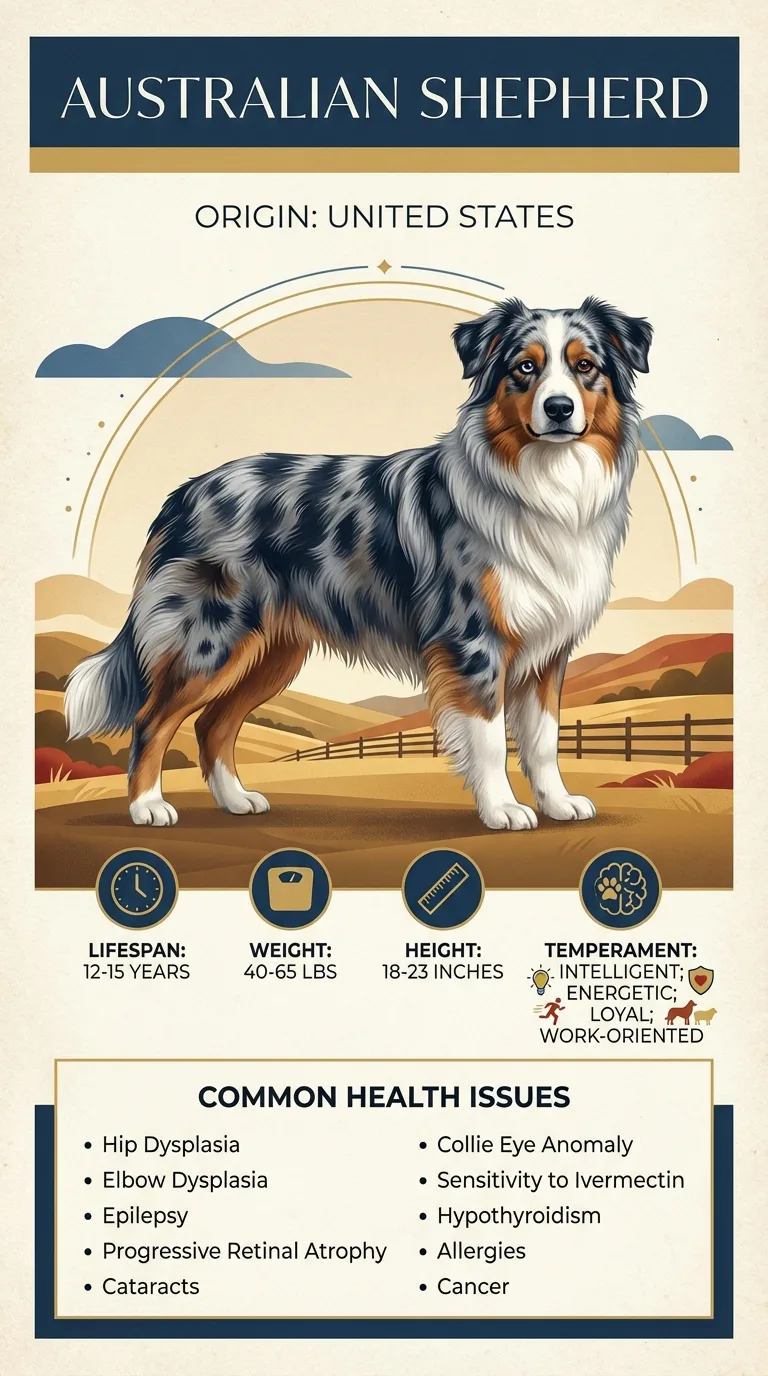
Every active dog owner benefits from knowing this response plan, since GDV episodes occur across many breeds including Australian Shepherds and the difference between a good and bad outcome frequently comes down to how quickly the owner acted once symptoms started.
This breed's activity level and food motivation put it among the dogs where a bloat episode is a realistic possibility, even though it isn't among the very highest-risk giant breeds. Because the underlying event unfolds the same way regardless of breed, the response plan matters just as much here as anywhere else.
The specific circumstances that precede most episodes — a large meal, activity around mealtime, or fast eating — mean symptoms often appear in the evening or shortly after exercise, which is exactly when owners are least likely to be looking for an emergency.
This entire topic is about recognizing when to go straight to a vet: a distended abdomen with unproductive retching, restlessness, and drooling together mean go now, not later today.
See all Australian Shepherd health problems, which breeds are prone to gastric dilatation volvulus gdvbloat, or the full Australian Shepherd breed guide for temperament, exercise needs and ownership costs.
The entire window from first recognizing symptoms to arriving at a vet should be measured in minutes. Once at the vet, stabilization and diagnosis typically take under an hour before a treatment decision is made.
Success means recognizing the pattern fast enough to get emergency treatment before major organ damage occurs. A rehearsed response plan, even if never needed, is what makes that possible.
If two or more of these are present at once, treat it as bloat until an emergency vet says otherwise.
Call the nearest emergency vet while you're already moving toward the car, not before you've decided whether to go. Tell them you suspect GDV so the team can prepare before you arrive, since a dog in shock benefits from every minute of preparation time.
Do not give food, water, or any home remedy, and do not attempt to induce vomiting yourself. Nothing you can do at home fixes a twisted stomach — the only path to safety is fast transport and emergency surgery, so the entire goal of the first minutes is simply getting there as quickly and safely as possible.

If you think your Aussie has gastric dilatation-volvulus (gdv/bloat), the plan is three steps: write down what you have seen and when it started, book a veterinary appointment rather than waiting for the next flare, and take video of the behaviour or symptom before you go — the thing you are worried about rarely happens in the consulting room. Screening in the parents covers hip dysplasia, elbow dysplasia, epilepsy.
What the vet visit should produce is a diagnosis and a written plan, not just reassurance: what is being ruled out, what the monitoring interval is, and which signs mean you come back sooner. Ask what the treatment costs across a year rather than per visit, because that is the number that decides whether you are managing this condition or reacting to it.
Between appointments, keep a short log — dates, what you saw, what changed. It is the single most useful thing an owner brings to a follow-up, and for gastric dilatation-volvulus (gdv/bloat) it is often what separates a clear pattern from a guess.
Marisol's Aussie, Piper, started pacing and retching unproductively around nine at night, with a belly that looked noticeably tighter than usual. Marisol had read about bloat months earlier and recognized the pattern immediately. She grabbed her keys, started driving, and called the emergency vet from the car to describe Piper's symptoms so the team could prepare. By the time they arrived twelve minutes later, the vet team was already set up for imaging, and Piper was in surgery within the hour. Marisol credits having a mental checklist ready, rather than needing to look anything up in the moment, with saving critical time.
Key takeaway: Recognizing the pattern is only half the job — having already decided in advance exactly what you'll do removes the hesitation that costs the most time in a real emergency.
A visibly distended, tight abdomen combined with unproductive retching is the key distinguishing pattern. A normal upset stomach usually still produces vomit and doesn't cause visible abdominal swelling.
Call while you're already heading to the car so the emergency team can prepare, but don't delay leaving in order to make the call — moving toward help matters more than the phone call itself.
No, there is no safe home treatment for a twisted stomach. Do not give food, water, or any medication, and do not try to induce vomiting.
When in doubt, treat it as bloat and go to an emergency vet. The cost of being wrong about a false alarm is far lower than the cost of delaying treatment for a real one.
Some dogs progress to severe shock within just a few hours of symptom onset, which is why the response plan is built around acting within minutes, not hours.
Any vet capable of emergency abdominal surgery can treat GDV, so the nearest one that's open and equipped is generally the right choice over driving further to a specific preferred clinic.
A distended abdomen, unproductive retching, restlessness, and excessive drooling together point strongly toward bloat.
No, never try to induce vomiting yourself. Go straight to an emergency vet instead.
Immediately — treat any suspected bloat as a same-minute emergency, not something to monitor for a while first.
No, avoid giving food or water once bloat is suspected, since it won't help and may complicate anesthesia if surgery is needed.
Tell them you suspect GDV and describe the distended abdomen and unproductive retching so the team can prepare before you arrive.
A one-page prep sheet for this condition: the signs, the questions to ask, what to get priced. Unlocks here.
You get: Vet visit prep sheet
No spam. One-click unsubscribe. See our privacy policy.
Preview page 1 before you decide.