Living
Bichon Frise or Labrador Retriever for a family with kids?
Labrador Retriever, rated very high (5/5) with kids versus the Bichon's high (4/5).

Quick answer
Bichon Frise or Labrador Retriever for a family with kids?
Labrador Retriever, rated very high (5/5) with kids versus the Bichon's high (4/5).
Bichon Frise or Labrador Retriever? On paper they differ most on exercise need, and on the scales Labrador Retriever is the heavier at 55–80 lbs. Here is how the two compare on everything that shapes an ordinary week.
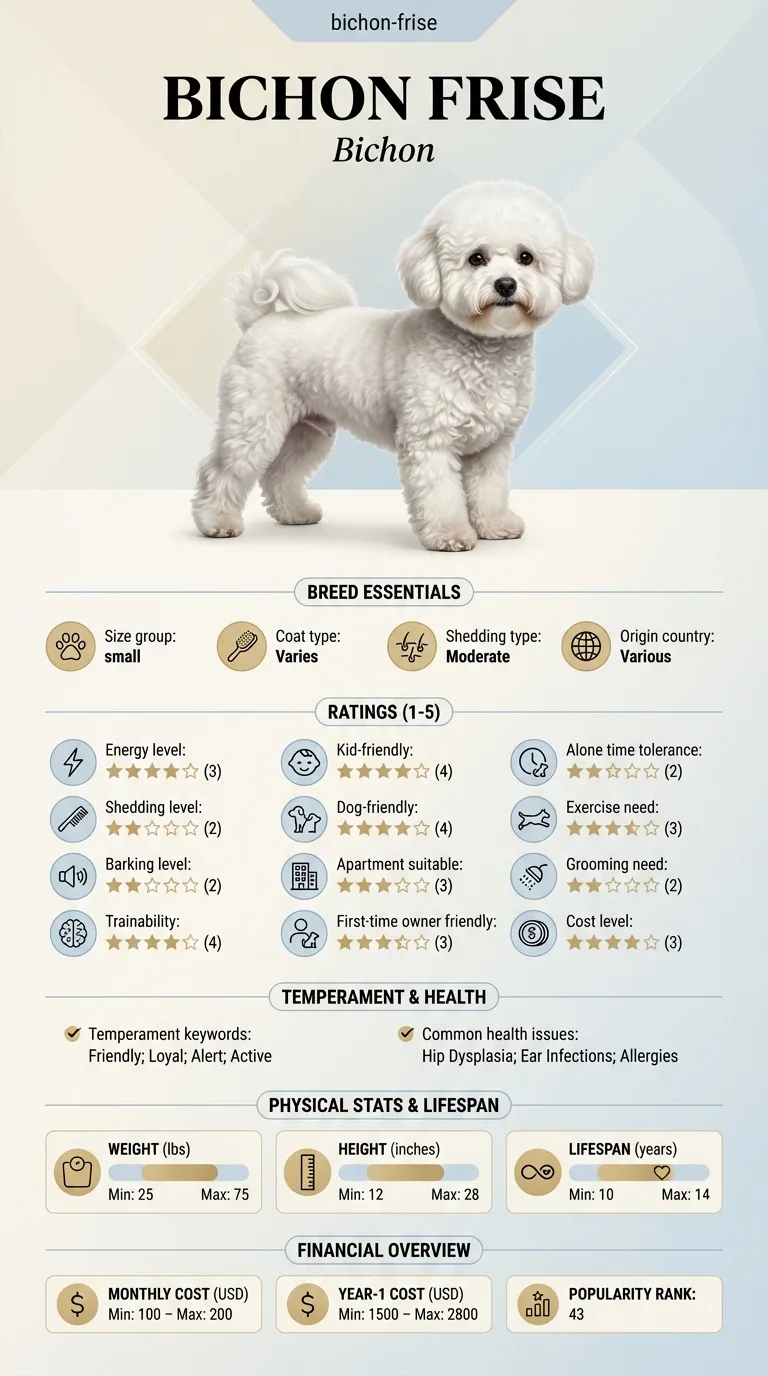
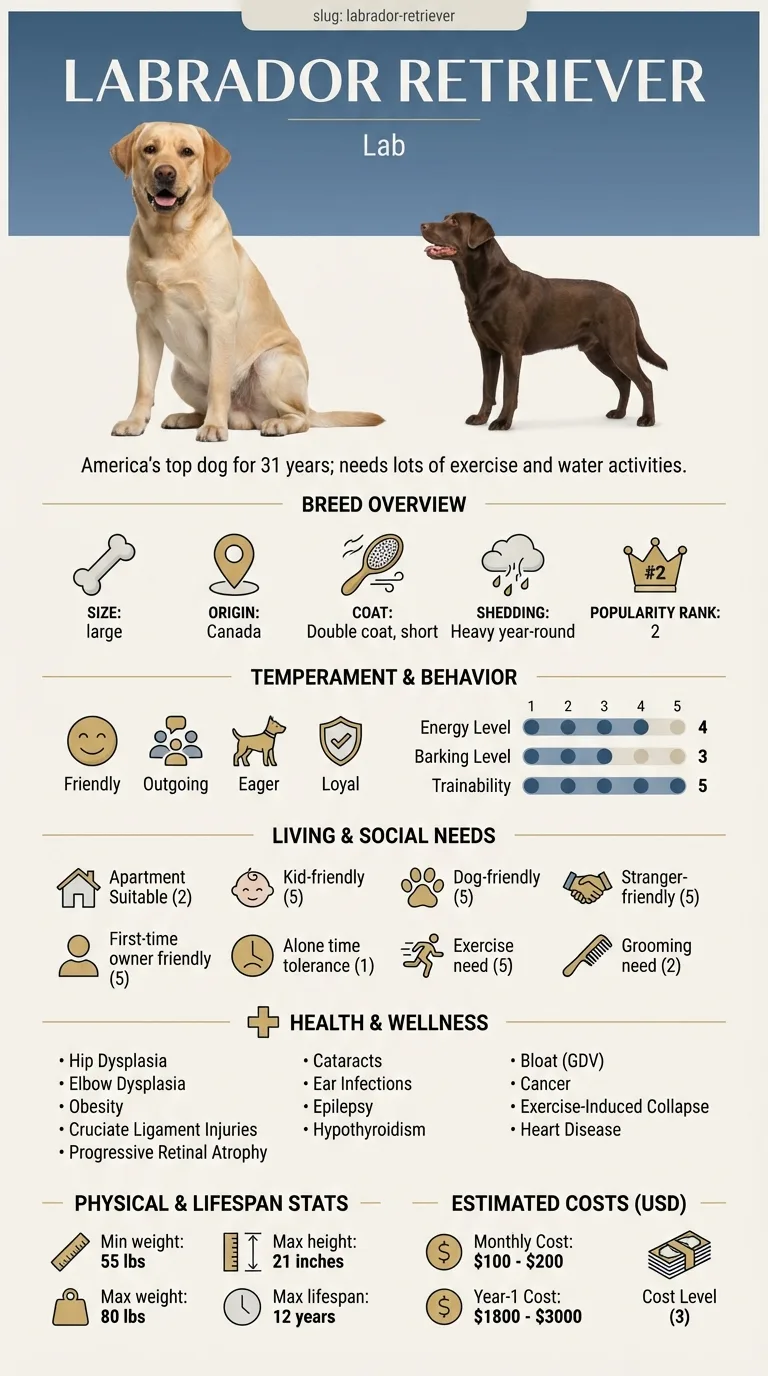
This is for someone already down to Bichon Frise and Labrador Retriever and deciding between them. For this pair the decision usually turns on exercise need and grooming need, so those are covered first and in most detail. Anyone choosing from a flat has a clear answer here: Bichon Frise rates 5/5 against 2/5. It is written for the decision rather than the breed history.
Between Bichon Frise and Labrador Retriever, exercise need is what separates them, and Bichon Frise is the lower-effort dog of the two to keep.
Choose Bichon Frise if you are in a flat or a smaller home, shedding is a problem in your house and your walking routine is modest.
Choose Labrador Retriever if this is your first dog, you do not want a standing grooming appointment and there are young children at home.
| Feature | bichon frise | labrador retriever | Winner |
|---|---|---|---|
| Size class | small | large | Equal |
| Weight | 12–18 lbs | 55–80 lbs | Equal |
| Height | 9–12 in | 21–24 in | Equal |
| Lifespan | 14–15 years | 10–12 years | bichon frise |
| Exercise need | Low (2/5) | Very high (5/5) | bichon frise |
| Grooming need | Very high (5/5) | Low (2/5) | labrador retriever |
| Shedding | Very low (1/5) | High (4/5) | bichon frise |
| Energy level | Moderate (3/5) | High (4/5) | Equal |
| Barking | Moderate (3/5) | Moderate (3/5) | Equal |
| Apartment suitability | Very high (5/5) | Low (2/5) | bichon frise |
| Good for first-time owners | High (4/5) | Very high (5/5) | labrador retriever |
| Tolerates being alone | Low (2/5) | Very low (1/5) | bichon frise |
| Trainability | Moderate (3/5) | Very high (5/5) | labrador retriever |
| Good with kids | High (4/5) | Very high (5/5) | labrador retriever |
| Good with other dogs | High (4/5) | Very high (5/5) | labrador retriever |
| Friendly to strangers | High (4/5) | Very high (5/5) | labrador retriever |
| Cost level | Moderate (3/5) | Moderate (3/5) | Equal |
| Coat | Curly, dense double coat | Double coat, short | Equal |
| Origin | Various | Canada | Equal |
| Typical monthly cost | $80–$150 | $100–$200 | Equal |
| Typical first-year cost | $1,100–$2,300 | $1,800–$3,000 | Equal |
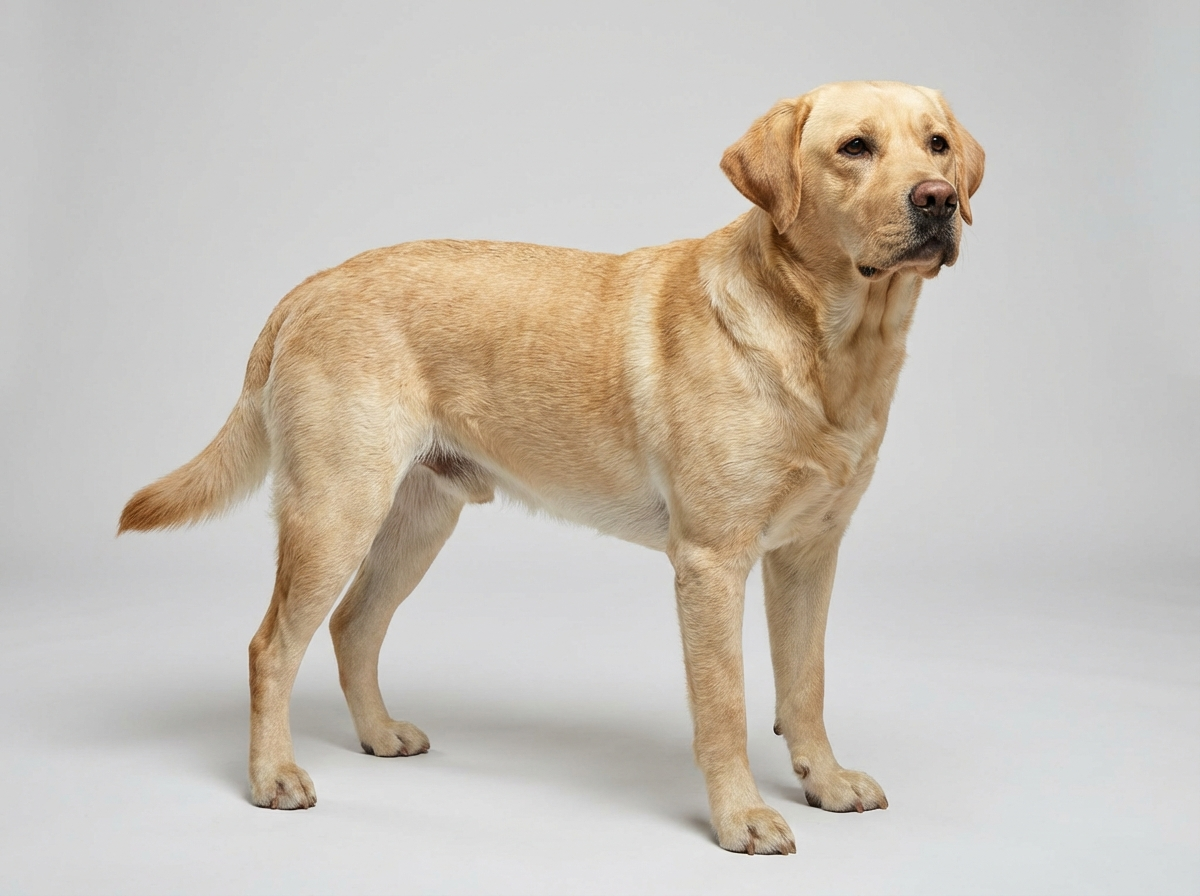
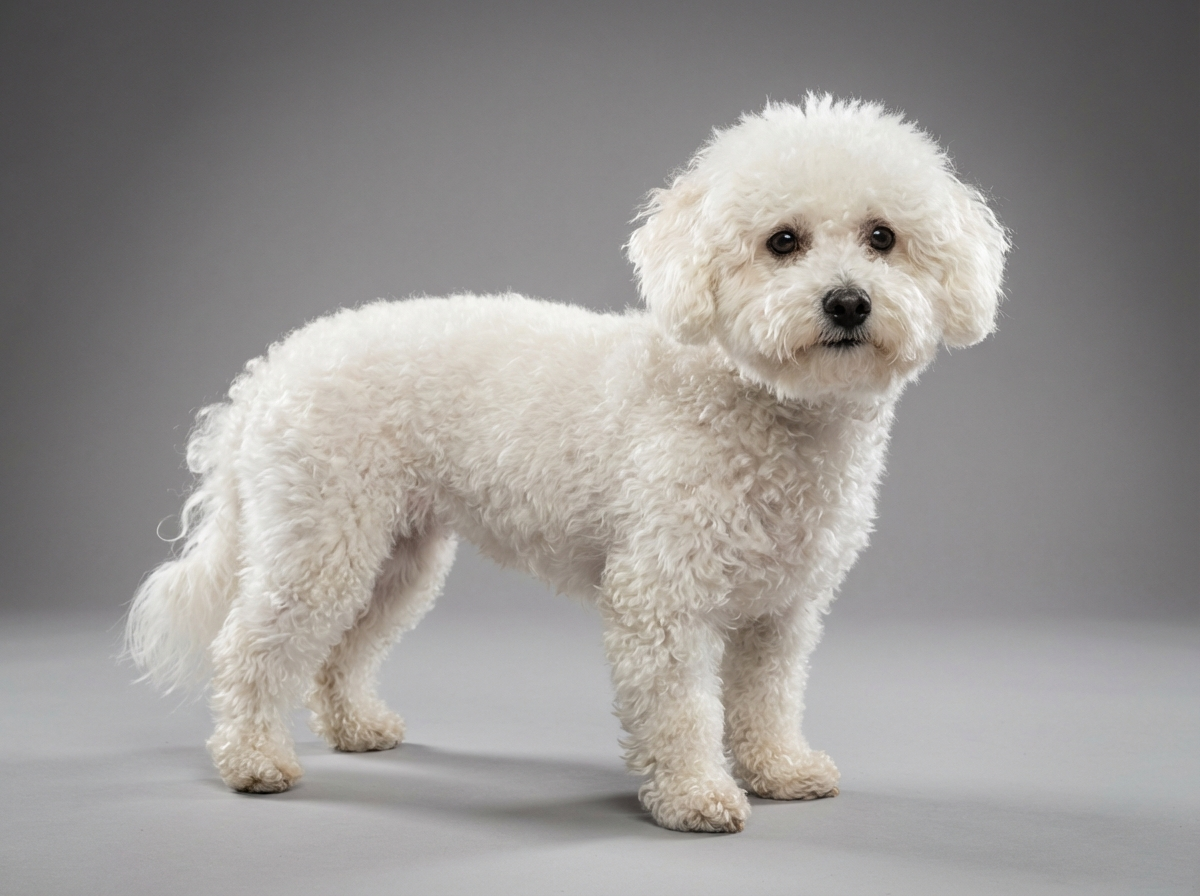
A Labrador Retriever's 55-80 lb, 21-24 inch frame dwarfs the Bichon Frise's 12-18 lbs and 9-12 inches, a difference of roughly four to six times the body weight. The Labrador's build is thick, sturdy, and athletic, developed for retrieving waterfowl and hauling fishing nets in cold water, while the Bichon's compact, plush frame exists purely for companionship. This is one of America's most popular large breeds against one of its most popular small ones, and the size gap alone will rule one of them out for many households before temperament or cost ever enters the conversation.
The Labrador rates very high (5/5) on exercise need and high (4/5) on energy level, a legacy of its working retriever background that still drives most pet Labradors today. The Bichon's low (2/5) exercise need and moderate (3/5) energy sit well below that. A Labrador that doesn't get enough daily exercise, commonly cited at 60 minutes or more of real activity, tends toward destructive chewing and weight gain, the latter a genuine concern given obesity's presence on this breed's health list. The Bichon's modest needs make it forgiving of a lighter activity schedule.
Grooming favors the Labrador clearly: low (2/5) for its short double coat versus the Bichon's very high (5/5) demands from a curly coat that mats without regular attention. Shedding tells the opposite story; the Labrador sheds high (4/5), especially during seasonal coat blows, against the Bichon's very low (1/5). This is a genuine tradeoff rather than one breed simply being easier: a Labrador needs almost no salon time but leaves substantially more hair around the house, while the Bichon needs frequent professional grooming but leaves comparatively little behind.
The Bichon's very high (5/5) apartment suitability far exceeds the Labrador's low (2/5), driven by the size and exercise gap rather than temperament; Labradors are famously easygoing indoors once properly exercised. Notably, the Labrador rates very low (1/5) on tolerating being alone, even lower than the Bichon's already-low 2/5, reflecting a breed bred for close human partnership that can struggle with long solo stretches regardless of home size. Barking ties at moderate (3/5) for both, so neither stands out as particularly quiet or vocal on that front.
Labrador Retrievers are near the top of this site's trainability scale at very high (5/5), paired with a very high (5/5) rating for first-time owners; few breeds combine eagerness to learn with beginner-friendliness this consistently. The Bichon rates lower on both, moderate (3/5) trainability and high (4/5) for first-timers, meaning it's still approachable for a beginner, just a less enthusiastic student of formal commands. Anyone specifically interested in obedience competition, retrieving games, or a working partnership with their dog will find the Labrador the clear choice here.
The Labrador edges out the Bichon across every household category: very high (5/5) with kids versus high (4/5), very high (5/5) with other dogs versus high (4/5), and very high (5/5) friendliness to strangers versus high (4/5). This is one of the more consistently lopsided family-friendliness comparisons on this site, and it explains part of why Labradors have topped popularity rankings for decades; they're genuinely built for busy, social households. The Bichon remains a solid family dog in its own right, just outpaced across the board by a breed specifically renowned for universal friendliness.
The Bichon's 14-15 year lifespan comfortably beats the Labrador's 10-12 years, and the health lists explain part of why: the Labrador's thirteen-condition list, tied for the longest in this batch, includes cancer, bloat (GDV), hip and elbow dysplasia, cruciate ligament injuries, exercise-induced collapse, and obesity, the last a well-documented risk given the breed's food motivation and appetite. The Bichon's five conditions (skin allergies, patellar luxation, bladder stones, cataracts, dental disease) are far more contained. Labrador owners should watch weight closely and screen for joint and cardiac issues; Bichon owners should focus on dental and skin care.
Monthly costs land close, $80-150 for the Bichon versus $100-200 for the Labrador, and both actually tie at moderate (3/5) on overall cost level, despite the Labrador's larger size. First-year totals diverge more meaningfully, at $1,100-2,300 for the Bichon against $1,800-3,000 for the Labrador, reflecting the upfront costs of a larger puppy's food, supplies, and initial veterinary workup. Given the Labrador's extensive thirteen-condition health list, budgeting for preventive screening, hip and elbow x-rays, cardiac checks, is worth factoring into that first-year number beyond the baseline range.
Bichon Frise weighs 12–18 lbs and lives 14–15 years; Labrador Retriever weighs 55–80 lbs and lives 10–12 years. The two diverge most on exercise need, grooming need and apartment suitability and 2 other rated axes. They are level on barking and cost level, so those cannot decide it. In the table, a "winner" means easier for an ordinary household — not better. Size, coat and origin are recorded without a verdict. Because both breeds are scored the same way, the gaps are reliable even where the absolute numbers are rough.

Yes; it rates very high (5/5) for both first-time owners and trainability, one of the most consistently beginner-friendly large breeds available. The Bichon Frise is also solid at high (4/5) for first-timers, with more modest moderate (3/5) trainability.
Very well; it rates very high (5/5) in both categories, a step above the Bichon's already-strong high (4/5) ratings, making it one of the most consistently social breeds on this site.
Yes, obesity appears on its health list alongside cruciate ligament injuries and hip dysplasia; a Labrador's strong food motivation combined with its very high (5/5) exercise need means portion control and consistent exercise both matter for weight management.
The Labrador Retriever, rated high (4/5) versus the Bichon's very low (1/5); expect regular vacuuming and seasonal coat blowouts with a Labrador.
Roughly $700 more, $1,800-3,000 for a Labrador versus $1,100-2,300 for a Bichon, mainly from larger-puppy food and supply costs.
The Bichon Frise, at 14-15 years versus the Labrador's 10-12 years, a gap connected to the Labrador's longer list of serious health conditions including cancer and bloat.
It's not ideal; the Labrador rates very low (1/5) on tolerating being alone, even lower than the Bichon's low (2/5), reflecting how strongly this breed bonds to its household.
Labrador Retriever, rated very high (5/5) with kids versus the Bichon's high (4/5).
The Bichon Frise, rated very low (1/5) versus the Labrador's high (4/5).
The Labrador Retriever, rated very high (5/5) versus the Bichon's moderate (3/5).
The Bichon Frise, at 14-15 years versus the Labrador's 10-12 years.
Secure checkout on Stripe. We never see your card.
7-day money-back guarantee. Instant access.
Health information here is general and is not veterinary advice. If your dog shows pain, sudden behaviour change, or worsening symptoms, consult a licensed veterinarian.
Some links on this site are affiliate links. We may earn a commission at no extra cost to you, and we only suggest products we believe are helpful for dog owners.
We research and check what we publish, but we do not warrant that any figure, date, price, or statement is accurate, complete, or current, and we accept no liability for any loss, cost, injury, or other harm arising from the use of this site. Use it as one reference among several. You remain responsible for your own decisions and for your dog's care - confirm anything that matters with a licensed veterinarian or another qualified professional before you act on it. Full disclaimer.
Match your lifestyle to the right dog.
Take quizNot sure which breed is right for you? Take our 2-minute quiz to find out.
Take the quiz