Health
What is the single most important surgical step?
Gastropexy, anchoring the stomach so it cannot twist again, performed as a standard part of essentially every GDV operation.

Quick answer
What is the single most important surgical step?
Gastropexy, anchoring the stomach so it cannot twist again, performed as a standard part of essentially every GDV operation.
The car ride is the part everyone prepares for. The surgery, the three days that follow, and the six months after that are the part almost nobody explains in advance.
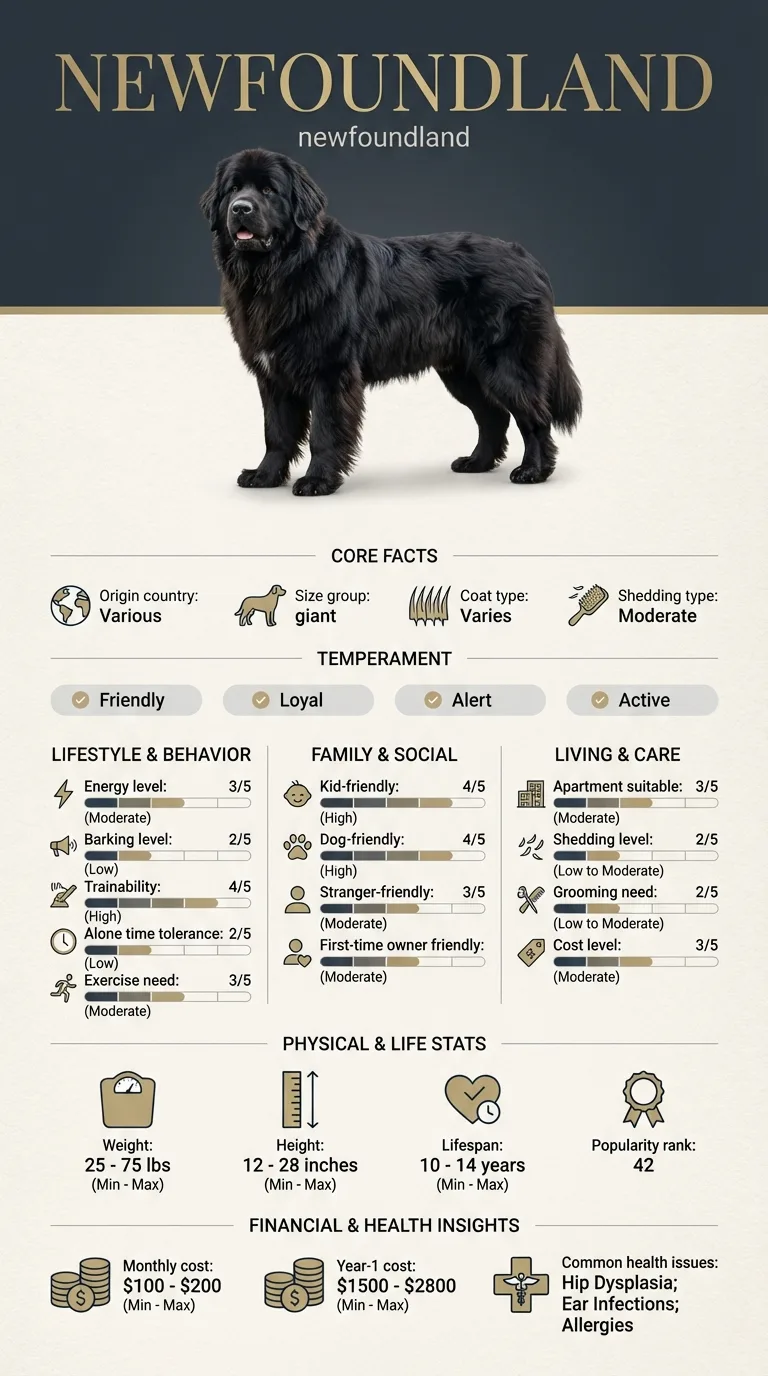
For owners whose Newfoundland has just been diagnosed with GDV and is heading into surgery, and for owners further along trying to understand a rocky recovery, a recurrence scare, or what a gastropexy actually changes going forward.
This guide is not medical advice. If your dog shows pain, sudden behavior change, or worsening symptoms, consult a licensed veterinarian.
Some links may be affiliate links. We may earn a commission at no extra cost to you. We only suggest products we believe are helpful for dog owners.
We research and check what we publish, but we do not warrant that any figure, date, price, or statement is accurate, complete, or current, and we accept no liability for any loss, cost, injury, or other harm arising from the use of this site. Use it as one reference among several. You remain responsible for your own decisions and for your dog's care - confirm anything that matters with a licensed veterinarian or another qualified professional before you act on it. Full disclaimer.
GDV surgery involves untwisting the stomach, assessing and if necessary removing tissue that has died from lost blood supply, and performing a gastropexy to anchor the stomach against future rotation. Recovery runs through several days of closely monitored hospitalisation, with heart rhythm watched for the arrhythmias that commonly follow this specific surgery, and then a graduated return to normal activity over roughly a month. How much tissue had already died before surgery began is the single biggest factor in how the whole event unfolds.
Every dog who survives to reach surgery for GDV goes through broadly this same process, and bloat is one of the five conditions most consistently listed for the Newfoundland alongside hip dysplasia, subaortic stenosis, dilated cardiomyopathy and cystinuria. Recovery outcomes vary enormously depending on how much tissue was affected by the time of surgery, which is why speed to the operating table matters as much as the operation itself.
The same deep-chested, giant conformation that creates the risk of the initial twist also shapes the surgery and recovery. A large stomach and a substantial volume of abdominal tissue mean more to examine, more potential tissue loss to manage, and a longer incision to protect during healing. The breed's documented cardiac conditions, subaortic stenosis and dilated cardiomyopathy, raise the stakes of the arrhythmia risk that follows GDV surgery specifically, which is why cardiac monitoring is taken particularly seriously in this breed's post-operative course rather than treated as a generic precaution.
The environment that matters most here is the hospital itself: access to twenty-four hour monitoring capability in the days immediately following surgery, since arrhythmias can appear after the dog seems to be recovering normally. At home, the environment during recovery is about restriction, a calm space where a large, active dog can be kept from over-exerting a healing abdomen, and a household able to manage a protective collar and restricted activity for a genuinely large, strong animal for several weeks.
Follow every scheduled recheck without exception, since these confirm healing before activity restrictions are lifted. Contact your surgical team promptly for any reduced appetite beyond what was expected, incision swelling, redness or discharge, or a dog who seems unusually quiet or reluctant to move. Seek emergency care immediately for weakness, collapse, pale or grey gums, laboured breathing, or any sign the abdomen is distending again, since these can indicate either a rhythm problem or a new complication requiring urgent attention.
See all Newfoundland health problems, which breeds are prone to gastric dilatation volvulus gdvbloat, or the full Newfoundland breed guide for temperament, exercise needs and ownership costs.
An uncomplicated case, operated on promptly with fully viable tissue, typically means two to four days of hospitalisation and a return to full normal activity within about a month. A case involving tissue removal or a complicated post-operative course can mean a longer hospital stay, a slower recovery, and closer follow-up. Full confidence in the gastropexy, in the sense of an owner no longer bracing for a repeat event, often takes considerably longer to develop than the physical healing itself.
Success is a healed incision, a stable heart rhythm through the highest-risk window, a gradual and uneventful return to normal life including swimming once cleared, and a household that has resumed its usual feeding routine with the same care as before, understanding that the gastropexy addressed one specific danger and not every risk that came with it.
The surgeon first untwists the stomach and returns it to its normal position, a step called derotation. Before or immediately after that, the whole stomach and the spleen are examined closely for tissue that has died from having its blood supply cut off. This assessment is the single biggest variable in the entire procedure, because a stomach with healthy, pink, actively bleeding-when-cut tissue is a very different operation from one with grey, non-bleeding tissue that must be removed.
Where tissue has died, the surgeon removes it, a more involved and higher-risk step than derotation alone. The spleen, which shares part of its blood supply with the affected area of stomach, is sometimes removed too if it has been compromised. Once the abdomen is otherwise settled, a gastropexy is performed: the stomach wall is sutured to the abdominal wall so that even if it fills with gas again in future, it cannot rotate into the twisted position that caused this emergency. This is done as standard in essentially every GDV surgery, not just as an optional extra, because without it a meaningful proportion of dogs bloat and twist again.
The heart is watched closely throughout and for days afterward, because the biochemical disruption of GDV, on top of this breed's own documented cardiac conditions, makes abnormal heart rhythms a recognised complication of the surgery itself, sometimes appearing hours after the dog seems to be recovering normally.

Recovery has a fairly predictable shape, though the details vary with how much tissue was affected.
If you think your Newfoundland has gastric dilatation-volvulus (gdv/bloat), the plan is three steps: write down what you have seen and when it started, book a veterinary appointment rather than waiting for the next flare, and take video of the behaviour or symptom before you go — the thing you are worried about rarely happens in the consulting room. Screening in the parents covers hip dysplasia, subaortic stenosis, dilated cardiomyopathy.
What the vet visit should produce is a diagnosis and a written plan, not just reassurance: what is being ruled out, what the monitoring interval is, and which signs mean you come back sooner. Ask what the treatment costs across a year rather than per visit, because that is the number that decides whether you are managing this condition or reacting to it.
Between appointments, keep a short log — dates, what you saw, what changed. It is the single most useful thing an owner brings to a follow-up, and for gastric dilatation-volvulus (gdv/bloat) it is often what separates a clear pattern from a guess.
Perth's stomach was untwisted within an hour of arriving at the emergency hospital, and the surgeon found the tissue still pink and viable, sparing him the more serious removal some dogs need. A gastropexy was performed before he was closed up. The second night was the hard one. A nurse called his owner, Talia, at eleven to say Perth's heart rhythm had become irregular on the monitor and he was being started on treatment for it, something nobody had warned her to expect given how well the surgery itself had gone. He stabilised by morning and came home on day four. The following three weeks were, in Talia's words, harder than the hospital stay. Perth felt fine well before his incision was ready for normal life, and keeping a bored, recovering giant breed dog calm and confined took more effort than she had planned for. A frozen food-stuffed toy and short, supervised garden time got them through it. He returned to swimming seven weeks later, once his recheck confirmed everything had healed. Talia still splits his meals and keeps mealtimes calm, and says she understands now that the pexy was never meant to be the end of the conversation about bloat, just the end of the twist.
Key takeaway: Surviving surgery is not the finish line. The days immediately after carry their own risk, particularly to heart rhythm, and the weeks of restricted activity that follow are often the part owners are least prepared for.
How much stomach and spleen tissue has already died by the time surgery begins. A dog operated on early with fully viable tissue has a straightforward procedure and a good outlook. A dog who arrived late, with tissue that must be removed, faces a longer, riskier surgery and hospital stay.
Yes, essentially always. Without it, a substantial proportion of dogs go on to bloat and twist again. It is considered a standard part of the operation rather than an optional add-on.
Ventricular arrhythmias are a recognised complication of GDV and its surgery, often appearing in the first one to three days after the operation, sometimes when the dog otherwise looks like it is recovering well. Monitoring catches this before it becomes dangerous.
Usually a cautious return over the first few days in hospital, moving from very small portions of a bland diet to the normal routine over one to two weeks at home, following your surgical team's specific guidance rather than a fixed schedule.
Only once your surgeon has confirmed the abdominal incision and the gastropexy site have healed, typically not before several weeks have passed. Swimming too early risks the healing incision and surrounding tissue.
No. The surgery prevents the twist, not the gas build-up that starts the event, so the same feeding practices, divided meals, slower eating, calm mealtimes, remain worthwhile afterward.
How long the blood supply had been cut off before surgery, which is directly tied to how quickly the dog reached the operating table. This is the clearest illustration of why speed to the hospital matters as much as the surgery itself.
Simple gas bloat without rotation can still occur, since the pexy addresses the twist rather than the gas. A properly performed gastropexy makes the life-threatening rotation itself rare, though not the small possibility of a simple bloat episode.
Gastropexy, anchoring the stomach so it cannot twist again, performed as a standard part of essentially every GDV operation.
Heart rhythm. Ventricular arrhythmias are a recognised complication that most often appears in the first few days after surgery.
Roughly two to four days for an uncomplicated case, longer if stomach or spleen tissue had to be removed.
Gradually over about a month, with only leash walks for toileting in the first couple of weeks and swimming held back until the incision is confirmed healed.
Yes, driven heavily by how much tissue needed removing and how long hospitalisation runs, which is directly related to how quickly the dog reached care.
A one-page prep sheet for this condition: the signs, the questions to ask, what to get priced. Unlocks here.
You get: Vet visit prep sheet
No spam. One-click unsubscribe. See our privacy policy.
Preview page 1 before you decide.