Costs
How much does a Labrador Retriever cost in the first year?
Budget $1,800–$3,000 for the first year and $100–$200 a month after that, plus an emergency fund of about $500.

The Labrador Retriever is the breed most first-time owners are pointed at, and for active families that advice holds up.
"The Labrador Retriever dog breed is ideal for active families and those who enjoy outdoor activities. Their friendly nature makes them great companions, but they may struggle in smaller living spaces due to their energy levels. The Labrador Retriever dog breed is generally healthy but is prone to specific health issues. Regular vet check-ups and a balanced diet are crucial for their well-being."
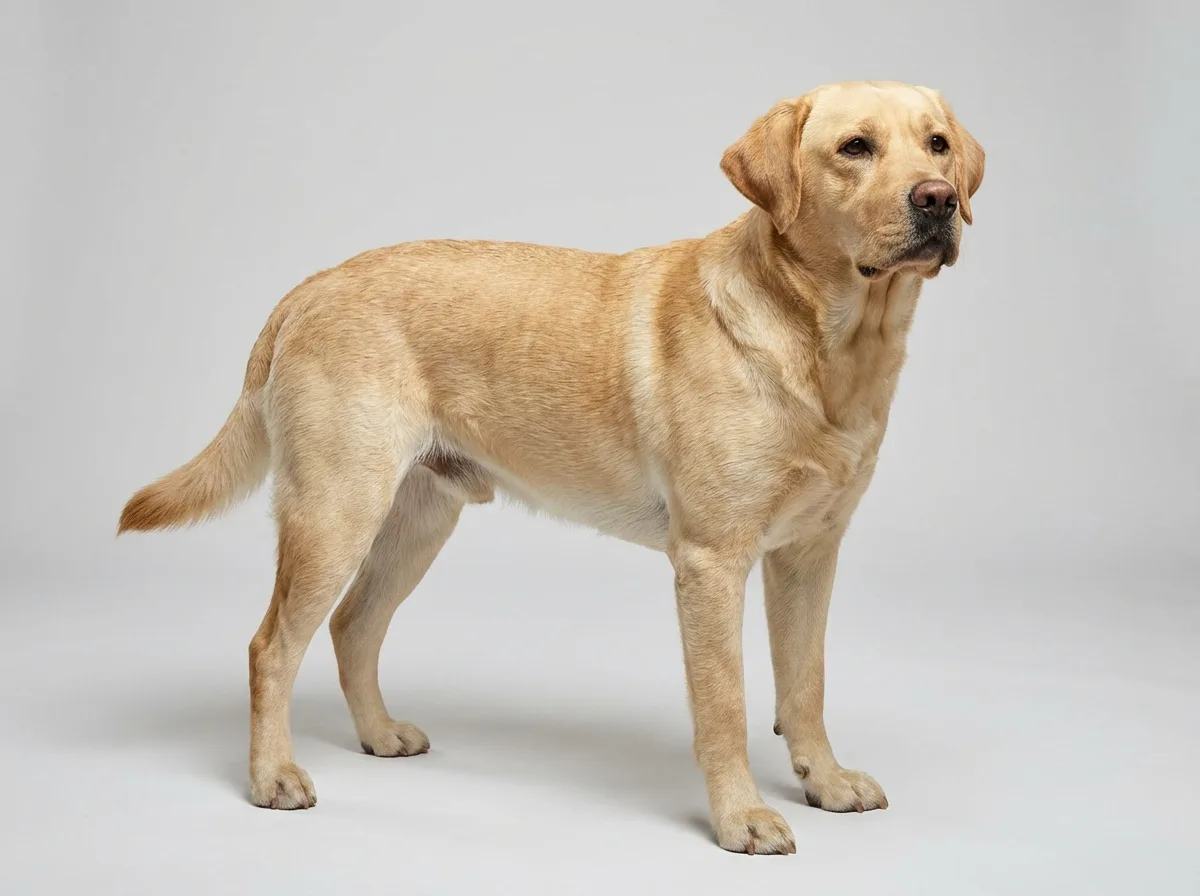
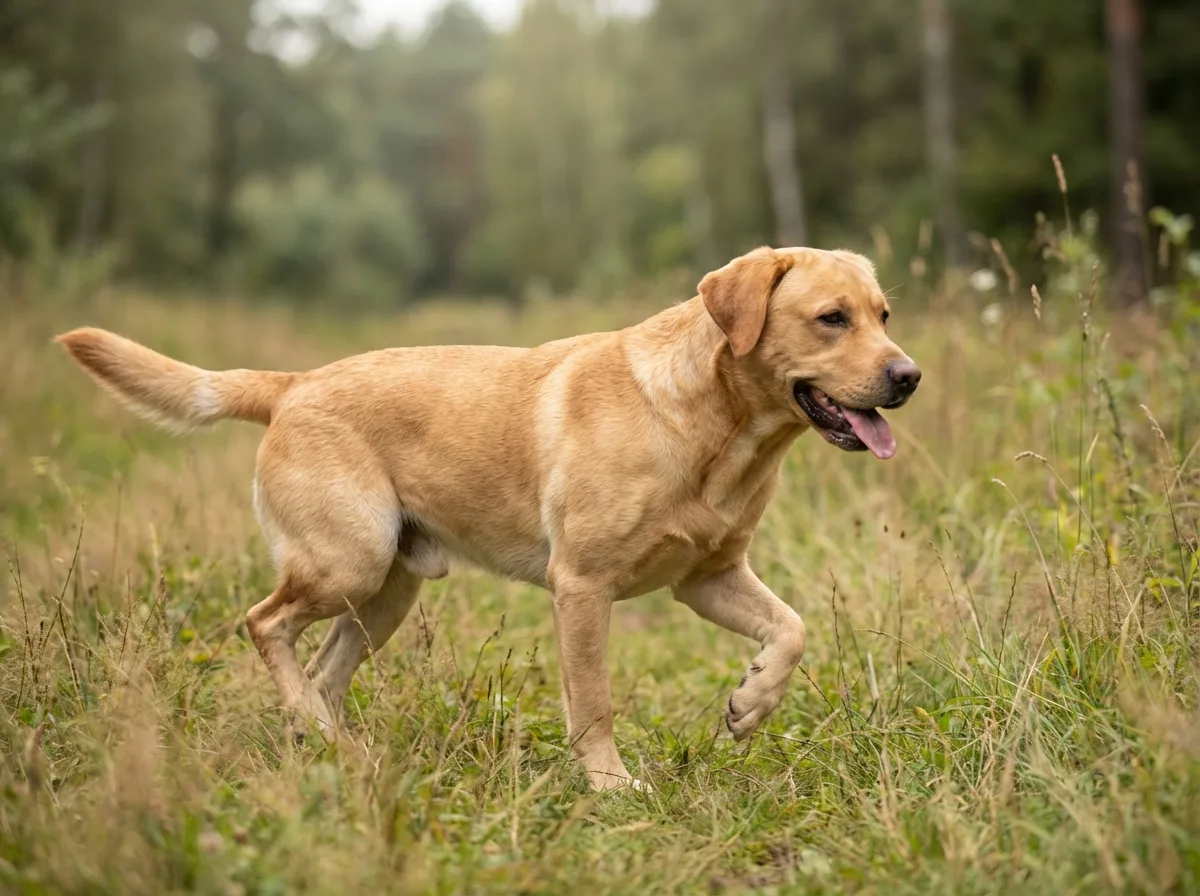
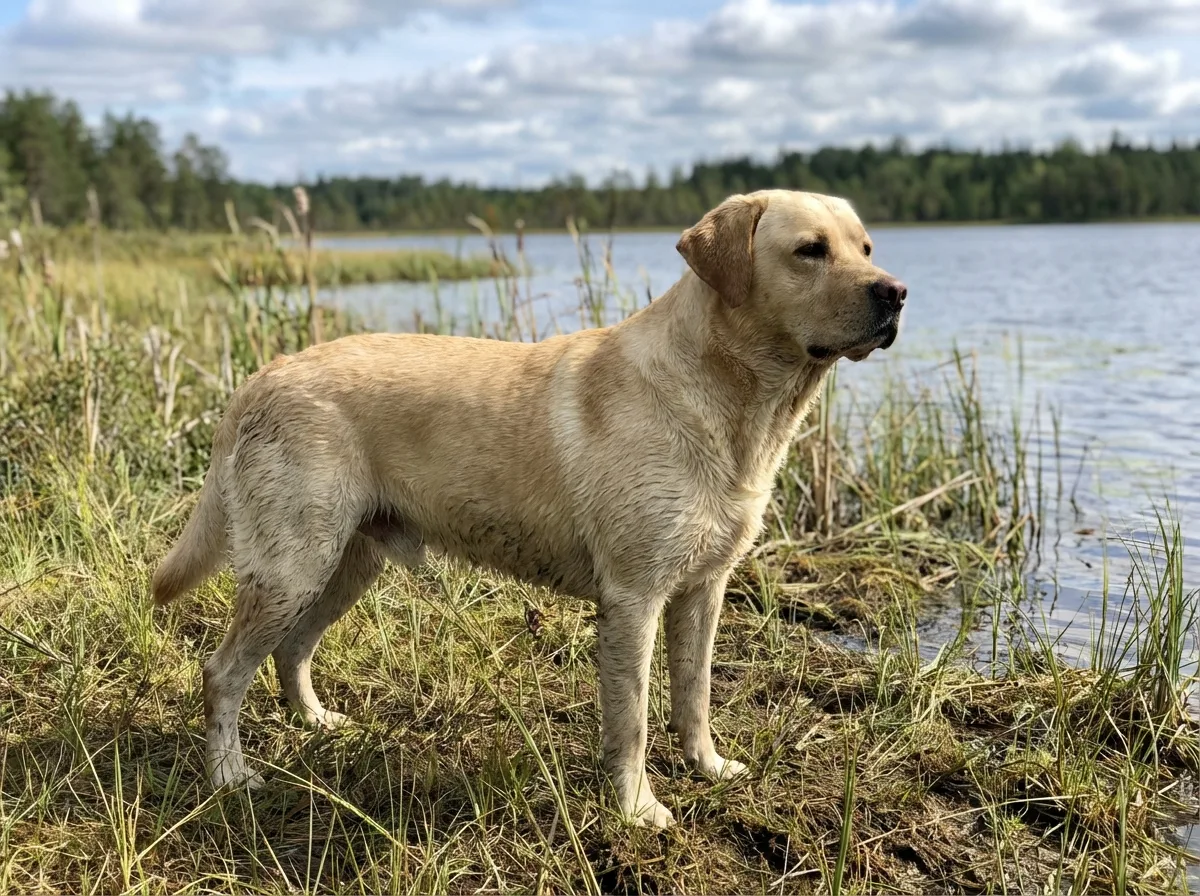
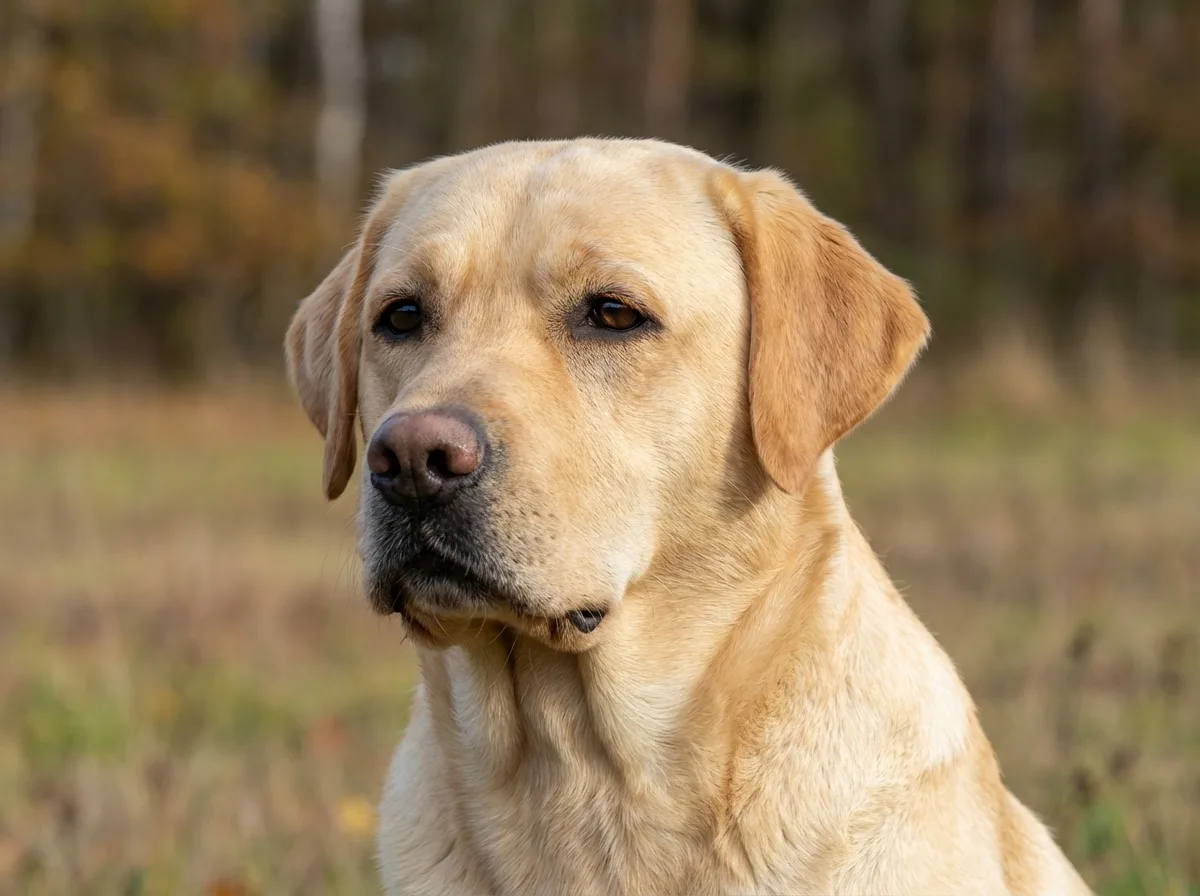
The Labrador Retriever dog breed is ideal for active families and those who enjoy outdoor activities. Their friendly nature makes them great companions, but they may struggle in smaller living spaces due to their energy levels.
Build my first 30 days with a Lab →


The Labrador's reputation is earned: friendly, outgoing, and more interested in joining in than in guarding anything. It is a poor watchdog and an excellent companion, and that trade is the point of the breed.
What the reputation leaves out is the adolescence. A Labrador was developed to retrieve all day in cold water, and that engine does not arrive fully socialised. Between roughly six and twenty-four months most Labs are large, strong, enthusiastic and not yet thoughtful — jumping on visitors, pulling on the lead, and picking up anything that is not nailed down. Owners who expected the calm dog from the advertisements often meet this stage unprepared.
They are also among the most food-motivated dogs there are, which is a gift for training and a liability for waistlines. The same trait that makes a Lab learn a recall in a week makes it counter-surf, raid bins, and swallow things it should not.
The calm, steady family dog most people picture is real. It usually appears somewhere around three years old, and it arrives faster in households that put the training in early.
Plan for at least an hour of real exercise a day for an adult, and more for a young dog from working lines. A Labrador that is under-exercised does not become calm; it becomes destructive.
Mental work matters as much as distance. This is a retrieving breed, so anything involving nose, mouth and a task lands well — scent games, food puzzles, fetch with rules, and short training sessions scattered through the day. Twenty minutes of scent work tires a Lab more than twenty minutes of walking.
Water is close to a requirement rather than a preference. Most Labs will swim at the first opportunity, and swimming is the best exercise there is for a heavy dog whose joints need protecting.
On being left alone: Labradors are sociable and generally cope with a normal working day if they have been taught to, but that teaching has to happen deliberately in the first weeks. A young Lab left alone with free run of a house will find something to do, and you will not like it.
This is one of the reasons the breed has topped popularity rankings for decades. Labradors are tolerant, resilient, and rarely resource-guard, which makes them forgiving of the noise and unpredictability of a household with children.
The caveat is physical rather than temperamental. An adolescent Lab weighs 25 to 35kg, moves fast, and does not always notice a toddler. Most incidents involving Labs and small children are collisions and knocked-over children, not aggression. Supervise, teach the dog not to jump before it is big enough to knock someone down, and give it somewhere to go when the house is busy.
Teach children the other half too: leave the dog alone when it is eating or sleeping, and let it walk away.
A Labrador can live in an apartment, and plenty do. It is not the first choice, but the constraint is exercise rather than floor area.
What makes it work: ground-floor or lift access, a genuine commitment to an hour or more outside every day regardless of weather, and enrichment indoors so the dog is not simply waiting. What makes it fail: relying on a yard instead of walks, or assuming a large dog will self-exercise in a small space.
If you do have a house with a yard, the same rule applies. A yard is a toilet and a place to sniff; it is not a substitute for being taken somewhere. Labs left to entertain themselves in a garden dig, chew fences and bark.
Grooming is simple and constant. The Labrador has a dense double coat that sheds year-round and blows heavily twice a year. A weekly brush is enough most of the time; during a coat blow, daily. No professional grooming is needed. Ears are worth a weekly look, particularly in a dog that swims, because a drop ear traps moisture.
The health priorities are well established for the breed. Hip and elbow dysplasia are common enough that any responsible breeder will show scored results for both parents. Progressive retinal atrophy and exercise-induced collapse both have DNA tests available. The breed is also predisposed to bloat, and — more than anything else — to obesity: a genetic variant affecting appetite regulation is unusually common in Labradors, which is the biological reason behind the stereotype.
Weight is the one thing an owner controls completely, and it changes the others. A lean Labrador has less joint pain, moves better into old age, and typically lives longer. Weigh the food rather than guessing, count treats as part of the daily ration, and ask your vet to body-condition score the dog at every visit.
In its favour. Few breeds are as reliably good-tempered with children and strangers. Training is straightforward, because the dog genuinely wants to work with you and will do almost anything for food. The coat needs no professional grooming. And the breed is common enough that vets, trainers and insurers all know it well, which makes problems easier and cheaper to solve than with a rare breed.
Against it. The exercise requirement is real and does not go away in bad weather. Shedding is constant and heavy. The adolescent stage is long and physically demanding. Obesity is close to a breed-wide problem and takes active management for the dog's whole life. Hip, elbow and eye conditions are common enough that health testing of the parents is not optional.
The honest summary. A Labrador is an easy dog to live with and a hard dog to under-serve. Give it exercise, training and a controlled diet and it is one of the best family dogs there is. Skip any of the three and you have a large, strong, bored dog with a weight problem.
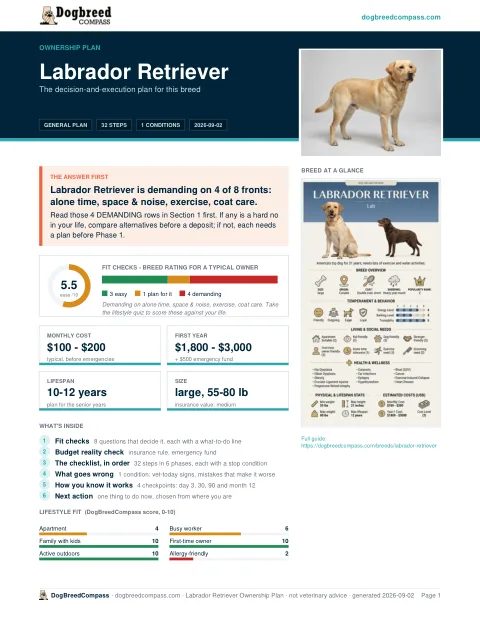
The Labrador Retriever is demanding on 4 of 8 fronts: alone time, space & noise, exercise, coat care. If any of those is a hard no in your life, this is not a good fit - compare a close cousin instead. If not, each one needs a plan before you commit, not after.
How many hours a day will the dog be alone? Demanding - Alone-time tolerance: very low. Away 6+ hours most days means daily cover (walker or daycare) or a different breed. Decide this before anything else.
Where will the dog live, and how much noise can the building take? Demanding - Apartment suitability: low; barking: moderate. Rated poorly for apartment living: needs a house with space, or an owner who will out-walk the building.
What can you spend every month, including a buffer for vet bills? Plan for it - Typical monthly cost: $100 - $200; cost level 3/5. Mid-range running costs ($100 - $200 a month); the first-year setup and an emergency fund are what people underestimate.
Have you trained a dog before? Easy - First-time-owner friendliness: very high; trainability: very high. Forgiving for first-time owners; trainability makes the Phase 3 basics quick.
Are there children in the home (now or soon)? Easy - Kid-friendly: very high. Good with children when supervised; size and energy are the things to manage around toddlers.
How much exercise will you actually give, on a bad week? Demanding - Exercise need: very high; energy: high. Needs 60+ minutes of real exercise most days, every season. If that is not realistic, neither is this breed.
How much hair and grooming can you live with? Demanding - Shedding: high (Double coat, short); grooming need: low. Heavy shedding or a coat that needs professional grooming: a monthly groomer bill or a serious brushing habit, not optional.
Any other pets at home? Easy - Dog-friendly: very high. Generally easy with other dogs; cats are an individual question to ask the breeder or rescue.
A good fit if the demanding rows above have a plan you can name today; you should avoid this breed if one of them is something you would be hoping to change later. Take the lifestyle quiz to have these scored against your own answers.
Life expectancy for the Lab sits at 10 to 12 years. By 7 a Lab is a senior dog, and the vet's advice shifts from prevention to monitoring. The breed-specific risk to watch across those years is hip dysplasia. A 80 lb skeleton does more work than a small breed's, and joints and heart are where the Lab usually loses years. Before buying, ask the breeder for screening results covering hip dysplasia, elbow dysplasia, obesity — those are the Lab conditions our records list first.
| Lab lifecycle | Figure |
|---|---|
| Typical Lab lifespan | 10–12 years |
| Lab counts as senior from | about 7 years |
| Lab size class | Large |
| Adult Lab weight | 55–80 lb |
| Origin | Canada |
Nothing here is fixed. A Lab kept lean, with clean teeth and an annual check, tends toward 12 rather than 10.
A full-grown Lab lands between 55 and 80 lb. Hair loss around the house is high; the coat itself is double coat, short. Labs typically stop growing around 18 months old.
| Lab measurement | Figure |
|---|---|
| Adult Lab weight | 55–80 lb |
| Lab height at the shoulder | 21–24 in |
| Lab shedding | high (heavy year-round) |
| Lab coat | double coat, short |
| Lab grooming need | light |
Upkeep sits at light, and that number matters more in a small home than the shedding rate. No breed is allergen-free. What matters is how much of that double coat, short coat reaches your floor, and for the Lab the answer is high. Temperament ratings for the Lab read friendly, outgoing, eager, and the breed sits at number 2 for popularity in our data, with the breed developed in Canada.
Owning a Labrador Retriever comes with various costs that potential owners should consider. The first year's expenses can add up, so it's important to budget accordingly.
The Labrador Retriever dog breed is generally healthy but is prone to specific health issues. Regular vet check-ups and a balanced diet are crucial for their well-being.
Labradors typically live between 10 to 12 years. They require regular exercise and mental stimulation throughout their life to remain healthy and happy.
Labrador Retrievers are known for their friendly and eager-to-please nature. However, they can sometimes exhibit stubbornness that requires proper training.
If your Lab shows signs of aggression, extreme anxiety, or continues to struggle with basic obedience, seeking professional training help is advisable.
Budget $1,800–$3,000 for the first year and $100–$200 a month after that, plus an emergency fund of about $500.
The most common are hip dysplasia, elbow dysplasia, obesity, cruciate ligament injuries. Labradors typically live between 10 to 12 years. They require regular exercise and mental stimulation throughout their life to remain healthy and happy.
The Labrador Retriever dog breed is ideal for active families and those who enjoy outdoor activities. Their friendly nature makes them great companions, but they may struggle in smaller living spaces due to their energy levels. It scores 5 out of 5 for beginner-friendliness and for families with children, but 2 out of 5 for apartments.
10–12 years, with senior care usually starting around 7.
Yes. The Labrador Retriever dog breed is ideal for active families and those who enjoy outdoor activities. Their friendly nature makes them great companions, but they may struggle in smaller living spaces due to their energy levels. The breed scores 5 out of 5 on our family-with-kids rating.
It is the weakest fit on our scale — 2 out of 5 for apartments. Those living in small apartments and busy workers who are often away are the two groups the breed suits least, because the energy has to go somewhere.
Owning a Labrador Retriever comes with various costs that potential owners should consider. The first year's expenses can add up, so it's important to budget accordingly. Expect $1,800–$3,000 across the first year and $100–$200 a month thereafter, with an emergency fund of around $500.
The Labrador Retriever dog breed is generally healthy but is prone to specific health issues. Regular vet check-ups and a balanced diet are crucial for their well-being. The conditions that come up most often are hip dysplasia, elbow dysplasia, obesity, cruciate ligament injuries, progressive retinal atrophy, cataracts.
Labrador Retrievers are known for their friendly and eager-to-please nature. However, they can sometimes exhibit stubbornness that requires proper training. The usual sticking points are overexcitement during playtime, jumping on guests, excessive barking when bored, difficulty with impulse control. If your Lab shows signs of aggression, extreme anxiety, or continues to struggle with basic obedience, seeking professional training help is advisable.
No. The breed scores 1 out of 5 for allergy-friendliness, and individuals with allergies are one of the three groups we advise against this breed for.
Labs typically live 10 to 12 years, and are usually treated as senior dogs from about 7. Keeping the dog lean, staying current on dental care and screening for the conditions this breed carries are what move an individual dog toward the top of that range.
Yes — shedding for the Lab is high on our 1-to-5 scale, described as heavy year-round. The coat is double coat, short, and grooming need is light. No breed is truly hypoallergenic; the difference is how much hair and dander reaches your floor.
An adult Lab weighs 55–80 lb and stands 21–24 inches at the shoulder. Growth finishes at around 18 months for a large breed.
Every condition we have documented for the Labrador Retriever, grouped by body system.
Open the Labrador Retriever health hub →
Open the Labrador Retriever comparison hub →
Also see: Labrador Retriever Anxiety: Signs, Triggers & a 7-Day Plan
7-day money-back guarantee. Instant access.
Take the lifestyle quiz first to get it personalised to your home, schedule and budget.
DogBreedCompass is an information website. Everything here - including breed traits, cost estimates, health explanations and calculator results - is general reference material shared for information only. It is not veterinary, medical, legal, or financial advice, and reading it does not create a veterinarian-client-patient or any other professional relationship.
We research and check what we publish, but we do not warrant that any figure, date, price, or statement is accurate, complete, or current, and we accept no liability for any loss, cost, injury, or other harm arising from the use of this site. Use it as one reference among several. You remain responsible for your own decisions and for your dog's care - confirm anything that matters with a licensed veterinarian or another qualified professional before you act on it.
Read the full disclaimer for the complete position on accuracy, liability and your responsibility as the reader.
Take the Lifestyle Match quiz to see how this breed fits your day-to-day life, schedule, and budget.
Take the quizAlready settled on a Labrador Retriever? Find names for this breed