Health
What makes an assessment meaningful?
Testing the dog under exertion, not just at rest. Obstruction that only appears under load is exactly what gets missed otherwise.

Quick answer
What makes an assessment meaningful?
Testing the dog under exertion, not just at rest. Obstruction that only appears under load is exactly what gets missed otherwise.
Most owners of moderately affected breeds never get a formal assessment, because the dog seems fine. The problem with that is progression. The soft tissue damage in this condition is caused by the effort of breathing itself, so a dog left unassessed at three can have a meaningfully worse airway at seven purely from the work it has been doing.
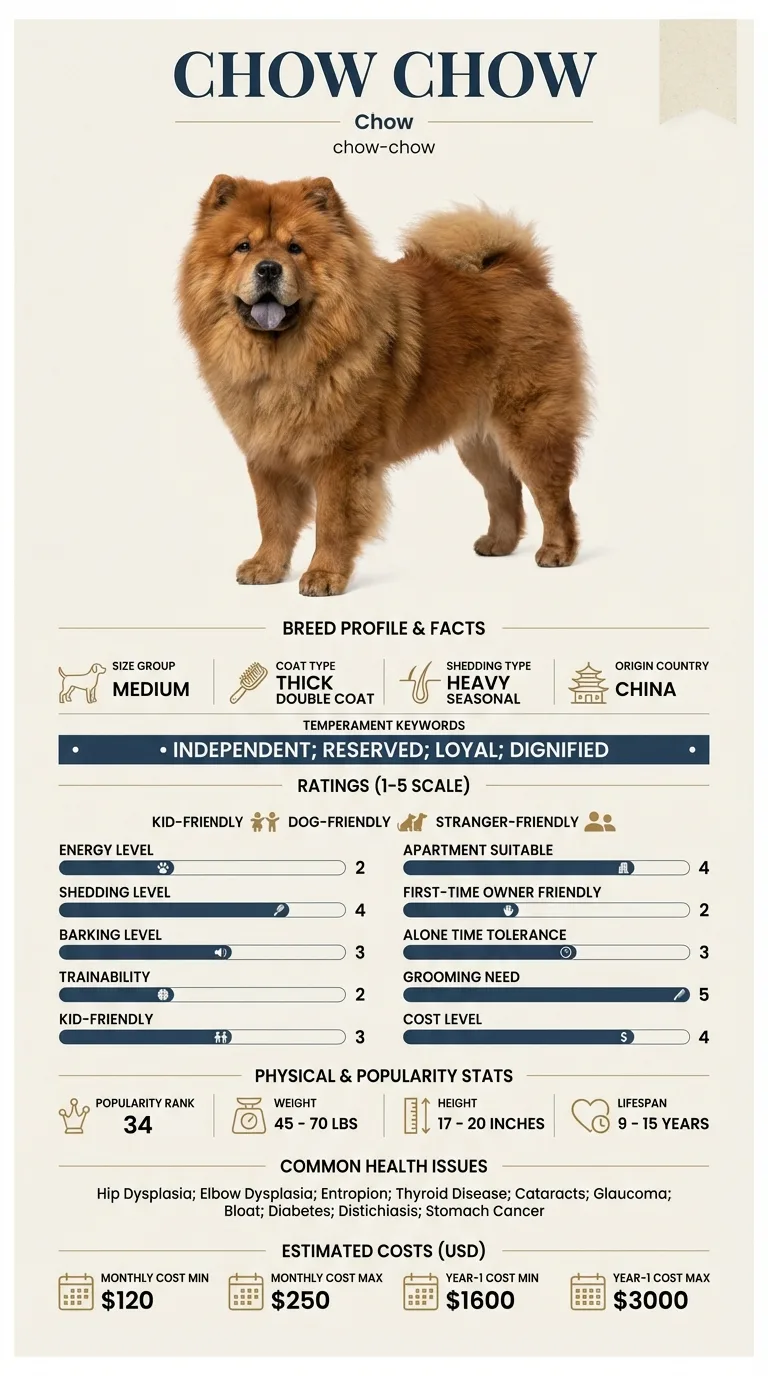
Owners of Chows that snore, snort, gag after eating, or slow down noticeably on walks. It is also for anyone who has been told their dog is fine because it can walk around the block, and who suspects that is a lower bar than it should be.
This guide is not medical advice. If your dog shows pain, sudden behavior change, or worsening symptoms, consult a licensed veterinarian.
Some links may be affiliate links. We may earn a commission at no extra cost to you. We only suggest products we believe are helpful for dog owners.
We research and check what we publish, but we do not warrant that any figure, date, price, or statement is accurate, complete, or current, and we accept no liability for any loss, cost, injury, or other harm arising from the use of this site. Use it as one reference among several. You remain responsible for your own decisions and for your dog's care - confirm anything that matters with a licensed veterinarian or another qualified professional before you act on it. Full disclaimer.
Obstructive airway syndrome in a shortened-muzzled dog is a combination of anatomical restrictions - narrow nostrils, an over-long palate, a narrow windpipe - plus the progressive tissue damage caused by breathing against them. In the Chow Chow the anatomical component is usually moderate, but the condition is progressive, and formal assessment is what distinguishes a dog that needs monitoring from one that needs intervention.
Some degree of airway restriction is inherent to a moderately shortened muzzle, so the question for a Chow is not whether it exists but whether it is limiting. Formal assessment is far less commonly done in this breed than in the extreme brachycephalic breeds, which means a proportion of affected Chows go undiagnosed until the condition has progressed further than it needed to.
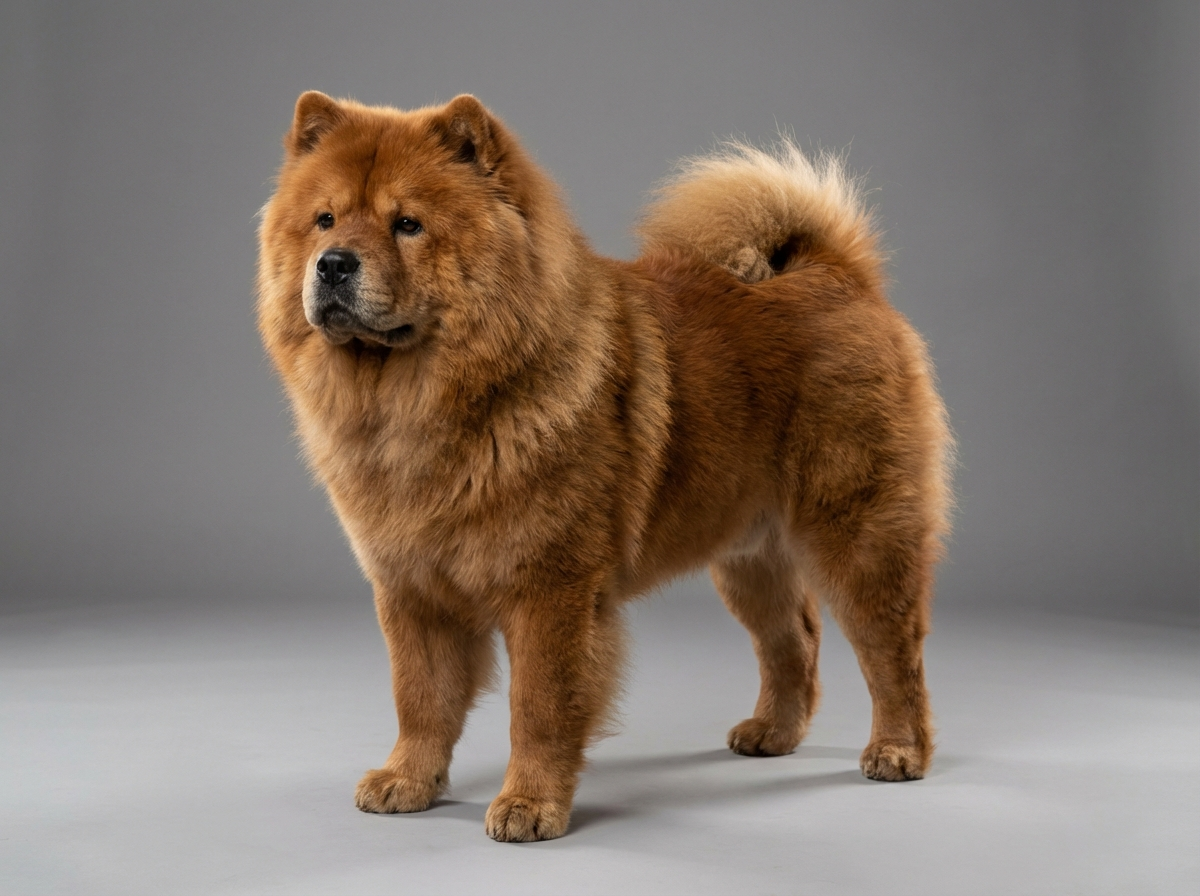
The primary driver is the Chow's moderately shortened, broad skull, in which soft tissue occupies less space than it evolved for. Nostril width varies considerably between individuals and lines, and narrow nostrils force the dog to generate greater suction to move air, which is the pressure that gradually deforms the larynx over years. The breed's heavy ruff adds bulk around the neck. Crucially, the thick double coat and documented heat sensitivity mean a Chow reaches the point of needing maximum airflow more often than a short-coated dog with an identical airway would, so the same anatomy produces more strain over a lifetime.
Climate determines how often the airway is pushed to its limit, and repeated demand is what drives progression. Homes that stay warm, walks scheduled in the heat, and a lifestyle involving frequent excitement all increase the cumulative load. Collar use rather than a harness adds direct external pressure. Weight gain, which is easy in a breed with genuinely low exercise requirements, is the environmental factor with the largest and most reversible effect.
Book an assessment if your dog snores loudly, is noisy at rest, gags or brings up foam after eating or drinking, sleeps with its neck extended or props its head up, or has become less willing on walks. Ask whether an exercise tolerance assessment can be done or whether referral is appropriate. Go immediately for laboured breathing that does not settle with rest, a blue, grey or dark purple tongue, collapse, or extreme distress with loud obstructed noise, particularly in warm weather - airway obstruction can become a fatal emergency within a short period, and cooling should begin on the way to the clinic.
See all Chow Chow health problems, which breeds are prone to brachycephalic obstructive airway syndrome boas, or the full Chow Chow breed guide for temperament, exercise needs and ownership costs.
Assessment and, if needed, referral typically span two to six weeks. Surgical recovery involves restricted activity for around four to six weeks, with the first forty-eight hours being the period of highest risk from airway swelling. Improvement in noise and exercise tolerance is usually apparent within a couple of months, and is generally greatest in younger dogs whose larynx has not yet been damaged.
Success is a dog that breathes more quietly, sleeps better, recovers faster after walking, and no longer struggles at temperatures it used to struggle at. It is not a dog with normal airway function, because the skull, windpipe and coat are all unchanged. The other, less visible form of success is having an assessment on record at a young age, so that any future decline can be measured against a real baseline.
A meaningful airway assessment has three parts, and a stethoscope in a five-minute consultation is not one of them.
The first is a resting examination: listening to the upper airway with the dog calm, looking at nostril shape, and noting whether there is audible noise without any exertion. The second is a functional test. Standardised exercise tolerance testing involves walking the dog at a set pace for a set time, then re-examining the upper airway immediately afterwards to hear what appears under load that was silent at rest. This is where moderately affected dogs are separated from genuinely unaffected ones, and it is the step most often skipped.
The third part, if the first two suggest significant obstruction, is direct examination of the airway under anaesthetic, where the soft palate, larynx and tonsils can be seen and graded. That is usually done at the same time as any corrective surgery, so the dog only goes under once.
For a Chow, ask specifically whether an exercise-based assessment is available or whether referral is needed. The breed's dense coat and heat sensitivity mean testing should be done in cool conditions with recovery monitored - a point worth raising when the appointment is booked.

Surgery is neither an automatic answer nor an extreme measure. The right way to hold it is as a decision with a genuinely different balance depending on which components are affected and how old the dog is.
Noodle was three and had been described at two consecutive annual check-ups as having no breathing concerns. Her owner, Sanne, kept raising it because Noodle snored heavily, slept with her chin propped on the arm of the sofa, and always seemed to be the slowest dog in the park. At the third appointment Sanne asked directly whether the dog had ever been tested while moving. The vet listened to Noodle at rest, heard very little, then walked her briskly around the car park for three minutes on a cool morning and listened again. The difference, Sanne said, was not subtle. Noodle was referred. Her nostrils were narrower than they had looked from the front, and her soft palate was over-long. Both were corrected in one procedure and she spent the first night on continuous monitoring. Four months later she was walking further in cooler weather than she ever had, and Sanne's clearest evidence was the silence at night.
Key takeaway: A resting examination is not an airway assessment. If a Chow snores, props its head up to sleep or lags behind, ask specifically for the dog to be listened to after exertion, because that is where a moderate airway declares itself.
Ask whether the assessment included any exertional component. A dog can be silent at rest and clearly obstructed after three minutes of brisk walking. If your dog snores, gags or tires easily, that discrepancy is exactly what functional testing exists to find.
Nostril shape can be judged in a young puppy, and it is worth raising at the first vaccination appointment. Fuller functional assessment is more meaningful once the dog is mature. Early identification of very narrow nostrils matters because correcting them young may reduce the strain that causes later damage.
It is a progressive weakening and inward folding of the cartilages of the voice box, caused by years of generating strong negative pressure while breathing against an obstruction. It is the component that turns a manageable airway into a poor one, it is much harder to treat, and it is the reason waiting has a cost.
No, and any promise otherwise should be treated sceptically. Surgery improves airflow; it does not remove the double coat or change the fact that this breed is documented as heat sensitive. Expect better tolerance, not normal tolerance.
Airway surgery in a shortened-muzzled dog carries a real but manageable risk, concentrated in the recovery period when swelling can narrow a freshly operated airway. Ask about post-operative monitoring arrangements specifically, and whether the dog will be watched continuously rather than checked periodically.
Weight loss is the most powerful non-surgical intervention and is frequently underestimated. Harness rather than collar, arousal management, and strict heat avoidance all reduce demand on the airway. None of them widen a narrow nostril, but together they can change how much a dog's obstruction actually limits its life.
Testing the dog under exertion, not just at rest. Obstruction that only appears under load is exactly what gets missed otherwise.
Because the effort of breathing against an obstruction progressively damages the larynx, and that damage is much harder to reverse.
It improves it. It does not solve it, because the double coat and the breed's documented heat sensitivity remain unchanged.
Sometimes, but conformational conditions are a common exclusion. Check the policy wording before you need it, not after.
A one-page prep sheet for this condition: the signs, the questions to ask, what to get priced. Unlocks here.
You get: Vet visit prep sheet
No spam. One-click unsubscribe. See our privacy policy.
Preview page 1 before you decide.