Health
How does pancreatitis lead to diabetes?
Repeated inflammation destroys pancreatic tissue including the insulin-producing beta cells. Enough loss and the dog becomes diabetic.

Quick answer
How does pancreatitis lead to diabetes?
Repeated inflammation destroys pancreatic tissue including the insulin-producing beta cells. Enough loss and the dog becomes diabetic.
Diabetes is on this breed's documented health list. Chronic pancreatitis is one of the routes there, and it is the route most influenced by what happens in your kitchen.
Owners of senior Chows managing one of these conditions who have been warned about the other, and anyone whose dog has had more than one episode of pancreatitis and wants to know where that leads.
This guide is not medical advice. If your dog shows pain, sudden behavior change, or worsening symptoms, consult a licensed veterinarian.
Some links may be affiliate links. We may earn a commission at no extra cost to you. We only suggest products we believe are helpful for dog owners.
We research and check what we publish, but we do not warrant that any figure, date, price, or statement is accurate, complete, or current, and we accept no liability for any loss, cost, injury, or other harm arising from the use of this site. Use it as one reference among several. You remain responsible for your own decisions and for your dog's care - confirm anything that matters with a licensed veterinarian or another qualified professional before you act on it. Full disclaimer.
These are two conditions of one organ that frequently arrive together. Chronic or repeated pancreatic inflammation destroys tissue, and when enough insulin-producing cells are lost the dog becomes diabetic. Managing the pair means running one strict dietary and dosing routine that satisfies both, and monitoring for the complications each brings.
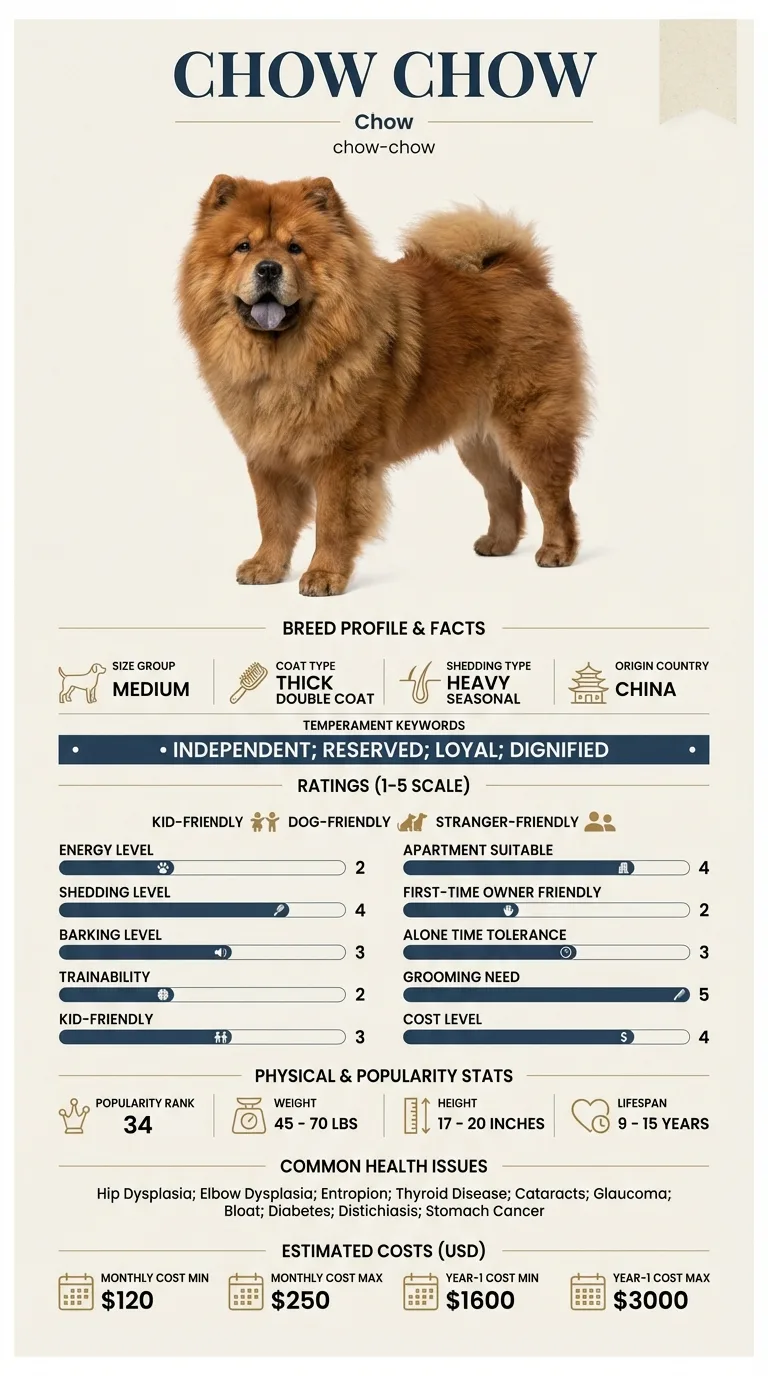
Diabetes is documented among the Chow Chow's ten recognised health issues, making it a genuine breed concern rather than a general one. Pancreatitis is not on that list and is driven mainly by diet and individual susceptibility. The combination is most often seen in senior dogs, which in this breed means from roughly eight years onward given a nine to fifteen year lifespan.
Diabetes sits on the Chow Chow's documented list, which is the central breed fact here, and it keeps company on that list with thyroid disease and cataracts, both of which interact with it. Beyond the genetics, the breed's practical contribution is to make monitoring hard. With energy and exercise need both rated 2 out of 5, weight accumulates easily and drives insulin resistance, while a coat rated 5 out of 5 for grooming demand hides both that gain and the later weight loss that signals trouble. A dignified, independent temperament means the dog does not advertise nausea, and blue-black gum pigment removes the visual check for dehydration and shock.
The household routine is the treatment, so household chaos is the risk factor. Variable meal times, food given by different people, free access to a bowl and holiday feeding all destabilise glucose control and simultaneously raise pancreatitis risk. Accessible bins remain the most common source of an unplanned fat load. In hot climates the picture is complicated further, because a heat-intolerant dog drinking more in summer makes the increased thirst of poor glucose control harder to interpret.
Two emergencies sit at opposite ends here and both need immediate care. Weakness, trembling, disorientation, collapse or seizure suggests dangerously low blood sugar. Vomiting with profound lethargy, dehydration and a sweet or acetone smell on the breath suggests ketoacidosis. Either means going now, not in the morning. Also go the same day for repeated vomiting, refusal of food, a painful abdomen or the praying posture, since a diabetic dog with a pancreatitis flare deteriorates quickly. Book a prompt appointment for increased thirst or urination, unexplained weight loss despite a good appetite, greasy or voluminous stools, or new cloudiness in either eye. Never adjust an insulin dose yourself.
See all Chow Chow health problems, which breeds are prone to pancreatitis diabetes, or the full Chow Chow breed guide for temperament, exercise needs and ownership costs.
Stabilising a newly diagnosed diabetic typically takes four to twelve weeks of dose adjustment with repeated glucose assessment. Once stable, rechecks fall every three to six months. Enzyme insufficiency, where present, responds within a week or two of starting supplementation. None of this ends; both conditions are managed for life.
Success is a dog holding a stable weight, drinking a consistent amount, eating with enthusiasm at the same two times each day, and going months without a pancreatitis flare. Perfect glucose numbers are not the goal, and chasing them causes more low-sugar emergencies than it prevents.
A single acute episode of pancreatitis, treated and recovered from, usually leaves the endocrine cells intact. The problem is repetition. Each episode replaces functioning tissue with scar, and scar produces neither enzymes nor hormones. Some dogs also carry a low-grade, smouldering inflammation that never produces a dramatic attack but grinds away at the organ across years, which is why a dog can become diabetic without an owner ever having witnessed an obvious crisis.
The reverse direction also exists. A diabetic dog with poorly controlled blood glucose has altered fat metabolism, and elevated circulating fats are themselves associated with pancreatic inflammation. So the two conditions can push each other along, and a diabetic Chow who suddenly stops eating and starts vomiting has to be assessed for pancreatitis rather than assumed to be having an insulin problem.
A third consequence sits alongside both. If enough enzyme-producing tissue is lost, the dog cannot digest food properly, a condition called exocrine pancreatic insufficiency. The signs are voluminous, pale, greasy stools and weight loss despite a good appetite, and it is treated with enzyme supplementation. A senior Chow losing weight while eating well deserves that test as well as a glucose check.

The routine is unglamorous and it is the treatment. Households that keep the schedule rigid do markedly better than those that keep it approximately.
If you think your Chow has pancreatitis & diabetes, the plan is three steps: write down what you have seen and when it started, book a veterinary appointment rather than waiting for the next flare, and take video of the behaviour or symptom before you go — the thing you are worried about rarely happens in the consulting room. Screening in the parents covers hip dysplasia, elbow dysplasia, entropion.
What the vet visit should produce is a diagnosis and a written plan, not just reassurance: what is being ruled out, what the monitoring interval is, and which signs mean you come back sooner. Ask what the treatment costs across a year rather than per visit, because that is the number that decides whether you are managing this condition or reacting to it.
Between appointments, keep a short log — dates, what you saw, what changed. It is the single most useful thing an owner brings to a follow-up, and for pancreatitis & diabetes it is often what separates a clear pattern from a guess.
Hana had pancreatitis three times between six and nine years old, each time after a family gathering. She recovered each time and her owner Wilhelm went back to being careful for a few months before the vigilance faded. At ten she started drinking from the toilet and having accidents overnight. Wilhelm assumed it was age. Her blood glucose was substantially elevated and she was diagnosed diabetic, with pancreatic enzyme levels suggesting long-standing damage. She also had early cataracts in both eyes that had not been there at her check eight months earlier. Hana now eats two weighed meals at seven and seven, gets insulin at the same times, and has never had another flare. Wilhelm keeps the log on the fridge and every family member has read it. He says the hardest part was accepting that the occasional treat was not occasional at all.
Key takeaway: Three separate episodes were not three separate events. They were instalments in the same slow destruction, and the diabetes was the invoice.
No. Most dogs who have a single acute episode recover with their insulin-producing cells intact. The risk comes from repeated or chronic low-grade inflammation over years, which gradually destroys enough tissue that both enzyme and hormone production fail.
Yes. Diabetes appears among the ten health issues documented for the breed, alongside thyroid disease. That places it firmly in the category of things a Chow owner should expect to have to rule out in a senior dog with increased thirst.
Drinking noticeably more, urinating more including overnight accidents, and losing weight despite a normal or increased appetite. Cataracts developing rapidly in both eyes are another common early presentation and sometimes the reason the dog is brought in at all.
The diet needs to be consistent, measured, and matched to both conditions, which typically means a lower-fat food fed in equal portions at fixed times. What matters as much as the food itself is that it never varies, because insulin dosing assumes a predictable meal.
Stable weight, stable water intake, normal appetite and no recurrence of accidents in the house are the practical markers. Your vet will use glucose curves or fructosamine measurements for the formal answer. Home glucose monitoring is possible and some owners are taught it.
Two, in opposite directions. Very low blood sugar causes weakness, trembling, disorientation, collapse or seizures and needs immediate care. Diabetic ketoacidosis causes vomiting, profound lethargy, dehydration and a sweet acetone smell on the breath and is equally urgent. Both are same-hour emergencies.
Repeated inflammation destroys pancreatic tissue including the insulin-producing beta cells. Enough loss and the dog becomes diabetic.
Yes, it is one of the breed's ten documented health issues, along with thyroid disease and cataracts, which both interact with it.
Identical meals at identical times, with no extras from anyone in the household. Insulin dosing depends on that predictability.
Diabetic cataracts can form over weeks rather than years. Cataracts are already documented in this breed, so eye checks belong in every diabetic recheck.
A one-page prep sheet for this condition: the signs, the questions to ask, what to get priced. Unlocks here.
You get: Vet visit prep sheet
No spam. One-click unsubscribe. See our privacy policy.
Preview page 1 before you decide.