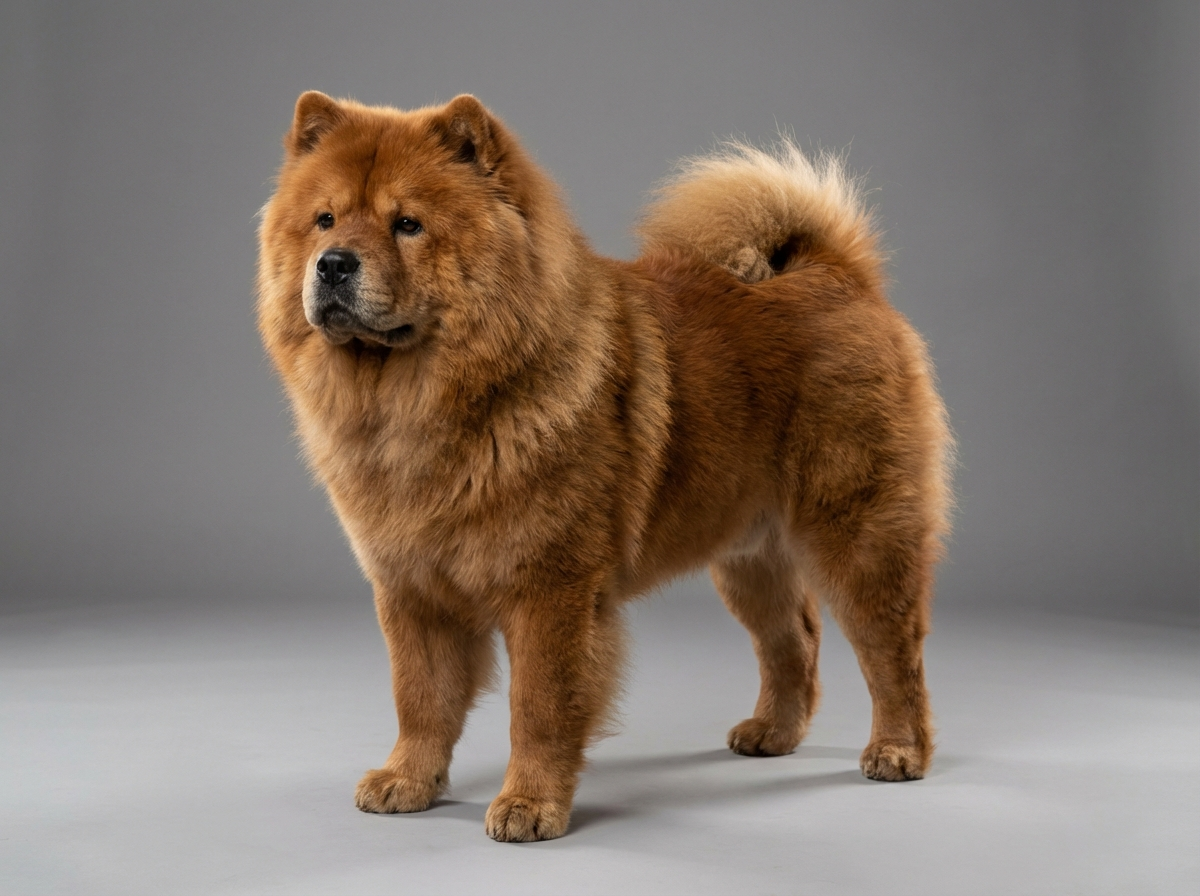
Health
Is DCM common in Chow Chows?
No. Inherited dilated cardiomyopathy clusters in giant and large deep-chested breeds. A medium 45 to 70 pound Chow is not in that risk group.

Quick answer
Is DCM common in Chow Chows?
No. Inherited dilated cardiomyopathy clusters in giant and large deep-chested breeds. A medium 45 to 70 pound Chow is not in that risk group.
Knowing which cardiac diseases your breed does not carry is as useful as knowing which it does, because it tells you what a finding probably means.
Owners who have just been handed a murmur diagnosis and gone home to research it, and prospective buyers trying to work out which screening tests a responsible Chow breeder should actually be doing.
This guide is not medical advice. If your dog shows pain, sudden behavior change, or worsening symptoms, consult a licensed veterinarian.
Some links may be affiliate links. We may earn a commission at no extra cost to you. We only suggest products we believe are helpful for dog owners.
We research and check what we publish, but we do not warrant that any figure, date, price, or statement is accurate, complete, or current, and we accept no liability for any loss, cost, injury, or other harm arising from the use of this site. Use it as one reference among several. You remain responsible for your own decisions and for your dog's care - confirm anything that matters with a licensed veterinarian or another qualified professional before you act on it. Full disclaimer.
Heart disease in a Chow Chow is almost always found rather than suspected. Because the breed is not on any cardiac watchlist, there is no screening programme prompting owners to look, and the first evidence is usually a murmur noted during an unrelated visit. From there the job is deciding what the murmur means and how urgently it needs to be answered.
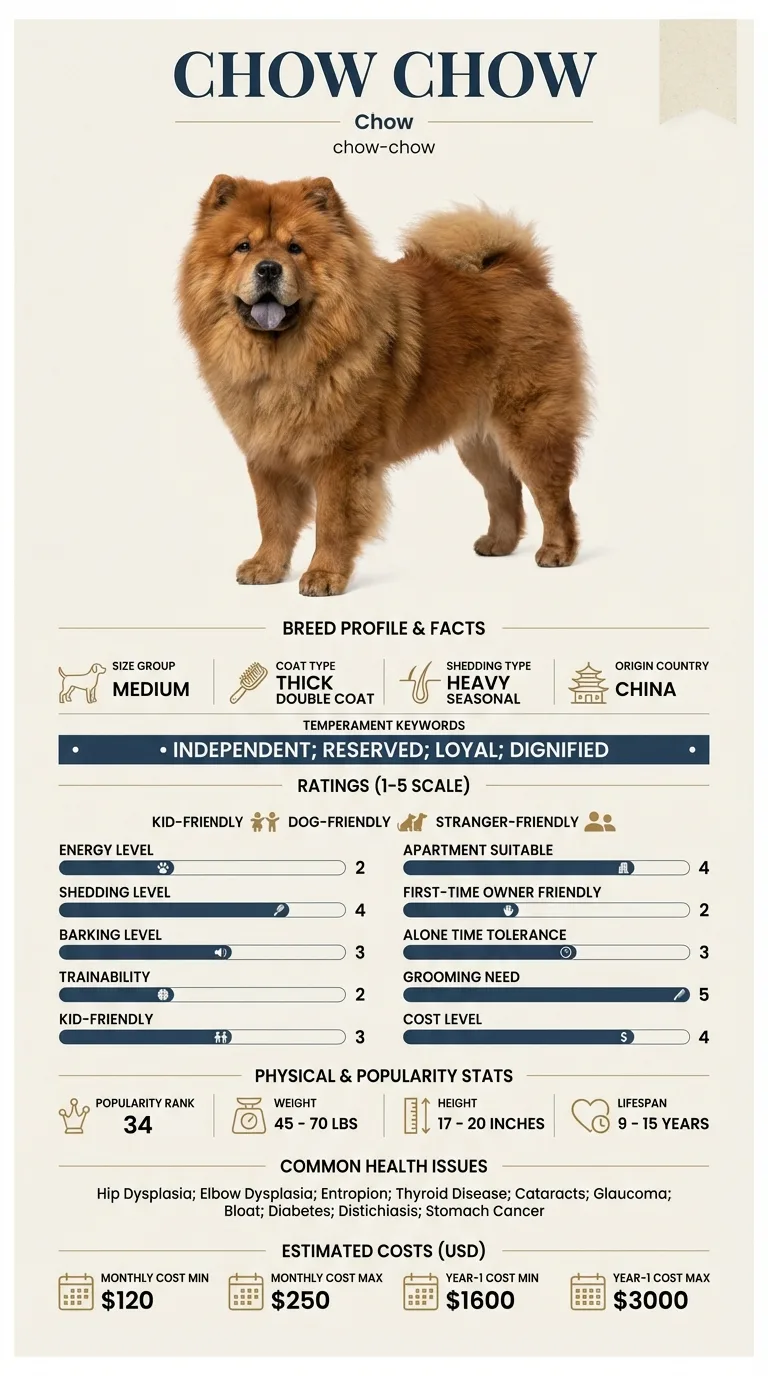
Cardiac disease does not feature among the ten documented Chow Chow health issues, which makes it an uncommon breed concern rather than a typical one. Age changes the picture: in a dog reaching nine to fifteen years, valve changes become an ordinary geriatric finding in any medium breed.
The honest answer is that nothing in Chow anatomy predisposes the heart. This is a compact, moderately built dog of medium size with no giant-breed wall stress and no toy-breed valve fragility. What the breed does contribute is concealment: heavy double coat over the chest, a temperament rated 2 out of 5 for stranger tolerance that makes a calm exam harder, and an activity baseline so low that lost stamina is invisible. Documented thyroid disease adds an indirect route, since thyroid hormone governs heart rate.
Long gaps between veterinary visits are the biggest external factor, because annual auscultation is the entire detection system for a breed nobody screens. Diet composition matters where formulations are unusual. Heat and humidity do not cause heart disease but reliably expose it, since a Chow struggling to cool through a dense coat is asking for circulatory work it may not have to give.
Same-day care is warranted for collapse, laboured breathing at rest, a dog who will not lie down and settle, blue or grey extremities, or coughing that produces frothy fluid. Because Chow gums and tongue are naturally blue-black, do not use mouth colour to decide; use breathing effort and posture. Book a normal appointment within a week for a newly noticed cough, a resting breath rate that has climbed, a drop in appetite lasting several days, or any single fainting episode however brief. Before elective anesthesia, ask whether a cardiac exam has been done that day.
See all Chow Chow health problems, which breeds are prone to heart disease, or the full Chow Chow breed guide for temperament, exercise needs and ownership costs.
Working through the diagnostic ladder typically spans two to six weeks depending on referral waiting times. If nothing is found beyond a low-grade murmur, expect a six-month recheck. If treatment starts, expect a first recheck inside two weeks and quarterly reviews after that.
Success is a clear label for what the murmur is, a plan with defined triggers for escalation, and an owner who is no longer researching a giant-breed disease their medium-sized dog was never likely to have.
Cardiac diagnostics are a ladder, not a menu. Each rung either closes the question or justifies the next expense, which matters in a breed already rated 4 out of 5 for cost.
Dilated cardiomyopathy is a disease of heart muscle: the walls stretch, the chambers balloon, and contraction weakens. Its genetic forms cluster tightly in Dobermans, Great Danes, Irish Wolfhounds, Boxers and other very large dogs, in which body mass and wall stress push an inherited weakness over the edge. A 55-pound Chow with a 17-to-20-inch frame sits well outside that population.
There is a second route to the same picture that is not breed-specific at all, and that is diet. Cases have been investigated in dogs eating unusual formulations, and a Chow eating one of those is theoretically exposed regardless of pedigree. This is the one version of the worry worth raising with your vet, and the conversation is about what is in the bag, not about breed.
What that leaves for a Chow with a genuine murmur is usually age-related valve change, occasionally a secondary consequence of thyroid disease or hypertension, and rarely something congenital that was missed in puppyhood. Those are all worth chasing. None of them is DCM.

Mei was eight and had a grade II murmur noted at a booster appointment. Her owner Daniel went home, searched the breed, and found dilated cardiomyopathy at the top of every list. He spent six weeks assuming his dog had a fatal muscle disease and cancelled a planned move to a warmer state. The echo took forty minutes. It showed mild degenerative change in one valve, normal contraction, and no chamber enlargement. The cardiologist explained that the DCM entries Daniel had been reading were generic health-list copy, not Chow data. Mei was placed on annual echoes and no medication. Daniel kept the breath-count habit he had started while worrying, which turned out to be the only useful thing that came out of those six weeks.
Key takeaway: Generic breed health lists borrow diseases from other breeds. Ask which finding your dog actually has before you plan your life around the worst item on the page.
Routine screening echoes are recommended for the breeds where inherited DCM is documented, and the Chow is not one of them. What a Chow does need is an annual chest listen and prompt investigation of any murmur, irregular beat or fainting episode.
The breed's real screening priorities are hips, elbows, eyes and thyroid, because hip dysplasia, elbow dysplasia, entropion, distichiasis, cataracts, glaucoma and thyroid disease are the documented concerns. A cardiac exam on breeding stock is reasonable diligence, but a breeder who leads with heart certificates and cannot show you hip and eye results has the priorities backwards.
It is a normal plan for a low-grade murmur in a dog with no other signs. Ask for the grade in writing, ask what would trigger imaging, and start a weekly sleeping breath count so the recheck has data behind it rather than an impression.
Diet-associated cardiomyopathy has been investigated in dogs across many breeds, so it is a fair question for any dog on an unusual formulation. Bring the actual bag or a photo of the ingredient panel to your appointment and let your vet judge, rather than switching foods on your own.
It hides the earliest stage. With an energy rating of 2 and exercise need of 2, the reduced-stamina signal that flags heart disease in active breeds simply never appears. Numbers you record at home replace the signal you will not get.
It varies widely by region and by whether a specialist referral is involved, but expect the echo to be the largest single item. Ask for an itemised estimate and ask which test would change the treatment plan, because that question often shortens the list.
No. Inherited dilated cardiomyopathy clusters in giant and large deep-chested breeds. A medium 45 to 70 pound Chow is not in that risk group.
One thorough annual exam with the chest actually listened to, coat parted, plus investigation of any fainting episode or new cough.
Hip and elbow evaluations, an eye exam covering entropion and distichiasis, and thyroid testing. Those match the breed's documented issues.
It can change heart rate and rhythm, and thyroid disease is documented in this breed. It is worth ruling out before chasing a primary cardiac diagnosis.
A one-page prep sheet for this condition: the signs, the questions to ask, what to get priced. Unlocks here.
You get: Vet visit prep sheet
No spam. One-click unsubscribe. See our privacy policy.
Preview page 1 before you decide.