Living
What is the fastest way to prevent post-bath skin infections?
Dry thoroughly down to the skin, especially the neck ruff and facial folds, rather than stopping once the outer coat feels dry.

Quick answer
What is the fastest way to prevent post-bath skin infections?
Dry thoroughly down to the skin, especially the neck ruff and facial folds, rather than stopping once the outer coat feels dry.
A patch of skin that looks red, moist and unpleasant to the touch under a thick mat of fur is not automatically an allergy. Sometimes it is a straightforward infection that started because the area never fully dried out.
Owners who bathe or walk their Chow in wet weather without a proper drying routine, and anyone who assumes any skin redness in this breed must mean allergies rather than a localized infection.
This guide is not medical advice. If your dog shows pain, sudden behavior change, or worsening symptoms, consult a licensed veterinarian.
Some links may be affiliate links. We may earn a commission at no extra cost to you. We only suggest products we believe are helpful for dog owners.
We research and check what we publish, but we do not warrant that any figure, date, price, or statement is accurate, complete, or current, and we accept no liability for any loss, cost, injury, or other harm arising from the use of this site. Use it as one reference among several. You remain responsible for your own decisions and for your dog's care - confirm anything that matters with a licensed veterinarian or another qualified professional before you act on it. Full disclaimer.
This is skin infection driven by trapped moisture rather than an allergic or immune reaction. The Chow Chow's dense double coat and heavy neck ruff hold dampness against the skin after baths, wet walks or swimming far longer than a shorter coat would, and that sustained moisture allows normally harmless bacteria and yeast to multiply into an active infection, often appearing as a fast-developing hot spot.
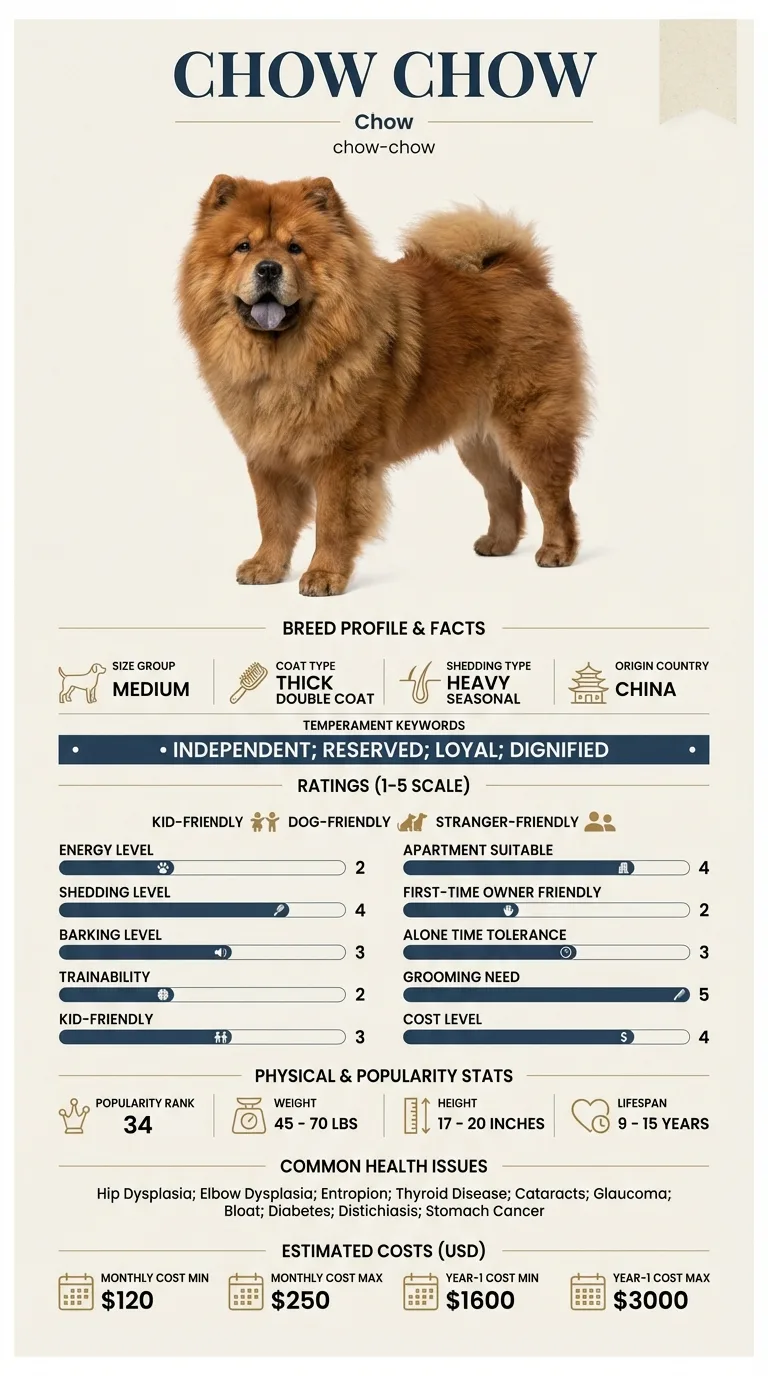
Not on the breed's short list of most strongly documented conditions, but hot spots and localized bacterial or yeast skin infections are a routine, frequently reported issue in heavily double-coated breeds, and the Chow Chow's coat rating of 5 out of 5 for grooming demand puts it squarely in that risk category.
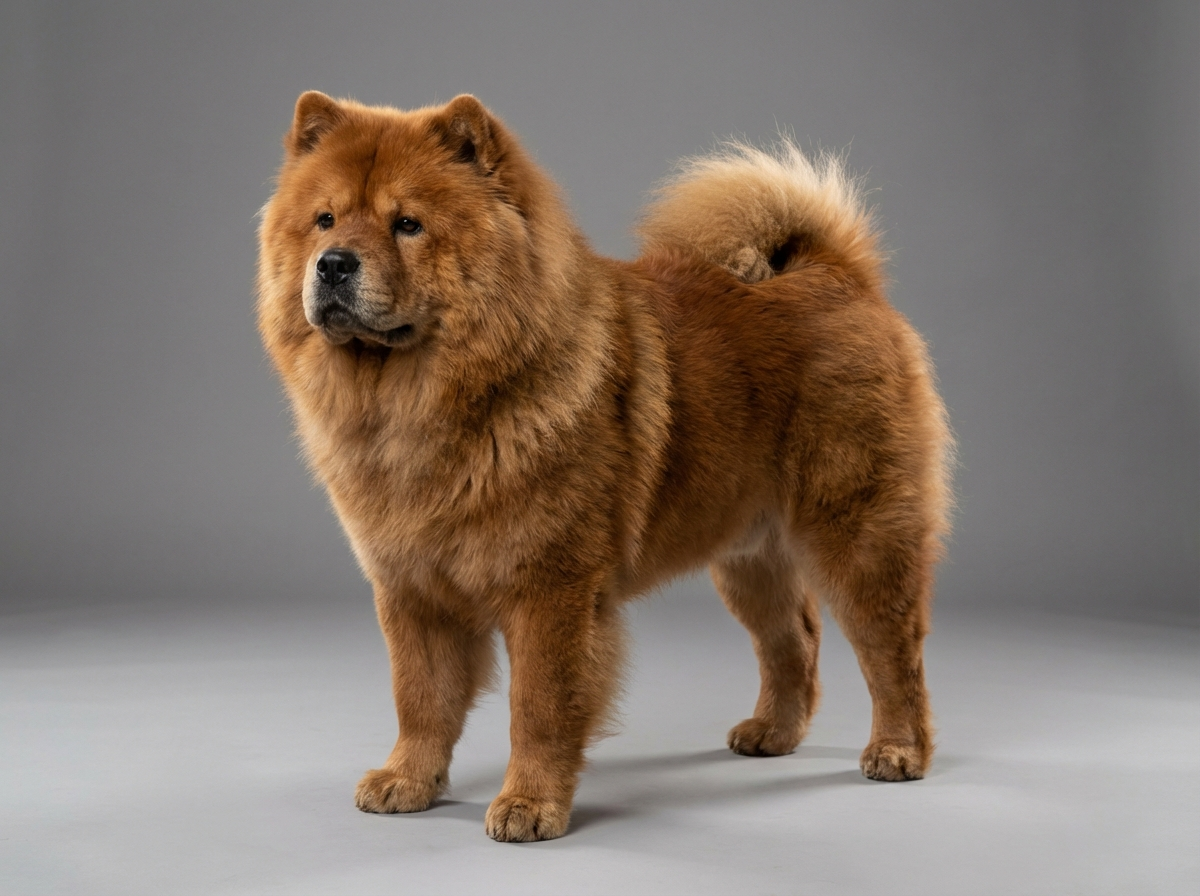
The Chow's dense double coat and heavy neck mane, built for a cold, dry climate, hold moisture against the skin rather than allowing it to evaporate quickly. Facial wrinkles and skin folds around the face add additional pockets where dampness, saliva and debris collect. None of this is an immune or allergic process, it is a straightforward mechanical setup for bacteria and yeast that are normally present in small, harmless numbers to multiply.
Wet weather, swimming, humid climates, and infrequent or rushed drying after bathing all extend how long skin stays damp, directly raising the odds of a localized infection establishing before it can dry out naturally.
See a vet promptly for any red, moist or rapidly enlarging skin patch, especially one that appeared within a day, or for a smell, discharge or crusting that does not improve with cleaning and drying within a day or two.
See all Chow Chow health problems, which breeds are prone to skin infections, or the full Chow Chow breed guide for temperament, exercise needs and ownership costs.
A straightforward hot spot or localized infection treated promptly typically improves within three to seven days with cleaning, drying and appropriate treatment.
Success is catching damp, at-risk areas before an infection establishes, and resolving any infection quickly once it appears, rather than eliminating every risk of moisture exposure in an active, heavily coated dog.
These are mechanical hot spots for infection risk, driven by trapped dampness rather than an immune reaction. Checking them specifically after baths, swimming or rainy walks catches problems before they establish.
A hot spot, known clinically as acute moist dermatitis, can develop within hours rather than days. Moisture trapped against skin softens the surface and creates ideal conditions for the bacteria normally present in small numbers to multiply rapidly. The area becomes itchy, the dog licks or scratches it, which breaks the skin further and introduces more bacteria, and the patch can visibly enlarge within a single day.
This is different from the more gradual, itch-driven pattern of allergic skin disease, and it responds differently too: clipping the fur away from the area to let it air out and dry, along with appropriate cleaning and sometimes topical or oral treatment, resolves a hot spot far faster than allergy management typically does for allergic itching.
A coat rated 5 out of 5 for grooming demand means these damp pockets are common in this breed specifically because the fur itself prevents the natural drying that would otherwise limit bacterial growth.

If you think your Chow has skin infections, the plan is three steps: write down what you have seen and when it started, book a veterinary appointment rather than waiting for the next flare, and take video of the behaviour or symptom before you go — the thing you are worried about rarely happens in the consulting room. Screening in the parents covers hip dysplasia, elbow dysplasia, entropion.
What the vet visit should produce is a diagnosis and a written plan, not just reassurance: what is being ruled out, what the monitoring interval is, and which signs mean you come back sooner. Ask what the treatment costs across a year rather than per visit, because that is the number that decides whether you are managing this condition or reacting to it.
Between appointments, keep a short log — dates, what you saw, what changed. It is the single most useful thing an owner brings to a follow-up, and for skin infections it is often what separates a clear pattern from a guess.
Biscuit spent a summer afternoon at a friend's pond and came home soaked through his thick coat. His owner Owen towel dried the visible fur and figured the rest would dry on its own overnight, as it usually seemed to. By the next morning, a patch on the side of Biscuit's neck, right where his mane sat thickest, was red, moist and clearly bothering him. He had been scratching at it in the night, which had spread the irritated area further than it likely started. Owen's vet clipped the fur back from the spot, cleaned it, and prescribed a short course of treatment. It cleared within five days, and Owen started using a dog dryer on the neck and mane specifically after any future wet outing.
Key takeaway: In a breed with this much coat, drying is not finished when the surface feels dry. The dense fur underneath needs the same attention, or trapped moisture will find its own way to become a problem.
An infection, especially a hot spot, tends to appear and worsen quickly, often within a day, and is usually localized to one damp area. Allergic skin disease is typically more widespread, itchier over a longer period, and often seasonal or food-linked.
The dense double coat and heavy mane trap water against the skin far longer than a shorter coat would, and that sustained dampness lets normally harmless bacteria and yeast multiply into an active infection.
A red, moist, often oozing patch of skin, usually with the fur around it matted down, that can appear and enlarge within hours. It is typically painful or itchy to the touch.
Towel dry thoroughly first, then use a dog-safe dryer on a cool or warm, not hot, setting, working through the undercoat rather than just the surface fur, particularly around the neck ruff and facial folds.
Left untreated, a localized infection can spread or deepen, and constant licking or scratching can cause secondary damage. Most resolve well with prompt treatment, but delay makes the process longer and more uncomfortable.
Not necessarily a full trim, but keeping problem areas like the neck ruff and facial folds brushed out and free of matting improves airflow and reduces how long moisture sits against the skin.
Yes, warm, moist skin folds are also favorable for yeast overgrowth, which produces a different smell and texture than bacterial infection but responds to a similarly prompt cleaning and treatment approach.
Dry thoroughly down to the skin, especially the neck ruff and facial folds, rather than stopping once the outer coat feels dry.
A straightforward hot spot treated promptly often costs under two hundred dollars, though a spreading or repeat case can cost more.
Gently clean and dry the area and prevent licking, but see a vet promptly if it is large, deep, or not improving within a day or two.
Persistent licking at one location often signals localized irritation or infection there rather than a general allergy, and it also worsens the problem by breaking the skin further.
Bathing frequency matters less than drying thoroughly afterward, so focus on your drying routine rather than reducing baths.
A one-page prep sheet for this condition: the signs, the questions to ask, what to get priced. Unlocks here.
You get: Vet visit prep sheet
No spam. One-click unsubscribe. See our privacy policy.
Preview page 1 before you decide.