Health
Do Australian Shepherds get BOAS?
No, BOAS is a condition of flat-faced breeds and isn't documented in Australian Shepherds.

Quick answer
Do Australian Shepherds get BOAS?
No, BOAS is a condition of flat-faced breeds and isn't documented in Australian Shepherds.
BOAS sounds like exactly the kind of thing a panting, heat-sensitive dog might have, but it's a condition tied to a skull shape the Australian Shepherd simply doesn't have.
Owners who've read general brachycephalic-breed breathing content and want to know whether their heavy-panting, heat-sensitive Aussie could have the same airway problem are the audience here.
This guide is not medical advice. If your dog shows pain, sudden behavior change, or worsening symptoms, consult a licensed veterinarian.
Some links may be affiliate links. We may earn a commission at no extra cost to you. We only suggest products we believe are helpful for dog owners.
We research and check what we publish, but we do not warrant that any figure, date, price, or statement is accurate, complete, or current, and we accept no liability for any loss, cost, injury, or other harm arising from the use of this site. Use it as one reference among several. You remain responsible for your own decisions and for your dog's care - confirm anything that matters with a licensed veterinarian or another qualified professional before you act on it. Full disclaimer.
Brachycephalic Obstructive Airway Syndrome is a well-documented structural breathing disorder in flat-faced breeds like Bulldogs, Pugs, and Boston Terriers, and it isn't established in Australian Shepherds, whose muzzle length and skull shape are normal. Heavy panting or slow recovery in this breed is far more often explained by its dense double coat and high work drive, or by an actually documented condition like hypothyroidism.
BOAS is common within brachycephalic breeds, affecting a large share of Bulldogs and Pugs, but it has no established prevalence in Australian Shepherds because the breed's skull and muzzle conformation doesn't produce the syndrome. Heat-related exercise intolerance from the double coat and work drive is the more genuinely common concern owners are likely encountering.
BOAS results from decades of selective breeding for an extremely shortened muzzle and flat face, a conformation trait deliberately bred into brachycephalic breeds and never part of the Australian Shepherd standard, which calls for a moderate-length, well-proportioned muzzle. Because the anatomical cause of BOAS simply isn't present in this breed's structure, there's no breed-specific pathway for it to develop.
Environmental factors that worsen BOAS in flat-faced breeds, such as heat, humidity, excitement, and obesity, aren't airway triggers in an Aussie, but heat and humidity still matter for a different, real reason. This breed's dense double coat and strong drive to keep working can push it toward heat stress faster than owners expect, which is the environmental precaution that's actually relevant here.
See a vet promptly for blue or pale gums, collapse, breathing that doesn't settle after rest and cooling, or any sign of heatstroke. These are genuine emergencies in this breed, and your vet's workup will reasonably focus on heat injury, cardiac causes, or hypothyroidism rather than a brachycephalic-style airway defect.
A well-documented syndrome in flat-faced breeds can create unnecessary worry when applied to a breed with an entirely different skull shape. Avoid these mistakes.
See all Australian Shepherd health problems, which breeds are prone to brachycephalic obstructive airway syndrome boas, or the full Australian Shepherd breed guide for temperament, exercise needs and ownership costs.
Because BOAS itself isn't a relevant timeline to track in this breed, the more useful timeline is seasonal: reassess your hot-weather exercise routine each spring and adjust as your dog ages, since heat tolerance can shift over a dog's life.
Success here looks like directing concern toward the breed's genuinely documented risks, such as joint health, eye conditions, thyroid function, and safe heat management, rather than screening for a syndrome that doesn't apply to this breed's anatomy.
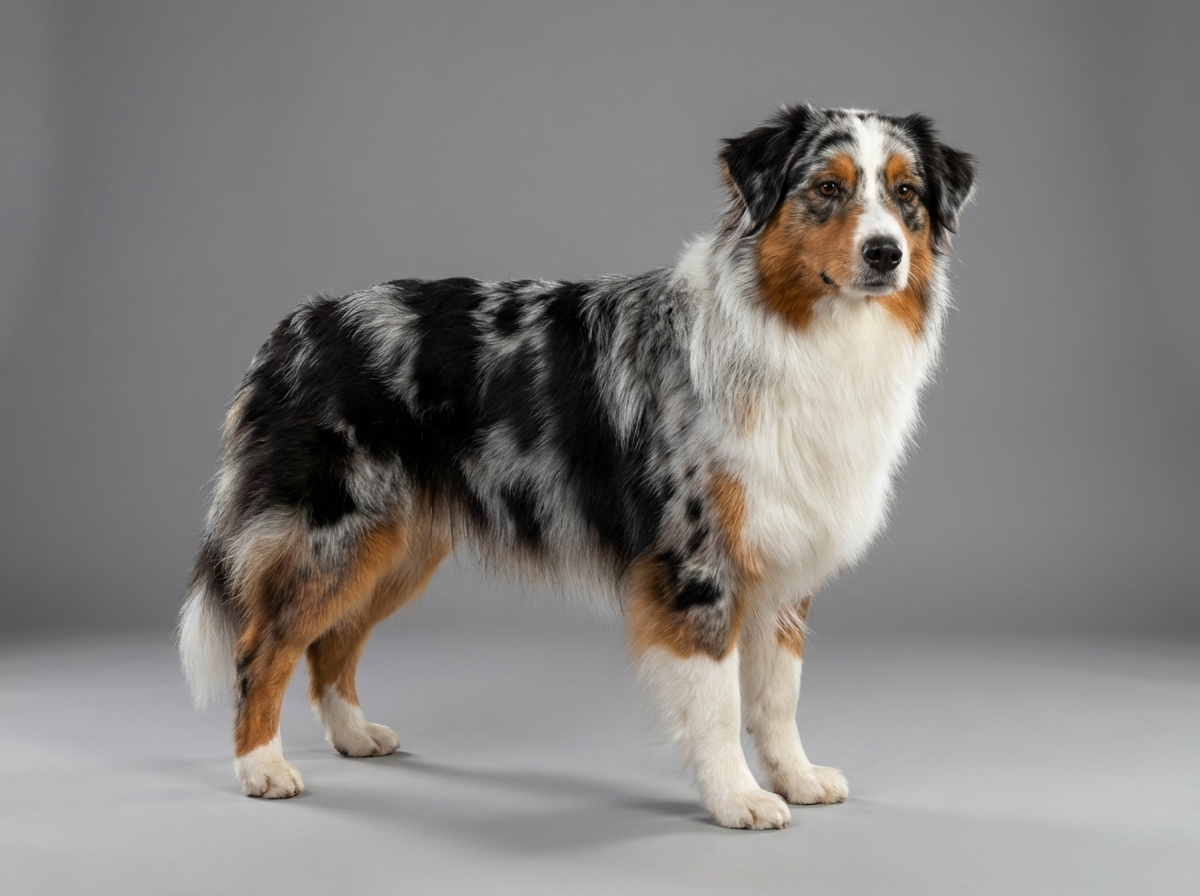
The Australian Shepherd's moderate, well-proportioned muzzle allows normal airflow, and the breed doesn't carry the shortened skull structure that produces BOAS in dogs like French Bulldogs or Pugs. What owners are often noticing in a panting, slow-to-recover Aussie is the combination of a dense double coat and a famously high work drive, which is a genuine, breed-relevant heat-management concern.
An Aussie pushed hard during herding trials, agility, or fetch in warm weather can pant heavily and recover slowly, not because of airway anatomy but because the coat traps heat while the dog's drive to keep working can outpace its own cooling. Scheduled water and shade breaks during vigorous exercise in heat, along with early recognition of excessive drooling, bright red gums, or uncoordinated movement, address this real risk directly.
Separately, a portion of Aussies carry the MDR1 gene mutation that causes sensitivity to ivermectin and related drugs, a documented, genetically testable risk that has nothing to do with airway structure. If stamina or breathing concerns persist after rest and cooling, a vet visit should rule out hypothyroidism or allergies rather than assume a brachycephalic-style airway problem.

Real emergencies for any dog's breathing, such as blue or pale gums, collapse, extreme distress, or breathing that doesn't slow after rest and cooling, need immediate veterinary care regardless of breed. In an Aussie, these signs point far more often to heatstroke, a cardiac issue, or a severe allergic reaction than to any structural airway defect.
Mild, occasional panting after exercise, brief snoring during deep sleep, or a normal recovery within a few minutes of rest aren't cause for alarm in this breed. The practical approach mirrors other breed-mismatch questions: take genuine symptoms seriously, but let your vet's workup start with the causes that are actually common and documented in Australian Shepherds.

After her Australian Shepherd Zeke started panting hard and recovering slowly during summer herding practice outside Boise, Idaho, Priya found an article on brachycephalic breathing surgery and worried Zeke needed similar intervention. Her vet examined Zeke's airway, confirmed it was structurally normal, and explained that his heavy panting was a heat-and-coat issue rather than an anatomical one, common in a high-drive, double-coated breed working outdoors in summer. Priya shifted practice sessions to early mornings and added water breaks every fifteen minutes, and Zeke's recovery time returned to normal within days.
Key takeaway: A breathing struggle in an Australian Shepherd is much more likely rooted in heat management for a double-coated, high-drive dog than in a brachycephalic airway syndrome that doesn't occur in this breed.
No, BOAS is documented in brachycephalic, flat-faced breeds such as Bulldogs, Pugs, and Boston Terriers. Australian Shepherds have a normal muzzle length and skull shape, so this specific airway syndrome isn't established in the breed.
Heavy panting after vigorous herding, agility, or play is usually the breed's dense double coat and high work drive outpacing its own cooling, not a structural airway problem. Excessive drooling, bright red gums, or wobbliness suggest heat stress rather than normal exertion.
Occasional snoring during deep sleep is common across many breeds and isn't linked to brachycephalic airway anatomy in an Aussie. Loud, persistent snoring paired with daytime lethargy is worth mentioning to your vet, but it's more likely tied to allergies or weight than to BOAS.
BOAS is documented in breeds selectively bred for very short, flat faces, including English and French Bulldogs, Pugs, Boston Terriers, and Pekingese. The Australian Shepherd's moderate muzzle length keeps it outside this risk group entirely.
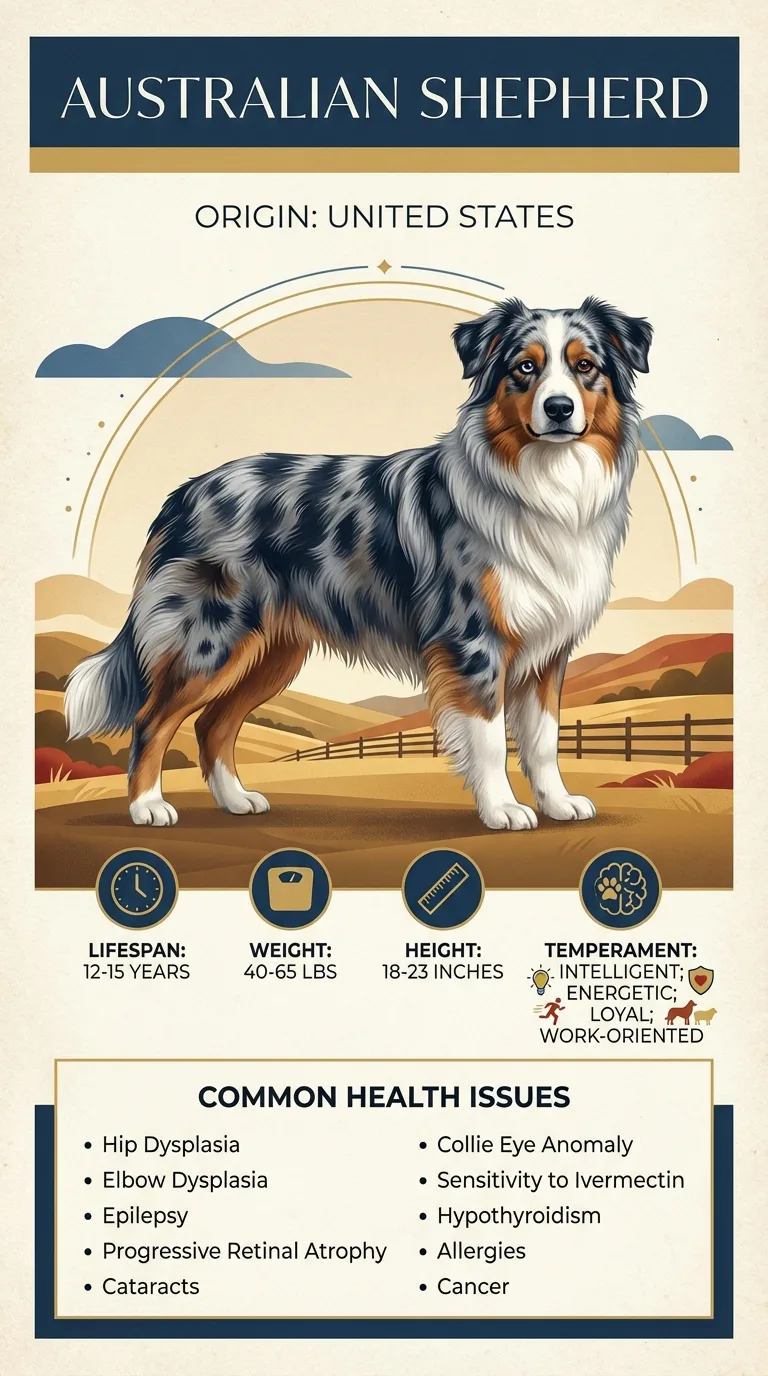
This breed's documented risks include hip and elbow dysplasia, epilepsy, inherited eye conditions like progressive retinal atrophy, cataracts, and collie eye anomaly, hypothyroidism, allergies, cancer, and MDR1-linked drug sensitivity. These are the conditions worth tracking with your vet instead of airway syndrome.
Hypothyroidism is a documented condition in Australian Shepherds and can cause weight gain, lethargy, and reduced exercise tolerance that might be mistaken for a breathing limitation. A simple blood panel can confirm or rule this out.
Since the real risk is heat management rather than airway anatomy, exercise during cooler parts of the day, provide frequent water and shade breaks, and stop activity at the first sign of excessive panting or drooling. This addresses the breed's genuine heat sensitivity without treating it as a BOAS-style airway condition.
No, BOAS is a condition of flat-faced breeds and isn't documented in Australian Shepherds.
It's more likely heat and work drive outpacing cooling from the double coat than any airway defect.
Plan for hip and elbow evaluations, an eye exam panel, and thyroid bloodwork rather than airway imaging.
Yes, their double coat and high drive make heat exhaustion a genuine risk during vigorous exercise.
No, but do limit exertion during peak heat and watch for early signs of heat stress.
A one-page prep sheet for this condition: the signs, the questions to ask, what to get priced. Unlocks here.
You get: Vet visit prep sheet
No spam. One-click unsubscribe. See our privacy policy.
Preview page 1 before you decide.