Health
How do I tell normal snoring from a real airway problem?
Snoring while asleep is usually benign. Noise while awake, at rest, or appearing early in a walk rather than at the end is not, and it needs a veterinary assessment.

Quick answer
How do I tell normal snoring from a real airway problem?
Snoring while asleep is usually benign. Noise while awake, at rest, or appearing early in a walk rather than at the end is not, and it needs a veterinary assessment.
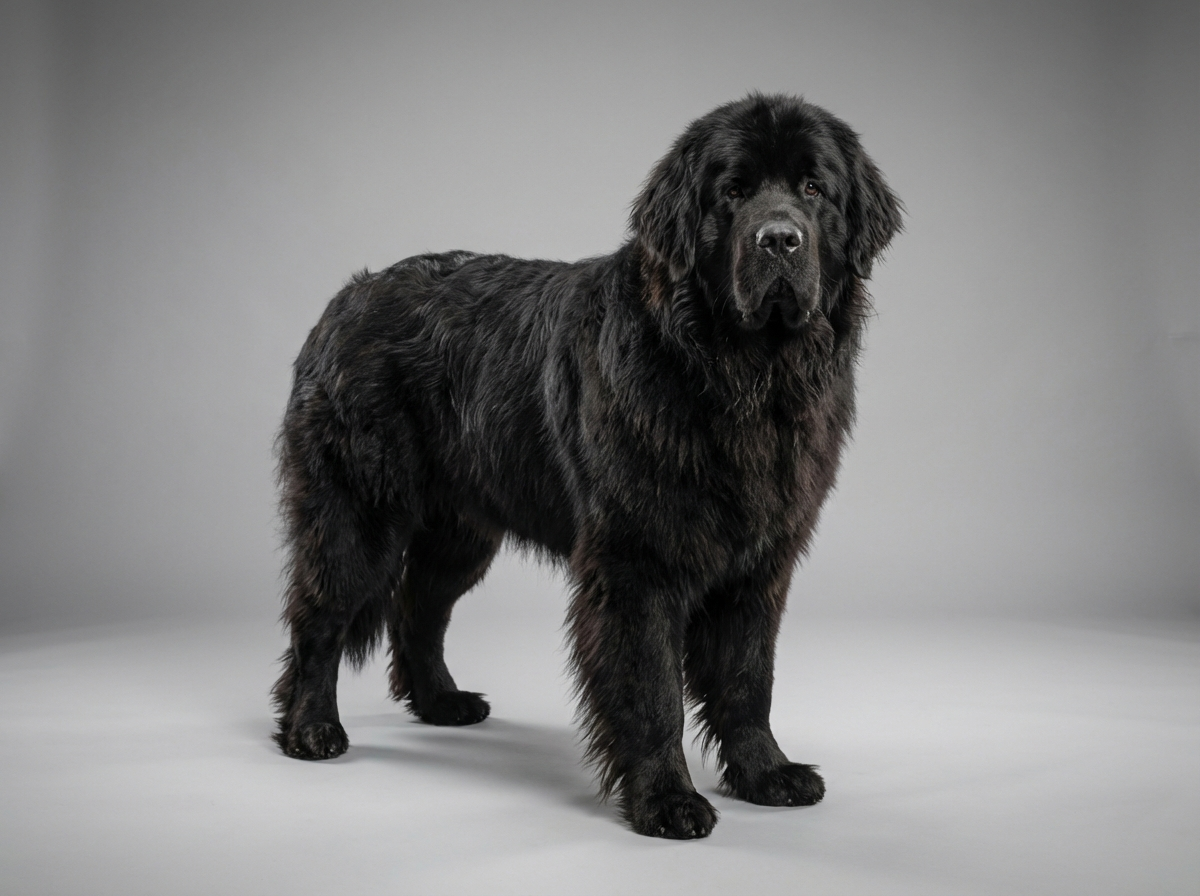
A Newfoundland that snores on the sofa is probably fine. A Newfoundland that makes noise while awake and walking is not. Almost everything useful lies in telling those two apart, and it is a skill you can learn in an afternoon.

For owners who have noticed a sound and cannot decide whether it is a personality quirk or a warning, and who want something more concrete than being told to keep an eye on it.
This guide is not medical advice. If your dog shows pain, sudden behavior change, or worsening symptoms, consult a licensed veterinarian.
Some links may be affiliate links. We may earn a commission at no extra cost to you. We only suggest products we believe are helpful for dog owners.
We research and check what we publish, but we do not warrant that any figure, date, price, or statement is accurate, complete, or current, and we accept no liability for any loss, cost, injury, or other harm arising from the use of this site. Use it as one reference among several. You remain responsible for your own decisions and for your dog's care - confirm anything that matters with a licensed veterinarian or another qualified professional before you act on it. Full disclaimer.
This page is about interpretation rather than a single disease. A Newfoundland can make a great deal of respiratory noise for entirely benign reasons, and can also develop genuine obstruction that is dangerous, and the two sound broadly similar to an untrained ear. Grading the noise by when it occurs, rather than how loud it is, separates them reliably. Because the breed is long-muzzled, obstruction here is never brachycephalic in origin, and the investigation should be aimed at the larynx and at heat physiology.
Benign snoring is extremely common in this breed and causes no problems. Genuine airway obstruction is far less common and is not listed among the conditions Newfoundlands are usually screened for, which are hip, cardiac, urinary and gastric. Its importance comes from severity rather than frequency: a heat-plus-airway crisis in a heavily coated giant breed can become life-threatening within minutes, and owners who have never been given a way to grade the symptom tend to react late.
The Newfoundland brings a thick neck, heavy flews and generous pharyngeal soft tissue, all of which produce vibration and noise without necessarily obstructing anything. What can genuinely obstruct is the larynx, and giant breeds are over-represented in acquired laryngeal dysfunction. Layered on top is the breed's thermal profile: a heavy water-resistant double coat and heavy year-round shedding provide insulation that works against every attempt to cool by panting, and 100 to 150 pounds of body mass generates a large heat load to begin with. A nine to ten year lifespan means the age-related airway changes arrive comparatively early.
Almost every serious episode in this breed has an environmental multiplier attached. Warm weather is the first. Humidity is the second and is routinely underestimated, because it reduces the cooling value of every pant. Poorly ventilated rooms, conservatories, cars and even a sunny patch of garden accumulate heat faster than expected around a dog wearing this much coat. Excitement in the household, particularly at doorways and around visitors, spikes respiratory demand. And the daily walk, if timed by human convenience rather than by thermometer, is where the majority of avoidable incidents begin.
Book an appointment when noise is audible during ordinary walking, when it appears early in exercise rather than at the end, when the bark has changed in character, or when your seasonal grade has moved up a step. Bring your recordings. Seek emergency care immediately, cooling the dog with water and air conditioning on the way, if breathing is noisy and effortful at rest, if your dog stands with the neck extended and elbows out and will not lie down, if the gums or tongue are blue, purple or grey, if the abdomen is heaving with each breath, or if any breathing difficulty occurs on a warm day. Do not attempt to wait this out or cool the dog at home and reassess; the loop between heat, swelling and obstruction accelerates and giant coated breeds have very little margin.
A Newfoundland's airway rarely fails on its own. It fails in combination with something, and the combinations are predictable enough to plan around.
Temperature is the dominant multiplier. Panting is the cooling system, and a dog with any degree of airway narrowing cannot pant as hard as it needs to. The dog gets hotter, the throat tissues swell with the heat, the airway narrows further, the dog panics and works harder, and each turn of that loop is faster than the last. A heavy water-resistant double coat and 100 to 150 pounds of body make this breed exceptionally good at retaining heat, which is a fine quality in cold water and a dangerous one in a July garden.
Excitement is the second multiplier, and it is badly underestimated. A dog that has just heard the doorbell is running its respiratory system near capacity for reasons that have nothing to do with exercise, and airway crises frequently begin at the front door rather than on the walk.
Weight is the third. Fat around the throat and chest narrows the airway mechanically and increases the metabolic heat that has to be shed. In a breed with an energy level of two out of five, weight gain is easy and its respiratory cost is invisible until the day it is not.
The fourth is lead pressure. A strong dog leaning into a collar compresses the very structures under strain. This is the cheapest of all the multipliers to remove, and switching to a harness costs an afternoon.

See all Newfoundland health problems, which breeds are prone to brachycephalic obstructive airway syndrome boas, or the full Newfoundland breed guide for temperament, exercise needs and ownership costs.
Grading and recording gives you a usable baseline in a single week. Environmental changes take effect immediately, and the benefits of weight loss usually become audible over two to four months. If structural disease is found, understand that it progresses: the honest expectation is a slow worsening across years, punctuated by summers that are harder than the last, rather than a stable condition. Surgical intervention where appropriate can produce a marked and rapid improvement, with lifelong management afterwards.
Success is an owner who can say precisely what their dog's breathing sounds like at rest, after exercise and in the heat, and who noticed the first step change rather than the fourth. It is a dog who has never had a crisis, whose routine is organised around temperature, who wears a harness, and who is lean. For a dog with confirmed disease, it is stable grading across a summer rather than a return to silence.
Airway assessment in clinic is limited by the fact that most dogs arrive cool, rested and adrenalised. What you observe at home over a week is better data. Grade your dog on this scale, note the date and the ambient temperature, and repeat it seasonally.
If you think your Newfoundland has BOAS, the plan is three steps: write down what you have seen and when it started, book a veterinary appointment rather than waiting for the next flare, and take video of the sign before you go — the thing you are worried about rarely happens in the consulting room.
What the visit should produce is a diagnosis and a written plan: what is being ruled out, how often it is monitored, and which signs mean you come back sooner. Ask what the treatment costs across a year rather than per visit, because that is the number that decides whether you are managing BOAS or reacting to it.
Between appointments keep a short log — dates, what you saw, what changed. For BOAS in Newfoundlands it is usually what separates a clear pattern from a guess.
Marlow's owner Fiona had been told by her vet to grade his breathing every June and September and keep the recordings. She thought it was fussy. She did it anyway. In his sixth year Marlow was grade zero in both months, silent at rest and after walking. In his seventh he was grade one in June, faintly audible after twenty minutes of walking and quiet again within a minute. In his eighth June the recording caught noise starting four minutes into a walk on a mild morning, and it took him nearly five minutes to go quiet afterwards. He had moved up a step, in exactly the way she had been told to watch for. She booked an appointment rather than waiting for the July heat. A laryngeal examination under light sedation, arranged after his heart was checked, confirmed early laryngeal dysfunction on one side. Nothing dramatic followed. Marlow lost fourteen pounds, moved onto a harness, and his summer routine was rebuilt around a thermometer by the back door. His grade the following June was unchanged from the previous year, which his vet called the best possible result. Fiona's view now is that the recordings were the whole thing. Without them she would have argued with herself about whether he had always sounded like that.
Key takeaway: Grade the noise by when it happens, record it, and watch the direction across seasons. In this breed the step change is the signal, and the heat is what turns a signal into an emergency.
No. Brachycephalic obstructive airway syndrome describes the consequences of a deliberately shortened muzzle, and the Newfoundland is a long-muzzled breed. If a Newfoundland has genuine airway obstruction, the cause is something else, most commonly laryngeal dysfunction, and using the wrong term can send an investigation in the wrong direction.
Lifelong sleeping snoring in a dog who is silent while awake and active is generally a soft-tissue quirk rather than a disease. The concerning pattern is noise that appears while the dog is awake, noise that has emerged in adulthood, or noise that is getting worse season by season. Longstanding and unchanged is reassuring; new and progressing is not.
Take audio, not just video, and get three clips: at rest in a quiet room, immediately after five minutes of walking, and on the warmest day you have. Say the date and the temperature aloud at the start of each recording. Vets consistently say this is more useful than anything an owner can describe in words.
It genuinely can, and in a giant breed the absolute numbers are large enough to matter. Reducing fat around the neck and chest reduces mechanical narrowing, and a lighter dog produces less heat to shed. It is not a cure for structural disease, but it is often the single most effective thing available without surgery.
Cooling equipment can help as part of a plan agreed with your vet, but it should never be the reason a dog is exposed to heat it would otherwise avoid. The most reliable interventions in this breed remain shade, moving air, cool water, and simply not exercising when it is warm.
Once the noise is present at rest or has clearly progressed between seasons, an examination of the larynx under light sedation by someone experienced in doing it is the next step. That requires anaesthetic planning, which in this breed means the heart should be assessed too, since two of the conditions the Newfoundland is known for are cardiac.
Snoring while asleep is usually benign. Noise while awake, at rest, or appearing early in a walk rather than at the end is not, and it needs a veterinary assessment.
Direction, not level. A grade that has worsened between one summer and the next matters more than the absolute amount of noise on any single day.
Swapping a collar for a well-fitted harness and moving walks to the coolest hours. Both take a day to implement and remove real load from a compromised airway.
Yes, by reducing arousal. Many episodes begin with excitement at the door rather than with exercise, so a reliable settle and a calm greeting routine are practical safety measures.
A laryngeal examination requires light sedation and, in this breed, sensible cardiac screening beforehand. Budget for a referral-level assessment rather than a standard consultation.
A one-page prep sheet for this condition: the signs, the questions to ask, what to get priced. Unlocks here.
You get: Vet visit prep sheet
No spam. One-click unsubscribe. See our privacy policy.
Preview page 1 before you decide.