Health
Is this breed at risk of overheating?
Yes, due to fold-trapped heat and documented lower exercise tolerance, even without true BOAS airway obstruction.

Quick answer
Is this breed at risk of overheating?
Yes, due to fold-trapped heat and documented lower exercise tolerance, even without true BOAS airway obstruction.
The end result — a dog struggling in the heat — can look the same regardless of the cause, which is exactly why owners need to know their dog's real anatomy rather than guessing from a label.
Owners in hot or humid climates trying to figure out how much summer activity is genuinely safe, especially after seeing warnings written specifically for true flat-faced breeds.
This guide is not medical advice. If your dog shows pain, sudden behavior change, or worsening symptoms, consult a licensed veterinarian.
Some links may be affiliate links. We may earn a commission at no extra cost to you. We only suggest products we believe are helpful for dog owners.
We research and check what we publish, but we do not warrant that any figure, date, price, or statement is accurate, complete, or current, and we accept no liability for any loss, cost, injury, or other harm arising from the use of this site. Use it as one reference among several. You remain responsible for your own decisions and for your dog's care - confirm anything that matters with a licensed veterinarian or another qualified professional before you act on it. Full disclaimer.
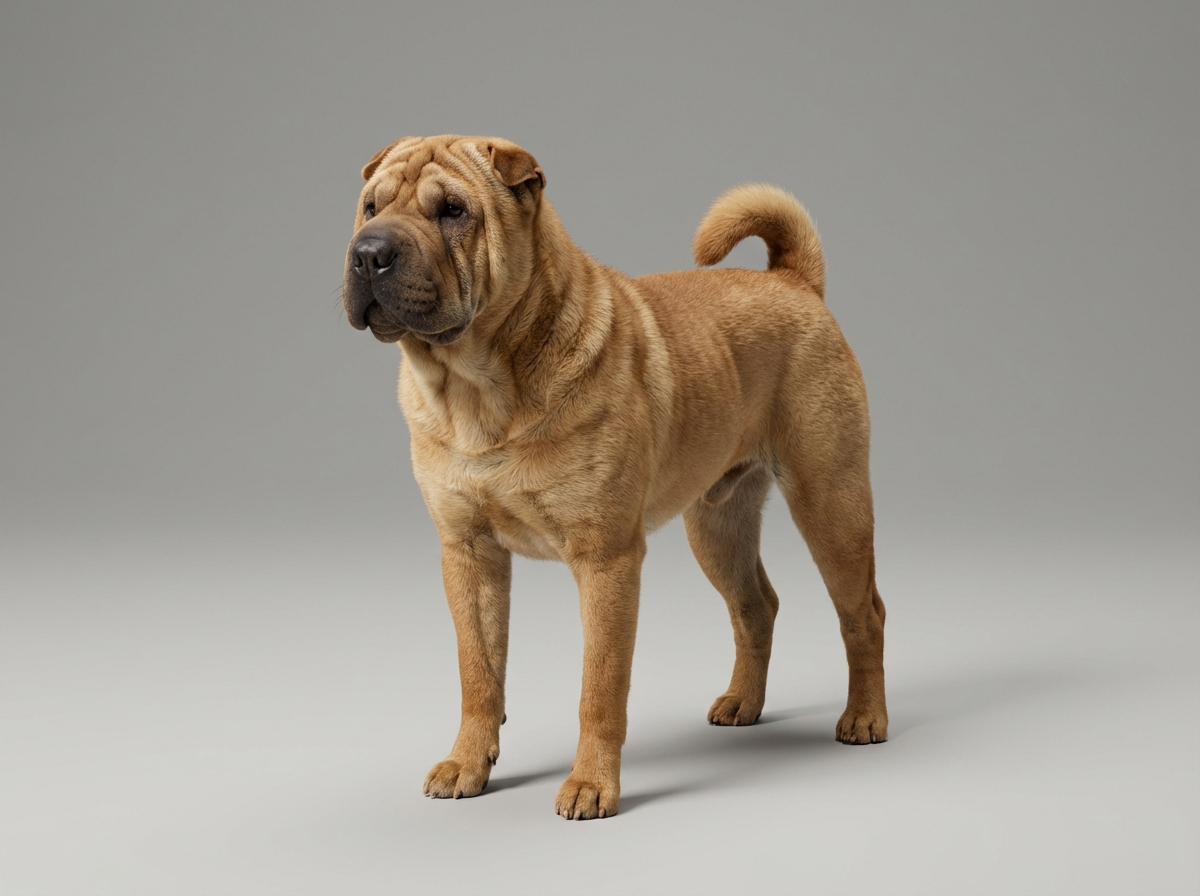
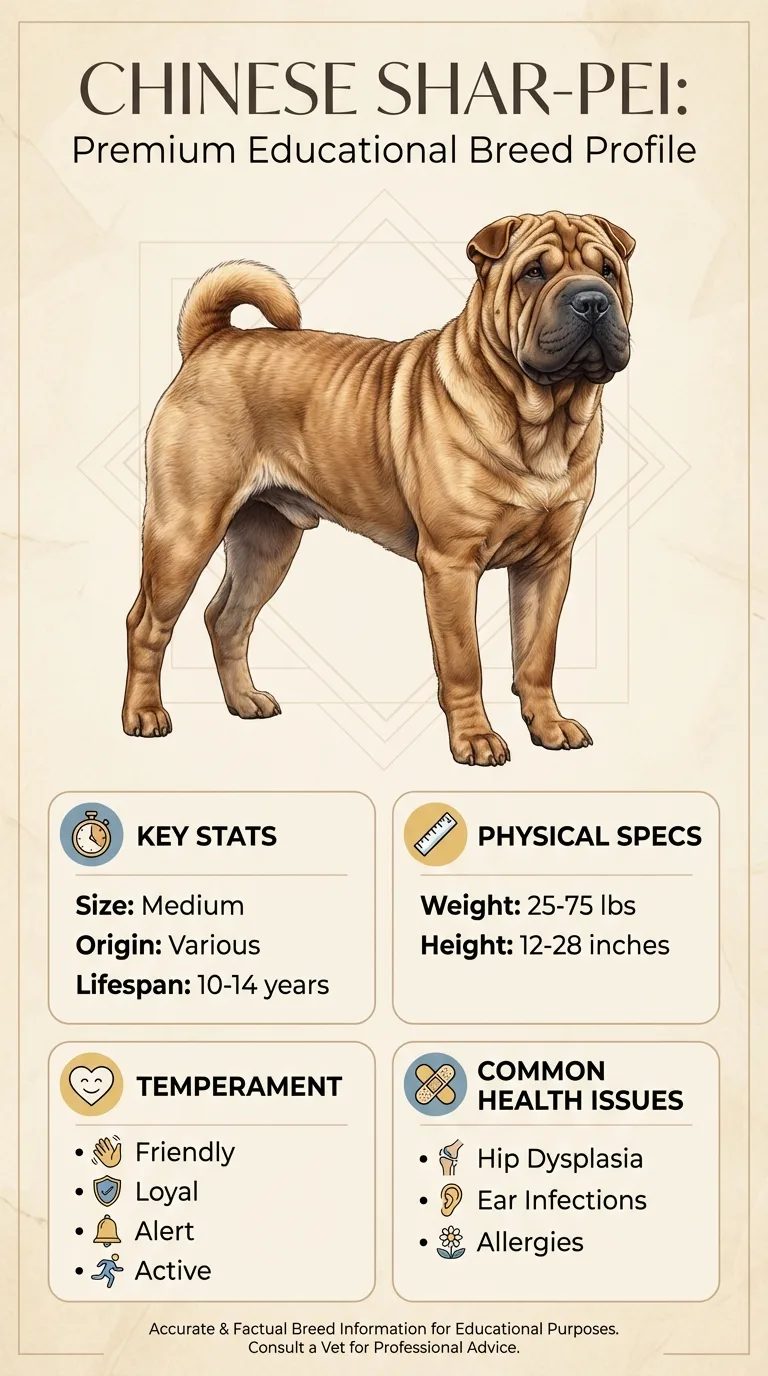
The Chinese Shar-Pei isn't a documented BOAS breed, but heat can still affect it significantly through a different mechanism: fold-trapped heat and a naturally lower documented exercise tolerance. The practical precautions look similar to those for true brachycephalic breeds, even though the underlying cause differs.
Heat sensitivity of some degree is common for this breed given its documented folds and low exercise tolerance, even though the specific mechanism differs from the airway obstruction seen in true BOAS breeds.
This breed's documented skin folds retain heat close to the body, and its documented low exercise needs and energy level mean it isn't built for sustained exertion, hot weather or not — a combination that produces real heat sensitivity without true brachycephalic airway obstruction.
High ambient temperature, humidity, and direct sun exposure during peak hours are the environmental factors that most directly increase this breed's real, if differently caused, heat risk.
Treat heavy, unrelenting panting, bright red gums, vomiting, wobbliness, or collapse as an emergency requiring immediate veterinary care, regardless of whether the cause turns out to be heat-related or something else.
Start here: Chinese Shar-Pei Most Common Genetic Disorders: Screening
See all Chinese Shar PEI health problems, which breeds are prone to brachycephalic obstructive airway syndrome boas, or the full Chinese Shar PEI breed guide for temperament, exercise needs and ownership costs.
Heat safety is a seasonal, ongoing habit rather than a problem with an endpoint — it recurs every warm season for the life of the dog.
Success looks like a summer routine adjusted to this breed's actual documented needs, with no heat-related emergencies, rather than assuming either full BOAS-level restriction or no caution at all.
A true BOAS dog struggles in heat because its narrowed airway can't move enough air to cool efficiently through panting — the physical bottleneck is in the throat and nose. This breed doesn't have that documented anatomical bottleneck. What it does have is thick, folded skin that can trap heat close to the body, and a documented lower baseline exercise tolerance that means it simply isn't built for sustained exertion in the first place, hot or not.
The practical result is similar: a dog that can overheat faster than expected on a hot day. The prevention looks similar too — shade, water, shorter activity windows during peak heat — even though the underlying reason is different from what's written for bulldogs and pugs.
Concrete steps that match this breed's actual, documented risk factors rather than a generic brachycephalic-breed warning.

Farrukh took his Shar-Pei Momo for what he thought was a normal midday walk during a summer heat wave, assuming Momo would be fine since he wasn't 'a flat-faced dog like a bulldog.' Ten minutes in, Momo started panting heavily, slowed to a stop, and refused to keep walking. Farrukh got him into shade immediately, offered water, and called his vet, who talked him through cooling Momo gradually rather than with ice-cold water, which can cause its own problems. Momo recovered within twenty minutes but seemed subdued the rest of the day. Farrukh's vet explained that Momo's fold-heavy skin and naturally low exercise tolerance made him genuinely heat-sensitive, even without the airway obstruction of a true brachycephalic breed — the caution needed to be the same either way.
Key takeaway: Not being a documented BOAS breed doesn't mean heat is a non-issue — this breed's own combination of traits creates real heat risk that deserves the same practical caution, just for a different reason.
The end result can look similar — a dog slowing down and panting hard — but the mechanism differs. This breed doesn't have the documented airway obstruction of true BOAS breeds; its folds trap heat and its baseline exercise tolerance is naturally lower.
There's no single documented cutoff specific to this breed, but as a general guide, avoid exercise during the hottest part of the day and shorten activity considerably once temperatures climb into the 80s Fahrenheit or higher, especially with humidity.
These can help any dog in hot weather and are a reasonable, optional tool given this breed's fold-related heat retention, though they aren't a substitute for avoiding peak heat activity altogether.
Heavy panting that doesn't ease with rest, bright red gums, vomiting, wobbliness, or collapse are all emergency signs in any dog and need immediate veterinary care, not home cooling alone.
It can be, for dogs that enjoy water, though folds should be dried thoroughly afterward to prevent moisture-related skin irritation, a genuinely relevant concern for this breed specifically.
A wrinkled face gets casually grouped with flat-faced breeds in a lot of generic content, even though this breed's documented anatomy — extra skin rather than a shortened skull — doesn't produce the same airway obstruction.
Yes, it's worth flagging clearly, since someone unfamiliar with this breed's specific reasons for heat caution might otherwise assume, correctly, that some caution is needed but not know exactly what to watch for or why.
Yes, due to fold-trapped heat and documented lower exercise tolerance, even without true BOAS airway obstruction.
Early morning or evening, avoiding the hottest midday hours entirely during warm months.
Yes, thoroughly — damp folds retain heat and invite skin irritation, a genuine concern for this breed.
They can be a useful addition but shouldn't replace avoiding peak heat hours altogether.
Mild panting is normal; panting that doesn't ease with rest and shade is a warning sign worth stopping activity for immediately.
A one-page prep sheet for this condition: the signs, the questions to ask, what to get priced. Unlocks here.
You get: Vet visit prep sheet
No spam. One-click unsubscribe. See our privacy policy.
Preview page 1 before you decide.