Health
What does the praying position mean in a dog?
Chest down and hindquarters up, held rather than stretched, usually means upper abdominal pain. Pancreatitis is a leading cause and it warrants a same-day vet visit.

Quick answer
What does the praying position mean in a dog?
Chest down and hindquarters up, held rather than stretched, usually means upper abdominal pain. Pancreatitis is a leading cause and it warrants a same-day vet visit.
The classic clue is a posture, not a symptom: chest down, hindquarters up, held for far longer than a stretch. Owners call it the praying position.
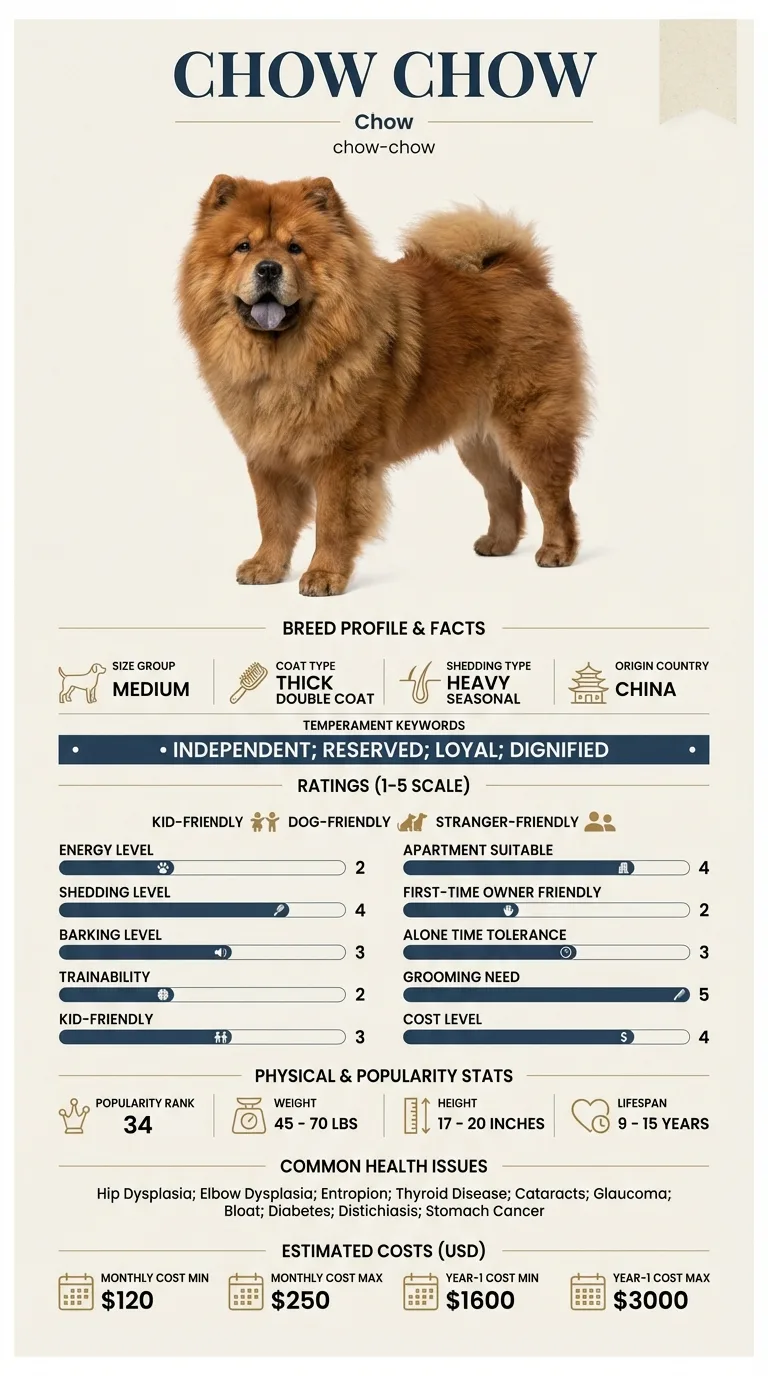
Owners whose Chow is vomiting repeatedly and will not settle, and anyone in a household where the dog has access to fatty scraps, particularly around holidays and barbecues.
This guide is not medical advice. If your dog shows pain, sudden behavior change, or worsening symptoms, consult a licensed veterinarian.
Some links may be affiliate links. We may earn a commission at no extra cost to you. We only suggest products we believe are helpful for dog owners.
We research and check what we publish, but we do not warrant that any figure, date, price, or statement is accurate, complete, or current, and we accept no liability for any loss, cost, injury, or other harm arising from the use of this site. Use it as one reference among several. You remain responsible for your own decisions and for your dog's care - confirm anything that matters with a licensed veterinarian or another qualified professional before you act on it. Full disclaimer.
Check this first
A high-fat meal is the best-recognised trigger for acute pancreatitis in dogs. Fat entering the small intestine is a powerful signal for the pancreas to release enzymes, and a sudden large load, particularly in a dog unaccustomed to it, appears to be enough to tip a susceptible pancreas into premature enzyme activation. This is why cases cluster around Christmas, Thanksgiving, barbecues and any occasion involving roasting fat, cheese, sausages or discarded trimmings.
The household detail that matters most is that the offending meal is rarely given deliberately. It is a bin raid, a plate left within reach, or a well-meaning relative. In a breed with a strong independent streak and a reputation for quiet self-direction, an unattended kitchen is an opportunity.
One differential deserves naming clearly. Bloat, or gastric dilatation-volvulus, is documented among this breed's health issues and can look superficially similar in the early stages: a distressed dog, an uncomfortable abdomen, unproductive retching. Bloat is a surgical emergency measured in hours, and the distinguishing features are a rapidly swelling, drum-tight abdomen and retching that produces nothing at all. If you are unsure which you are looking at, that uncertainty is itself a reason to go now rather than to observe.
If any of these apply, call your vet or an emergency clinic now. The rest of this page is for the cases that are not an emergency.
Pancreatitis is inflammation of the pancreas caused by digestive enzymes activating within the organ itself. Acute attacks bring vomiting, severe abdominal pain and refusal of food, and require hospital treatment with fluids, pain control and careful nutritional management. Mild cases recover in days; severe ones can be fatal, and repeated episodes cause lasting damage.
Pancreatitis does not appear among the Chow Chow's documented health issues, so it is a general canine risk rather than a breed hallmark. It is nonetheless one of the more common reasons any dog is hospitalised for vomiting, and its main risk factors, dietary indiscretion and excess body weight, are entirely present in this breed.
The Chow's pancreas is not anatomically unusual, and the honest answer is that this is a diet-driven condition rather than a conformational one. Where the breed matters is in recognition and in risk exposure. An independent, reserved dog with a dignified bearing does not signal abdominal pain early, so the window between the first discomfort and the owner's alarm is longer than in a demonstrative breed. A coat rated 5 out of 5 for grooming demand hides the hunched, tucked posture that would otherwise be obvious. Blue-black oral pigment removes the gum colour check used to assess shock. And a low exercise need of 2 out of 5 makes weight gain, a genuine risk factor, easy to accumulate unnoticed.
Kitchens and calendars do most of the work. Households that treat table scraps as affection, that leave bins accessible, or that have visiting relatives with different rules, produce the sudden fat loads that trigger attacks. Holiday cooking concentrates the risk into a few days a year. Barbecues add both fatty trimmings and unsupervised access. Multi-dog households make portion control harder to police, and a quiet, self-directed Chow is well placed to take advantage of an unwatched counter.
Go the same day, and out of hours if necessary, for repeated vomiting, a dog holding the praying position, refusal of food combined with restlessness, an abdomen that is painful to touch, or obvious weakness. Severe pancreatitis causes dehydration and shock quickly and needs intravenous support rather than home monitoring. Go immediately, without delay, if the abdomen is swelling and hard and your dog is retching without producing anything, since bloat is documented in this breed and is fatal within hours untreated. Do not rely on gum colour to judge severity in a Chow, and do not give any human medication, food or home remedy while you are deciding.
See all Chow Chow health problems, which breeds are prone to pancreatitis, or the full Chow Chow breed guide for temperament, exercise needs and ownership costs.
Mild cases often improve within two to four days with supportive treatment, and many dogs are hospitalised for one to three days. Severe cases can require a week or more of intensive care. Diet changes are usually permanent, and appetite may take a week or two to return fully after an attack.
Success is a dog eating normally on a low-fat diet, back to his usual routine, with no further episodes. Given how frequently pancreatitis recurs, a household that has genuinely changed its habits around bins and table food is a more meaningful marker of success than the recovery itself.
Two of these together in a Chow warrant a call. In a breed rated for independence and dignity, a dog who is visibly unable to get comfortable has already passed the point where he would normally hide it.
If you think your Chow has pancreatitis, the plan is three steps: write down what you have seen and when it started, book a veterinary appointment rather than waiting for the next flare, and take video of the behaviour or symptom before you go — the thing you are worried about rarely happens in the consulting room. Screening in the parents covers hip dysplasia, elbow dysplasia, entropion.
What the vet visit should produce is a diagnosis and a written plan, not just reassurance: what is being ruled out, what the monitoring interval is, and which signs mean you come back sooner. Ask what the treatment costs across a year rather than per visit, because that is the number that decides whether you are managing this condition or reacting to it.
Between appointments, keep a short log — dates, what you saw, what changed. It is the single most useful thing an owner brings to a follow-up, and for pancreatitis it is often what separates a clear pattern from a guess.
Bramble was seven and had never had a day's illness. On Boxing Day morning his owner Grainne found the roasting tin on the floor, licked clean, and a great deal of goose fat gone. By that evening he was vomiting, and by ten o'clock he was standing in the hallway with his chest on the carpet and his hindquarters up, refusing to lie down. Grainne had never seen the posture before and did not know what it meant. What made her call was that he would not settle at all, which was completely unlike him. Bramble spent three days on intravenous fluids and pain relief with a diagnosis of acute pancreatitis. He recovered fully. The tin now goes straight into a lidded bin in a closed cupboard, and Grainne's brother-in-law has been told, in writing, that the dog gets nothing from the table.
Key takeaway: The dog did not steal a meal. He absorbed a year's worth of fat in ten minutes. Secure the bin before the holiday, not after the hospital bill.
Pancreatitis is not among the ten documented health issues for the breed. It is a common canine problem driven mainly by diet and individual susceptibility rather than by breed conformation, though documented diabetes in Chows creates an overlapping metabolic picture worth being aware of.
Usually by combining the clinical picture with a specific pancreatic lipase blood test and abdominal ultrasound. General blood panels alone are not reliable, because the older enzyme measurements are affected by other conditions. Imaging also helps exclude the surgical emergencies that present similarly.
Do not manage this at home. Prolonged food withholding is no longer standard practice, and the current approach favours early feeding of an appropriate diet alongside pain control and fluids. Decisions about when and what to feed belong to the vet treating the dog.
Yes. Repeated or smouldering inflammation can gradually destroy pancreatic tissue, which over time may reduce both enzyme production and the insulin-producing cells. That is the pathway linking chronic pancreatitis to diabetes, which is documented in this breed.
A consistently low-fat diet, no table food at all, secure bins, and a household rule that everyone follows. Recurrence is common in dogs that have had one episode, and the single biggest cause of a second attack is a return to occasional scraps once the dog seems recovered.
Considerably. A reserved, dignified breed does not perform discomfort, a dense double coat conceals a tucked or hunched outline, and blue-black gum pigment prevents the usual colour check for shock. Behaviour, posture and willingness to settle are the reliable signals here.
Chest down and hindquarters up, held rather than stretched, usually means upper abdominal pain. Pancreatitis is a leading cause and it warrants a same-day vet visit.
Sudden high-fat loads: roasting fat, sausages, cheese, buttery leftovers and bin raids. Holidays and barbecues are the classic settings.
Bloat shows a rapidly swelling, drum-tight belly with retching that produces nothing. If you are unsure, treat it as bloat and go immediately.
Usually a permanently low-fat diet is advised, because recurrence is common. Most repeat attacks follow a return to occasional table scraps.
A one-page prep sheet for this condition: the signs, the questions to ask, what to get priced. Unlocks here.
You get: Vet visit prep sheet
No spam. One-click unsubscribe. See our privacy policy.
Preview page 1 before you decide.