Health
Is my Labrador chondrodystrophic?
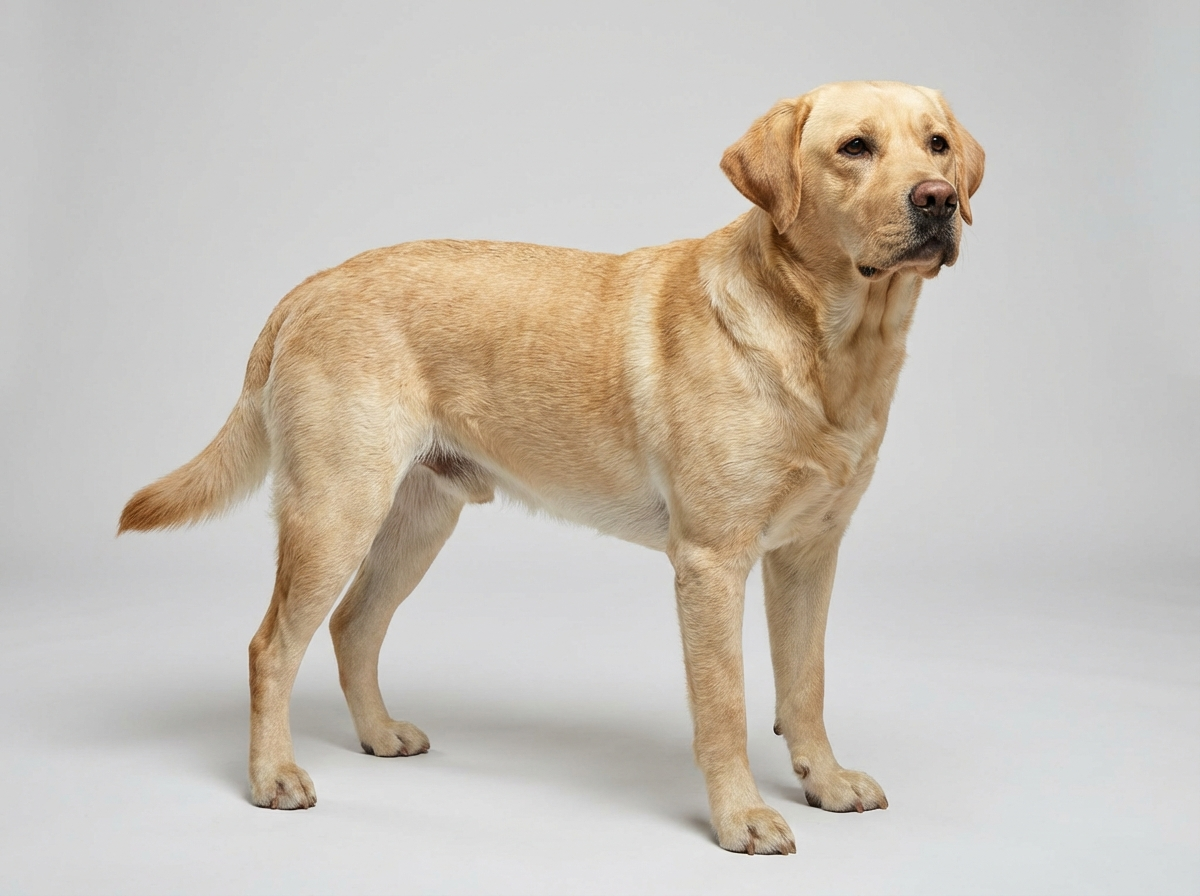
No, Labrador Retrievers don't carry the CDDY gene mutation and have a normal, proportionate build.

Quick answer
Is my Labrador chondrodystrophic?
No, Labrador Retrievers don't carry the CDDY gene mutation and have a normal, proportionate build.
If you searched CDDY because you're worried about your Lab's back, the reassuring, accurate answer is that this specific mutation and its associated build simply aren't part of this breed.
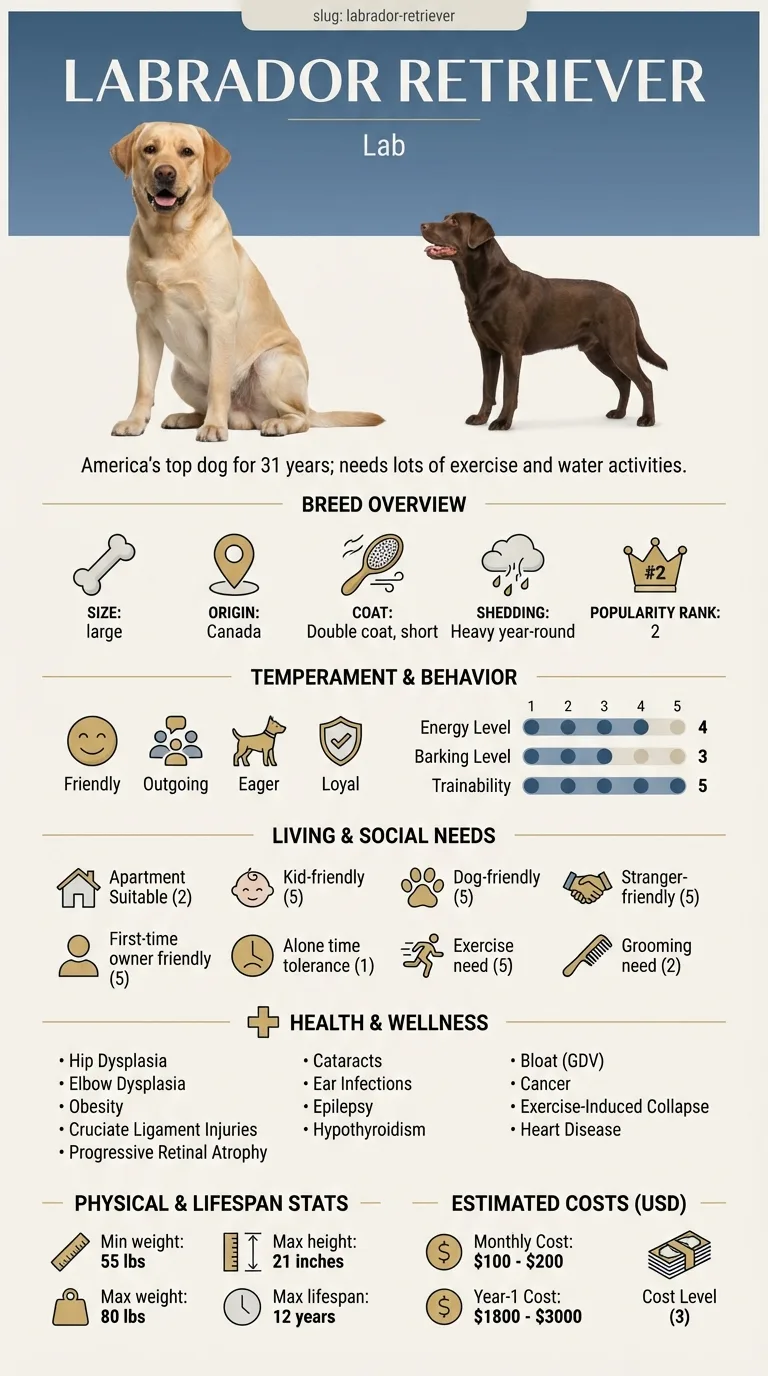
Owners comparing their Labrador's back health to information written about short-legged breeds, or those who've seen a genetic panel mention chondrodystrophy status, are the ones who benefit most from this direct clarification.
This guide is not medical advice. If your dog shows pain, sudden behavior change, or worsening symptoms, consult a licensed veterinarian.
Some links may be affiliate links. We may earn a commission at no extra cost to you. We only suggest products we believe are helpful for dog owners.
We research and check what we publish, but we do not warrant that any figure, date, price, or statement is accurate, complete, or current, and we accept no liability for any loss, cost, injury, or other harm arising from the use of this site. Use it as one reference among several. You remain responsible for your own decisions and for your dog's care - confirm anything that matters with a licensed veterinarian or another qualified professional before you act on it. Full disclaimer.
Chondrodystrophy, or CDDY, is a specific gene mutation responsible for the short-legged, long-backed build seen in breeds like Dachshunds and Corgis, and the early, sudden disc ruptures that build predisposes them to. Labrador Retrievers do not carry this mutation and have a normal, proportionate spine and leg length. This page exists to clarify that directly, since the label sometimes gets applied to back-problem searches regardless of breed.
Not applicable to Labrador Retrievers as a documented breed trait; this mutation and its associated build are specific to chondrodystrophic breeds and have no meaningful presence in this breed's gene pool.
Labrador Retrievers carry the standard, non-mutated version of the FGF4 gene responsible for chondrodystrophy, and were developed as a proportionate, athletic working breed rather than selected for the short-legged build this mutation produces. There is no documented CDDY presence in this breed.
As a fixed genetic trait rather than an environmentally influenced one, CDDY has no relevant environmental drivers for this breed. What does matter environmentally for a Labrador's actual back health is activity level, weight, and age, covered in this breed's own back and spine content.
There's no CDDY-specific reason to see a vet for this breed. Bring up genuine back or spine symptoms, hesitation to jump, sensitivity along the spine, or hind-limb weakness, as their own concern using this breed's actual relevant conditions as context.
See all Labrador Retriever health problems, which breeds are prone to chondrodystrophy cddy, or the full Labrador Retriever breed guide for temperament, exercise needs and ownership costs.
This is a fixed genetic fact rather than a condition with a timeline. Understanding it is a one-time clarification that redirects attention to the back-health topics that are actually genuinely relevant to this breed.
Success is simply having accurate information: knowing this specific mutation and its associated risks don't apply to your Labrador, and directing any real back-health concerns toward the conditions that do.
CDDY refers to an extra copy of a gene called FGF4 inserted at a specific location in a dog's genome, a mutation responsible for the disproportionately short legs and long back seen in breeds like Dachshunds, Corgis, French Bulldogs, and Basset Hounds. This same mutation also changes disc structure throughout the spine, making early, sudden disc rupture (the "Type I" pattern) common in those breeds, sometimes in dogs just a few years old. It's a well-defined, testable genetic trait, and it is specifically absent in Labrador Retrievers, which have the standard, non-mutated gene and a correspondingly normal leg length and spine proportion.
Since Labradors don't carry the CDDY mutation, they don't experience the early, sudden Type I disc ruptures documented in chondrodystrophic breeds. When back or spine problems do occur in this breed, they're typically either mechanical strain from an active, high-impact lifestyle, or a slower, age-related Type II disc degeneration process more typical of larger, normally-proportioned breeds. If a genetic panel or a vet has raised chondrodystrophy in connection with your Lab, it's worth asking directly what specifically prompted that, since it isn't an expected finding for this breed.

If you think your Lab has chondrodystrophy (cddy), the plan is three steps: write down what you have seen and when it started, book a veterinary appointment rather than waiting for the next flare, and take video of the behaviour or symptom before you go — the thing you are worried about rarely happens in the consulting room. Screening in the parents covers hip dysplasia, elbow dysplasia, obesity.
What the vet visit should produce is a diagnosis and a written plan, not just reassurance: what is being ruled out, what the monitoring interval is, and which signs mean you come back sooner. Ask what the treatment costs across a year rather than per visit, because that is the number that decides whether you are managing this condition or reacting to it.
Between appointments, keep a short log — dates, what you saw, what changed. It is the single most useful thing an owner brings to a follow-up, and for chondrodystrophy (cddy) it is often what separates a clear pattern from a guess.
Moss's owner ran a comprehensive DNA health panel out of general curiosity and was startled to see "chondrodystrophy: clear" listed among dozens of results, having never heard the term before and briefly worrying it meant Moss was at risk for something serious. A quick call to her vet clarified that "clear" was the expected, reassuring result for a Labrador, since the panel tests for the mutation across all possible ancestries regardless of breed, and Moss's result simply confirmed he didn't carry it, as expected. Her vet used the moment to walk through what Moss's actual, breed-relevant back-health risks looked like instead, weight management and activity moderation, which felt far more useful than the confusing initial scare.
Key takeaway: A chondrodystrophy result on a genetic panel is expected to come back clear for a Labrador, and the more useful conversation is about this breed's actual, documented back-health risks instead.
No. CDDY is specifically documented in short-legged, long-backed breeds like Dachshunds and Corgis. Labradors have the standard, non-mutated gene and a normal, proportionate build.
Chondrodystrophy comes from a specific inherited gene mutation that isn't present in this breed's gene pool. Labrador Retrievers were bred for a proportionate, athletic build suited to retrieving work, not the short-legged conformation the mutation produces.
Yes, if the dog also has ancestry from a chondrodystrophic breed, it could inherit the mutation from that side of its family, but the Labrador contribution to its genetics wouldn't be the source.
Genuine disc-related back problems are possible in any breed, but in Labradors it follows a different, generally slower, age-related pattern rather than the early, sudden ruptures CDDY causes in affected breeds.
Many comprehensive dog DNA panels test for this mutation regardless of breed, simply because it's relevant across many possible ancestries; a negative or "clear" result for a Labrador is the expected, unremarkable finding.
In breeds that carry it, it raises the risk of early, sometimes severe disc rupture, but it's not itself a disease the dog suffers from directly; it's a build and spine-structure trait with that specific downstream risk.
It's reasonable context to have, since it means one specific, well-documented disc disease risk pattern doesn't apply to your dog, though it doesn't mean back problems of any kind are impossible.
No, Labrador Retrievers don't carry the CDDY gene mutation and have a normal, proportionate build.
Dachshunds, Corgis, Basset Hounds, French Bulldogs, and other short-legged, long-backed breeds are the classic examples carrying this mutation.
No, disc issues can still occur, but as a slower, age-related pattern rather than the early, sudden ruptures CDDY causes in affected breeds.
It's not necessary given the breed's known genetics, though a comprehensive DNA panel testing for many traits at once will simply return a clear result.
Unlikely; visual impression alone isn't reliable, and without documented breed-wide CDDY presence in Labradors, a genetic test would be the only way to confirm anything unusual.
A one-page prep sheet for this condition: the signs, the questions to ask, what to get priced. Unlocks here.
You get: Vet visit prep sheet
No spam. One-click unsubscribe. See our privacy policy.
Preview page 1 before you decide.