Health
What does chondrodystrophy actually mean?
A form of dwarfism that shortens the leg bones and causes spinal discs to mineralise early, producing the long-low body plan and early disc disease.

Quick answer
What does chondrodystrophy actually mean?
A form of dwarfism that shortens the leg bones and causes spinal discs to mineralise early, producing the long-low body plan and early disc disease.
Most owners meet this term not through a sick dog but through a mail-order DNA panel that tested for it because the panel tests everything, and reading that result correctly is a skill worth having.
Bichon Frise owners who have run a genetic test and are now looking at a list of forty conditions they have never heard of. Also owners comparing breeds who want to understand why some small dogs are prone to slipped discs and others are not.
This guide is not medical advice. If your dog shows pain, sudden behavior change, or worsening symptoms, consult a licensed veterinarian.
Some links may be affiliate links. We may earn a commission at no extra cost to you. We only suggest products we believe are helpful for dog owners.
We research and check what we publish, but we do not warrant that any figure, date, price, or statement is accurate, complete, or current, and we accept no liability for any loss, cost, injury, or other harm arising from the use of this site. Use it as one reference among several. You remain responsible for your own decisions and for your dog's care - confirm anything that matters with a licensed veterinarian or another qualified professional before you act on it. Full disclaimer.
Chondrodystrophy is a genetically driven form of dwarfism that shortens the limb bones and causes premature mineralisation of the spinal discs. It defines the body plan of breeds such as the dachshund and the corgi, and it is the reason those breeds suffer sudden disc ruptures at young ages. The Bichon Frise is not built on that plan and disc disease is not among the conditions documented for it.
Effectively universal in the breeds defined by it, and correspondingly rare outside them. The Bichon Frise sits outside, both by conformation and by its documented health list. Most owners of this breed encounter the term only through a consumer genetic panel, which tests the same large menu for every dog it processes regardless of whether a given variant has any relevance to that animal.
The trait comes from an inserted extra copy of a growth factor gene that is active during skeletal development. Its dual effect, shortened limbs and early disc mineralisation, is inseparable, which is the tragedy of the breeds that carry it: the silhouette people find appealing and the disc disease that follows arrive from the same source. The Bichon Frise was developed as a compact companion dog with proportionate limbs and shows no evidence of that variant's effects. Its documented problems, from skin allergies to patellar luxation and bladder stones, arise through entirely unrelated mechanisms.
Genetics sets the disc chemistry; environment supplies the load. In carrier breeds, jumping from furniture, stairs and excess weight convert a fragile disc into a ruptured one, which is why management advice for a dachshund is so heavily focused on the home. For a Bichon Frise those same measures remain worthwhile, but for ordinary reasons rather than genetic ones. A dog of 9 to 12 inches jumping repeatedly from human-scale furniture onto laminate is loading its joints and spine hard, whatever its DNA report says.
Bring a DNA panel to a routine appointment rather than treating it as urgent, and ask which of its findings, if any, are validated in this breed. Book a proper neurological assessment for hind leg wobbliness, scuffing, crossing of the back feet, or a new reluctance to jump. Treat as an emergency and go immediately, day or night, if your dog cannot stand or walk, is dragging a hind leg, has lost bladder or bowel control, is knuckling repeatedly onto the tops of its feet, or is in severe pain with a rigid hunched posture. Spinal cord compression is time-critical and the useful treatment window is measured in hours.
See all Bichon Frise health problems, which breeds are prone to chondrodystrophy cddy, or the full Bichon Frise breed guide for temperament, exercise needs and ownership costs.
If you arrived here holding a DNA report, the realistic timeline is one conversation at your next routine appointment. Nothing about your dog's day-to-day care is likely to change. Where household modifications are made, ramps and floor grip take a couple of weeks for a dog to adopt with some encouragement. Genuine spinal problems, should they ever arise, follow their own timelines and are assessed clinically rather than genetically.
Success is an owner who understands what a genetic report can and cannot say, who has not restricted a healthy dog's life on the basis of an irrelevant variant, and who is watching the things that actually matter: how the hind legs move, how much the dog weighs, and whether anything has changed. A Bichon Frise with a normal gait at twelve years old is the outcome, and it is reached through household habits rather than through testing.
The variant works by inserting an extra copy of a growth factor gene into the genome. That extra copy is active during development, and it does two distinct things.
The first is the visible one. It shortens and curves the long bones of the limbs, which is why the affected breeds all look the way they do. Legs finish growing earlier and shorter while the spine and skull develop normally, giving that characteristic long-low silhouette.
The second effect is invisible and more consequential. The soft gel-like centre of each spinal disc undergoes premature change, mineralising much earlier in life than it should. A disc with a hardened centre behaves like a stone rather than a cushion, and under load it can burst upward into the spinal canal and press on the cord.
That is why breeds carrying this variant have such a high rate of dramatic, sudden spinal injuries in young and middle-aged dogs, while other breeds develop spinal problems slowly and much later.
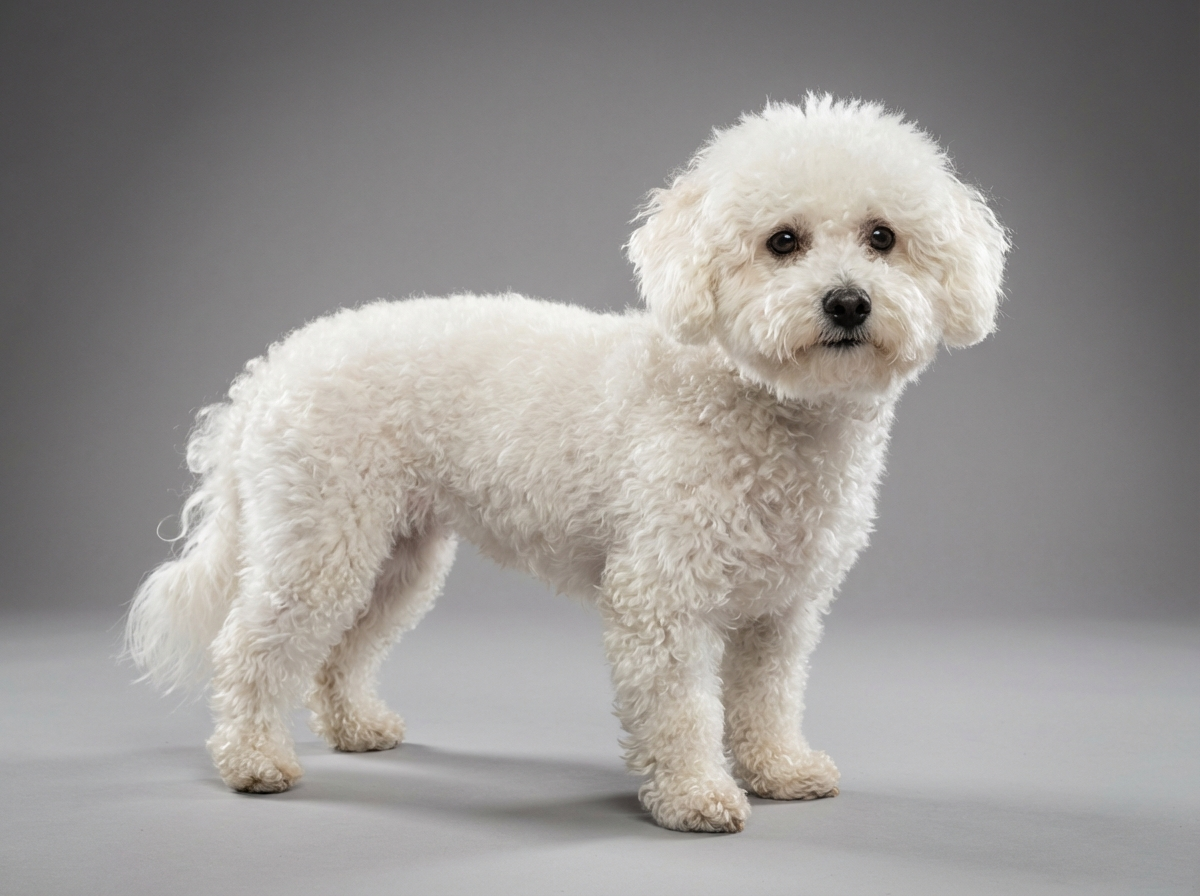
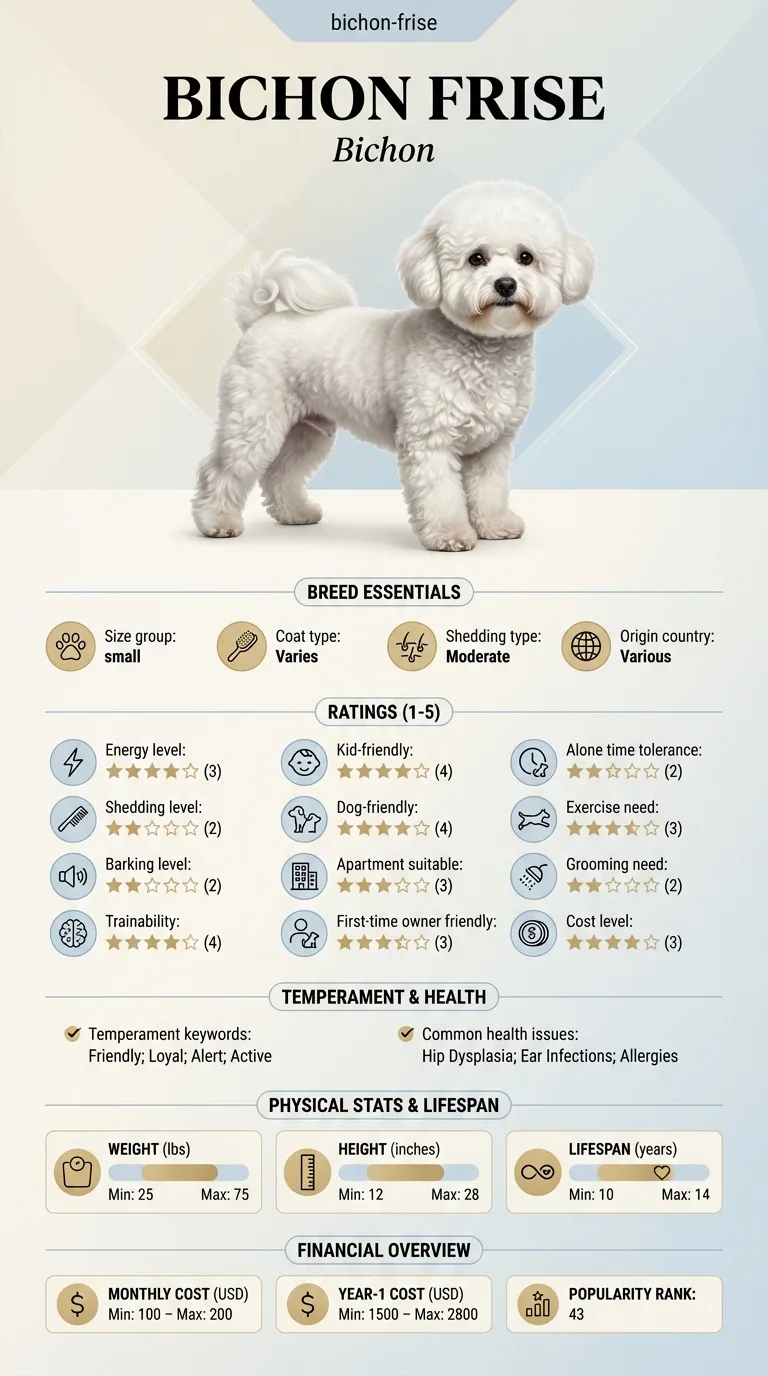
The Bichon Frise does not have the long-low body plan. It stands 9 to 12 inches with legs in normal proportion, and disc disease does not appear on its documented health list, which covers skin allergies, patellar luxation, bladder stones, cataracts and dental disease.

Consumer panels test the same large set of variants for every dog regardless of breed. That design produces a long report, most of which is irrelevant to your particular animal. These principles keep the exercise useful.
If you think your Bichon has chondrodystrophy, the plan is three steps: write down what you have seen and when it started, book a veterinary appointment rather than waiting for the next flare, and take video of the behaviour or symptom before you go — the thing you are worried about rarely happens in the consulting room. Screening in the parents covers skin allergies, patellar luxation, bladder stones.
What the vet visit should produce is a diagnosis and a written plan, not just reassurance: what is being ruled out, what the monitoring interval is, and which signs mean you come back sooner. Ask what the treatment costs across a year rather than per visit, because that is the number that decides whether you are managing this condition or reacting to it.
Between appointments, keep a short log — dates, what you saw, what changed. It is the single most useful thing an owner brings to a follow-up, and for chondrodystrophy it is often what separates a clear pattern from a guess.
Amira ran a broad genetic panel on her three-year-old Bichon Frise, Fennel, mostly out of curiosity after seeing an advertisement. The report came back listing results for more than forty conditions, several of them with names she could not pronounce and one flagged in amber. She spent an evening reading and by midnight had convinced herself Fennel had a spinal condition and should never use the stairs again. Her vet gave her ten minutes at the next vaccination appointment. The flagged variant had been characterised in breeds with a body plan Fennel plainly did not have; her limbs were of normal proportion, her neurological examination was unremarkable, and nothing about her care needed to change. What did change was small and sensible. Amira put a ramp beside the sofa and rugs down the hallway, which her vet endorsed for any small dog. Fennel keeps using the stairs.
Key takeaway: A consumer genetic panel tests the same menu for every dog it receives, so an unfamiliar result usually says more about the panel's design than about the animal in front of you.
No. The breed has legs in normal proportion to its body and does not display the long-low conformation that defines chondrodystrophy. It is a compact, roughly square small dog of 9 to 12 inches, and the spinal consequences associated with the variant are not part of its documented health picture.
Take the report to your veterinarian rather than acting on it alone. Ask specifically whether the variant has been validated in this breed, what a result of that type would mean clinically, and whether anything about your dog's examination supports it. In most cases the answer is that nothing changes about your dog's care.
Not on the basis of a panel alone. Restricting a healthy dog carries real costs: weaker supporting muscle, weight gain and reduced quality of life. Sensible general precautions such as ramps to furniture and grip on slippery floors are worth doing for every small dog anyway.
It can be interesting, particularly for ancestry in a mixed-breed dog, and some panels include variants worth knowing about. What it will not do is predict the conditions this breed actually gets, since allergic skin disease, dental disease and cataracts are influenced by many genes and by environment. Set expectations accordingly.
For this variant the number of copies does influence the strength of the effect in the breeds where it has been studied. That nuance is one more reason to have a result interpreted by a veterinarian who can put it alongside your dog's actual conformation and examination findings rather than reading it in isolation.
Watch how your dog uses its hind legs. Scuffing, crossing the back feet, wobbliness, worn tops on the hind toenails, or a sudden reluctance to jump are the signs that matter, and they warrant an examination whatever a DNA panel says. Clinical signs always outrank a laboratory report.
A form of dwarfism that shortens the leg bones and causes spinal discs to mineralise early, producing the long-low body plan and early disc disease.
The breed is not chondrodystrophic and does not have the associated body shape or the documented disc disease that follows from it.
As a conversation starter with your vet, not as a diagnosis. Ask whether the variant has been validated in this breed at all.
Ramps to furniture, grip on slippery floors and a lean body weight. These protect any small dog's spine regardless of genetics.
Modest for what they cover, but they do not predict the conditions this breed genuinely gets. Annual veterinary examinations remain better value.
A one-page prep sheet for this condition: the signs, the questions to ask, what to get priced. Unlocks here.
You get: Vet visit prep sheet
No spam. One-click unsubscribe. See our privacy policy.
Preview page 1 before you decide.