Health
Is DM painful for dogs?
No, this is one of its defining features; DM causes progressive weakness and poor coordination without pain, unlike disc disease.

Quick answer
Is DM painful for dogs?
No, this is one of its defining features; DM causes progressive weakness and poor coordination without pain, unlike disc disease.
A Lab that starts dragging its back toes or seems wobbly in the hind end, but shows no signs of pain when you check its back or hips, may be showing the earliest signs of DM rather than a disc or joint problem.
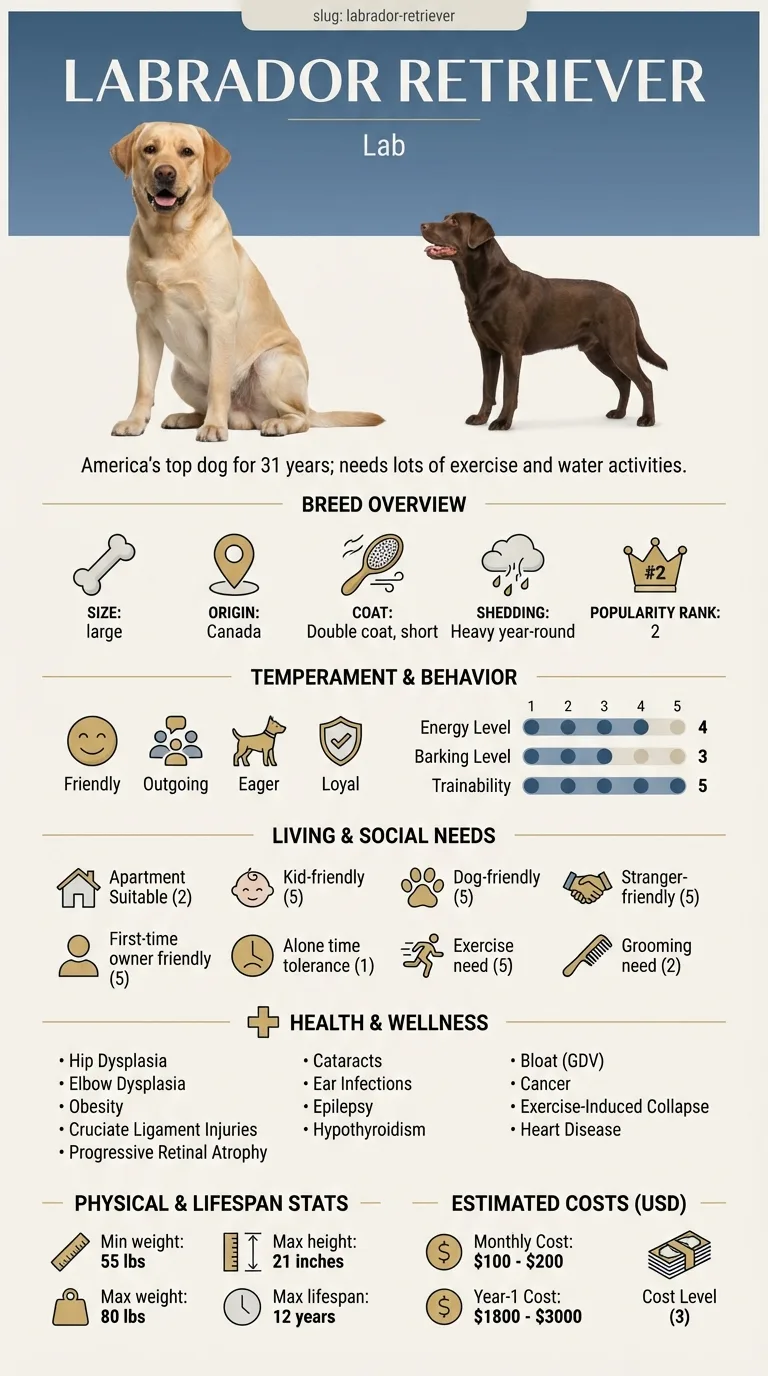
Owners of senior Labradors, typically eight and older, especially those from lines with known DM-positive genetic test results, are the ones most likely to encounter this condition directly.
This guide is not medical advice. If your dog shows pain, sudden behavior change, or worsening symptoms, consult a licensed veterinarian.
Some links may be affiliate links. We may earn a commission at no extra cost to you. We only suggest products we believe are helpful for dog owners.
We research and check what we publish, but we do not warrant that any figure, date, price, or statement is accurate, complete, or current, and we accept no liability for any loss, cost, injury, or other harm arising from the use of this site. Use it as one reference among several. You remain responsible for your own decisions and for your dog's care - confirm anything that matters with a licensed veterinarian or another qualified professional before you act on it. Full disclaimer.
Degenerative myelopathy is a progressive spinal cord disease with genuine genetic documentation in Labrador Retrievers, linked to a mutation in the SOD1 gene. It causes gradually worsening hind-end weakness and poor coordination, notably without pain, which helps distinguish it clinically from disc disease. There's no cure, but physical therapy and mobility support can meaningfully help quality of life as it progresses.
Genuinely documented through genetic research specifically including this breed, making it a real, testable risk rather than a loosely applied label, though not every genetically at-risk Labrador develops clinical disease.
Labrador Retrievers are one of the breeds specifically studied in genetic research on the SOD1 gene mutation linked to degenerative myelopathy, giving this condition real, documented relevance for the breed, distinct from conditions with no genuine breed connection.
There's no established environmental trigger for DM; it's primarily a genetic, age-related neurological disease. Maintaining good overall physical conditioning and a healthy weight can support mobility and comfort as the disease progresses, even though it doesn't affect the disease's underlying course.
Talk to your vet about any gradual, painless hind-end weakness or coordination changes in a senior Labrador, since distinguishing DM from a painful, treatable condition like disc disease matters for choosing the right management path. This is a progressive condition to discuss and plan for, not a sudden emergency.
See all Labrador Retriever health problems, which breeds are prone to degenerative myelopathy dm, or the full Labrador Retriever breed guide for temperament, exercise needs and ownership costs.
DM typically progresses gradually over six months to a year or more from first noticeable signs to significant mobility loss. There's no treatment that slows the underlying disease, so the timeline reflects the disease's natural course rather than a response to intervention.
Success is maintaining the best possible quality of life and mobility support for as long as possible through physical therapy, mobility aids, and a safe home environment, since this is a progressive condition without a cure, not one where full recovery is a realistic goal.
Degenerative myelopathy in dogs is linked to a mutation in the SOD1 gene, and Labrador Retrievers are one of the breeds specifically included in the genetic research and DNA testing panels developed around this mutation. Carrying two copies of the mutation raises a dog's risk of eventually developing the disease, though not every genetically at-risk dog goes on to show symptoms, and onset typically doesn't occur until a dog is well into its senior years. This genetic basis is what makes DM a genuinely documented, testable condition in this breed, unlike several other neurological conditions sometimes mentioned without real evidence.
DM causes progressive weakness and loss of coordination in the hind end, starting subtly, a dragging back toe, scuffed nails, or mild wobbliness, and worsening gradually over months. Critically, this happens without pain, because the disease affects the spinal cord's nerve fibers rather than causing inflammation or nerve compression the way disc disease does. This distinction matters clinically: a dog with disc disease is often reluctant to move and shows clear pain response, while a DM-affected dog will often keep trying to move normally despite worsening coordination, precisely because nothing hurts. That contrast is frequently what helps a vet distinguish the two conditions during an exam.

If you think your Lab has degenerative myelopathy (dm), the plan is three steps: write down what you have seen and when it started, book a veterinary appointment rather than waiting for the next flare, and take video of the behaviour or symptom before you go — the thing you are worried about rarely happens in the consulting room. Screening in the parents covers hip dysplasia, elbow dysplasia, obesity.
What the vet visit should produce is a diagnosis and a written plan, not just reassurance: what is being ruled out, what the monitoring interval is, and which signs mean you come back sooner. Ask what the treatment costs across a year rather than per visit, because that is the number that decides whether you are managing this condition or reacting to it.
Between appointments, keep a short log — dates, what you saw, what changed. It is the single most useful thing an owner brings to a follow-up, and for degenerative myelopathy (dm) it is often what separates a clear pattern from a guess.
Willow's owner first noticed her nine-year-old Labrador's back toenail had become oddly scuffed and worn down on one side, though Willow showed no sign of pain and seemed otherwise completely normal. Over the following months, a subtle wobble developed in her hind end. A vet exam, ruling out disc disease given the complete absence of pain response, combined with a positive genetic test for the SOD1 mutation, led to a working diagnosis of degenerative myelopathy. Willow's owner started her on a program of gentle daily exercise and added a supportive rear harness for walks. A year later, Willow's mobility has continued to decline gradually, but she remains comfortable and engaged, and her owner has begun researching a wheeled cart for when she needs it.
Key takeaway: The absence of pain alongside gradually worsening hind-end coordination in a senior Labrador is the clearest clinical signal pointing toward DM rather than a treatable disc or joint problem, and early recognition helps set up the right long-term support plan.
Yes, this condition has genuine genetic documentation in this breed through research and DNA testing linked to the SOD1 gene mutation, distinguishing it from more loosely applied condition labels.
Subtle dragging of a back toe, scuffed rear nails, mild wobbliness or swaying in the hind end, and gradually worsening coordination over months, all without any apparent pain.
The biggest clinical difference is pain. Disc disease typically causes clear pain and reluctance to move. DM causes progressive weakness and poor coordination without pain, since it affects nerve fibers rather than causing compression or inflammation.
A DNA test can identify whether a dog carries the SOD1 mutation associated with DM risk, which supports a suspected diagnosis, though a definitive confirmation traditionally requires spinal cord examination after death; the genetic test combined with clinical signs is used for practical diagnosis in a living dog.
There's no cure or treatment that stops progression. Physical therapy, controlled exercise, and mobility aids like harnesses or carts can meaningfully support quality of life as the disease advances.
It typically progresses gradually over six months to a year or more, moving from mild hind-end weakness to significant loss of mobility, though the pace varies between individual dogs.
No, carrying two copies of the mutation raises risk but doesn't guarantee the disease will develop; some genetically at-risk dogs never show symptoms during their lifetime.
No, this is one of its defining features; DM causes progressive weakness and poor coordination without pain, unlike disc disease.
Yes, a DNA test for the SOD1 gene mutation is available and commonly included in comprehensive breed health panels.
No, there's no cure or treatment that halts progression, though physical therapy and mobility support can meaningfully help quality of life as it advances.
Supportive harnesses are relatively inexpensive, while wheeled carts for more advanced mobility loss represent a larger one-time cost, both worth budgeting for as the disease progresses.
Typically in senior dogs, often eight years or older, though the exact onset age varies between individual dogs even among those carrying the same genetic risk.
A one-page prep sheet for this condition: the signs, the questions to ask, what to get priced. Unlocks here.
You get: Vet visit prep sheet
No spam. One-click unsubscribe. See our privacy policy.
Preview page 1 before you decide.