Maltese Chondrodystrophy (CDDY): What You Need to Know
Maltese chondrodystrophy (cddy) is a developmental disorder that impacts your dog's bones. This condition can lead to discomfort and mobility issues.
Typically, first-time Maltese owners or those unaware of breed-specific health issues may struggle with the implications of chondrodystrophy. These owners often seek guidance on managing their dog's symptoms and improving their quality of life.
Important reminder
This guide is not medical advice. If your dog shows pain, sudden behavior change, or worsening symptoms, consult a licensed veterinarian.
Some links may be affiliate links. We may earn a commission at no extra cost to you. We only suggest products we believe are helpful for dog owners.
What this problem looks like
Maltese chondrodystrophy (cddy) is a developmental disorder that affects the bone structure of this small breed. Owners may notice their Maltese has shorter limbs and a compact body shape. This can lead to mobility issues and discomfort, particularly as the dog ages.
Common triggers
Genetic predisposition
Rapid growth periods
Inadequate nutrition during development
Chondrodystrophy is relatively common in Maltese dogs due to their genetic background. Many owners may encounter this issue, especially if they are not familiar with the breed's health predispositions. While not every Maltese will develop cddy, awareness can help in managing the condition.
Why this happens
Breed factors
Maltese chondrodystrophy (cddy) is primarily a genetic condition. It affects how bones develop, leading to issues like shortened limbs. Breeds like the Maltese are more prone to this disorder due to their specific genetic makeup.
Environment factors
Environmental factors can also contribute to the severity of cddy. For example, a lack of proper nutrition during the early growth stages may exacerbate bone development issues. Additionally, excessive weight can put more stress on already weakened bones.
What you can try
At-home strategies
Provide a balanced diet rich in essential nutrients to support bone health. Consult your vet for the best food options.
Encourage gentle exercises, like short walks, to maintain mobility without overexertion. Monitor your Maltese for signs of discomfort.
Create a comfortable living space with soft bedding to reduce pressure on joints. Avoid stairs or rough surfaces that could cause injury.
When to consider a trainer
If you notice persistent behavior issues or difficulty with basic commands, consider hiring a professional trainer. A trainer can help address specific challenges related to cddy and improve your Maltese's overall behavior.
When to talk to your vet
Consult your vet if your Maltese shows signs of pain, limping, or difficulty moving. Regular check-ups are essential to monitor their condition and adjust care plans as needed.
Realistic expectations
You can expect to see improvements in your Maltese's behavior within 2 to 3 months of consistent training and care.
Success means your Maltese exhibits less anxiety and shows more confidence, allowing them to engage more comfortably with their environment and family.
Mistakes that make this worse
Avoid these common mistakes when dealing with Maltese chondrodystrophy (cddy). They can delay improvement and reinforce the problem.
Ignoring vet advice: Skipping recommended check-ups or treatments can worsen your Maltese’s condition. Always follow your vet's guidance.
Overexercising: Pushing your Maltese too hard can lead to injury. Opt for short, gentle walks instead of intense exercise sessions.
Inconsistent training: If you don’t stick to a training routine, your Maltese may become confused or anxious. Establish a consistent schedule for commands and rewards.
Neglecting dental care: Maltese are prone to dental issues, which can exacerbate health problems. Regular brushing and vet check-ups are essential.
Allowing too much independence: Letting your Maltese roam freely can lead to anxiety and behavior issues. Set clear boundaries and create a safe space for them.
Using negative reinforcement: Punishing your Maltese for mistakes can increase anxiety. Instead, focus on positive reinforcement to encourage good behavior.
Ignoring signs of discomfort: If your Maltese shows signs of pain or distress, don’t brush it off. Take them to the vet to address any underlying issues.
When Maltese Chondrodystrophy (cddy) is an Emergency
Recognizing when Maltese chondrodystrophy (cddy) is an emergency can be crucial for your dog's health. If your Maltese shows severe symptoms, it's time to call your vet. Look for signs like inability to walk, extreme pain, or swelling in the limbs. These are red flags that need immediate attention.
In contrast, if your Maltese has mild symptoms such as slight limping or occasional discomfort, you can monitor the situation. Create a plan for regular vet check-ups and adjust your dog's activity level. Keep track of any changes in behavior or mobility, and consult your vet if things worsen.
Here’s a quick guide to distinguish between emergency situations and mild cases:
- **Emergency Signs:** Inability to stand, severe pain, visible deformities, or sudden changes in behavior.
- **Mild Cases:** Occasional limping, mild discomfort, or slight changes in mobility that can be monitored over time.

Maltese Chondrodystrophy (CDDY): What You Need to Know - When Maltese Chondrodystrophy (cddy) is an Emergency
Building Confidence in Bella the Maltese
When Sarah adopted Bella, her Maltese, she quickly noticed her pup struggled with anxiety due to chondrodystrophy (CDDY). Bella was hesitant to play and often sat alone, which worried Sarah. After researching how to stop Maltese chondrodystrophy (cddy), Sarah decided to enroll Bella in a positive reinforcement training class. With patience, Sarah practiced daily training exercises, slowly introducing Bella to new environments and social situations. Over time, Bella transformed into a more confident and playful dog, enjoying time with other pets and even learning new tricks. Sarah's dedication helped Bella become a happier and more sociable Maltese.
Key takeaway: With consistent training and support, Maltese with chondrodystrophy (cddy) can overcome anxiety and thrive in their homes.
Frequently asked questions
What is Maltese chondrodystrophy (cddy)?
Maltese chondrodystrophy (cddy) is a developmental disorder that affects the bones in Maltese dogs. This condition can lead to shorter limbs and other skeletal issues, impacting their mobility and overall health. It's important to monitor your Maltese for signs of discomfort or abnormal development.
Why does my Maltese have chondrodystrophy (cddy)?
Maltese chondrodystrophy (cddy) is typically inherited and results from genetic factors. Breeding practices can influence the likelihood of this condition appearing in your Maltese. Regular vet check-ups can help identify and manage these genetic issues early.
How can I help my Maltese with chondrodystrophy (cddy)?
To support a Maltese with chondrodystrophy (cddy), provide a comfortable living environment and avoid activities that put excessive strain on their joints. Regular vet visits are crucial to monitor bone health and address any pain or mobility issues as they arise.
What are the symptoms of Maltese chondrodystrophy (cddy)?
Symptoms of Maltese chondrodystrophy (cddy) can include difficulty walking, stiffness, and changes in gait. You may also notice unusual bone development or pain when your Maltese is active. If you observe any of these signs, consult your veterinarian promptly.
Is training affected by Maltese chondrodystrophy (cddy)?
Training can still be effective for Maltese with chondrodystrophy (cddy), but it should be approached gently. Focus on low-impact activities and positive reinforcement techniques to keep your Maltese engaged without causing stress on their bones.
Can Maltese with chondrodystrophy (cddy) live a normal life?
Yes, many Maltese with chondrodystrophy (cddy) can lead fulfilling lives with proper care and management. Regular veterinary care and a supportive home environment are essential to help them thrive despite their condition.
What are the signs of Maltese chondrodystrophy (cddy)?
Signs of Maltese chondrodystrophy (cddy) include a shorter stature, unusual bone structure, and potential mobility issues. You may also notice your Maltese struggling with coordination or showing reluctance to exercise. If these signs appear, consulting with a vet is crucial.
Can Maltese chondrodystrophy (cddy) affect older dogs?
Yes, Maltese chondrodystrophy (cddy) can affect older dogs, especially as their physical condition changes. Aging can exacerbate the symptoms, making it harder for them to move comfortably. Regular vet check-ups can help manage any complications as your Maltese ages.
When should I see a vet about my Maltese's chondrodystrophy (cddy)?
You should see a vet if your Maltese shows signs of discomfort, such as limping, reluctance to play, or changes in appetite. Early intervention can help manage pain and improve their quality of life. Don't hesitate to reach out if you have any concerns.
How can I help my Maltese with chondrodystrophy (cddy)?
To help your Maltese with chondrodystrophy (cddy), provide a comfortable living environment and consider gentle exercise to maintain mobility. Specialized diets and supplements may also support bone health. Always consult your vet before making any changes.
Are there specific training methods for Maltese with chondrodystrophy (cddy)?
Yes, training methods for Maltese with chondrodystrophy (cddy) should focus on gentle, positive reinforcement techniques. Avoid strenuous activities that could strain their bones. Tailoring training to their abilities will help them learn without discomfort.
What are quick tips for managing Maltese chondrodystrophy (cddy)?
To manage Maltese chondrodystrophy (cddy), ensure regular vet check-ups, provide a safe environment, and avoid high-impact activities. Consider gentle training methods to keep your dog engaged without strain.
Costs
How much does it cost to care for a Maltese with chondrodystrophy (cddy)?
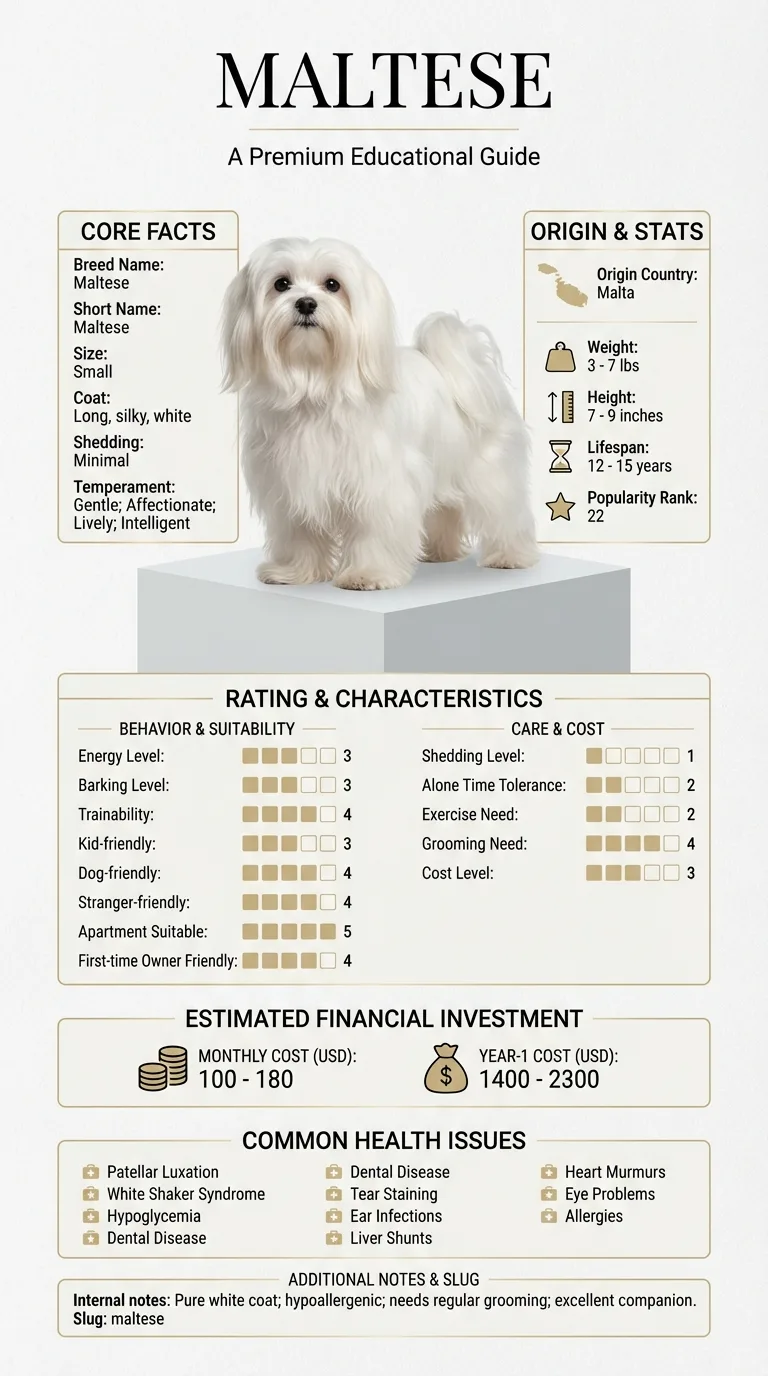
Caring for a Maltese with chondrodystrophy (cddy) can cost between $100 and $180 monthly, depending on veterinary care and any special needs. It's essential to budget for regular check-ups and potential treatments.
Living
Is Maltese chondrodystrophy (cddy) common?
Maltese chondrodystrophy (cddy) is not uncommon in this breed, especially due to genetic factors. Responsible breeding practices can help reduce the incidence of this condition.
Related DogBreedCompass guides
Maltese behavior problems – Understanding the specific behavioral issues that can arise with Maltese dogs will help you address chondrodystrophy (cddy) more effectively.
Maltese separation anxiety guide – Separation anxiety can be common in small breeds like the Maltese. This guide offers strategies to help your dog cope.
Maltese ownership cost breakdown – Find out how much it will cost to own a Maltese, including potential health issues like chondrodystrophy (cddy).
Maltese training techniques – Discover training methods specifically designed for Maltese dogs, which can aid in managing chondrodystrophy (cddy) symptoms.
Maltese health issues overview – Learning about common health issues in Maltese dogs can help you prepare for and manage chondrodystrophy (cddy).