Behavior
What are some quick tips for Miniature Schnauzer chondrodystrophy (cddy)?
Focus on low-impact activities and maintain a healthy weight to reduce strain on your Mini Schnauzer's joints.

Quick answer
What are some quick tips for Miniature Schnauzer chondrodystrophy (cddy)?
Focus on low-impact activities and maintain a healthy weight to reduce strain on your Mini Schnauzer's joints.
Miniature Schnauzer chondrodystrophy (CDDY) is a developmental bone disorder that can significantly affect your dog's quality of life. Understanding this condition is crucial for every Mini Schnauzer owner.
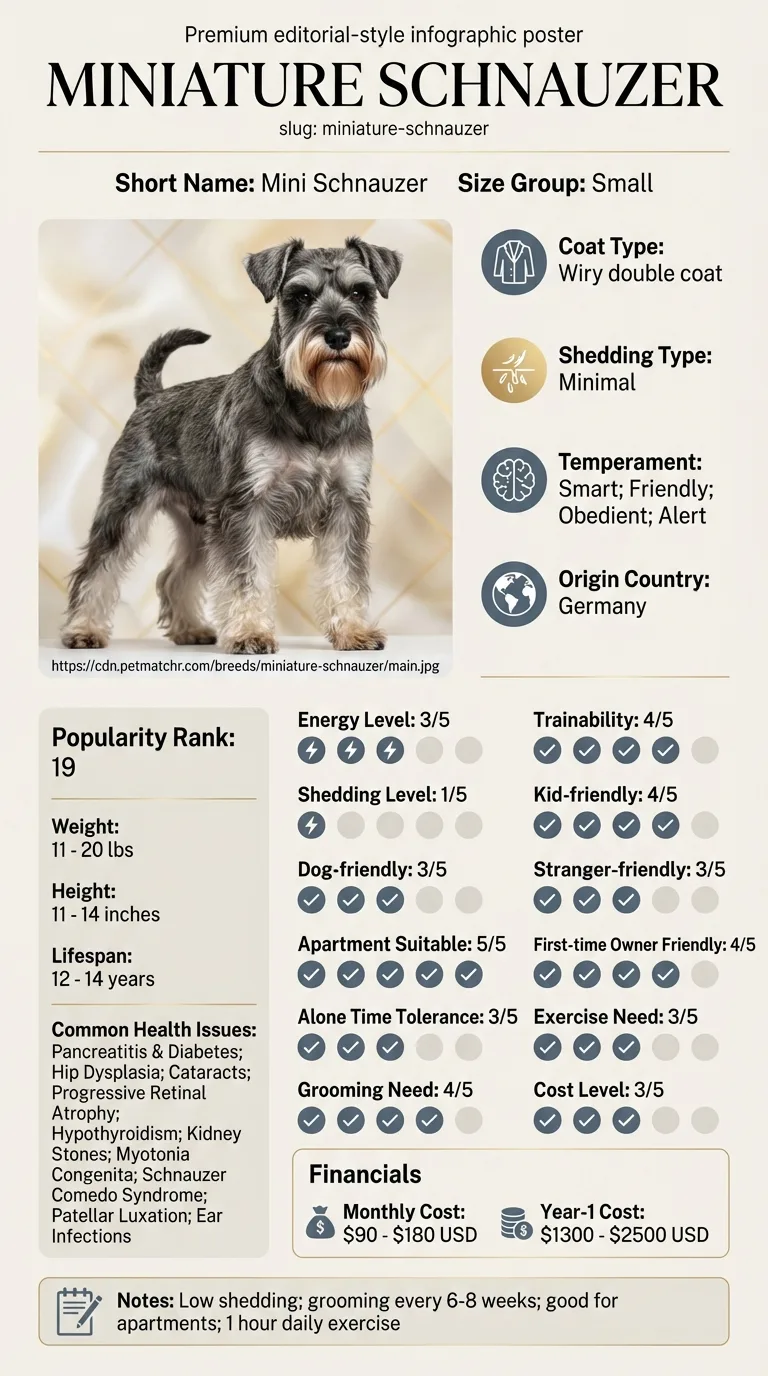
Owners of Miniature Schnauzers often face this issue, especially those who are new to dog care. If you're a busy family or an individual who loves their pet but struggles with managing health issues, understanding CDDY is essential.
This guide is not medical advice. If your dog shows pain, sudden behavior change, or worsening symptoms, consult a licensed veterinarian.
Some links may be affiliate links. We may earn a commission at no extra cost to you. We only suggest products we believe are helpful for dog owners.
We research and check what we publish, but we do not warrant that any figure, date, price, or statement is accurate, complete, or current, and we accept no liability for any loss, cost, injury, or other harm arising from the use of this site. Use it as one reference among several. You remain responsible for your own decisions and for your dog's care - confirm anything that matters with a licensed veterinarian or another qualified professional before you act on it. Full disclaimer.
Check this first
Call your vet right away if you notice: - Severe pain or distress in your Miniature Schnauzer. If they are yelping, whimpering, or unable to move normally, this is concerning. - Difficulty breathing or unusual coughing. These can indicate serious complications. - Swelling in the limbs or joints that seems sudden or excessive. This might signal underlying issues related to their bones.
On the other hand, you can monitor your dog at home if they show mild symptoms such as: - Slight limping or stiffness after exercise. This may improve with rest. - Occasional reluctance to jump or climb stairs. Keep an eye on them and adjust their activities as needed. - Minor weight changes. If they are still active and eating well, it might not be urgent.
It's always better to err on the side of caution. If you’re ever in doubt, reach out to your vet for advice. Regular check-ups and being aware of your Miniature Schnauzer's behavior can help you catch potential problems early.
If any of these apply, call your vet or an emergency clinic now. The rest of this page is for the cases that are not an emergency.
Miniature Schnauzer chondrodystrophy (cddy) is a developmental disorder that affects the bone structure of these small dogs. This condition often leads to issues with mobility and physical discomfort, which can manifest as reluctance to walk or play. Owners may notice their Mini Schnauzers having difficulty with stairs or jumping onto furniture, which can be frustrating for both the pet and the owner.
Chondrodystrophy (cddy) is relatively common in Miniature Schnauzers, as the breed has a higher risk due to its genetic background. While not every Mini Schnauzer will develop this issue, it is a significant concern for many owners, making awareness and preventive measures crucial.
Miniature Schnauzers are prone to chondrodystrophy (CDDY) due to their genetic makeup. This developmental disorder affects bone growth and structure, making them more susceptible to skeletal issues. The breed's characteristics, like their small stature, can contribute to these health challenges.
Environmental factors can also play a role in the severity of CDDY symptoms. For example, excessive weight from overfeeding can exacerbate bone issues. Additionally, a lack of proper exercise can weaken their bones and muscles, leading to more discomfort.
Consult your vet if you notice any significant changes in your dog's mobility or if they seem to be in pain. Early intervention is key in managing CDDY, and your vet can provide tailored advice or medication if needed.
Avoiding these common mistakes can help manage Miniature Schnauzer chondrodystrophy (cddy) more effectively.
Start here: Miniature Schnauzer Most Common Genetic Disorders: Screening
See all Miniature Schnauzer health problems, which breeds are prone to chondrodystrophy cddy, or the full Miniature Schnauzer breed guide for temperament, exercise needs and ownership costs.
You can expect to see improvements in your Miniature Schnauzer within 8 to 12 weeks of consistent care and follow-up with your vet. Regular vet check-ups will also help monitor progress.
Success means your Miniature Schnauzer will show reduced symptoms of chondrodystrophy, such as improved mobility and comfort. You'll also notice a more stable mood and less anxiety overall.
When Sarah adopted Bella, her Miniature Schnauzer, she quickly noticed Bella struggled with mobility due to chondrodystrophy. Frustrated, Sarah consulted her vet, who suggested a combination of gentle exercise and specialized training techniques. With patience, Sarah implemented a daily routine of low-impact activities and reinforced positive behaviors. By the end of three months, Bella was not only moving more comfortably but also seemed happier and more engaged with Sarah's family.
Key takeaway: With the right training and consistent care, you can significantly improve your Miniature Schnauzer's quality of life despite chondrodystrophy.
Miniature Schnauzers can inherit chondrodystrophy (cddy), a genetic condition affecting bone development. This disorder typically leads to shorter limbs and can cause mobility issues. If you suspect your dog has cddy, consult your vet for a proper diagnosis and management plan.
Managing cddy involves regular vet check-ups and a controlled exercise routine. Focus on low-impact activities to prevent joint strain. Additionally, maintaining a healthy weight is crucial to reduce stress on their bones.
Signs of cddy may include difficulty walking, a waddling gait, or noticeable limb deformities. You might also observe your Mini Schnauzer experiencing pain or reluctance to engage in physical activities. If you notice these symptoms, seek veterinary advice.
While cddy itself can't be cured, you can help prevent it from worsening by providing joint supplements and a balanced diet. Regular, gentle exercise can also help keep their muscles strong and support mobility. Always consult your vet before starting any new regimen.
Yes, training is essential for Miniature Schnauzers with cddy. Gentle training exercises can help improve coordination and mobility. Positive reinforcement techniques create a supportive environment that encourages your dog to engage without overexerting themselves.
Yes, Miniature Schnauzer chondrodystrophy (cddy) can worsen as your dog ages. Increased joint stress over time may lead to more noticeable symptoms or complications, so regular vet check-ups are essential.
Managing Miniature Schnauzer chondrodystrophy (cddy) at home can involve providing a comfortable resting area, ensuring proper nutrition, and maintaining a healthy weight. Gentle exercise and physical therapy can also help, but always consult your vet before starting any new regimen.
Surgery may be an option for some Miniature Schnauzers with chondrodystrophy (cddy), particularly if they experience severe pain or mobility issues. Discussing this with your vet can help determine if it's the right approach for your dog's specific situation.
Yes, there are genetic tests available to determine if a Miniature Schnauzer carries the genes associated with chondrodystrophy (cddy). If you’re considering breeding or want to understand your dog's health better, consulting a vet about testing options is a good idea.
Focus on low-impact activities and maintain a healthy weight to reduce strain on your Mini Schnauzer's joints.
Provide a soft, supportive bed and avoid hard surfaces to ease their discomfort. Regular vet check-ups are also vital.
Use positive reinforcement methods and keep training sessions short to prevent fatigue. Tailor exercises to their physical limitations.
Yes, a balanced diet can help maintain a healthy weight, which is important for managing cddy symptoms. Consult your vet for the best dietary options.
A one-page prep sheet for this condition: the signs, the questions to ask, what to get priced. Unlocks here.
You get: Vet visit prep sheet
No spam. One-click unsubscribe. See our privacy policy.
Preview page 1 before you decide.