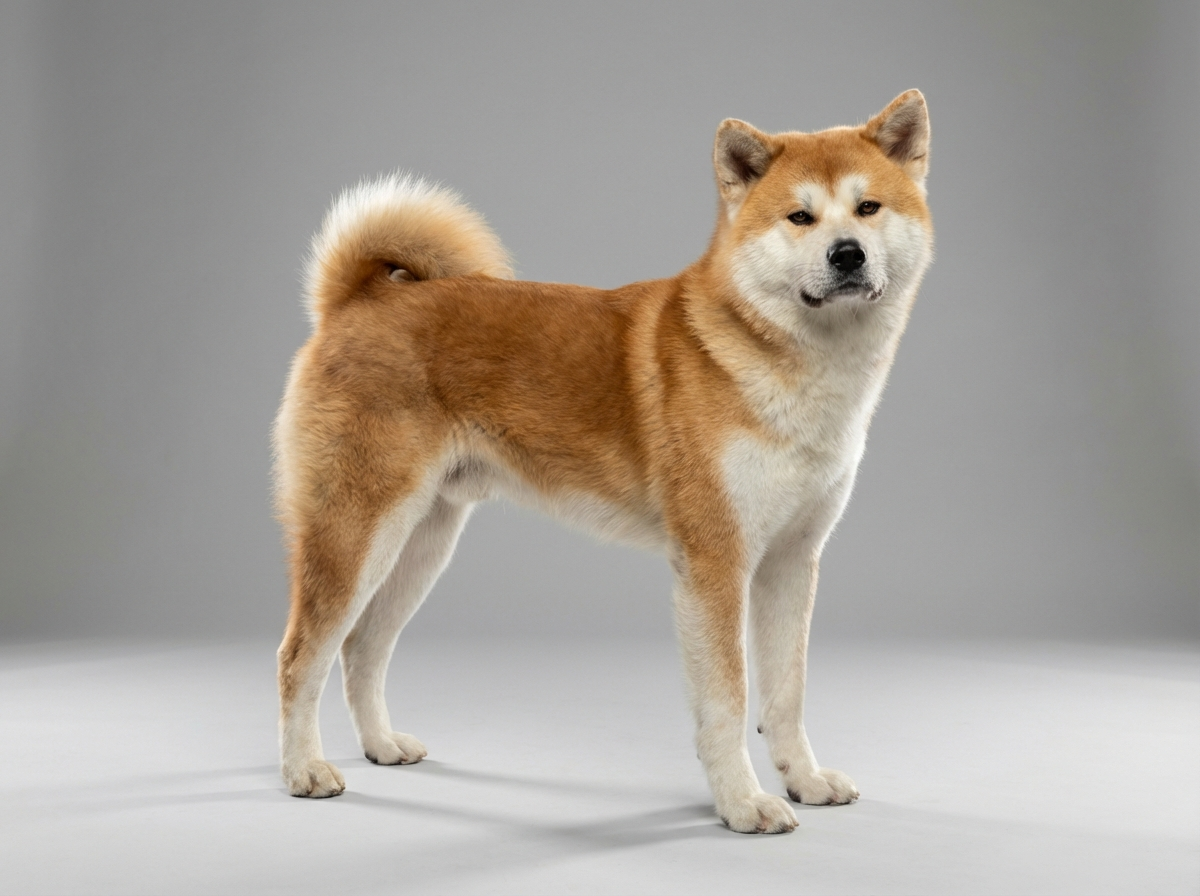
Health
Do Akitas carry the chondrodystrophy gene variant?
No — this trait defines short-legged breeds like Dachshunds and Corgis, not the long-legged Akita.

Quick answer
Do Akitas carry the chondrodystrophy gene variant?
No — this trait defines short-legged breeds like Dachshunds and Corgis, not the long-legged Akita.
Chondrodystrophy is the genetic trait behind the short, curved legs of breeds like Dachshunds and Corgis — a defining, visible body type the Akita, as a tall, long-legged large breed, simply doesn't share.
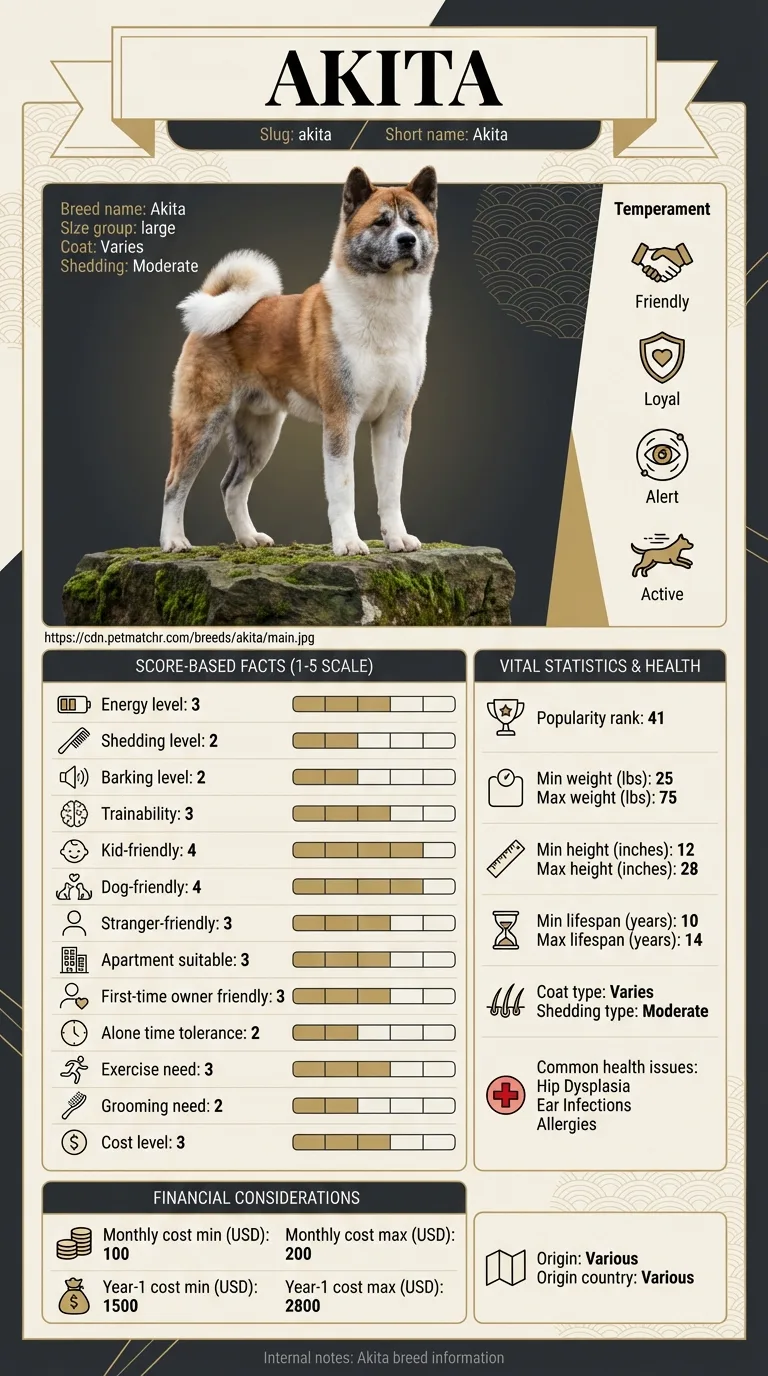
Owners who've encountered CDDY in general canine genetic health content and want to understand whether it's relevant to their Akita are the audience here.
This guide is not medical advice. If your dog shows pain, sudden behavior change, or worsening symptoms, consult a licensed veterinarian.
Some links may be affiliate links. We may earn a commission at no extra cost to you. We only suggest products we believe are helpful for dog owners.
We research and check what we publish, but we do not warrant that any figure, date, price, or statement is accurate, complete, or current, and we accept no liability for any loss, cost, injury, or other harm arising from the use of this site. Use it as one reference among several. You remain responsible for your own decisions and for your dog's care - confirm anything that matters with a licensed veterinarian or another qualified professional before you act on it. Full disclaimer.
Check this first
Sudden inability to walk, dragging of the rear legs, or loss of bladder or bowel control warrant same-day emergency veterinary care regardless of a dog's conformation or genetic background. These signs need prompt evaluation whether or not chondrodystrophy is a relevant consideration for the breed in question.
For an Akita specifically, gradual gait changes are a more statistically likely and relevant pattern to watch for than a sudden, young-dog collapse associated with chondrodystrophy-linked disc disease, but any genuine symptom deserves its own proper evaluation.
The practical point is that chondrodystrophy status doesn't change the basic emergency triage rules — sudden, severe neurologic symptoms always warrant immediate care, regardless of a dog's breed-specific genetic background.
If any of these apply, call your vet or an emergency clinic now. The rest of this page is for the cases that are not an emergency.
Chondrodystrophy is a specific genetic variant producing the short, often curved limbs characteristic of breeds like Dachshunds and Corgis, along with an associated increased risk of early-onset disc disease. The Akita's breed standard calls for long, proportionate legs typical of a large working breed, meaning this trait isn't part of the breed's genetics, and its actual disc disease risk follows an entirely different, unrelated pattern.
Chondrodystrophy is well documented and defining in numerous specific breeds bred for short, curved legs; it is not present in the Akita, whose standard and genetics call for a normally proportioned, long-legged large-breed build.
The Akita's breed standard and genetic background call for a tall, well-proportioned, long-legged build typical of a large working and guarding breed, the functional opposite of the shortened-limb conformation that defines chondrodystrophic breeds. This is a fundamental, standard-specified trait difference rather than something that varies by individual or bloodline within the Akita.
Because this is a matter of inherent genetics rather than an acquired condition, environment plays no role in whether an individual Akita has this trait. The breed's genuinely environment-influenced orthopedic concerns — hip and elbow dysplasia, and general disc health — are separate from anything related to chondrodystrophy.
This is primarily an informational question rather than one requiring routine visits, but any dog showing sudden inability to walk, dragging of the rear legs, or loss of bladder or bowel control needs same-day emergency care regardless of breed genetics.
Applying a defining trait of short-legged breeds to a tall, long-legged breed leads research astray. Avoid these mistakes.
See all Akita health problems, which breeds are prone to chondrodystrophy cddy, or the full Akita breed guide for temperament, exercise needs and ownership costs.
This is a fixed, standard-specified genetic trait difference rather than something that changes over time or needs monitoring.
Success is having an accurate understanding that the Akita doesn't carry this trait, which helps focus health vigilance on the conditions genuinely relevant to this breed's actual conformation and genetics.
If you think your Akita has chondrodystrophy, the plan is three steps: write down what you have seen and when it started, book a veterinary appointment rather than waiting for the next flare, and take video of the behaviour or symptom before you go — the thing you are worried about rarely happens in the consulting room. Screening in the parents covers hip dysplasia, progressive retinal atrophy, hypothyroidism.
What the vet visit should produce is a diagnosis and a written plan, not just reassurance: what is being ruled out, what the monitoring interval is, and which signs mean you come back sooner. Ask what the treatment costs across a year rather than per visit, because that is the number that decides whether you are managing this condition or reacting to it.
Between appointments, keep a short log — dates, what you saw, what changed. It is the single most useful thing an owner brings to a follow-up, and for chondrodystrophy it is often what separates a clear pattern from a guess.
After a broad genetic health panel for her Akita, Titan, came back with a note about chondrodystrophy status, Holly in Eugene wasn't sure what it meant. Her vet explained that this trait defines short-legged breeds and simply isn't relevant to Titan's build, confirming the panel's negative result was exactly what would be expected for the breed. Her vet redirected the conversation toward hip and elbow health, the orthopedic concerns actually documented for Akitas, and recommended routine screening for those instead. Holly found this far more useful than continuing to focus on a trait that had never been a realistic concern for her dog's breed.
Key takeaway: A genetic panel testing for traits across many breeds can raise questions that don't actually apply — confirming what's genuinely relevant to your specific breed keeps health vigilance focused where it matters.
It's a specific genetic variant affecting cartilage and bone growth, producing the characteristically short, often curved limbs seen in breeds like Dachshunds, Corgis, and Basset Hounds, and carrying an associated increased risk of early-onset disc disease.
No — the Akita's breed standard calls for long, well-proportioned legs typical of a large working breed, and this trait isn't part of the breed's genetics or conformation.
When disc disease occurs in Akitas, it typically follows the Type II pattern, a slower, age-related process unrelated to the CDDY gene variant, generally affecting middle-aged to older dogs rather than young ones.
Not particularly — since this trait isn't part of the breed's genetics, testing for it doesn't provide meaningful information for an Akita the way it might for a breed where the variant is actually present.
Hip dysplasia and elbow dysplasia are the genuinely documented, breed-relevant orthopedic concerns for this large breed, distinct from anything related to chondrodystrophy.
This would depend entirely on whether the other breed(s) in the mix carry the CDDY variant; the Akita side of the ancestry wouldn't contribute this trait.
This isn't part of standard Akita breeding health screening, since it isn't a relevant trait for the breed; hip and elbow screening are the pertinent orthopedic health tests for this breed instead.
No — this trait defines short-legged breeds like Dachshunds and Corgis, not the long-legged Akita.
The more gradual, age-related Type II pattern, unrelated to the CDDY variant.
Not particularly, since this trait isn't part of the breed's genetics.
Hip and elbow dysplasia are the genuinely documented, breed-relevant concerns.
No — it isn't part of standard Akita health screening since it isn't a breed-relevant trait.
A one-page prep sheet for this condition: the signs, the questions to ask, what to get priced. Unlocks here.
You get: Vet visit prep sheet
No spam. One-click unsubscribe. See our privacy policy.
Preview page 1 before you decide.