Health
What is chondrodystrophy in simple terms?
A genetic trait altering cartilage-to-bone development, producing this breed's short legs, curled tail, and compact spine.

Quick answer
What is chondrodystrophy in simple terms?
A genetic trait altering cartilage-to-bone development, producing this breed's short legs, curled tail, and compact spine.
One genetic switch is quietly responsible for more of a Pug's body than most owners realize.
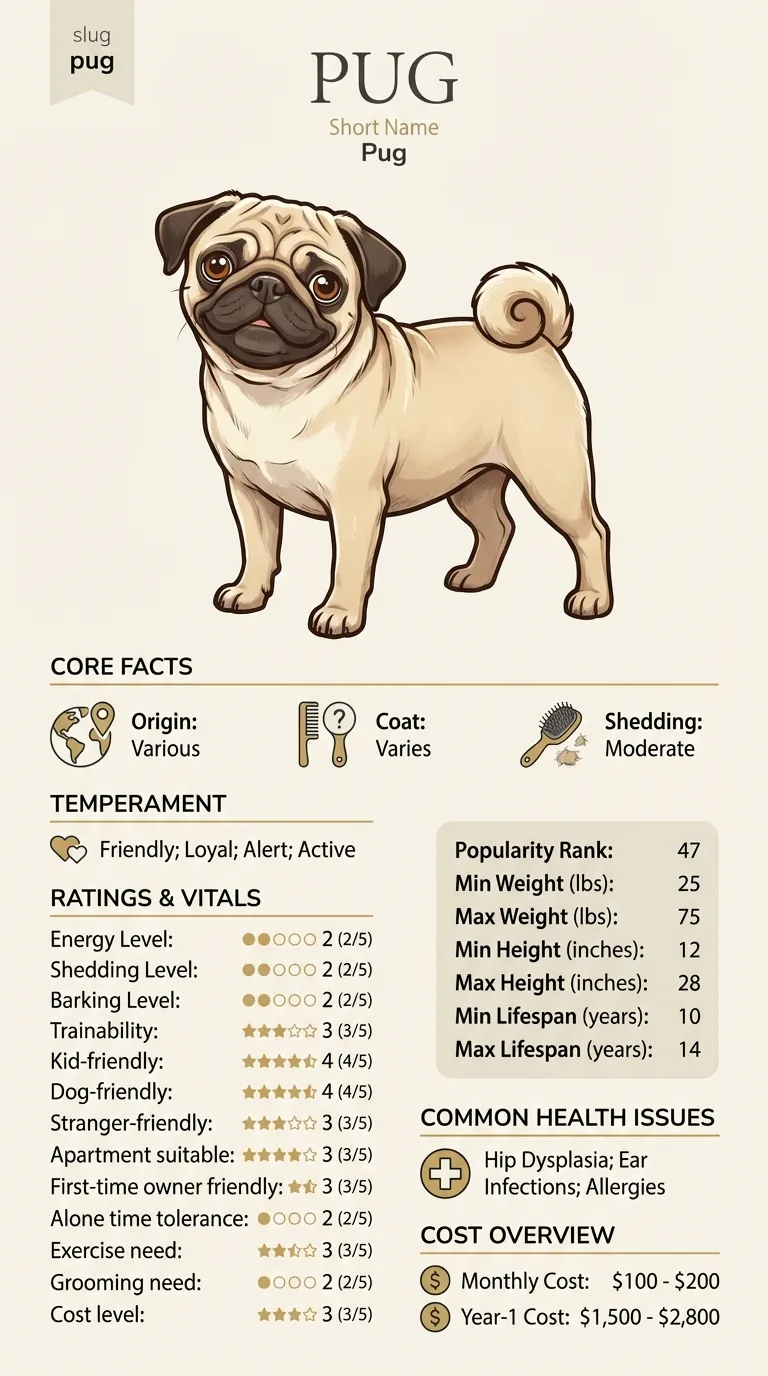
This is useful reading for any owner who wants to understand why so many separate-sounding Pug health topics keep circling back to the same explanation, rather than treating each one as an isolated coincidence.
This guide is not medical advice. If your dog shows pain, sudden behavior change, or worsening symptoms, consult a licensed veterinarian.
Some links may be affiliate links. We may earn a commission at no extra cost to you. We only suggest products we believe are helpful for dog owners.
We research and check what we publish, but we do not warrant that any figure, date, price, or statement is accurate, complete, or current, and we accept no liability for any loss, cost, injury, or other harm arising from the use of this site. Use it as one reference among several. You remain responsible for your own decisions and for your dog's care - confirm anything that matters with a licensed veterinarian or another qualified professional before you act on it. Full disclaimer.
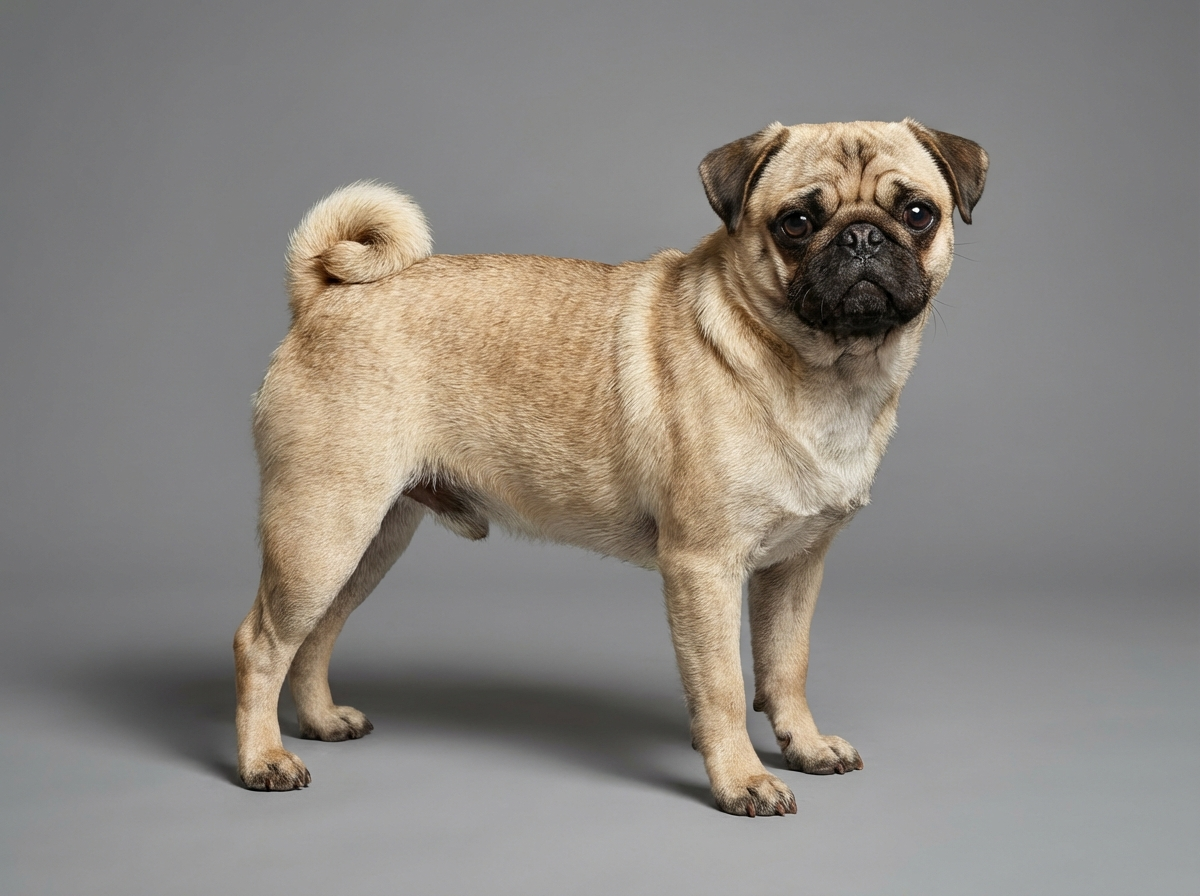
Chondrodystrophy is the genetic trait that alters cartilage-to-bone development, producing this breed's short legs, compact spine, curled tail, and shortened muzzle as connected expressions of one underlying developmental pathway. It's a defining body-type trait rather than a disease, though it carries real downstream implications, particularly for spinal health.
This trait is universal to the breed, defining every Pug's basic body shape rather than affecting only some individuals. What varies is how significantly the associated downstream conditions, like disc degeneration, show up over each dog's lifetime.
This is entirely a genetic, breed-defining trait, the product of selective breeding for this compact body shape over generations, working through a specific disruption in cartilage growth signaling during skeletal development.
Environment doesn't cause this underlying trait, but it does influence how much strain gets placed on the resulting compact spine and joints over a dog's life, through factors like weight and activity level.
This trait itself doesn't require a specific vet visit, but understanding it should inform how quickly you bring your dog in for any back pain, mobility change, or gait abnormality, since this breed's spine is more vulnerable than a standard-proportioned dog's.
Start here: Pug Most Common Genetic Disorders: What to Screen For
See all PUG health problems, which breeds are prone to chondrodystrophy cddy, or the full PUG breed guide for temperament, exercise needs and ownership costs.
This is a lifelong, fixed genetic trait rather than something with a treatment timeline. Understanding it is a one-time learning process that then informs ongoing, lifelong awareness of related conditions.
Success means recognizing how this trait connects several of your Pug's health considerations, allowing you to watch for related conditions proactively rather than treating each one as a surprise.
Research into short-legged and compact dog breeds has identified an extra, duplicated copy of a gene involved in cartilage growth signaling, inserted elsewhere in the genome, as a driver of chondrodystrophic development across multiple breeds that share this compact body type. This altered signaling changes how the growth plates at the ends of long bones convert cartilage into bone, resulting in shorter limbs relative to body size. The same disrupted cartilage-to-bone pathway also affects the discs between spinal vertebrae, which is part of why chondrodystrophic breeds broadly, Pugs included, tend to develop disc calcification and related spinal issues earlier than dogs with typical proportions.
Once you understand chondrodystrophy as the shared root cause, several separately discussed Pug conditions start to look like branches of the same tree rather than unrelated problems. Early intervertebral disc degeneration is a direct downstream effect of this altered cartilage biology. The curled, "screw" tail results from the same vertebral development pattern extending into the tailbones, and in some dogs that same pattern produces hemivertebrae elsewhere in the spine. Even the shortened muzzle that underlies this breed's breathing challenges traces back to the same compressed, altered bone growth pattern. It's one genetic story with several visible chapters.

Over the years, Sam's Pug Diesel had a mild hemivertebra found incidentally, a slightly curled tail that seemed unremarkable, and eventually an early disc-related back episode in his sixth year. Sam had always thought of these as three separate, unlucky issues, until a veterinary neurologist explained during Diesel's back treatment that all three traced back to the same underlying chondrodystrophic genetics. Understanding the connection didn't change Diesel's treatment, but it changed how Sam thought about his dog's overall health picture, no longer surprised by each new finding but rather seeing it as part of one known pattern.
Key takeaway: Recognizing chondrodystrophy as the shared cause behind several separate-sounding conditions helps owners understand their dog's health as one connected picture rather than a string of unrelated coincidences.
It's better understood as a genetic trait or body type rather than a disease in itself. It's the same trait responsible for this breed's defining compact shape, though it does carry some downstream health implications, particularly for spinal health.
Early intervertebral disc degeneration, the curled tail, and in some dogs hemivertebrae are all connected to this same underlying developmental trait, along with the general shortened, compact body shape that defines the breed.
Genetic research has identified markers associated with this trait in various breeds, and some genetic testing panels include it, though it's already visibly expressed in every Pug's body type rather than being a hidden risk to screen for.
The trait itself defines the breed's basic body plan for every Pug, but the degree of downstream effects, like how early or severely disc degeneration shows up, varies from dog to dog.
No, it's shared across a number of breeds with a similarly compact, short-legged body type, including several other companion and working breeds, all of which face some of the same downstream spinal considerations.
Mostly not directly; it's the underlying cause of specific downstream conditions rather than something that itself produces day-to-day symptoms. Understanding it mainly helps owners anticipate and recognize the related conditions it can lead to.
Not always by name; a vet might simply describe your dog as a 'short-legged' or 'chondrodystrophic breed' when explaining elevated risk for a specific spinal condition, rather than leading with the genetic terminology itself.
Not directly on its own; it's the downstream conditions it can contribute to, particularly spinal issues in a smaller number of dogs, that have more bearing on quality of life than the underlying body-type trait itself.
A genetic trait altering cartilage-to-bone development, producing this breed's short legs, curled tail, and compact spine.
It contributes to earlier disc calcification, which raises the risk of disc-related back problems over time.
No, several other compact, short-legged breeds share this same underlying genetic trait.
Genetic panels exist that include markers for it, though the trait is already visibly expressed in this breed's body shape.
Yes, it helps owners recognize why several separate conditions are connected and worth mentioning together at checkups.
A one-page prep sheet for this condition: the signs, the questions to ask, what to get priced. Unlocks here.
You get: Vet visit prep sheet
No spam. One-click unsubscribe. See our privacy policy.
Preview page 1 before you decide.