Behavior
Sheds less?
The Yorkshire Terrier, rated Very low (1/5) versus the Pug's High (4/5).

Quick answer
Sheds less?
The Yorkshire Terrier, rated Very low (1/5) versus the Pug's High (4/5).
Pug or Yorkshire Terrier? On paper they differ most on grooming need, and on the scales Pug is the heavier at 14–18 lbs. Here is how the two compare on everything that shapes an ordinary week.
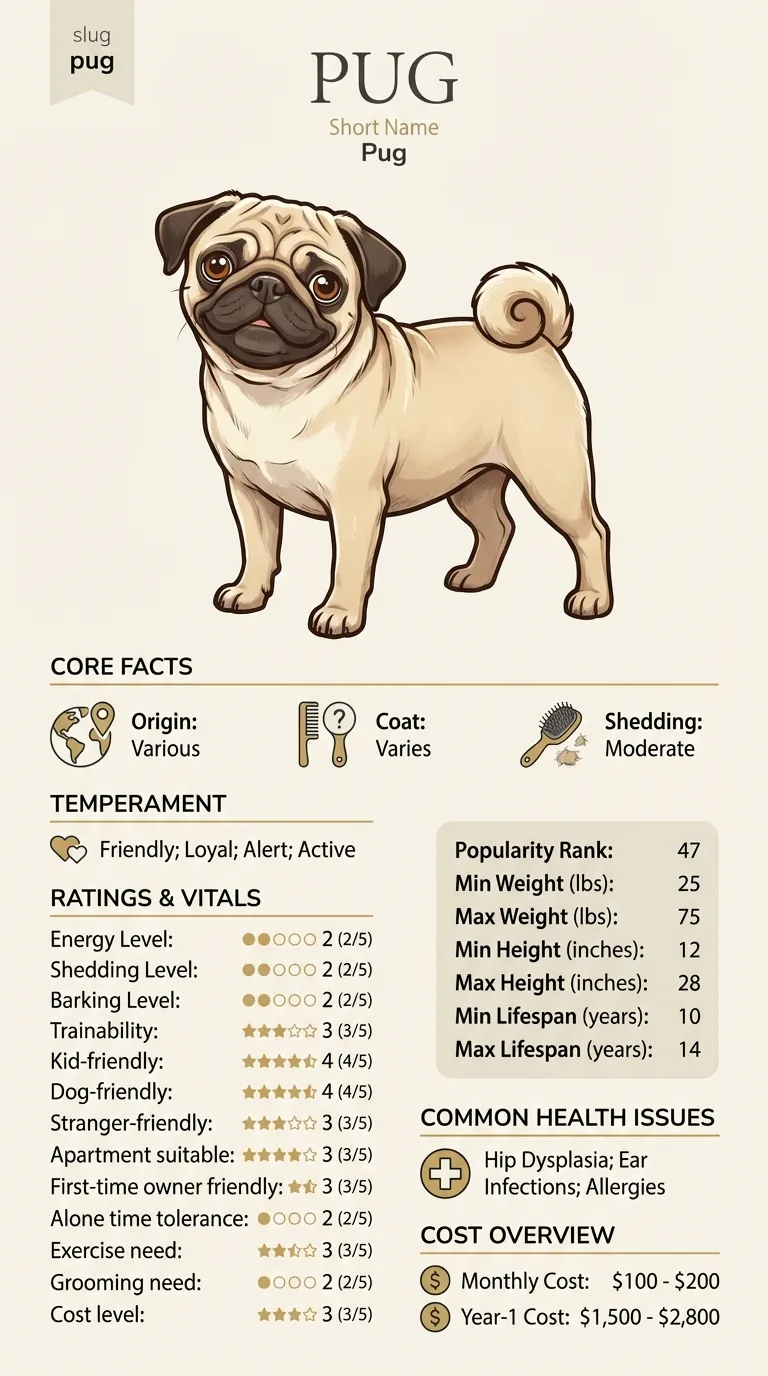
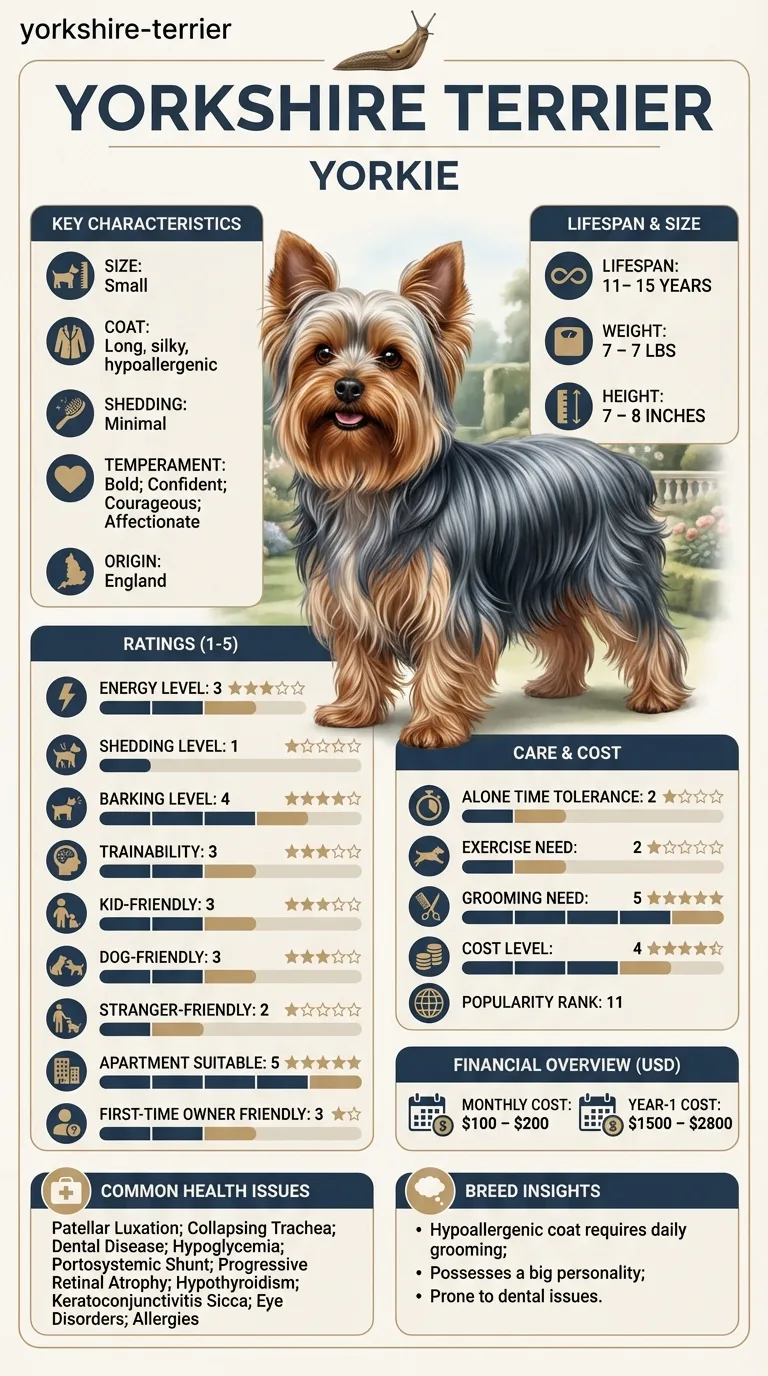
This is for someone already down to Pug and Yorkshire Terrier and deciding between them. For this pair the decision usually turns on grooming need and shedding, so those are covered first and in most detail. Both rate 5/5 for flats, so housing does not settle this one. The focus throughout is on daily consequences rather than breed background.
Between Pug and Yorkshire Terrier, grooming need is what separates them, and Pug is the lower-effort dog of the two to keep.
Choose Pug if this is your first dog, you do not want a standing grooming appointment and there are young children at home.
Choose Yorkshire Terrier if shedding is a problem in your house, a smaller dog suits your car, your home or your back and you want a dog that is more watchful with visitors.
| Feature | pug | yorkshire terrier | Winner |
|---|---|---|---|
| Size class | small | small | Equal |
| Weight | 14–18 lbs | 4–7 lbs | Equal |
| Height | 10–13 in | 7–8 in | Equal |
| Lifespan | 13–15 years | 11–15 years | pug |
| Exercise need | Low (2/5) | Low (2/5) | Equal |
| Grooming need | Low (2/5) | Very high (5/5) | pug |
| Shedding | High (4/5) | Very low (1/5) | yorkshire terrier |
| Energy level | Low (2/5) | Moderate (3/5) | Equal |
| Barking | Low (2/5) | High (4/5) | pug |
| Apartment suitability | Very high (5/5) | Very high (5/5) | Equal |
| Good for first-time owners | Very high (5/5) | Moderate (3/5) | pug |
| Tolerates being alone | Low (2/5) | Low (2/5) | Equal |
| Trainability | Moderate (3/5) | Moderate (3/5) | Equal |
| Good with kids | Very high (5/5) | Moderate (3/5) | pug |
| Good with other dogs | High (4/5) | Moderate (3/5) | pug |
| Friendly to strangers | Very high (5/5) | Low (2/5) | pug |
| Cost level | Moderate (3/5) | High (4/5) | pug |
| Coat | Short, smooth double coat | Long, silky, hypoallergenic | Equal |
| Origin | Various | England | Equal |
| Typical monthly cost | $80–$150 | $100–$190 | Equal |
| Typical first-year cost | $1,100–$2,300 | $1,400–$2,900 | Equal |
Despite both landing in the small size class, the Yorkshire Terrier is dramatically smaller than the Pug — 4–7 pounds and 7–8 inches against the Pug's 14–18 pounds and 10–13 inches, making the Pug roughly two to three times heavier. The Yorkie's build reflects its terrier ratting heritage: a compact but genuinely tiny frame under a long, silky coat, while the Pug's stockier, square body and flat face come from a very different companion lineage. That size gap matters practically — a 5-pound Yorkie is far more fragile around rough play or an accidental step than a sturdier 16-pound Pug.
Exercise need ties at Low (2/5) for both breeds, so neither demands much physically. Energy level tips slightly toward the Yorkshire Terrier, Moderate (3/5) against the Pug's Low (2/5) — a reflection of its terrier heritage, since terriers bred for ratting tend to carry more spring and alertness even at rest than purely companion breeds do. In practice both are satisfied with short walks and indoor play, but a Yorkie is more likely to stay busy and alert between outings, while a Pug is content to settle in for a nap.
Grooming is a major divide: Low (2/5) for the Pug against Very high (5/5) for the Yorkshire Terrier, whose long, silky, hypoallergenic coat needs daily brushing and frequent trims to stay healthy and untangled. Shedding runs the opposite direction, High (4/5) for the Pug versus Very low (1/5) for the Yorkie, whose coat is prized precisely for how little hair it leaves around. Many Yorkie owners opt for a shorter puppy clip specifically to cut down on daily brushing time, trading some of that famous silky length for a lower-maintenance routine closer to the Pug's own.
Both breeds tie at Very high (5/5) for apartment suitability, but barking tells a different story: Low (2/5) for the Pug against High (4/5) for the Yorkshire Terrier, a classic terrier trait carried over from its ratting background and its bold, confident temperament. A Yorkie is more likely to sound off at hallway noise, delivery visitors, or other dogs passing by than the more laid-back Pug. Anyone in close-quarters housing with noise-sensitive neighbors should weigh that barking gap seriously, even though both breeds are equally well-suited to small living spaces on paper.
Trainability ties at Moderate (3/5) for both breeds, so neither stands out as notably easier or harder to teach in that specific sense. First-time-owner suitability tells a fuller story though: Very high (5/5) for the Pug against Moderate (3/5) for the Yorkshire Terrier, whose Bold, Confident, Courageous temperament — genuinely large personality traits packed into a 4-to-7-pound body — can catch new owners off guard. Yorkies are known for a stubborn, terrier-typical streak and a tendency toward small-dog syndrome without consistent boundaries, something the more easygoing, mischievous-but-manageable Pug rarely presents to the same degree.
Household fit favors the Pug clearly across every category: Very high (5/5) with kids against the Yorkie's Moderate (3/5), High (4/5) with other dogs against Moderate (3/5), and Very high (5/5) with strangers against Low (2/5). The Yorkie's small size is a real factor with children specifically — its own fragility around rough handling, combined with a bold terrier temperament that doesn't always back down from perceived threats, makes supervision especially important. Families with young kids or a busy household of visitors and other pets will generally find the sturdier, more universally friendly Pug the easier fit.
Lifespan runs 13–15 years for the Pug against a wider 11–15 range for the Yorkshire Terrier, whose tiny size brings its own distinct risks — its ten-item health list includes Hypoglycemia and Portosystemic Shunt, conditions that disproportionately affect very small toy breeds, alongside Collapsing Trachea and Dental Disease. That's a notably different profile than the Pug's shorter five-item list of Brachycephalic Airway Syndrome, Pug Dog Encephalitis, Corneal Ulcers, Hemivertebrae, and Obesity, which centers on its flat face and compact spine instead. Toy-breed owners in particular should ask about a Yorkie's blood sugar management as a puppy, when hypoglycemia risk is highest.
Cost level favors the Pug, Moderate (3/5) against the Yorkshire Terrier's High (4/5), and the dollar ranges follow suit: $80–$150 monthly and $1,100–$2,300 in year one for the Pug versus $100–$190 and $1,400–$2,900 for the Yorkie. Despite weighing a fraction of the Pug, the Yorkie's Very high (5/5) grooming need drives its higher cost — regular professional grooming for that long silky coat adds up over a year more than the modest food bill for such a small dog ever would. Coat maintenance, not size, is the real cost driver in this pairing.
Pug weighs 14–18 lbs and lives 13–15 years; Yorkshire Terrier weighs 4–7 lbs and lives 11–15 years. The two diverge most on grooming need, shedding and friendly to strangers and 3 other rated axes. They are level on tolerates being alone, apartment suitability and exercise need, so those cannot decide it. The table below marks a winner only where one breed is genuinely easier for a typical owner; size and origin are facts rather than merits and stay level. Ratings come from one source applied to both breeds, so they are meaningful against each other rather than as absolute scores.

The Yorkshire Terrier, rated Very low (1/5) versus the Pug's High (4/5) — though it needs Very high (5/5) grooming in return.
Only rated Moderate (3/5), well below the Pug's Very high (5/5) — its small size makes it more fragile around rough handling, and it can be less tolerant.
The Pug, rated Very high (5/5) versus the Yorkie's Low (2/5); Yorkies tend to be more reserved and vocal toward unfamiliar people.
Yes — rated High (4/5) versus the Pug's Low (2/5), a well-known terrier trait.
The Pug, at $1,100-2,300 in the first year versus the Yorkie's $1,400-2,900, driven mainly by the Yorkie's coat-grooming costs.
Yes, both tie at Very high (5/5) for apartment suitability, though the Yorkie's higher barking rating is worth considering with close neighbors.
Hypoglycemia (low blood sugar), especially as a puppy, along with Portosystemic Shunt — both linked to very small toy-breed physiology.
The Yorkshire Terrier, rated Very low (1/5) versus the Pug's High (4/5).
The Yorkshire Terrier, rated High (4/5) versus the Pug's Low (2/5).
The Pug, rated Very high (5/5) versus the Yorkie's Low (2/5).
The Pug, by a few hundred dollars in the first year.
See every pug comparison.
Secure checkout on Stripe. We never see your card.
7-day money-back guarantee. Instant access.
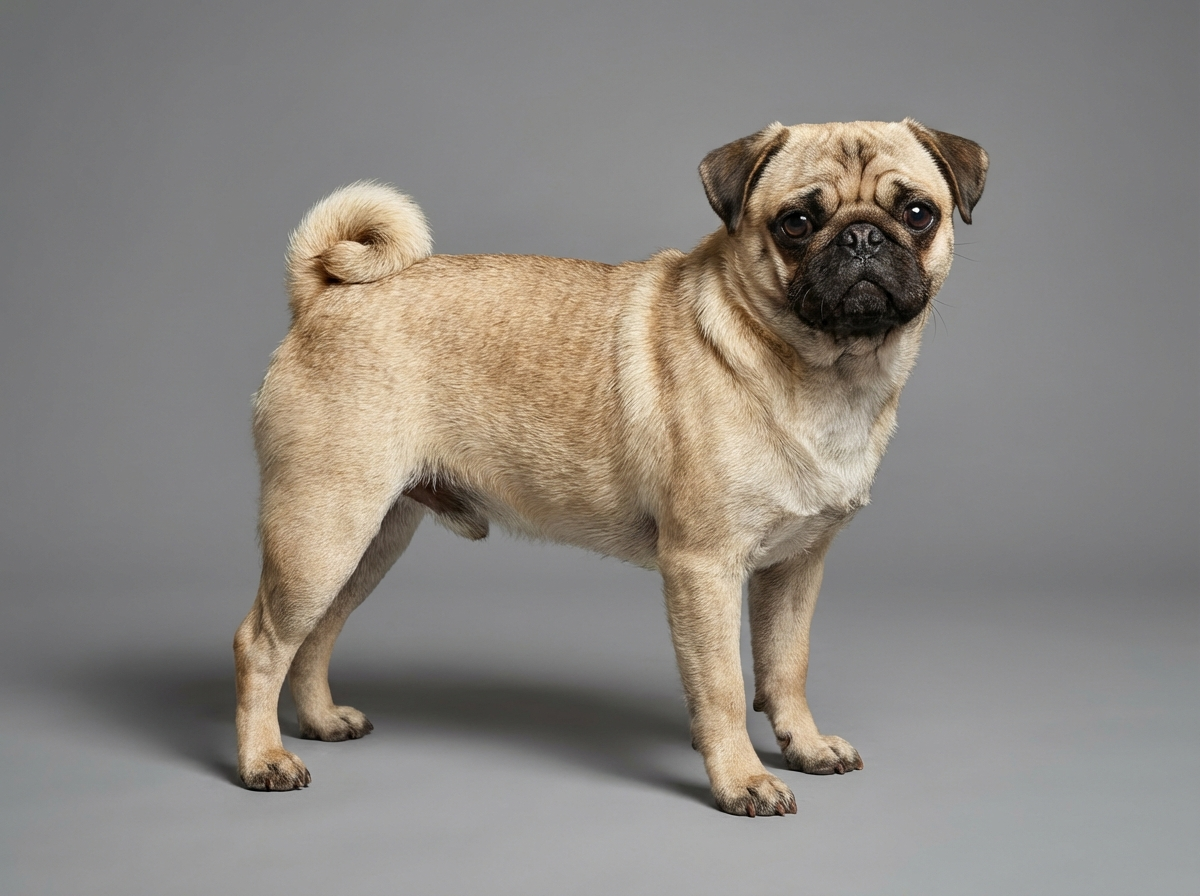
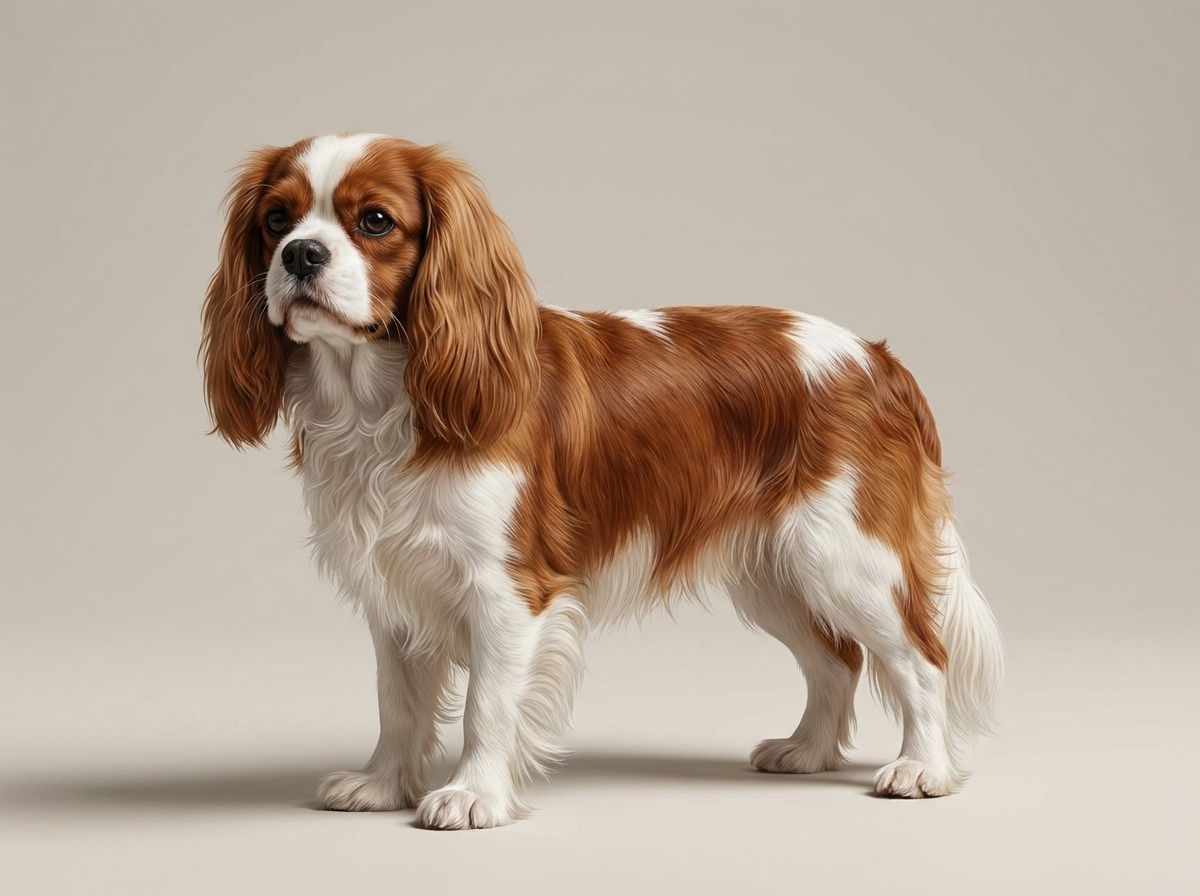
Health information here is general and is not veterinary advice. If your dog shows pain, sudden behaviour change, or worsening symptoms, consult a licensed veterinarian.
Some links on this site are affiliate links. We may earn a commission at no extra cost to you, and we only suggest products we believe are helpful for dog owners.
We research and check what we publish, but we do not warrant that any figure, date, price, or statement is accurate, complete, or current, and we accept no liability for any loss, cost, injury, or other harm arising from the use of this site. Use it as one reference among several. You remain responsible for your own decisions and for your dog's care - confirm anything that matters with a licensed veterinarian or another qualified professional before you act on it. Full disclaimer.
Match your lifestyle to the right dog.
Take quizNot sure which breed is right for you? Take our 2-minute quiz to find out.
Take the quiz