Health
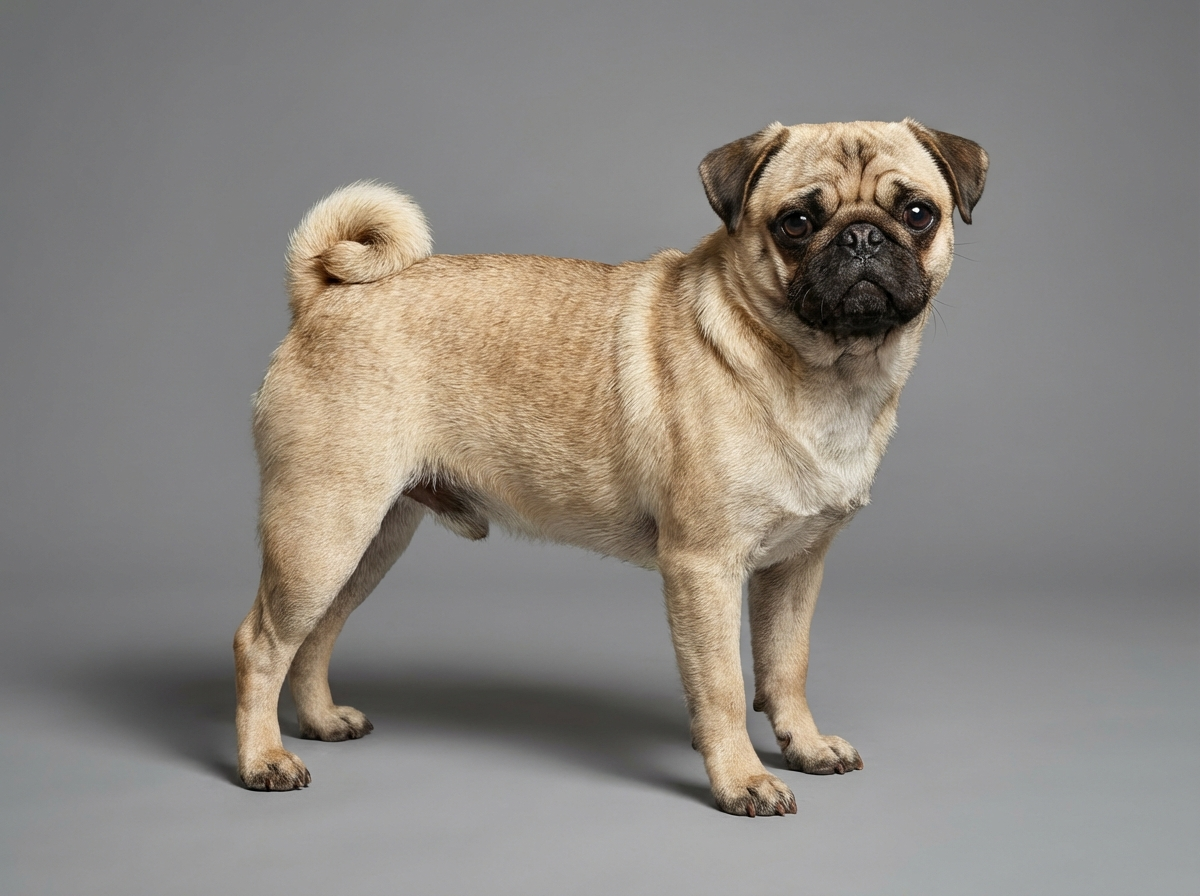
What are the main brachycephalic structures in a Pug?
Narrowed nostrils, an elongated soft palate, a narrow windpipe, and sometimes everted laryngeal tissue.

Quick answer
What are the main brachycephalic structures in a Pug?
Narrowed nostrils, an elongated soft palate, a narrow windpipe, and sometimes everted laryngeal tissue.
Everything people love about a Pug's face is also, structurally, the reason it works harder to breathe.
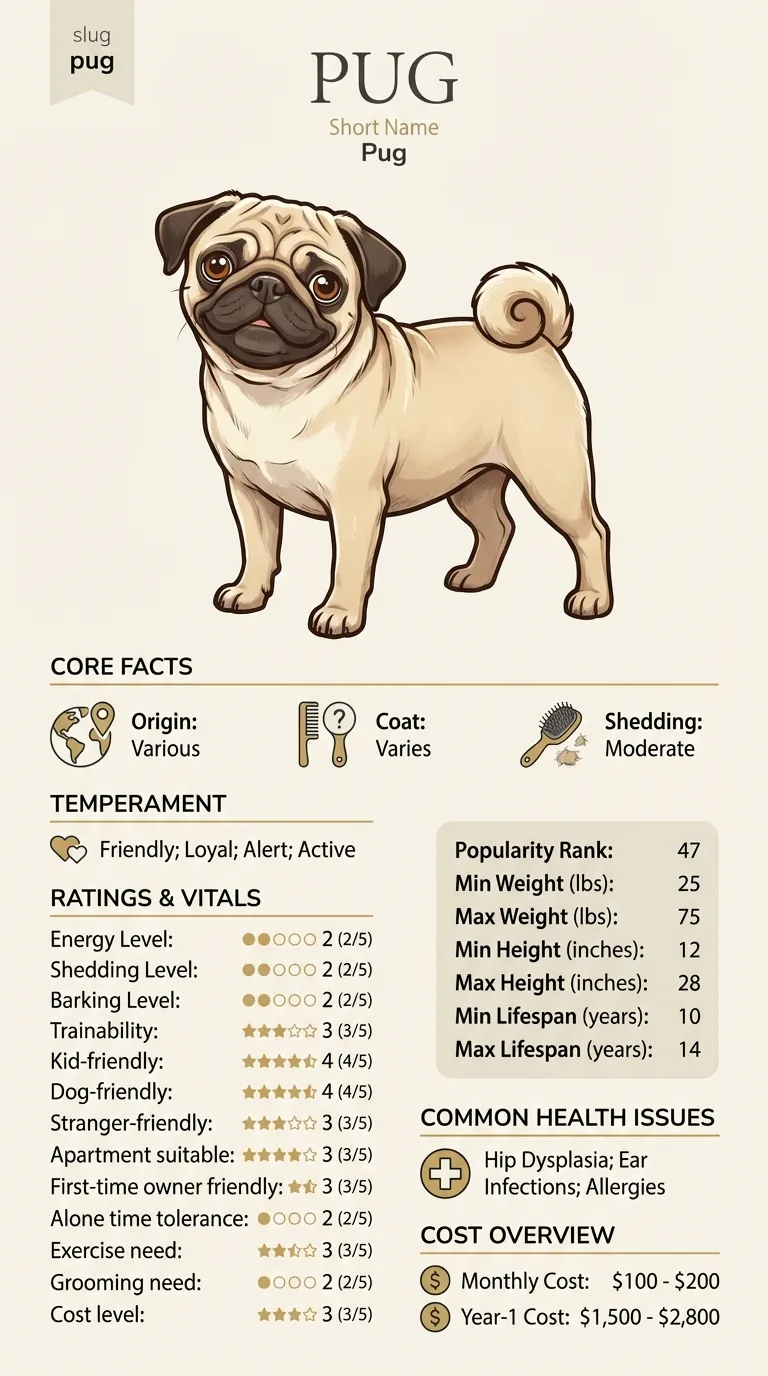
This is foundational reading for any new or prospective Pug owner trying to understand why breathing-related topics come up so often for this breed, before getting into the specific syndromes and emergencies that build on this anatomy.
This guide is not medical advice. If your dog shows pain, sudden behavior change, or worsening symptoms, consult a licensed veterinarian.
Some links may be affiliate links. We may earn a commission at no extra cost to you. We only suggest products we believe are helpful for dog owners.
We research and check what we publish, but we do not warrant that any figure, date, price, or statement is accurate, complete, or current, and we accept no liability for any loss, cost, injury, or other harm arising from the use of this site. Use it as one reference among several. You remain responsible for your own decisions and for your dog's care - confirm anything that matters with a licensed veterinarian or another qualified professional before you act on it. Full disclaimer.
Brachycephalic features describe the specific set of facial structures, narrowed nostrils, an elongated soft palate, a narrow windpipe, and sometimes everted tissue near the voice box, that together define this breed's flattened face and restrict airflow. Understanding these as distinct anatomical structures makes the breathing-related conditions built on top of them easier to understand individually.
Some degree of this anatomical structure is universal to the breed; it's the defining physical trait rather than something only certain individual Pugs have. What varies is how much airflow restriction results and how much it affects day-to-day breathing.
This is entirely a breed-defining structural trait, produced by generations of selective breeding for a compact, flat-faced appearance combined with the same developmental pathway responsible for this breed's compact limbs and tail.
Environment doesn't shape this underlying anatomy, but it does influence how much the resulting airflow restriction actually affects a given dog day to day, through factors like weight, heat, and activity level.
Ask your vet to specifically assess your Pug's airway structures at routine exams, since this gives you an early, individualized sense of how significantly your particular dog is affected before any daily symptoms become obvious. Any sudden change in breathing effort or sound deserves prompt evaluation.
Start here: Pug Most Common Genetic Disorders: What to Screen For
See all PUG health problems, which breeds are prone to brachycephalic features, or the full PUG breed guide for temperament, exercise needs and ownership costs.
This anatomy is fixed from birth and doesn't change over time on its own, though understanding it is really a one-time learning process for an owner rather than something requiring ongoing timeline-based management by itself.
Success here is simply a clear, accurate understanding of your own dog's specific anatomy and its degree of airway restriction, which informs every other breathing-related decision you'll make for this breed.
Stenotic nares are narrowed nostrils that restrict airflow at the very entrance of the respiratory tract, sometimes visibly pinched rather than open and round. An elongated soft palate is tissue at the back of the mouth that, because the jaw beneath it is shortened but the soft palate tissue itself isn't proportionally reduced, ends up too long for the space available and can partially block the airway opening. A hypoplastic trachea is a windpipe narrower in diameter than typical, reducing overall airflow capacity. Everted laryngeal saccules, tissue near the voice box that can turn outward and further obstruct airflow, often develop secondarily as a dog works harder to breathe around the other restrictions. Together, these four structures make up what's often just summarized as "the brachycephalic package."
This facial structure isn't an accident or a modern health problem layered onto an otherwise typical dog; it's the direct result of selective breeding for a specific compact, short-muzzled appearance that has defined this breed for centuries. The same genetic and developmental pathway responsible for this breed's compact limbs and curled tail also shortens the facial bones without proportionally shortening the soft tissue that has to fit inside them, which is the structural root of the airflow restriction. Understanding this as an anatomical package, rather than a single disease, is what makes the various breathing-related conditions in this breed easier to make sense of individually.

Before bringing home her first Pug puppy, Elena did some research and was surprised to learn that "brachycephalic" wasn't itself a diagnosis but a description of four or five specific anatomical structures working together. At her puppy's first exam, she asked her vet directly to assess each structure, nostrils, palate, trachea, rather than just asking generally "is he healthy." Her vet noted mild nostril narrowing and a soft palate on the longer side of normal, neither severe enough to need surgery, and recommended routine monitoring at future visits. Elena said having the specific anatomical vocabulary made every later conversation about her dog's breathing far clearer.
Key takeaway: Understanding brachycephalic anatomy as a set of distinct, individually assessable structures, rather than one vague label, gives owners a much clearer basis for tracking their own dog's specific risk over time.
It translates roughly to 'short-headed' and describes breeds with a shortened, flattened facial structure, including Pugs, Bulldogs, and similar breeds, as opposed to a normal or elongated muzzle.
To some degree, yes, since it's part of this breed's defining facial structure, though the degree of narrowing varies significantly between individual dogs and affects breathing accordingly.
It's the soft tissue at the back of the roof of the mouth, which in this breed tends to be proportionally longer than the shortened jaw underneath it, allowing it to partially obstruct the airway opening near the throat.
Some can be surgically addressed, widening narrowed nostrils or shortening an overly long soft palate, in dogs whose breathing is significantly restricted, though the underlying facial bone structure itself isn't something surgery changes.
No, they're separate structures. Stenotic nares affect airflow at the nostrils, while a hypoplastic trachea is a narrower windpipe further down the airway; a dog can have one, both, or neither to varying degrees.
The bone structure itself is fixed from early development, but secondary soft-tissue changes, like everted laryngeal saccules, can develop over time as a dog works harder to breathe around the underlying restriction.
Historically, some breeding trends favored increasingly flat faces for appearance, which has drawn criticism from veterinary groups since more extreme flattening tends to worsen airway restriction; some breed clubs now actively encourage moderation in facial structure.
Narrowed nostrils, an elongated soft palate, a narrow windpipe, and sometimes everted laryngeal tissue.
The anatomy itself is a breed trait, not a disease; the breathing difficulty it can cause is what's treated as a medical concern.
Some structures, like overly narrow nostrils or an overlong soft palate, can be surgically corrected in more affected dogs.
No, many manage well with lifestyle adjustments; surgery is considered for more significantly affected individual dogs.
The combination of narrowed airway structures makes normal breathing sounds louder than in dogs with typical facial proportions.
A one-page prep sheet for this condition: the signs, the questions to ask, what to get priced. Unlocks here.
You get: Vet visit prep sheet
No spam. One-click unsubscribe. See our privacy policy.
Preview page 1 before you decide.