Health
What blood test detects kidney disease in dogs?
Creatinine and SDMA levels, combined with a urine concentration test, are the standard markers used to detect and stage kidney disease.

Quick answer
What blood test detects kidney disease in dogs?
Creatinine and SDMA levels, combined with a urine concentration test, are the standard markers used to detect and stage kidney disease.
Increased thirst and more frequent urination sound like small, forgettable changes — but in an aging Pug, they're often the first visible sign of a kidney decline that's already well underway.
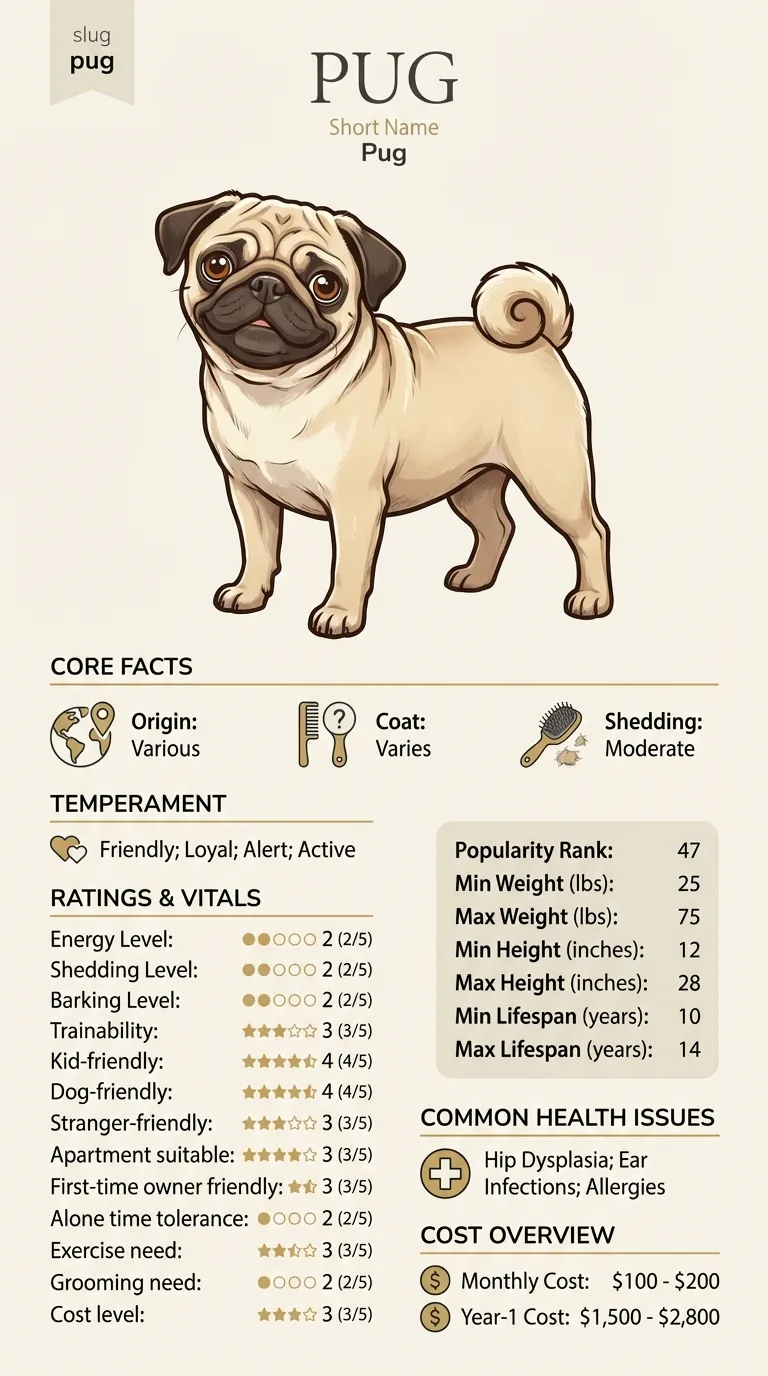
Owners of senior Pugs navigating a new diagnosis after routine senior bloodwork flagged kidney values, trying to understand what staging actually means for daily life going forward.
This guide is not medical advice. If your dog shows pain, sudden behavior change, or worsening symptoms, consult a licensed veterinarian.
Some links may be affiliate links. We may earn a commission at no extra cost to you. We only suggest products we believe are helpful for dog owners.
We research and check what we publish, but we do not warrant that any figure, date, price, or statement is accurate, complete, or current, and we accept no liability for any loss, cost, injury, or other harm arising from the use of this site. Use it as one reference among several. You remain responsible for your own decisions and for your dog's care - confirm anything that matters with a licensed veterinarian or another qualified professional before you act on it. Full disclaimer.
Chronic kidney disease is a progressive decline in kidney filtering function that develops quietly over time, often caught through routine bloodwork before symptoms appear. Management is built around diet, monitoring, and supportive care staged to how much function has already been lost.
Chronic kidney disease is a commonly diagnosed condition in senior dogs across breeds, including Pugs, and is one of the more frequent findings on routine senior wellness bloodwork panels.
Kidney disease in Pugs generally follows the same age-related decline pattern seen across dog breeds broadly, rather than reflecting a documented breed-specific structural predisposition. Age remains the single biggest risk factor.
Chronic dehydration, untreated high blood pressure, and cumulative wear from a lifetime of normal kidney filtering work all contribute to gradual decline. Toxin exposure or past kidney infections can also leave lasting damage that compounds over time.
Schedule an appointment if you notice increased thirst or urination, appetite changes, weight loss, or unusual lethargy in a senior Pug. Seek same-day care if your dog stops drinking or eating entirely, vomits repeatedly, or seems acutely unwell, since this can indicate an acute worsening on top of chronic disease.
Start here: Pug Most Common Genetic Disorders: What to Screen For
See all PUG health problems, which breeds are prone to kidney disease, or the full PUG breed guide for temperament, exercise needs and ownership costs.
Chronic kidney disease is progressive and doesn't reverse, but progression can often be slowed meaningfully with consistent diet and monitoring, sometimes over a period of years rather than months, particularly when caught at an earlier stage.
Success is a dog that maintains a good appetite, stable weight, and comfortable daily life for as long as possible within the limits of their diagnosed stage — not a kidney function that returns to normal, which isn't a realistic outcome for this disease.
Kidneys have substantial reserve capacity — a dog can lose roughly two-thirds of functioning kidney tissue before standard bloodwork even shows abnormal values, and noticeable symptoms often don't appear until function has dropped further still. This is why chronic kidney disease is so often caught on a routine senior wellness panel rather than because an owner noticed something wrong, and why early bloodwork screening matters more for this condition than for ones with more obvious early warning signs.
Once function has declined enough to produce symptoms, increased thirst and urination are usually first, as the kidneys lose their ability to concentrate urine efficiently. Reduced appetite, weight loss, and lethargy tend to follow as waste products that the kidneys can no longer filter build up in the bloodstream. None of these appear suddenly in most cases — they build gradually, in a pattern that can be genuinely difficult to distinguish from ordinary aging without bloodwork to confirm what's actually happening.
Stage isn't just a label — it determines specifically what diet, monitoring frequency, and additional treatments make sense for a given dog.

At his twelve-year wellness exam, Theo the Pug seemed completely normal to his owner, Renata — same appetite, same energy, nothing she'd have flagged herself. Routine senior bloodwork came back showing elevated kidney values, staged as early moderate chronic kidney disease. Renata was surprised there'd been no warning signs at all. Her vet explained that by the time thirst or appetite changes typically show up, a lot of function is often already gone — which was exactly why the screening had caught it this early. Theo started a prescription renal diet immediately. Eighteen months later, his kidney values have stayed remarkably stable, and Renata credits the early catch — purely from routine bloodwork, not any symptom she noticed — with buying him that stability.
Key takeaway: Kidney disease can be well underway with a dog looking and acting completely normal — routine senior bloodwork, not symptom-watching, is what actually catches it early.
Increased thirst and more frequent urination are typically the earliest visible signs, though by the time these appear, kidney function has often already declined substantially. Reduced appetite and weight loss tend to follow as the disease progresses.
Bloodwork measuring creatinine and SDMA, combined with a urine test checking how well the kidneys concentrate urine, is the standard diagnostic approach, and results are used to assign a stage from 1 to 4.
No — kidney tissue that's been damaged generally doesn't regenerate, so management focuses on slowing progression and supporting remaining function rather than restoring the kidneys to full health.
Yes — prescription renal diets with reduced phosphorus and adjusted protein levels have been shown in veterinary research to meaningfully slow disease progression and are considered a core part of management from moderate stages onward.
This varies enormously by stage at diagnosis and how well the dog responds to management — some dogs live comfortably for a substantial stretch of time with early-stage disease and consistent management, while advanced-stage disease carries a more limited outlook.
SDMA is a blood marker that can detect kidney function decline earlier than traditional creatinine testing, sometimes flagging disease before as much kidney tissue has been lost, which allows management to start sooner.
It depends on stage — subcutaneous fluids given at home become more relevant for moderate to advanced disease to help maintain hydration and flush waste, and your vet will train you on the technique if it's recommended.
Creatinine and SDMA levels, combined with a urine concentration test, are the standard markers used to detect and stage kidney disease.
Not always, but it's common enough in kidney disease that any noticeable increase in thirst or urination in a senior dog is worth mentioning to a vet.
Prescription kidney diets typically cost more than standard commercial food, often running a noticeably higher monthly amount, but the diet itself is considered a significant part of managing progression.
Every two to four months is common for tracking progression and adjusting management, though your vet will set the specific interval based on stage.
Yes — most owners are trained by their vet to give these fluids at home, which becomes a routine part of managing moderate to advanced kidney disease.
A one-page prep sheet for this condition: the signs, the questions to ask, what to get priced. Unlocks here.
You get: Vet visit prep sheet
No spam. One-click unsubscribe. See our privacy policy.
Preview page 1 before you decide.