Health
How can pancreatitis lead to diabetes over time?
Repeated or severe episodes can damage the pancreas's insulin-producing cells, and enough cumulative damage impairs blood sugar regulation.

Quick answer
How can pancreatitis lead to diabetes over time?
Repeated or severe episodes can damage the pancreas's insulin-producing cells, and enough cumulative damage impairs blood sugar regulation.
The pancreatitis episode your Pug recovered from at age four might be part of the reason they're diagnosed with diabetes at age eleven — two conditions that look completely unrelated on the surface but share the same damaged organ underneath.
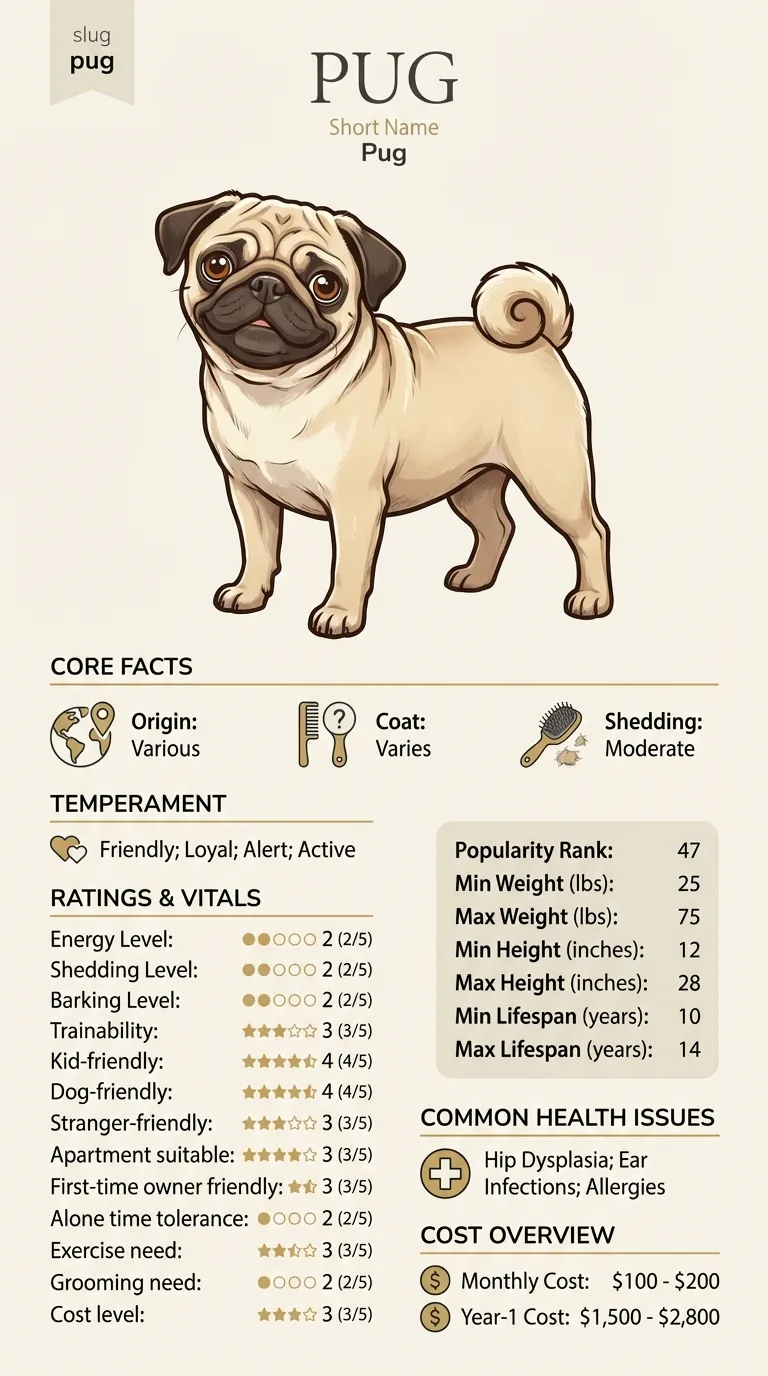
Owners of senior Pugs, especially those with a history of prior pancreatitis episodes, navigating a new diabetes diagnosis and the significant daily routine change it requires.
This guide is not medical advice. If your dog shows pain, sudden behavior change, or worsening symptoms, consult a licensed veterinarian.
Some links may be affiliate links. We may earn a commission at no extra cost to you. We only suggest products we believe are helpful for dog owners.
We research and check what we publish, but we do not warrant that any figure, date, price, or statement is accurate, complete, or current, and we accept no liability for any loss, cost, injury, or other harm arising from the use of this site. Use it as one reference among several. You remain responsible for your own decisions and for your dog's care - confirm anything that matters with a licensed veterinarian or another qualified professional before you act on it. Full disclaimer.
Repeated or severe pancreatitis episodes over a dog's life can gradually damage the pancreas's insulin-producing cells alongside the enzyme-producing tissue more directly affected by acute inflammation. In senior Pugs, this cumulative damage is one recognized pathway toward a diabetes diagnosis, requiring lifelong daily management once it develops.
Diabetes is a recognized senior-dog condition across breeds, and while it can develop through several mechanisms, a documented history of pancreatitis is one meaningful risk factor that raises the likelihood of this specific progression in dogs who've had repeated or severe episodes.
This progression isn't a documented breed-specific structural issue so much as a consequence of the Pug's well-established tendency toward obesity and pancreatitis risk — both of which compound over a dog's lifetime and increase the chance of cumulative pancreatic damage that eventually affects insulin production.
Repeated exposure to high-fat foods triggering pancreatitis episodes, ongoing obesity, and general age-related decline in organ function all contribute to the cumulative pancreatic damage that can eventually manifest as diabetes in a senior dog.
Schedule an evaluation for increased thirst and urination, increased appetite with unexplained weight loss, or new lethargy in a senior dog, particularly one with a history of pancreatitis. Seek immediate care for weakness, disorientation, or collapse, which can indicate a dangerous blood sugar swing in a diagnosed diabetic dog.
Start here: Pug Most Common Genetic Disorders: What to Screen For
See all PUG health problems, which breeds are prone to pancreatitis diabetes, or the full PUG breed guide for temperament, exercise needs and ownership costs.
Most dogs and owners settle into a stable daily insulin routine within a few weeks of diagnosis, though the initial period often involves several glucose curve rechecks to fine-tune the correct dose.
Success is a dog with well-regulated blood sugar, stable weight, and normal energy on a consistent daily routine — not a cure, since diabetes in dogs is a lifelong condition managed through ongoing insulin therapy rather than resolved.
The pancreas has two separate jobs bundled into one organ: producing digestive enzymes, and producing insulin through specialized cell clusters that regulate blood sugar. Acute pancreatitis primarily damages the enzyme-producing tissue, but repeated or severe episodes can also damage the nearby insulin-producing cells over time, since inflammation doesn't always respect that internal division cleanly. Enough cumulative damage to those insulin-producing cells eventually means the body can no longer regulate blood sugar effectively, which is diabetes.
This is why a dog's pancreatitis history matters specifically when a vet is working through possible causes of new diabetes symptoms in a senior dog — it's one recognized contributing pathway, distinct from diabetes that develops through other mechanisms like age-related insulin resistance. It also means that consistent pancreatitis prevention throughout a dog's life isn't only about avoiding the acute emergency itself, but about protecting long-term pancreatic function that the dog will depend on for the rest of their life.
This is a genuine lifestyle shift, but most owners settle into the routine within a few weeks, and most dogs adapt well to consistent daily insulin management.

If you think your Pug has pancreatitis & diabetes, the plan is three steps: write down what you have seen and when it started, book a veterinary appointment rather than waiting for the next flare, and take video of the behaviour or symptom before you go — the thing you are worried about rarely happens in the consulting room. Screening in the parents covers brachycephalic airway syndrome (boas), pug dog encephalitis, corneal ulcers.
What the vet visit should produce is a diagnosis and a written plan, not just reassurance: what is being ruled out, what the monitoring interval is, and which signs mean you come back sooner. Ask what the treatment costs across a year rather than per visit, because that is the number that decides whether you are managing this condition or reacting to it.
Between appointments, keep a short log — dates, what you saw, what changed. It is the single most useful thing an owner brings to a follow-up, and for pancreatitis & diabetes it is often what separates a clear pattern from a guess.
Pauline's Pug, Waffles, had two separate pancreatitis hospitalizations in his younger years, both traced back to fatty food incidents. By age eleven, seemingly unrelated, Waffles started drinking water constantly and losing weight despite a ravenous appetite. Her vet's bloodwork confirmed diabetes, and in reviewing Waffles's history, connected it plausibly to those earlier pancreatitis episodes as a contributing factor to the insulin-producing cell damage now showing up. Pauline learned to give twice-daily insulin injections, adjusting Waffles's feeding schedule to match exactly. After a few glucose curve rechecks to dial in the right dose, Waffles has been stable for over a year — a diagnosis that traced back, in part, to incidents from years before that Pauline hadn't connected to anything at the time.
Key takeaway: A pancreatitis history from years earlier is genuinely relevant information when a senior dog develops new symptoms — the connection between the two conditions isn't always obvious in the moment.
Repeated or severe pancreatitis episodes can damage the pancreas's insulin-producing cells over time, and enough cumulative damage can lead to diabetes. This is one recognized pathway among several possible causes of diabetes in dogs.
No — most dogs recover from acute pancreatitis without developing diabetes. The risk relates more to repeated or severe episodes causing cumulative damage over time, rather than being an inevitable outcome of any single episode.
Increased thirst and urination, increased appetite alongside unexplained weight loss, and lethargy are the classic combination, similar in some ways to kidney disease symptoms, which is why bloodwork is needed to distinguish between possible causes.
The basic mechanism — insulin regulating blood sugar — is similar, and treatment does involve insulin injections much like some forms of human diabetes, though dosing, monitoring, and specific protocols are tailored to veterinary practice.
No, it's a lifelong condition requiring ongoing management through insulin injections and consistent diet and feeding schedule, rather than something that resolves with treatment.
Bloodwork showing elevated blood glucose, along with a urine test checking for glucose and other markers, confirms the diagnosis. A vet may also consider the prior pancreatitis history as part of understanding how the condition developed.
Good overall management — appropriate diet, weight control, and avoiding fatty food triggers — helps with both conditions simultaneously, since many of the same lifestyle factors protect against further pancreatic strain.
Repeated or severe episodes can damage the pancreas's insulin-producing cells, and enough cumulative damage impairs blood sugar regulation.
Twice-daily insulin injections given alongside consistent meal timing, plus periodic blood glucose monitoring.
Ongoing insulin, syringes, and monitoring supplies represent a real monthly cost, plus periodic vet visits for glucose curve rechecks.
Increased thirst and urination alongside increased appetite but unexplained weight loss is the classic combination worth mentioning to a vet.
It's a relevant piece of history worth bringing up to your vet, since it's one recognized contributing pathway among several possible causes.
A one-page prep sheet for this condition: the signs, the questions to ask, what to get priced. Unlocks here.
You get: Vet visit prep sheet
No spam. One-click unsubscribe. See our privacy policy.
Preview page 1 before you decide.