Living
What is the average size and energy level of a Pug?
Pugs typically weigh between 14 to 18 pounds and stand about 10 to 13 inches tall. They have a low to moderate energy level, making them suitable for various living situations.

The Pug dog breed is known for its charming personality and playful nature, making it a great companion for families and individuals alike.
Best for: Pugs are perfect for those who live in apartments or smaller homes, as their size and temperament allow them to thrive in limited spaces. They are also great for families with children, as they are friendly and generally good with kids. If you appreciate a loyal, affectionate dog that enjoys being part of the family, a Pug could be a great fit.
Avoid if: If you have allergies or are looking for a hypoallergenic dog, the Pug might not be for you because Pugs shed heavily for their size, year-round. Additionally, if you’re very active and want a dog that can keep up with intense outdoor activities, a Pug's lower energy level may not meet your needs. Lastly, if you're away from home for long periods, consider that Pugs can struggle with separation anxiety.
"Living with a Pug dog breed is like having a charming little companion who brings joy and laughter into your home. Known for their adorable wrinkled faces and playful personalities, Pugs are small dogs with moderate energy levels. They enjoy a mix of playtime and relaxation, making them ideal for both active families and couch potatoes alike."


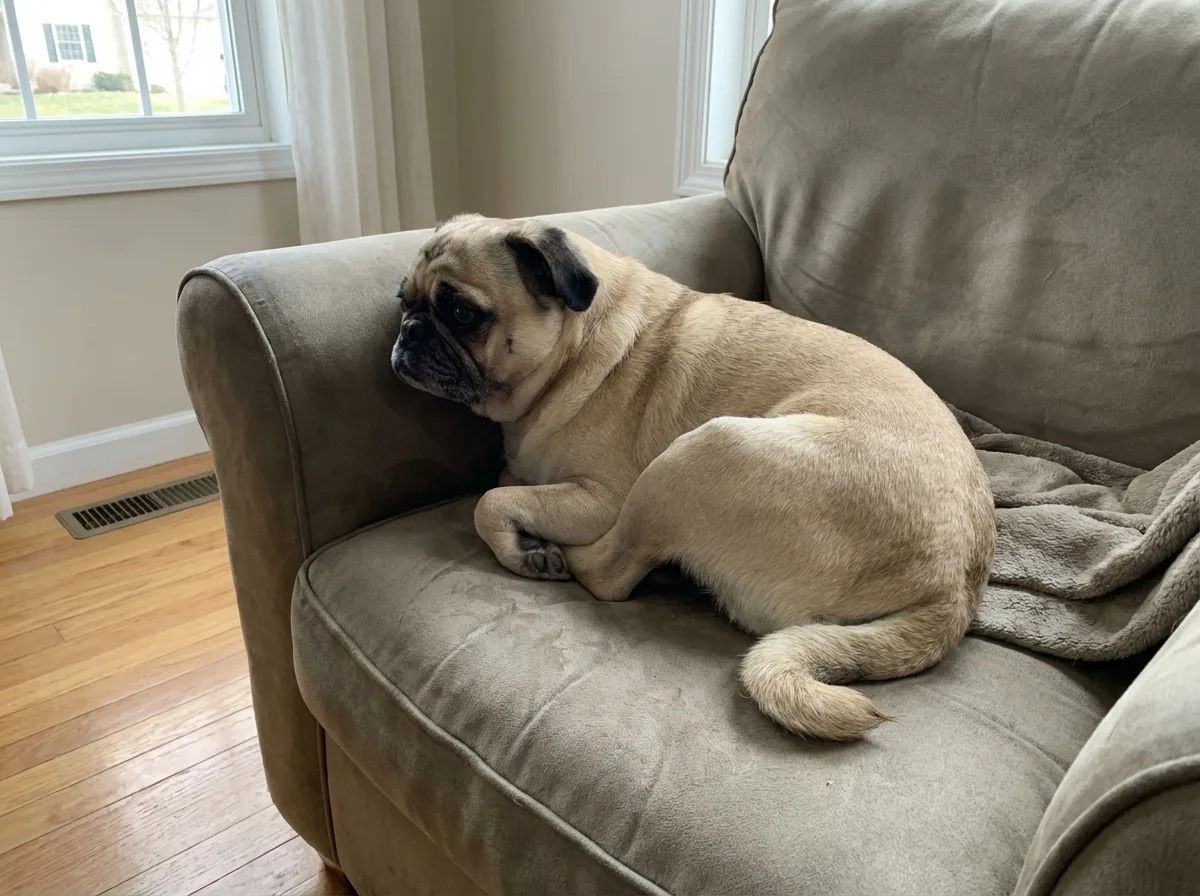

The Pug dog breed is a charming choice for many families and individuals. They adapt well to various living situations but have specific needs that prospective owners should consider.
Build my first 30 days with a Pug →
The Pug dog breed is known for its friendly and loyal nature. They are alert and active, making them great companions. Pugs are generally good with kids and other pets, which makes them a family favorite.
Pugs adapt well to apartment living due to their small size and moderate exercise needs. They require daily walks and playtime, totaling around 30 to 60 minutes of activity. Regular grooming is essential, but their shedding is manageable.

Before bringing a Pug into your home, consider the following pros and cons. Understanding these can help you decide if this breed fits your lifestyle.

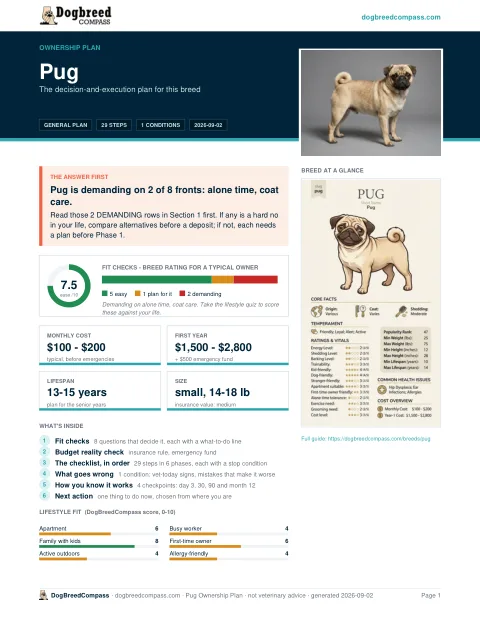
The Pug is demanding on 2 of 8 fronts: alone time, coat care. If any of those is a hard no in your life, this is not a good fit - compare a close cousin instead. If not, each one needs a plan before you commit, not after.
How many hours a day will the dog be alone? Demanding - Alone-time tolerance: low. Away 6+ hours most days means daily cover (walker or daycare) or a different breed. Decide this before anything else.
Where will the dog live, and how much noise can the building take? Easy - Apartment suitability: very high; barking: low. Suits apartments and houses alike; barking is manageable with early quiet-training.
What can you spend every month, including a buffer for vet bills? Plan for it - Typical monthly cost: $80 - $150; cost level 3/5. Mid-range running costs ($80 - $150 a month); the first-year setup and an emergency fund are what people underestimate.
Have you trained a dog before? Easy - First-time-owner friendliness: very high; trainability: moderate. Forgiving for first-time owners; trainability makes the Phase 3 basics quick.
Are there children in the home (now or soon)? Easy - Kid-friendly: very high. Good with children when supervised; size and energy are the things to manage around toddlers.
How much exercise will you actually give, on a bad week? Easy - Exercise need: low; energy: low. Modest exercise needs: a daily walk and some play cover it.
How much hair and grooming can you live with? Demanding - Shedding: high (Short, smooth double coat); grooming need: low. Heavy shedding or a coat that needs professional grooming: a monthly groomer bill or a serious brushing habit, not optional.
Any other pets at home? Easy - Dog-friendly: high. Generally easy with other dogs; cats are an individual question to ask the breeder or rescue.
A good fit if the demanding rows above have a plan you can name today; you should avoid this breed if one of them is something you would be hoping to change later. Take the lifestyle quiz to have these scored against your own answers.

The Pug dog breed is known for its friendly and playful nature, making it a great companion for families with children. Pugs generally have a calm demeanor, which helps them fit well into family life. Their moderate energy levels mean they enjoy playtime without being overly hyper, making them suitable for households with young kids.

The Pug dog breed can adapt well to both apartment and house living. In apartments, they generally handle small spaces well, as they are small in size and have a moderate energy level. However, they do need regular exercise to stay healthy and happy, so daily walks and playtime are essential, even in limited space.
Noise and neighbor dynamics can be a concern in apartments. Pugs have a moderate barking level, so they may bark at noises or when they get excited. This could be an issue if you have close neighbors.
On the other hand, in a house with a yard, they can enjoy the freedom to roam and play without worrying about disturbing anyone.
While Pugs can thrive in an apartment with the right care, a house with a yard is often preferred for their overall well-being. A yard allows them to play freely, which is great for their social needs and energy levels. If you work long hours or have a busy lifestyle, a house may be a better fit to give your Pug ample space to relax and play when you're not home.

Caring for a Pug dog breed involves regular grooming and health maintenance to keep them happy and healthy. Weekly brushing is recommended to manage their moderate shedding and to keep their coat clean. Baths should be done every few months or as needed, especially if they get dirty.
Regular nail trimming, ear cleaning, and dental care are also essential parts of their routine.
Expect 13 to 15 years with a Pug. Senior status arrives near 9 for this breed; screening from that point catches most age-related problems early. Health-wise, brachycephalic airway syndrome (boas) is the item that most often turns up in this breed's records. Being light is why the Pug range runs long: a 18 lb frame matures slowly and ages slowly with it. Before buying, ask the breeder for screening results covering brachycephalic airway syndrome (boas), pug dog encephalitis, corneal ulcers — those are the Pug conditions our records list first.
| Pug lifecycle | Figure |
|---|---|
| Typical Pug lifespan | 13–15 years |
| Pug counts as senior from | about 9 years |
| Pug size class | Small |
| Adult Pug weight | 14–18 lb |
| Origin | Various |
Where your Pug lands between 13 and 15 is mostly body condition, dental health and early screening — the parts an owner controls.
A Pug reaches 14 to 18 lb once fully grown. You are dealing with high shedding and a short, smooth double coat coat. Most of the growing is finished by 12 months.
| Pug measurement | Figure |
|---|---|
| Adult Pug weight | 14–18 lb |
| Pug height at the shoulder | 10–13 in |
| Pug shedding | high (heavy for its size) |
| Pug coat | short, smooth double coat |
| Pug grooming need | light |
Day-to-day grooming is light; budget accordingly for brushes, baths or a groomer. If anyone in the household reacts to dogs, the Pug's high shedding figure matters more than its short, smooth double coat coat description. Temperament ratings for the Pug read charming, mischievous, affectionate, and the breed sits at number 47 for popularity in our data, with the breed developed in Various.
Owning a Pug can be a moderate expense, especially in the first year. Prepare for initial setup costs along with ongoing care.
The Pug dog breed is generally healthy but can face specific health issues due to their unique body structure. Owners should be aware of these concerns to ensure their Pug lives a long, happy life.
Pugs typically live between 10 to 14 years. Regular vet check-ups are essential to monitor their health, especially as they age.
Pugs are friendly and eager to please, but they can be stubborn at times. Early socialization and training are crucial for a well-behaved dog.
If your Pug shows signs of extreme stubbornness or anxiety, consulting a professional trainer can be beneficial. They can provide strategies tailored to your dog's needs.
Pugs typically weigh between 14 to 18 pounds and stand about 10 to 13 inches tall. They have a low to moderate energy level, making them suitable for various living situations.
Common health issues for Pugs include hip dysplasia, ear infections, and allergies. Regular vet check-ups can help manage these concerns effectively.
The average monthly cost of owning a Pug ranges from $100 to $200. This includes food, grooming, and veterinary care.
13–15 years, with senior care usually starting around 9.
Yes, Pugs are generally good with families. Their friendly and loyal nature makes them great companions for children. However, supervision is always recommended, especially with younger kids, to ensure gentle play.
Pugs can be good apartment dogs due to their small size and moderate exercise needs. They adapt well to smaller living spaces, but they still need regular walks and playtime. Their friendly disposition also makes them great neighbors!
Pugs require about 30 minutes of exercise each day. This can include walks, playtime, or even some indoor games. While they enjoy being active, they can tire quickly, so keep an eye on their energy levels.
Pugs have moderate grooming needs. Their short coat requires regular brushing to manage shedding, particularly during seasonal changes. Don't forget to clean their facial wrinkles to prevent infections.
Pros of owning a Pug include their friendly temperament, adaptability to apartment life, and low exercise requirements. On the downside, they can suffer from health issues like hip dysplasia and allergies, and they need careful monitoring in hot weather due to their brachycephalic nature.
Absolutely! Pugs are known for their playful and affectionate nature, which makes them great companions for children. They usually enjoy the attention and activity that kids provide.
Yes, Pugs are known for their friendly and loyal nature, making them great companions for families. They generally get along well with children and are playful, which can enhance family bonding.
Absolutely! Pugs make excellent apartment dogs since they adapt well to smaller living spaces. As long as they receive regular exercise and mental stimulation, they can thrive in an apartment setting.
Pugs can be prone to several health issues like hip dysplasia, ear infections, and allergies. Regular vet check-ups are important to catch these issues early and maintain their health throughout their lives.
Pugs have moderate grooming needs. Their short coat requires regular brushing to minimize shedding and keep their skin healthy. Pay special attention to cleaning their facial folds to prevent skin infections.
Pros of owning a Pug include their friendly temperament, suitability for families, and adaptability to apartment living. However, cons include potential health issues and their tendency to snore and wheeze due to their brachycephalic nature.
Pugs are moderately trainable. They can learn commands and tricks but may have a stubborn streak. Positive reinforcement methods work best with them, so patience and consistency are key.
The average lifespan of a Pug is between 10 to 14 years. Providing them with a healthy diet, regular exercise, and routine veterinary care can help them live a longer, happier life.
Yes — shedding for the Pug is high on our 1-to-5 scale, described as heavy for its size. The coat is short, smooth double coat, and grooming need is light. No breed is truly hypoallergenic; the difference is how much hair and dander reaches your floor.
An adult Pug weighs 14–18 lb and stands 10–13 inches at the shoulder. Growth finishes at around 12 months for a small breed.
Every condition we have documented for the Pug, grouped by body system.

7-day money-back guarantee. Instant access.
Take the lifestyle quiz first to get it personalised to your home, schedule and budget.
DogBreedCompass is an information website. Everything here - including breed traits, cost estimates, health explanations and calculator results - is general reference material shared for information only. It is not veterinary, medical, legal, or financial advice, and reading it does not create a veterinarian-client-patient or any other professional relationship.
We research and check what we publish, but we do not warrant that any figure, date, price, or statement is accurate, complete, or current, and we accept no liability for any loss, cost, injury, or other harm arising from the use of this site. Use it as one reference among several. You remain responsible for your own decisions and for your dog's care - confirm anything that matters with a licensed veterinarian or another qualified professional before you act on it.
Read the full disclaimer for the complete position on accuracy, liability and your responsibility as the reader.
Take the Lifestyle Match quiz to see how this breed fits your day-to-day life, schedule, and budget.
Take the quizAlready settled on a Pug? Find names for this breed