Behavior
What does a luxating kneecap look like in everyday life?
A brief skip or hop on one back leg mid-stride, followed by the dog immediately resuming normal walking.

Quick answer
What does a luxating kneecap look like in everyday life?
A brief skip or hop on one back leg mid-stride, followed by the dog immediately resuming normal walking.
Owners usually describe it the same way before they know the medical name: their dog does this weird little skip, almost like a hiccup in their back leg, and then just keeps walking.
Owners who've noticed this odd gait pattern and are trying to figure out whether it's something to worry about or just a quirky habit their dog has always had.
This guide is not medical advice. If your dog shows pain, sudden behavior change, or worsening symptoms, consult a licensed veterinarian.
Some links may be affiliate links. We may earn a commission at no extra cost to you. We only suggest products we believe are helpful for dog owners.
We research and check what we publish, but we do not warrant that any figure, date, price, or statement is accurate, complete, or current, and we accept no liability for any loss, cost, injury, or other harm arising from the use of this site. Use it as one reference among several. You remain responsible for your own decisions and for your dog's care - confirm anything that matters with a licensed veterinarian or another qualified professional before you act on it. Full disclaimer.
A luxating kneecap slips out of its normal groove and pops back in on its own, producing the brief skip-hop gait many small-breed owners notice long before ever mentioning it to a vet. It's a common, often mild, everyday joint quirk that can nonetheless progress if left unmonitored.
A mild, occasionally self-resolving luxating kneecap is one of the more commonly observed everyday joint quirks in small breeds, and many owners live with it for a long time before it's ever formally assessed by a vet.
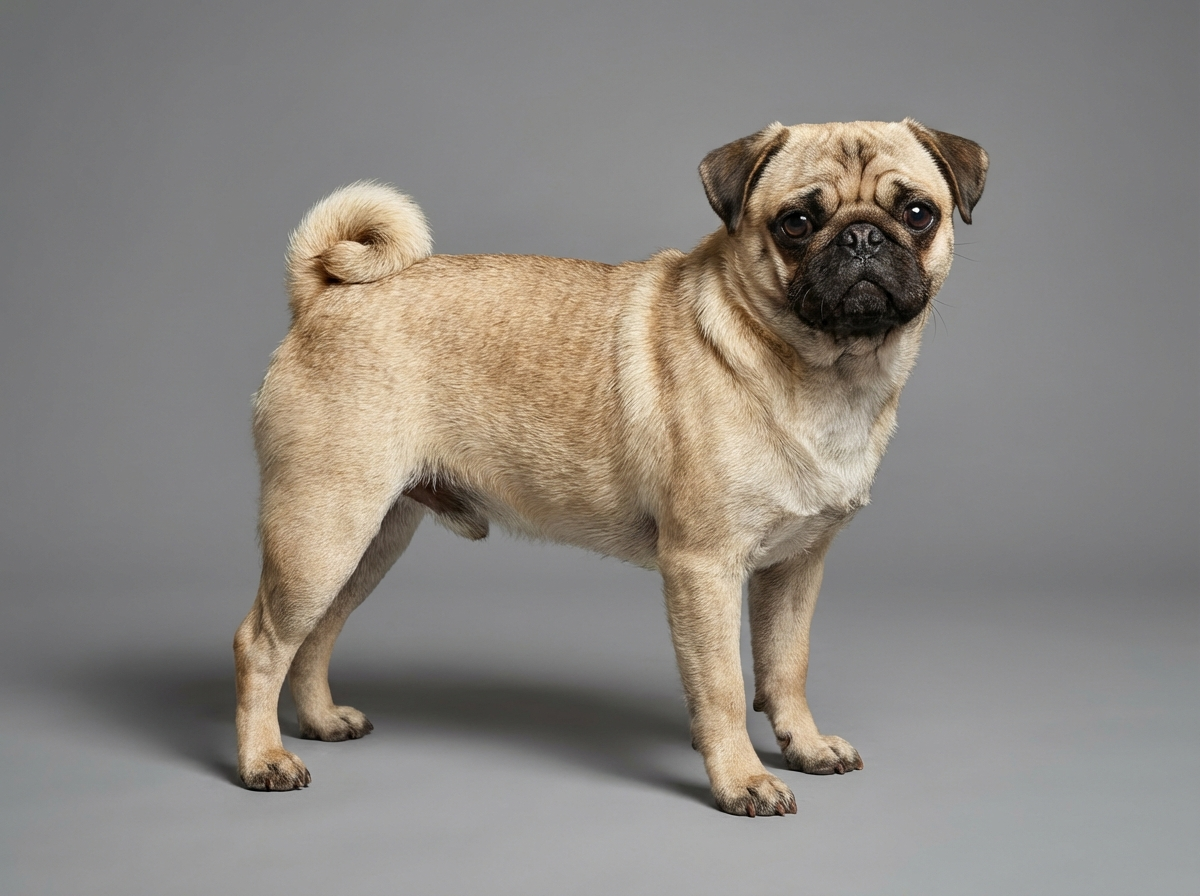
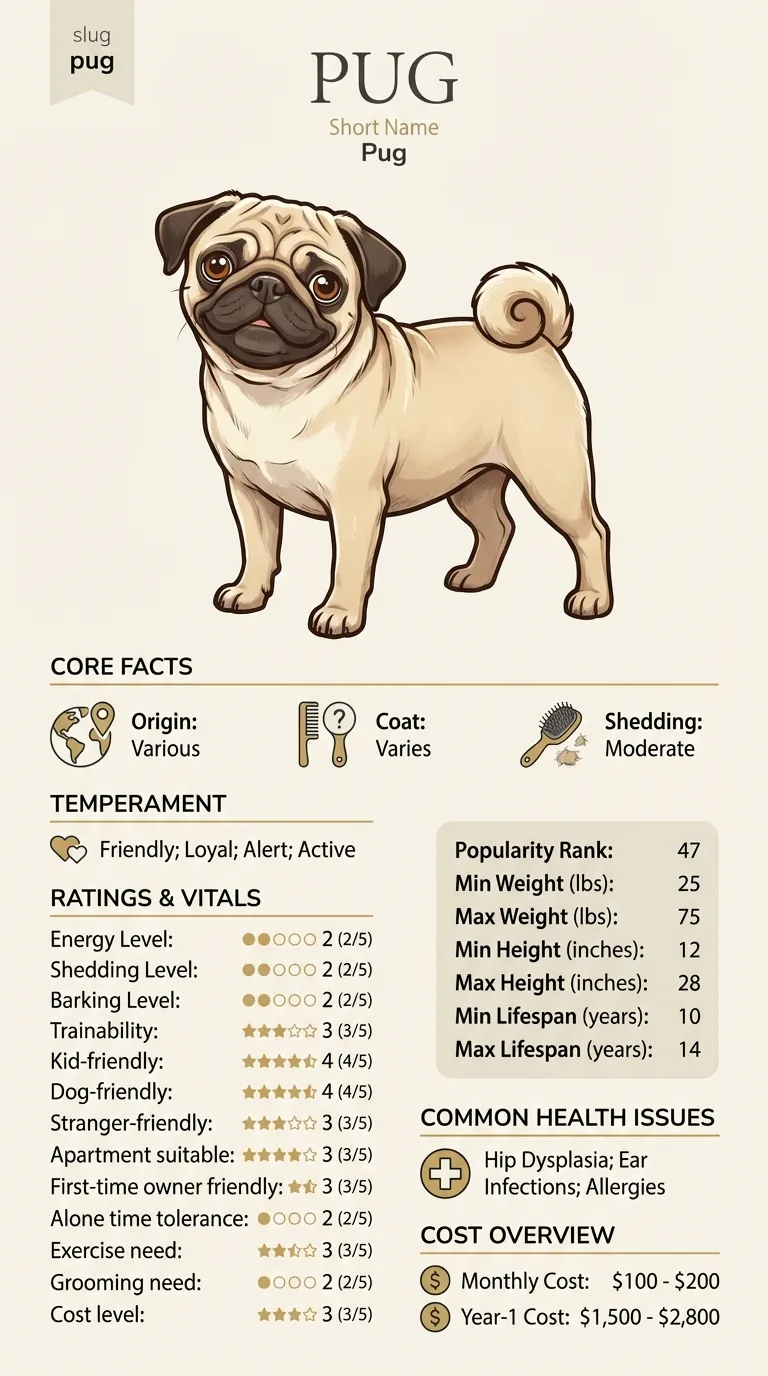
Small breeds like the Pug commonly have a shallower-than-ideal groove at the front of the knee joint where the kneecap is meant to glide, which makes sideways slipping more likely than in breeds with deeper joint grooves. This structural trait is largely inherited rather than something that develops from lifestyle factors alone.
Excess body weight and repeated high-impact activity like jumping both increase the force traveling through an already shallow groove, making slipping episodes more frequent. Slippery flooring can also contribute by giving the joint less stable footing to resist sideways movement.
Mention this pattern at your next routine visit if you haven't already, and seek a sooner appointment if the skip-hop is becoming more frequent, if your dog seems to hold the leg up longer than usual, or if you notice any limping that doesn't resolve within a minute on its own.
Start here: Pug Most Common Genetic Disorders: What to Screen For
See all PUG health problems, which breeds are prone to luxating patellas, or the full PUG breed guide for temperament, exercise needs and ownership costs.
Mild cases can remain stable for years with basic home management. Any noticeable increase in frequency or severity is worth reassessing promptly rather than assuming it will plateau on its own.
Success is a dog whose kneecap slipping stays infrequent, brief, and self-resolving, with no progression to persistent lameness or a joint that requires manual repositioning or surgery.
The kneecap normally sits in a groove at the front of the knee joint and glides up and down as the leg bends. When that groove is shallower than it should be — a common structural trait in small breeds — the kneecap can slip sideways out of position, usually toward the inside of the leg. The dog instinctively holds the leg up and gives it a shake or kick, which is often enough to pop the kneecap back into its groove, at which point the dog simply resumes walking as if nothing happened.
This "skip-hop-and-continue" pattern is exactly why so many owners live with it for months or years before ever mentioning it to a vet — it doesn't look painful in the way a limp usually does, and the dog is back to normal within a second or two. But each slip-and-pop cycle causes a small amount of cartilage wear inside that groove, and over time, a joint that pops back into place easily on its own can progress to one that needs a hand to help reposition it, or eventually one that doesn't go back in at all without surgery.
Most dogs with a mild, occasional skip-hop pattern live completely normal, active lives with a few sensible home adjustments rather than any dramatic intervention.

For almost two years, Danielle had noticed her Pug, Biggs, do an odd little skip on his back left leg every so often — always brief, never seeming to bother him, so she never brought it up at his checkups. At his sixth birthday exam, she mentioned it almost as an afterthought. Her vet examined the knee and graded it as a mild, stable luxating kneecap — exactly the kind that had been popping back into place on its own the whole time. Her vet suggested adding rugs to the hardwood floors and trimming a pound off Biggs's weight as simple, low-effort steps. Eight months later, at his recheck, the grading hadn't worsened, and Danielle finally had a name and a baseline for something she'd been quietly wondering about for two years.
Key takeaway: A mild, self-resolving skip-hop is common enough to go unmentioned for years — but naming and grading it turns a vague observation into something you can actually track.
It's common in small breeds and often not an emergency, but it's a real sign of a kneecap slipping out of place, and it's worth mentioning at your next vet visit so it can be graded and monitored rather than assumed to be harmless quirk.
Many dogs show minimal or no obvious discomfort during a mild, occasional episode, which is why it can go unnoticed by owners for a long time. That doesn't mean there's zero cartilage wear happening with each occurrence, even if the dog doesn't visibly react.
It can, though not always — some dogs stay mild and stable for years, while others progress to more frequent slipping or a kneecap that stops popping back into place easily on its own. Tracking frequency over time is the best way to catch a real trend.
Yes, meaningfully — reducing body weight directly reduces the force traveling through the knee joint with every step, which can reduce how often slipping occurs even without any other treatment change.
Generally once it's happening frequently, causing visible pain or persistent lameness, or has progressed to a point where the kneecap doesn't return to its groove on its own — your vet's grading assessment is what determines whether that threshold has been reached.
Usually nothing is needed — most episodes resolve within seconds as the dog naturally repositions the kneecap. If it doesn't resolve after a minute or your dog seems genuinely distressed, that's worth a vet call rather than home intervention.
It's the same underlying condition, just usually the milder, everyday presentation — many dogs with occasional, self-resolving slipping never progress to needing surgical correction, though the more severe grades of the same condition can require it.
A brief skip or hop on one back leg mid-stride, followed by the dog immediately resuming normal walking.
Not urgently, but mention it at your next vet visit so it can be assessed and graded rather than left unmonitored.
No — many mild, stable cases are managed successfully with weight control and home adjustments for the dog's whole life.
Keeping a lean body weight, since it directly reduces the mechanical force on the affected knee joint.
Both — the skip-hop is the everyday symptom owners notice, while the vet's grading assessment turns that observation into an actual severity diagnosis.
A one-page prep sheet for this condition: the signs, the questions to ask, what to get priced. Unlocks here.
You get: Vet visit prep sheet
No spam. One-click unsubscribe. See our privacy policy.
Preview page 1 before you decide.