Health
What causes facial fold infections in Pugs?
Trapped moisture and low airflow within the skin fold itself, creating conditions where bacteria and yeast multiply excessively.

Quick answer
What causes facial fold infections in Pugs?
Trapped moisture and low airflow within the skin fold itself, creating conditions where bacteria and yeast multiply excessively.
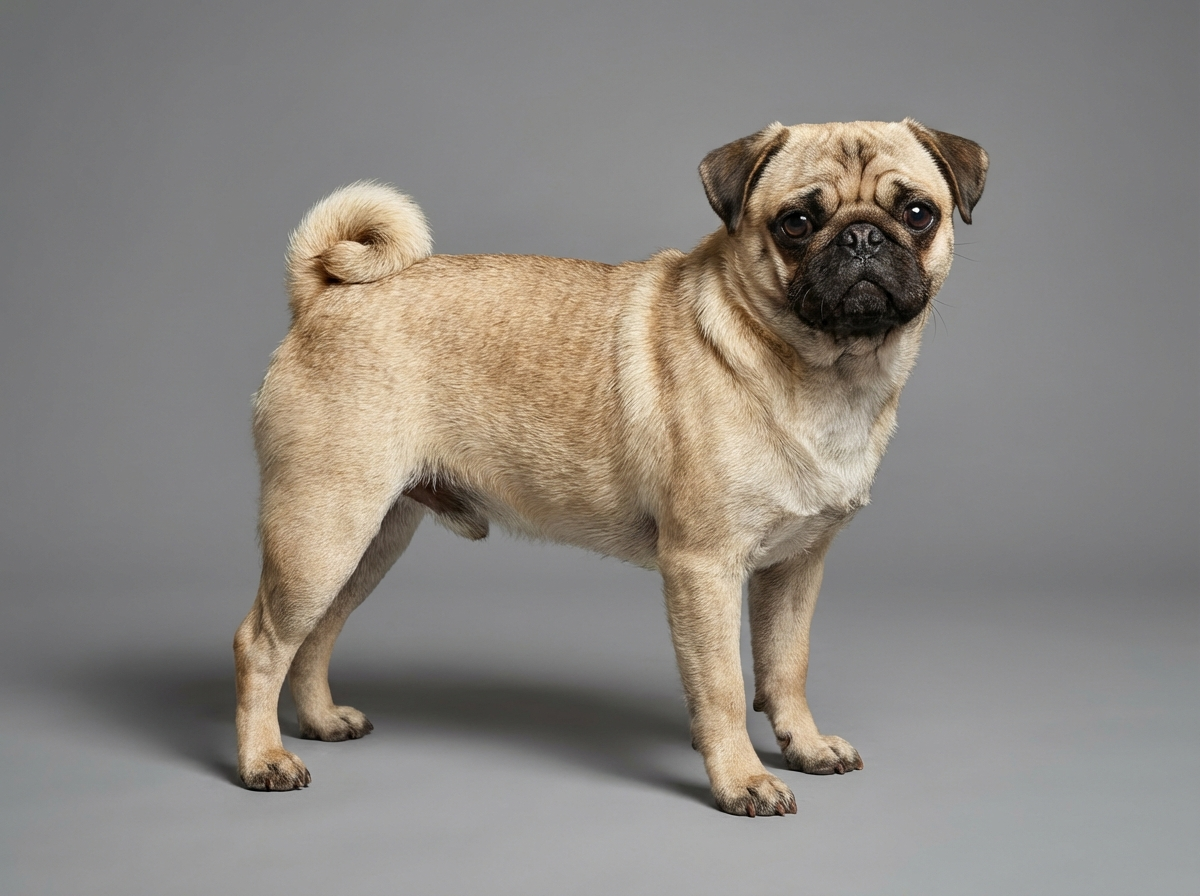
A Pug's wrinkles are part of the breed's whole appeal, and they're also the single most predictable spot on this dog's body for an infection to start, given the right conditions.
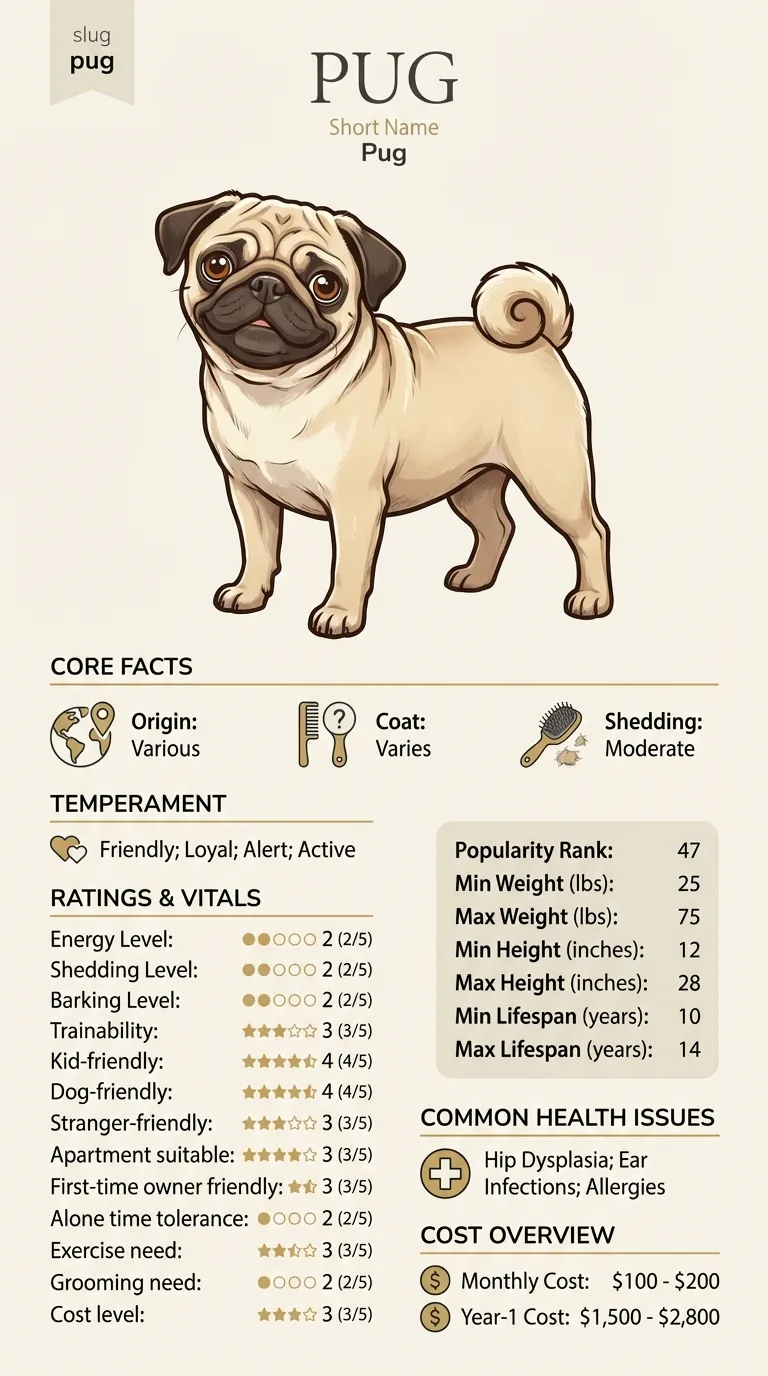
Owners noticing redness, odor, or discharge specifically within their Pug's facial folds, trying to understand how this differs from general skin allergies and what daily care actually prevents it.
This guide is not medical advice. If your dog shows pain, sudden behavior change, or worsening symptoms, consult a licensed veterinarian.
Some links may be affiliate links. We may earn a commission at no extra cost to you. We only suggest products we believe are helpful for dog owners.
We research and check what we publish, but we do not warrant that any figure, date, price, or statement is accurate, complete, or current, and we accept no liability for any loss, cost, injury, or other harm arising from the use of this site. Use it as one reference among several. You remain responsible for your own decisions and for your dog's care - confirm anything that matters with a licensed veterinarian or another qualified professional before you act on it. Full disclaimer.
Facial fold infections occur when trapped moisture and low airflow within the Pug's deep facial wrinkles create conditions favoring excessive bacterial and yeast growth. This is mechanically distinct from generalized allergic skin disease, driven by the fold's physical structure rather than an immune response, and requires an ongoing daily prevention routine.
Facial fold infections are one of the most commonly documented recurring skin issues in Pugs specifically, reflecting how directly the breed's defining facial structure creates this particular vulnerability.
The Pug's deep facial wrinkles are a core, defining trait of the breed's appearance, and they create a physical pocket that traps moisture against the skin with minimal airflow — a structural vulnerability distinct from the general skin biology issues seen in other breeds.
Infrequent cleaning, humid conditions, and excess moisture from drooling or tearing all worsen the trapped-moisture environment within the fold, directly increasing the likelihood of bacterial or yeast overgrowth and resulting infection.
Schedule a visit if you notice redness, odor, discharge, or visible irritation within a facial fold that doesn't improve with more diligent cleaning within a few days. Persistent or worsening infections may need a prescribed topical or oral treatment beyond home cleaning alone.
Start here: Pug Most Common Genetic Disorders: What to Screen For
See all PUG health problems, which breeds are prone to skin infections, or the full PUG breed guide for temperament, exercise needs and ownership costs.
A mild, early fold infection often improves within a few days to a week of more diligent cleaning; established infections needing prescribed treatment typically resolve within one to two weeks of starting that treatment alongside continued cleaning.
Success is a consistent daily cleaning habit that keeps the folds free of infection most of the time — not a permanent elimination of the risk, since the fold structure creating this vulnerability is a permanent feature of the breed's anatomy.
Facial folds create a physical pocket where two skin surfaces sit pressed against each other, trapping moisture from drooling, tears, food residue, and normal skin oils with very little airflow to help it evaporate. That warm, damp, low-oxygen environment is exactly what many opportunistic bacteria and yeast species need to multiply well beyond their normal, harmless population levels, leading to what's technically called intertrigo — inflammation and infection specifically within a skin fold.
This is mechanically distinct from generalized allergic skin disease, which tends to affect multiple body areas through an immune-driven itch response. A fold infection is fundamentally about the physical environment created by the fold itself, which is why it recurs specifically in that location even in a dog with otherwise perfectly healthy skin elsewhere, and why the primary fix isn't identifying an allergen but managing moisture and cleanliness in that specific spot.
This isn't a one-time treatment — it's an ongoing daily habit, since the fold's physical structure creating the risk doesn't change.

If you think your Pug has skin infections, the plan is three steps: write down what you have seen and when it started, book a veterinary appointment rather than waiting for the next flare, and take video of the behaviour or symptom before you go — the thing you are worried about rarely happens in the consulting room. Screening in the parents covers brachycephalic airway syndrome (boas), pug dog encephalitis, corneal ulcers.
What the vet visit should produce is a diagnosis and a written plan, not just reassurance: what is being ruled out, what the monitoring interval is, and which signs mean you come back sooner. Ask what the treatment costs across a year rather than per visit, because that is the number that decides whether you are managing this condition or reacting to it.
Between appointments, keep a short log — dates, what you saw, what changed. It is the single most useful thing an owner brings to a follow-up, and for skin infections it is often what separates a clear pattern from a guess.
Teresa noticed an unpleasant smell coming from her Pug Mochi's face folds one evening, along with visible redness she hadn't seen before. She'd been wiping Mochi's face occasionally, but not with any real consistency or attention to actually drying the folds afterward. Her vet diagnosed a mild fold infection and prescribed a medicated wipe, while also walking Teresa through a proper daily cleaning technique — reaching fully into the fold and drying thoroughly, rather than a quick surface wipe. The infection cleared within about ten days. More importantly, Teresa's now-consistent daily routine has meant no recurrence in the year since, a contrast she notices clearly against the occasional, inconsistent wiping she used to do before understanding why the technique actually mattered.
Key takeaway: It's not whether you clean the folds occasionally that prevents infection — it's whether the routine is consistent and thorough enough to actually keep the trapped moisture from building up.
Their deep facial wrinkles trap moisture from drooling, tears, and skin oils against the skin with very little airflow, creating a warm, damp environment where bacteria and yeast can multiply well beyond normal levels.
A fold infection is caused by the physical environment trapped within the wrinkle itself — moisture and lack of airflow — rather than an immune-driven allergic response, and it stays concentrated specifically within the fold rather than affecting multiple body areas.
Daily cleaning is generally recommended as a preventive routine, with thorough drying afterward, since leaving moisture behind undermines the purpose of cleaning in the first place.
Redness, a noticeable odor, discharge, and sometimes visible irritation or crusting within the fold are common signs, distinct from the surrounding, unaffected skin.
Mild cases often respond to more diligent cleaning with a medicated wipe or cleanser recommended by your vet. More established infections may need a prescribed topical or oral antimicrobial treatment alongside the cleaning routine.
Consistent daily cleaning and drying meaningfully reduces frequency and severity, though the underlying fold structure creating the risk is permanent, so most owners manage this as an ongoing preventive habit rather than eliminating the risk entirely.
Dogs with deeper or tighter folds, or those prone to more drooling or tearing, may need more frequent or more thorough cleaning than dogs with comparatively shallower folds, though daily attention is a reasonable baseline for the breed generally.
Trapped moisture and low airflow within the skin fold itself, creating conditions where bacteria and yeast multiply excessively.
Daily cleaning with thorough drying afterward is the standard preventive recommendation.
A vet visit with prescribed topical or oral treatment for an active infection commonly runs a modest to moderate amount depending on severity.
No — it's caused by the physical fold environment trapping moisture, not an immune-driven allergic reaction affecting the whole body.
Redness, odor, or discharge specifically within the fold, distinct from surrounding healthy skin.
A one-page prep sheet for this condition: the signs, the questions to ask, what to get priced. Unlocks here.
You get: Vet visit prep sheet
No spam. One-click unsubscribe. See our privacy policy.
Preview page 1 before you decide.