Health
What is the first sign of an allergic reaction in a Pug?
Facial swelling, hives on the belly or ears, or sudden vomiting shortly after a sting, new medication, or vaccine.

Quick answer
What is the first sign of an allergic reaction in a Pug?
Facial swelling, hives on the belly or ears, or sudden vomiting shortly after a sting, new medication, or vaccine.
When a Pug's face swells up fast, the clock is already running differently than it would for a longer-nosed dog.
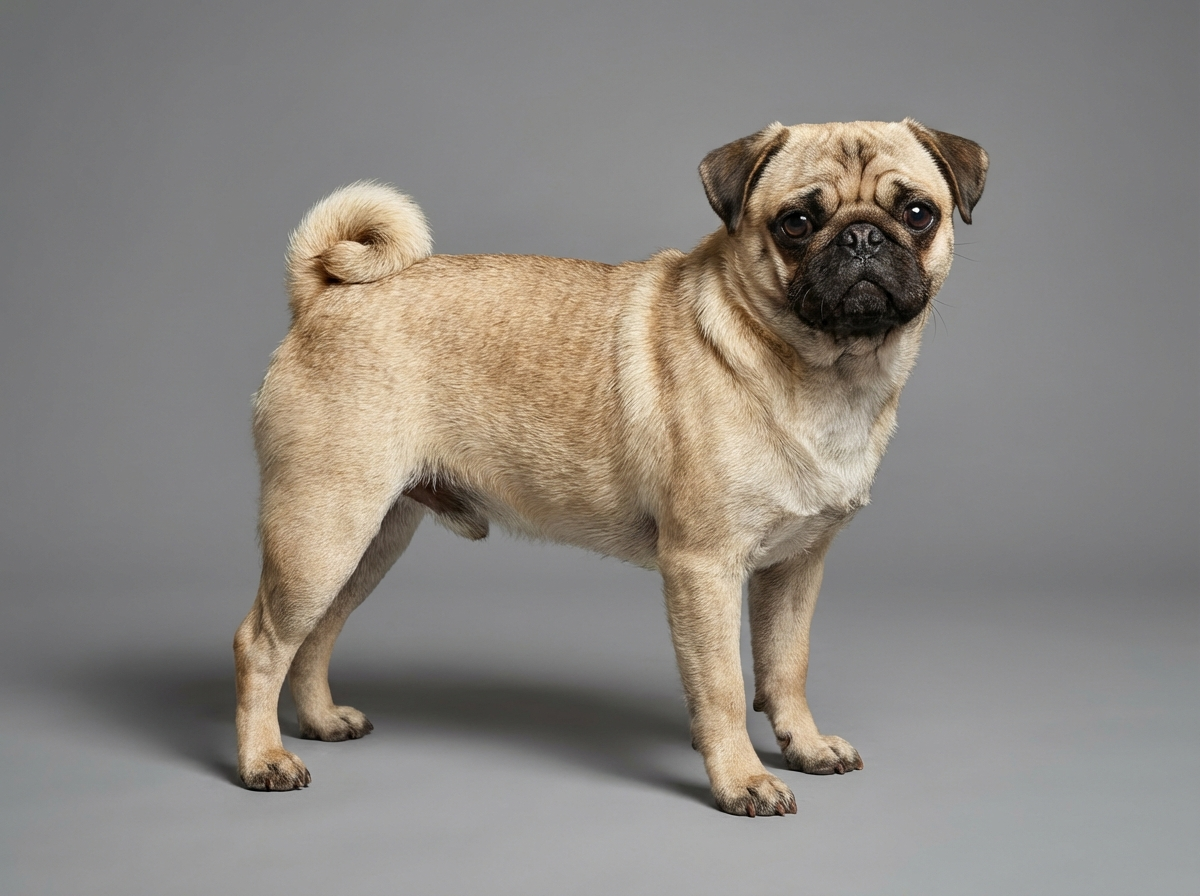
This affects owners who assume a swollen muzzle is just a minor annoyance to watch overnight. It is most urgent for Pugs who spend time outdoors near stinging insects, dogs due for vaccines or new medications, and any owner who has not yet had to distinguish a true allergic emergency from ordinary itching.
This guide is not medical advice. If your dog shows pain, sudden behavior change, or worsening symptoms, consult a licensed veterinarian.
Some links may be affiliate links. We may earn a commission at no extra cost to you. We only suggest products we believe are helpful for dog owners.
We research and check what we publish, but we do not warrant that any figure, date, price, or statement is accurate, complete, or current, and we accept no liability for any loss, cost, injury, or other harm arising from the use of this site. Use it as one reference among several. You remain responsible for your own decisions and for your dog's care - confirm anything that matters with a licensed veterinarian or another qualified professional before you act on it. Full disclaimer.
An allergic reaction in a Pug is a fast, immune-driven response to something the body has flagged as dangerous, usually a sting, a vaccine, a new medication, or occasionally a food. It differs from chronic allergies in speed and pattern: swelling, hives, or vomiting that appear within minutes to hours of a specific exposure, rather than itching that slowly builds over weeks.
True acute allergic reactions are far less common than chronic itching and ear infections in this breed, but they are reported often enough after stings and vaccinations that most vets specifically ask owners of flat-faced breeds to watch closely after any new exposure.
Nothing about a Pug's immune system is unusually reactive compared to other breeds. What changes the stakes is anatomy: a short muzzle, narrow nostrils, and a soft palate positioned close to the airway opening mean there is very little spare breathing room to begin with. Swelling that would be a cosmetic nuisance in a longer-nosed dog can meaningfully narrow this breed's airway.
Warm-weather months bring more stinging insects into yards and on walking routes. Routine vet visits, including vaccine appointments, are the other predictable trigger point, which is why many clinics ask owners of brachycephalic breeds to wait in the parking lot for fifteen to twenty minutes after a shot before heading home.
Call immediately, do not wait, if you see facial or throat swelling, labored or noisy breathing beyond your dog's normal baseline, pale or bluish gums, repeated vomiting, or collapse. These are signs of a reaction that can worsen within minutes in a breed with this little airway margin, and this is a genuine emergency, not a call-in-the-morning situation.
Start here: Pug Most Common Genetic Disorders: What to Screen For
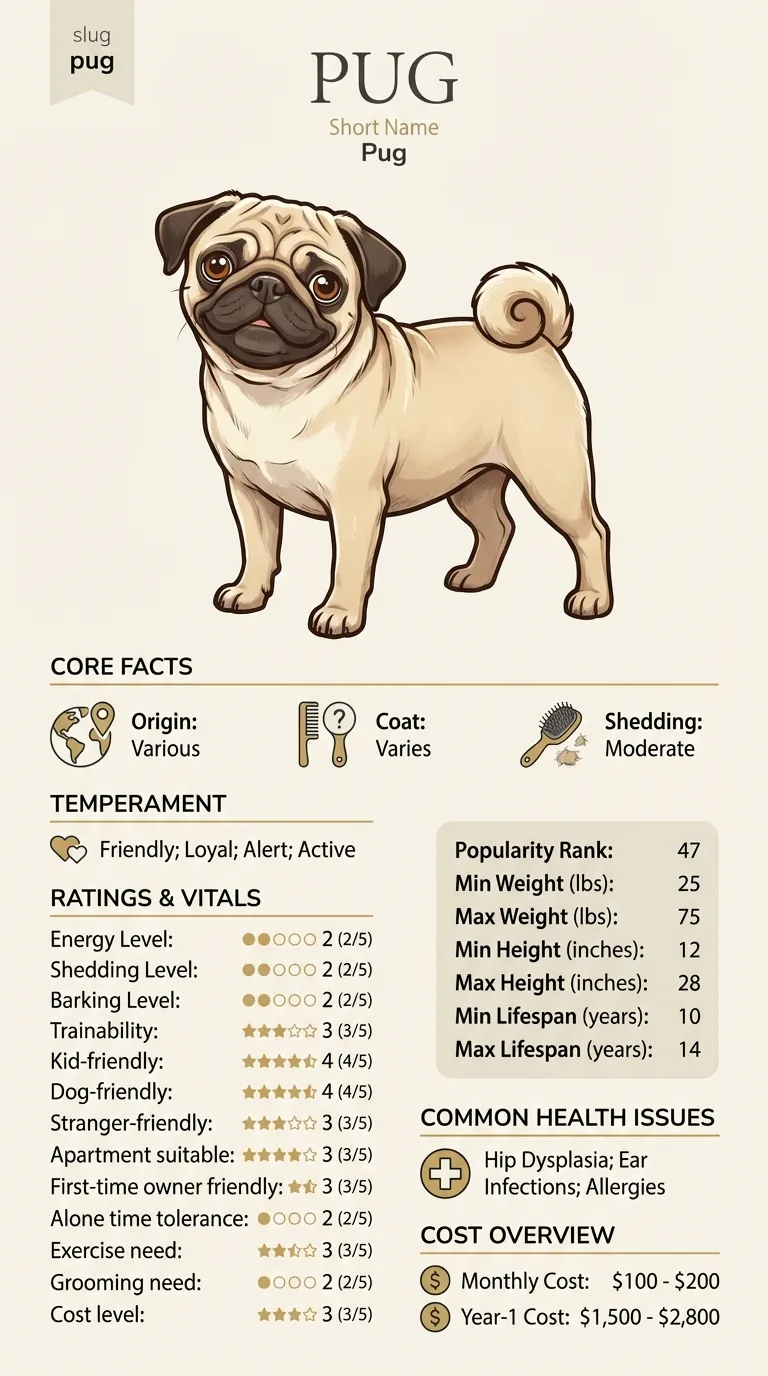
See all PUG health problems, which breeds are prone to allergic reactions, or the full PUG breed guide for temperament, exercise needs and ownership costs.
A mild reaction typically resolves within a few hours of treatment. A severe reaction requiring emergency stabilization can mean an overnight stay for observation, with most dogs recovering fully within a day or two once the swelling and any breathing difficulty resolve.
Success here is recognizing the pattern quickly enough to get treatment before breathing is affected, not preventing every sting or reaction from happening in the first place.
In a dog with a normal-length muzzle, swelling around the mouth and throat has to progress a long way before it meaningfully narrows the airway. A Pug starts from a much smaller baseline: the nostrils are already narrow, the soft palate already sits close to the airway opening, and there is little redundant space to lose before breathing becomes labored. Tissue swelling from a sting or drug reaction can push a Pug from "breathing loudly, as usual" to "working hard to breathe" much faster than it would in a breed built with more airway margin. This is not a reason to panic at every snort. It is a reason to treat facial or throat swelling, sudden hives, or repeated vomiting after a new exposure as something to act on immediately rather than watch for a few hours.
Insect stings are one of the most common causes, since a curious Pug nose investigates the ground at exactly the height where bees and wasps are found. Vaccine reactions are another well-recognized pattern: a small percentage of dogs develop facial swelling or hives within a few hours of a shot, and small, flat-faced breeds are frequently reported among the dogs this happens to. New medications, contrast dye, and, less often, a food ingredient can also trigger a reaction. The timing is the tell: true allergic reactions cluster tightly around a recent exposure, not weeks of slow-building itch the way chronic allergies do.

Rosie, a four-year-old Pug, was sniffing along the base of a fence when she yelped and pawed at her muzzle. Within twenty minutes her owner noticed her face looked puffier than usual and her breathing had gone from its normal snorting to something louder and more effortful. Rather than waiting to see if it settled down, her owner called the emergency clinic on the way there. Rosie was given treatment for the reaction and kept for observation for several hours until the swelling came down and her breathing returned to its usual baseline. She went home that night with no lasting effects. Her owner later said the deciding factor wasn't the swelling itself, which didn't look dramatic at first, but the change in how hard Rosie was working to breathe.
Key takeaway: The visible swelling matters less than any change in breathing effort. In this breed, a change in breathing sound or effort after a sting or new exposure is the signal to move fast, not to wait and watch.
Often within 20 minutes to a few hours of exposure to a sting, medication, or vaccine. Facial swelling, hives, or vomiting that start soon after something new happened are the pattern to watch for, as opposed to gradual itching that builds over days.
Any swelling around the muzzle, eyes, or throat warrants an urgent call to a vet given how little airway margin a Pug starts with. Mild, localized swelling without breathing changes may be manageable with vet-guided treatment, but breathing difficulty of any kind should go to emergency care right away.
Yes. A small number of dogs of any breed react to a vaccine with facial swelling, hives, or lethargy within hours, and flat-faced breeds are commonly among the dogs reported. Most vets recommend staying at the clinic or nearby for observation after a first vaccine series for exactly this reason.
Mild reactions usually mean a few hives, some facial puffiness, or mild vomiting, with the dog otherwise alert. Severe reactions involve labored breathing, pale or blue-tinged gums, collapse, or repeated vomiting, and these need immediate emergency veterinary treatment rather than a wait-and-see approach.
Talk to a vet before giving anything, including over-the-counter antihistamines, since dosing and product choice matter and some formulations are unsafe for dogs. Many vets do give owners a specific home plan in advance for known sting-prone dogs, but that plan should come from your own vet.
There is no solid evidence Pugs react more often than other breeds. What differs is the consequence: the same degree of facial or throat swelling narrows a Pug's already-tight airway more meaningfully than it would in a dog with a longer muzzle.
It can, though food reactions more often build slowly as chronic itching rather than appearing suddenly. A true acute reaction to food, with hives or facial swelling shortly after eating something new, is less common than sting or vaccine reactions but is treated the same way.
Facial swelling, hives on the belly or ears, or sudden vomiting shortly after a sting, new medication, or vaccine.
Any labored breathing, pale or blue gums, or collapse means emergency care now, not a wait-and-see night at home.
Usually within 20 minutes to a few hours; reactions that start days later are unlikely to be from that sting.
Keep a Pug from nosing into flowerbeds and mulch piles, where ground-nesting bees and wasps are common in warm months.
Most accident-and-illness plans cover emergency reaction visits; check your policy's per-incident limits before you need one.
A one-page prep sheet for this condition: the signs, the questions to ask, what to get priced. Unlocks here.
You get: Vet visit prep sheet
No spam. One-click unsubscribe. See our privacy policy.
Preview page 1 before you decide.