Health
What's a healthy weight range for an adult Pug?
Roughly 14 to 18 pounds is typical, though your vet's body condition assessment matters more than the number alone.

Quick answer
What's a healthy weight range for an adult Pug?
Roughly 14 to 18 pounds is typical, though your vet's body condition assessment matters more than the number alone.
Nobody decides to let their Pug get overweight — it happens one extra treat, one skipped walk, and one round "but he's just built that way" at a time.
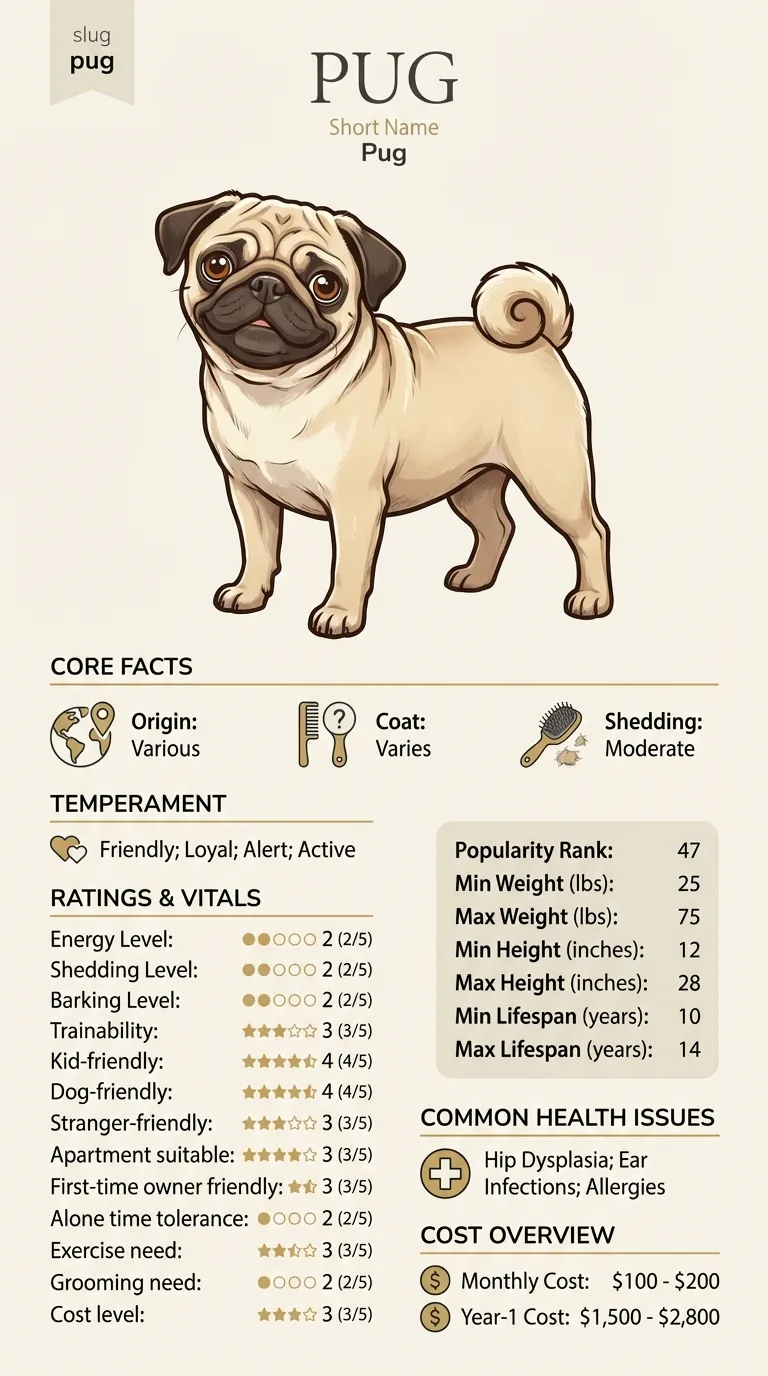
Owners who've been told at a vet visit that their Pug needs to lose weight, and are trying to figure out how to do that with a dog whose whole personality seems built around wanting food.
This guide is not medical advice. If your dog shows pain, sudden behavior change, or worsening symptoms, consult a licensed veterinarian.
Some links may be affiliate links. We may earn a commission at no extra cost to you. We only suggest products we believe are helpful for dog owners.
We research and check what we publish, but we do not warrant that any figure, date, price, or statement is accurate, complete, or current, and we accept no liability for any loss, cost, injury, or other harm arising from the use of this site. Use it as one reference among several. You remain responsible for your own decisions and for your dog's care - confirm anything that matters with a licensed veterinarian or another qualified professional before you act on it. Full disclaimer.
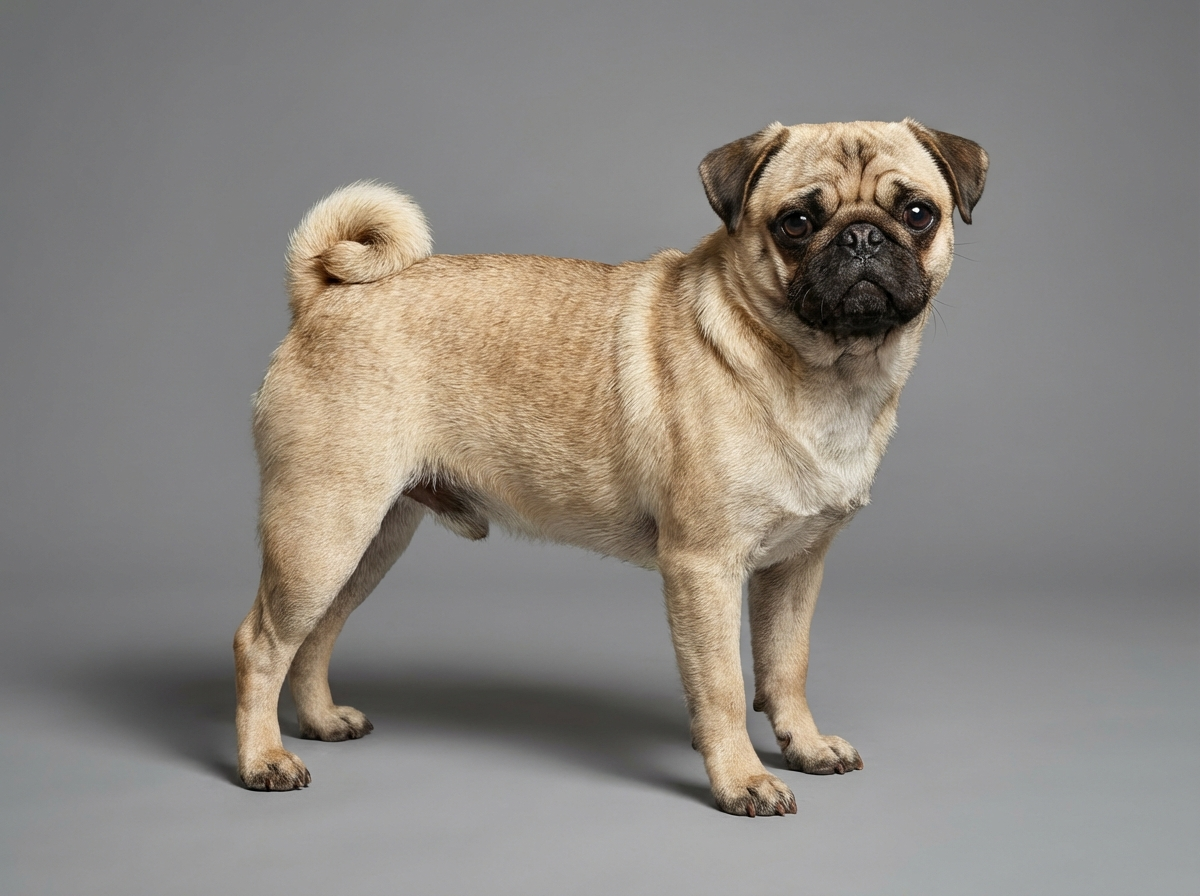
Obesity is one of the most consequential everyday health risks for Pugs, driven by the breed's naturally low exercise needs combined with a strong food-motivated temperament. Excess weight is especially damaging in this breed because it compounds nearly every other documented health concern, from airway strain to joint load to cardiac workload.
Obesity is widely recognized as one of the most common weight-related health concerns in the Pug breed specifically, given how directly the breed's low activity needs and food motivation combine to make weight gain easy.
The Pug's naturally low exercise drive and modest energy needs mean fewer calories are burned through daily activity compared to higher-energy breeds, while the breed's famously strong food motivation makes overfeeding and treat-driven weight gain a persistent, breed-typical challenge.
Imprecise portion sizing, frequent treats given outside of any calorie budget, and reduced activity — sometimes itself caused by airway or joint discomfort — all combine to make gradual weight gain the default outcome without active, ongoing management.
Schedule a weight check and body condition assessment at least annually, and sooner if you notice reduced stamina, increased breathing effort, or new reluctance to exercise, all of which can indicate that existing weight is already affecting other systems.
Start here: Pug Most Common Genetic Disorders: What to Screen For
See all PUG health problems, which breeds are prone to obesity, or the full PUG breed guide for temperament, exercise needs and ownership costs.
Safe, sustainable weight loss for a small dog typically targets a modest amount per month rather than a rapid drop, meaning a meaningful weight-loss goal often takes several months of consistent management to achieve.
Success is a lean body condition — visible waist, easily felt ribs — maintained consistently over time through an ongoing routine, not a one-time weight loss that reverts once attention lapses.
Two traits stack against a Pug in exactly the wrong way when it comes to weight. Their naturally low exercise drive and modest activity needs mean fewer calories get burned through movement compared with a higher-energy breed eating the same portion. At the same time, Pugs are widely known for a food-driven personality that makes begging, counter-surfing, and an eager response to treats a defining part of the breed's charm — the very trait owners love can quietly work against a healthy weight if portions aren't watched carefully.
The consequences of that extra weight land harder in a Pug than in many other breeds specifically because so much of what already challenges this breed gets worse with every extra pound. Their compromised airway has to move more tissue with every breath. Their joints, already dealing with the breed's typical orthopedic vulnerabilities, bear more load with every step. Their heart, already prone to age-related valve disease, works harder to circulate blood through more body mass. Weight isn't just a cosmetic concern in this breed — it's a multiplier sitting on top of nearly every other documented health issue.
None of these require dramatic restriction — consistency in small daily choices is what actually moves the number on the scale over time.

Over about eighteen months, Carlos's Pug, Otis, had crept up from a lean 16 pounds to nearly 22 — a gain so gradual that Carlos genuinely hadn't noticed until his vet weighed Otis at a routine visit and flagged it as a real concern rather than just something to watch. Carlos realized he'd been eyeballing portions for years and giving Otis a steady stream of small treats throughout the day without ever thinking of them as "extra food." He started measuring meals precisely and cut treats down to a small daily allotment, swapping in some praise and play instead. Over five months, Otis lost the extra six pounds back down to a lean weight. His energy on walks noticeably picked up, and at his next vet visit, his breathing sounded easier even at rest — a change his vet specifically credited to the weight loss.
Key takeaway: Weight gain in this breed is rarely a single bad decision — it's small, unmeasured extras adding up slowly, which means undoing it is just as much about consistent small changes as the gain was.
A combination of naturally low exercise needs and a famously strong food motivation means it's easy for calorie intake to exceed what the dog actually burns, especially if treats and portion sizes aren't carefully tracked.
A healthy adult Pug typically falls in a range around 14 to 18 pounds, though the right weight for an individual dog depends on frame size — your vet can assess body condition directly rather than relying on weight alone.
Yes, significantly — excess weight adds strain to the breed's already compromised airway, adds load to joints already prone to orthopedic issues, and increases workload on a heart already prone to age-related valve disease, compounding nearly every other documented breed health concern.
Gradual, moderate calorie reduction combined with measured portions and reduced treat volume is generally more sustainable and comfortable than a dramatic cut, and your vet can help set a realistic weekly weight-loss target.
Yes, in moderation — keeping treats to a small percentage of total daily calories and choosing lower-calorie options allows for continued positive reinforcement without undermining weight goals.
Pugs have comparatively modest exercise needs compared to many breeds, but regular, moderate daily walks still matter both for weight management and joint and airway health, adjusted around their heat sensitivity.
Excess weight is associated with reduced lifespan and quality of life across dog breeds generally, and in a breed already prone to airway, joint, and cardiac issues, the compounding effect of obesity makes weight management a particularly high-leverage health intervention.
Roughly 14 to 18 pounds is typical, though your vet's body condition assessment matters more than the number alone.
Measuring food precisely rather than estimating portions is usually the highest-impact, easiest change to make.
Costs vary by complication, but conditions worsened by excess weight — joint, cardiac, airway issues — often mean more frequent and expensive vet visits over a dog's lifetime.
Not necessarily — keeping treats to a small share of total daily calories, using lower-calorie options, is usually more sustainable than eliminating them entirely.
Monthly weigh-ins on the same scale give a clear trend line without over-focusing on small day-to-day fluctuations.
A one-page prep sheet for this condition: the signs, the questions to ask, what to get priced. Unlocks here.
You get: Vet visit prep sheet
No spam. One-click unsubscribe. See our privacy policy.
Preview page 1 before you decide.