Health
Is Type I IVDD an emergency?
Yes, always — any sudden back pain with hind-leg weakness needs immediate veterinary evaluation, not overnight observation.

Quick answer
Is Type I IVDD an emergency?
Yes, always — any sudden back pain with hind-leg weakness needs immediate veterinary evaluation, not overnight observation.
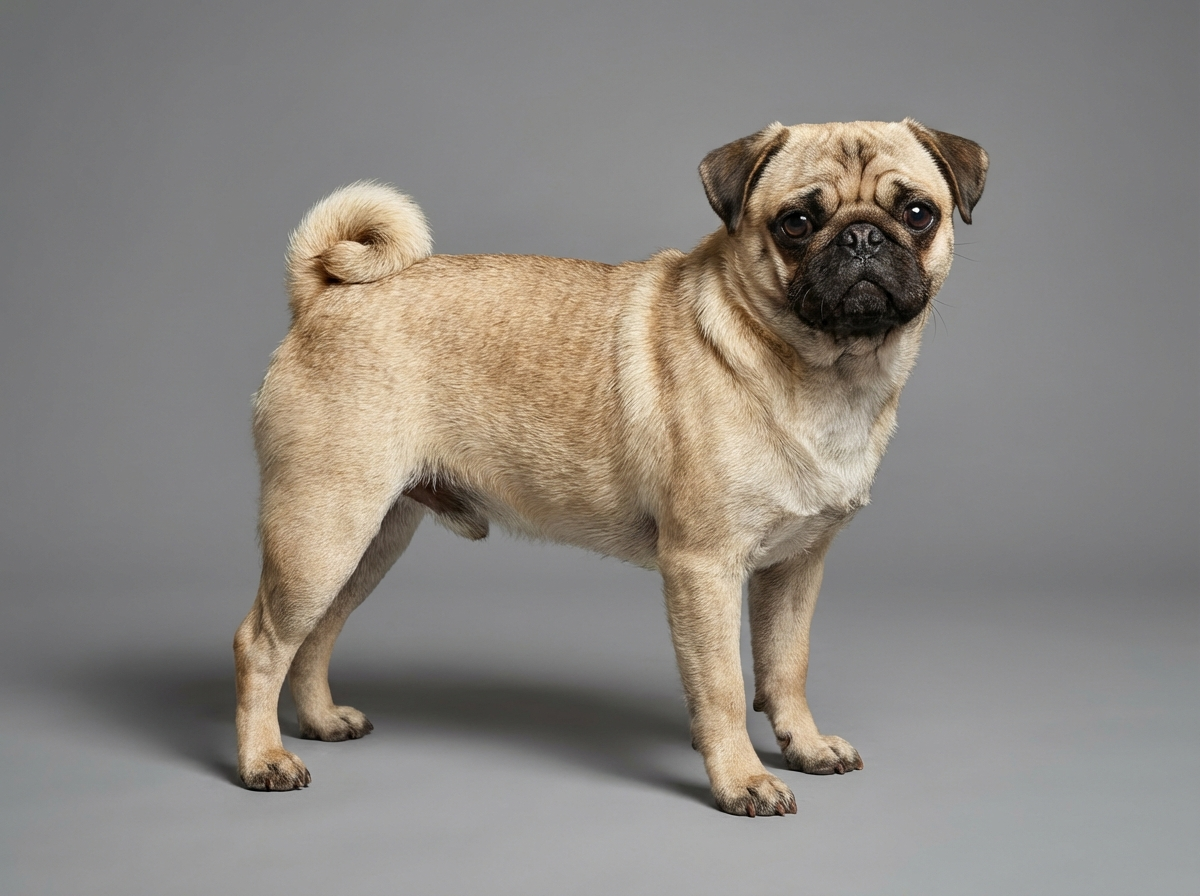
A Pug that was walking normally at breakfast and can't stand by lunch isn't exaggerating a sore back — that speed of onset is the defining feature of Type I disc disease, and it changes the entire timeline for treatment.
Owners in the middle of an active emergency, watching a dog that was fine hours ago suddenly unable to walk normally, trying to understand how fast they actually need to move.
This guide is not medical advice. If your dog shows pain, sudden behavior change, or worsening symptoms, consult a licensed veterinarian.
Some links may be affiliate links. We may earn a commission at no extra cost to you. We only suggest products we believe are helpful for dog owners.
We research and check what we publish, but we do not warrant that any figure, date, price, or statement is accurate, complete, or current, and we accept no liability for any loss, cost, injury, or other harm arising from the use of this site. Use it as one reference among several. You remain responsible for your own decisions and for your dog's care - confirm anything that matters with a licensed veterinarian or another qualified professional before you act on it. Full disclaimer.
Check this first
This isn't a condition where waiting a day to see if things improve is a neutral choice — delay itself is part of what determines the outcome.
If any of these apply, call your vet or an emergency clinic now. The rest of this page is for the cases that are not an emergency.
Type I IVDD is the acute form of disc disease in which the outer ring of a degenerated disc suddenly tears and its gel-like center extrudes forcefully against the spinal cord, often triggered by an ordinary jump or twist. It progresses far faster than gradual disc degeneration and is treated as a true veterinary emergency.
Type I presentations are a recognized acute form of the broader IVDD risk documented in Pugs, and while overall breed predisposition is moderate rather than extreme, any Pug with degenerating discs can experience a sudden Type I event.
Pugs carry a moderate breed predisposition to disc degeneration tied to their compact spinal build, which sets up the underlying vulnerability. Once a disc has degenerated enough, its outer ring becomes prone to sudden tearing under stress that a healthy disc would absorb without issue.
The immediate trigger is usually a routine movement — jumping, twisting, an awkward landing — that happens to coincide with a disc that's already weakened. Excess body weight adds baseline spinal stress that can make this kind of sudden failure more likely over time.
Seek emergency veterinary care immediately for any sudden back pain, reluctance to move, hunched posture, or hind-leg weakness or wobbling. Do not wait overnight to see if symptoms improve — this is one of the clearest cases in veterinary medicine where delay directly worsens the chance of recovery.
Start here: Pug Most Common Genetic Disorders: What to Screen For
See all PUG health problems, which breeds are prone to intervertebral disc disease ivdd type i, or the full PUG breed guide for temperament, exercise needs and ownership costs.
Onset happens within minutes to hours of the triggering event. The treatment decision window for severe cases is measured in hours, not days, and recovery afterward — surgical or conservative — typically involves four to eight weeks of restricted activity.
Success is spinal cord function preserved or regained through prompt treatment. In cases where deep pain sensation was lost before treatment began, success may mean a more limited but still meaningful recovery, and outcomes vary considerably based on how quickly care started.
In Type I disc disease, the tough outer ring of an already-degenerated disc suddenly tears, and the gel-like material inside extrudes outward with real force, striking the spinal cord rather than gradually pressing against it. This is mechanically different from the slow bulging seen in more gradual disc degeneration — it's closer to an explosion than a leak, and the resulting spinal cord injury can be severe within minutes of the disc actually rupturing.
The trigger is often something completely ordinary — a jump off furniture, a sudden twist chasing a toy, even an awkward landing that wouldn't concern anyone in a dog with a healthy disc. That's part of what makes Type I so disorienting for owners: there's rarely a dramatic accident to point to, just an unremarkable moment followed by a dog that suddenly can't walk right. The disc had likely been quietly degenerating for a while beforehand, with the rupture itself being the first visible sign anything was wrong.
If you think your Pug has intervertebral disc disease (ivdd) type i, the plan is three steps: write down what you have seen and when it started, book a veterinary appointment rather than waiting for the next flare, and take video of the behaviour or symptom before you go — the thing you are worried about rarely happens in the consulting room. Screening in the parents covers brachycephalic airway syndrome (boas), pug dog encephalitis, corneal ulcers.
What the vet visit should produce is a diagnosis and a written plan, not just reassurance: what is being ruled out, what the monitoring interval is, and which signs mean you come back sooner. Ask what the treatment costs across a year rather than per visit, because that is the number that decides whether you are managing this condition or reacting to it.
Between appointments, keep a short log — dates, what you saw, what changed. It is the single most useful thing an owner brings to a follow-up, and for intervertebral disc disease (ivdd) type i it is often what separates a clear pattern from a guess.
Nadia's Pug, Ollie, jumped off the bed the way he did every single morning — nothing unusual about the movement at all. This time, he yelped sharply on landing and wouldn't put weight on his back end. Nadia recognized it immediately as different from ordinary stiffness and drove straight to an emergency vet rather than waiting to see if it passed. Within two hours, Ollie had lost the ability to walk on his hind legs entirely, though he still had deep pain sensation — a critical distinction the emergency vet checked for right away. He went into surgery that same evening. Eight weeks of restricted recovery later, Ollie was walking again, close to normally. His surgeon was direct with Nadia afterward: acting within those first two hours, rather than waiting through the night, was very likely what preserved his ability to walk at all.
Key takeaway: Type I IVDD can be triggered by a completely routine movement — what matters most for outcome isn't the size of the trigger, it's how fast treatment starts afterward.
Type I is a sudden, acute rupture where disc material extrudes forcefully and strikes the spinal cord, typically triggered by an ordinary movement. It progresses far faster than the gradual bulging seen in more chronic disc degeneration, and requires urgent rather than routine evaluation.
Often something completely unremarkable — a jump off a couch, a sudden twist, an awkward landing — acting on a disc that had likely already been quietly degenerating. There's rarely a dramatic accident involved.
Immediately — this is a true emergency. If your dog shows sudden back pain, reluctance to move, or any hind-leg weakness, treat it the same way you would any other urgent medical crisis and seek care right away rather than waiting overnight.
Yes, particularly if deep pain sensation is lost and surgical decompression doesn't happen within the window veterinary neurologists consider meaningful for recovery — generally within about 24 hours of that loss occurring.
Not always — milder cases with pain but no significant weakness may be managed conservatively with strict rest. But any significant weakness, wobbling, or loss of function typically calls for surgical evaluation given how quickly this form progresses.
The speed of onset is the key distinguishing feature — Type I appears suddenly, often within minutes of a triggering movement, while gradual disc degeneration builds slowly over weeks or months. Either way, new back symptoms warrant prompt veterinary evaluation.
It depends heavily on how much spinal cord function remained at the time of surgery. Dogs who retained deep pain sensation and had surgery promptly often regain significant mobility; those who lost it before treatment have a more guarded outlook even with surgery.
Yes, always — any sudden back pain with hind-leg weakness needs immediate veterinary evaluation, not overnight observation.
Generally within about 24 hours of losing deep pain sensation, according to veterinary neurology consensus, though earlier is always better.
Emergency MRI and surgical decompression together often run several thousand dollars, varying by facility, region, and severity.
Yes — the trigger is often unremarkable because the disc had likely already degenerated quietly beforehand; the movement just happens to be what finally ruptures it.
Let a veterinary professional perform that assessment — handling a dog with a suspected spinal injury incorrectly can worsen the outcome, so get to a vet rather than testing at home.
A one-page prep sheet for this condition: the signs, the questions to ask, what to get priced. Unlocks here.
You get: Vet visit prep sheet
No spam. One-click unsubscribe. See our privacy policy.
Preview page 1 before you decide.