DogBreedCompass

Akita or English Mastiff: Deterrence by Presence or Decision

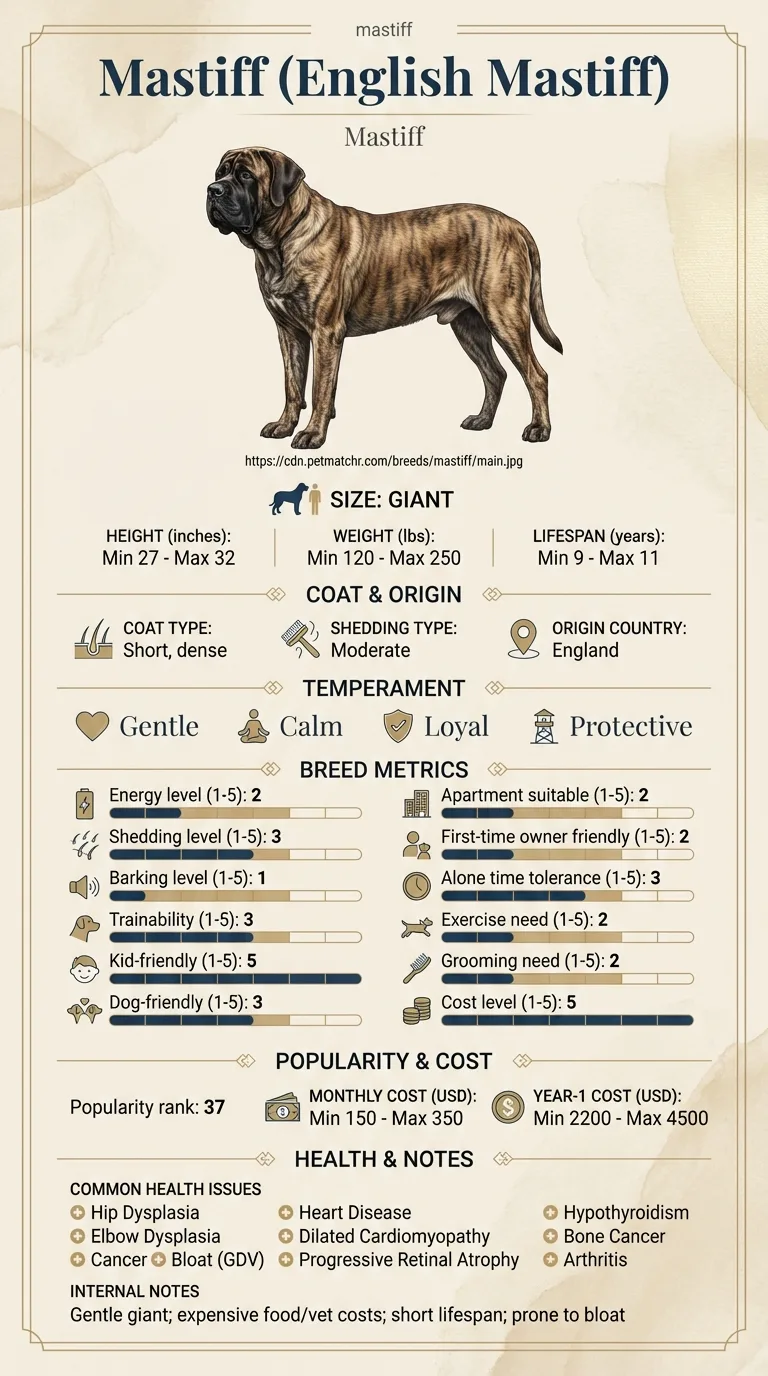
The Mastiff rates 1/5 for barking — the lowest rating on this site — and can weigh 250 pounds. It does not need to make a noise, and it mostly does not. The Akita is nearly as quiet at 2/5 but goes about guarding entirely differently: the Mastiff blocks, and the Akita decides.

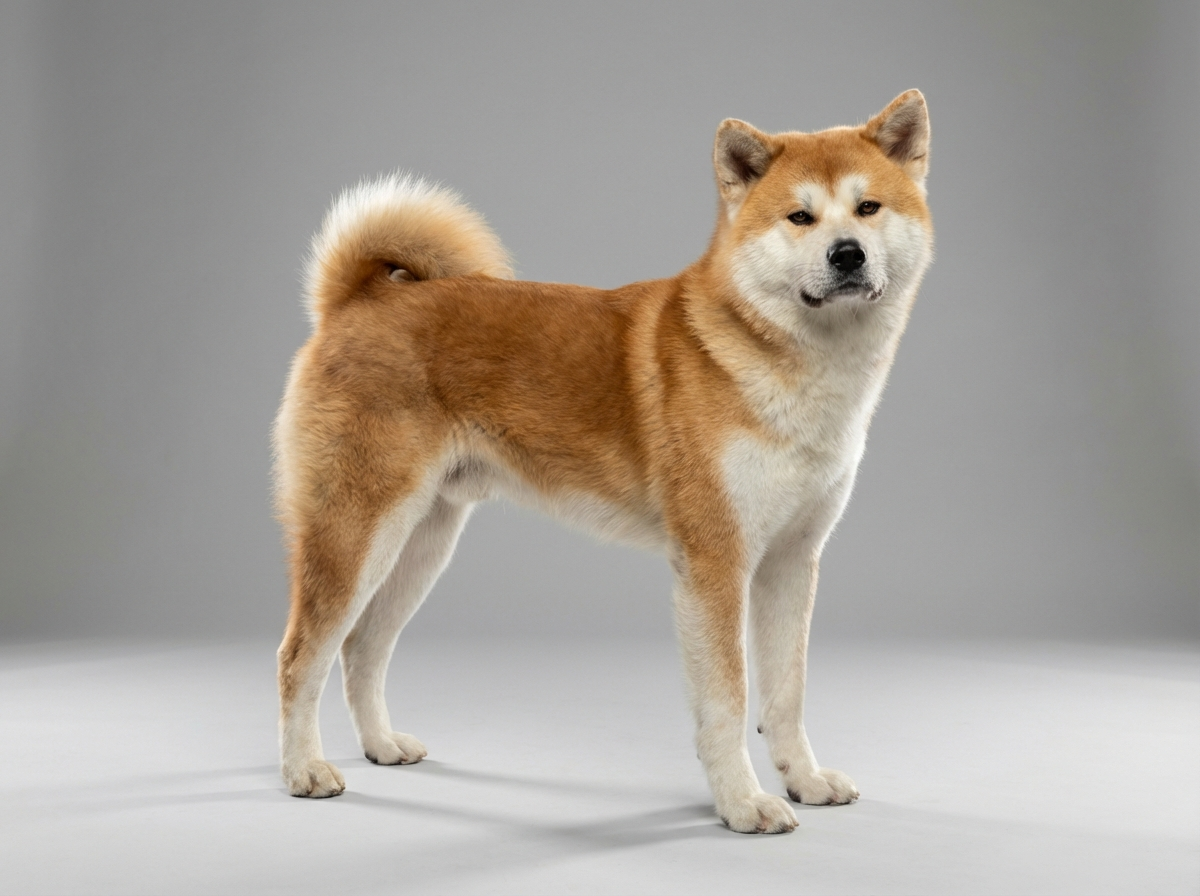
akita infographic
mastiff infographic

This page is for someone who wants a very large deterrent dog and needs the practicalities laid out. It covers the enormous size difference and what it costs, noise, drool and heat, bloat and joint disease, and how each breed actually guards.

Quick verdict

The Mastiff is a calmer, more tolerant, more expensive dog with a shorter life; the Akita costs less, lives longer and requires far more careful handling of its temperament.

Choose akita if...

Choose the Akita if lifespan and cost matter. It lives 10 to 13 years against the Mastiff's 9 to 11 and costs $110–$240 a month against $150–$350. It does not drool, tolerates heat better, and is far easier to move. You are accepting 1/5 for first-time owners, 2/5 with other dogs and strangers, and 5/5 shedding.

Choose mastiff if...

Choose the Mastiff if you want overwhelming presence with a genuinely placid temperament. It rates 5/5 with children, 3/5 with other dogs and strangers, barks at only 1/5, and needs just 2/5 exercise. You are accepting up to 250 pounds, constant drool, real heat intolerance, and the highest running cost in this batch.

Head-to-head comparison

FeatureakitamastiffWinner
Weight70–130 lbs120–250 lbsEqual
Height24–28 in27–32 inEqual
Lifespan10–13 years9–11 yearsakita
CoatDense double coatShort and denseEqual
Grooming needModerate (3/5)Low (2/5)mastiff
SheddingVery high (5/5)Moderate (3/5)mastiff
Energy levelModerate (3/5)Low (2/5)Equal
Exercise needModerate (3/5)Low (2/5)mastiff
TrainabilityModerate (3/5)Moderate (3/5)Equal
BarkingLow (2/5)Very low (1/5)mastiff
Good with kidsModerate (3/5)Very high (5/5)mastiff
Good with other dogsLow (2/5)Moderate (3/5)mastiff
Friendly to strangersLow (2/5)Moderate (3/5)mastiff
Apartment suitabilityLow (2/5)Low (2/5)Equal
Good for first-time ownersVery low (1/5)Low (2/5)mastiff
Tolerates being aloneModerate (3/5)Moderate (3/5)Equal
Typical monthly cost$110–$240$150–$350akita
Typical first-year cost$1,700–$3,200$2,200–$4,500akita

Deep dive

What 250 pounds actually means

The Mastiff is the heaviest breed on this site and the practical consequences reach into every corner of ownership.

A dog that cannot be lifted cannot be carried to a car when it is injured or elderly — plan for a ramp and for help. Furniture, doorways and car boots all need to accommodate it. Anaesthesia in giant breeds requires careful dose calculation and is not something every practice does routinely; it is worth asking your vet about their experience with the size.

Strength is the other issue. Even at 3/5 trainability and with a placid temperament, a Mastiff that decides to move in a direction is not physically stoppable by most people. Lead manners are therefore not a nicety — they have to be taught early, while the dog still weighs less than you do.

Growth is slow. Mastiffs are not physically mature until two to three years old, and forced exercise, stairs and jumping should be restricted until the growth plates close. Keep a giant puppy visibly lean and never supplement calcium.

The Akita at 70 to 130 pounds is a large dog with none of these being quite so absolute.

Drool, heat and the daily reality

Two things dominate day-to-day life with a Mastiff and neither appears in any rating.

The first is drool. Loose flews mean saliva collects and is then distributed — onto floors, walls, trousers and anyone who leans down. Owners keep a towel in every room and they are not joking about it. If this would bother you, it is a reason not to buy the breed.

The second is heat. A short-muzzled, heavily built dog with a lot of body mass and relatively little surface area is a poor heat regulator. Mastiffs overheat readily, and summer exercise has to move to the cool ends of the day. Air conditioning or fans are worth having.

The Akita's dense double coat looks like the greater heat liability and is in fact the lesser one, because it insulates in both directions — though it too should be walked early and late in summer, and never clipped.

On grooming the Mastiff is easier at 2/5 against 3/5, with moderate 3/5 shedding against the Akita's 5/5.

Bloat, bone cancer and a nine to eleven year life

The Mastiff's lifespan is 9 to 11 years, and as with every giant breed the size is the reason.

Bloat heads the practical concerns. A deep chest and a large stomach make gastric dilatation-volvulus a genuine risk, and it is an emergency measured in hours. Learn the signs — unproductive retching, a distending abdomen, restlessness, drooling beyond the usual — and know where your nearest out-of-hours surgery is. A preventive gastropexy at neutering is worth discussing with a vet for any giant breed.

Cancer and bone cancer both appear on the list. Osteosarcoma is a disease of tall heavy breeds and typically presents as a limp that does not resolve, so persistent lameness means an X-ray rather than rest.

Dilated cardiomyopathy and other heart disease are common in giants, making cardiac examination from middle age sensible. Hip and elbow dysplasia, arthritis, hypothyroidism and progressive retinal atrophy complete the list.

The Akita shares the bloat and hip risks and adds autoimmune and endocrine disease, and it lives one to two years longer.

The most expensive dog in this batch

The Mastiff runs $150–$350 a month and $2,200–$4,500 in the first year, against the Akita's $110–$240 and $1,700–$3,200.

Food is the visible part — a 200-pound dog on a good large-breed diet is a serious monthly line. The invisible part is that almost everything else scales with weight. Parasite treatment, most medications, anaesthesia, joint supplements and boarding are all priced by size, and a course of antibiotics for a Mastiff costs several times what it costs for a mid-sized dog.

The big-ticket risks are correspondingly big. Bloat surgery, cardiac management or an orthopaedic procedure in a giant dog are all four-figure events, and insurance for giant breeds is priced with that in mind — check the excess structure as well as the premium.

Grooming is the one saving, at 2/5 against 3/5.

On exercise the Mastiff needs only 2/5, less than the Akita's 3/5, which makes it a surprisingly undemanding dog to walk once it is grown.

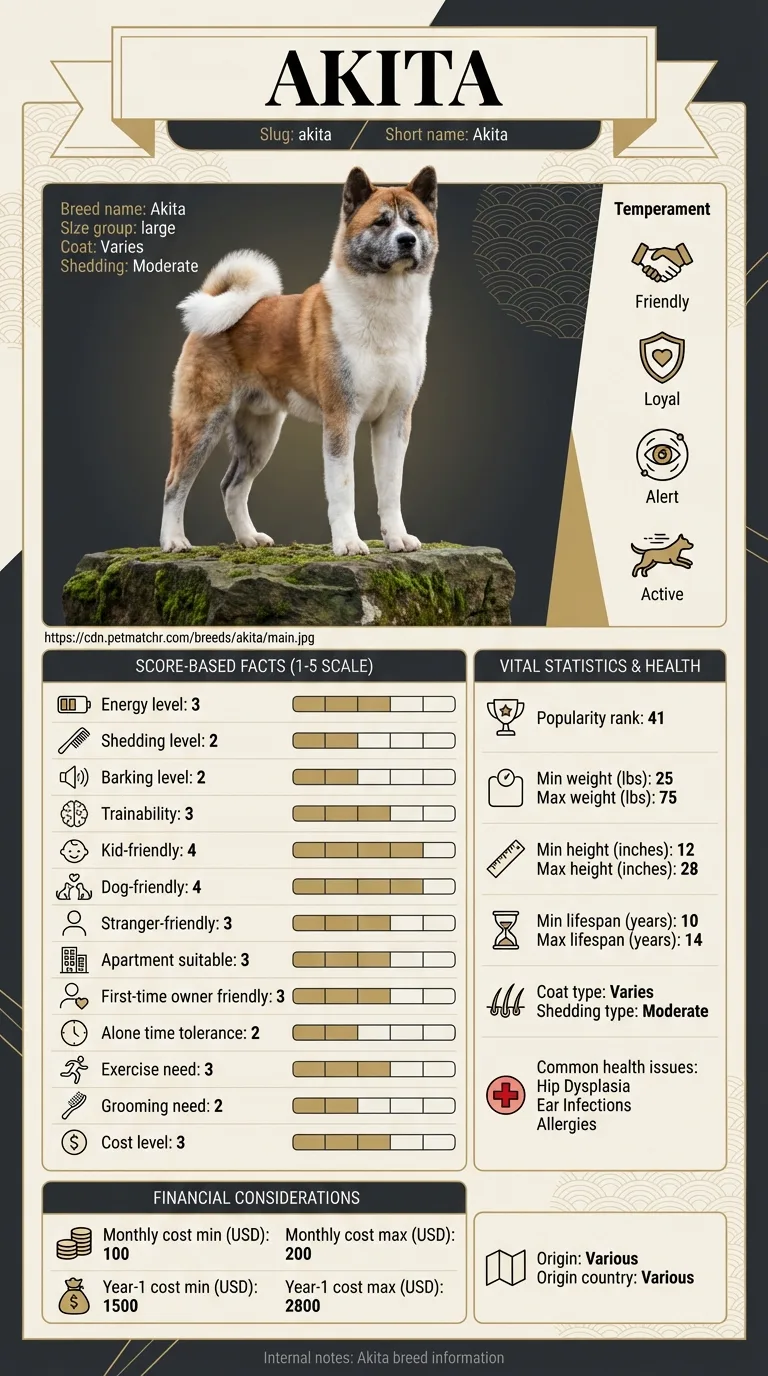
Akita vs Mastiff: two quiet dogs, two kinds of guarding

Trainability ties at 3/5, apartments tie at 2/5, time alone ties at 3/5, and energy is 2/5 against 3/5. These are two undemanding dogs in terms of daily activity.

The difference is in method. A Mastiff guards by occupying space. It is unhurried, hard to provoke, and its deterrent effect is entirely visual — a dog that weighs more than most adults, standing in a doorway, ends most situations before they begin. It rates 3/5 with strangers, which is to say it tolerates them.

The Akita guards by forming a view. Its 2/5 with strangers is an assessment rather than a tolerance, and it will act on that assessment without consulting you.

For a household with children, the Mastiff's 5/5 against 3/5 is a real advantage, subject to the obvious caveat that a 200-pound dog turning around in a small room is a hazard to a toddler regardless of intent.

Frequently asked questions

Do Mastiffs bark?

Rarely — 1/5, the lowest rating on this site, against the Akita's 2/5. A Mastiff's deterrent effect is entirely visual and it does not need to make a noise. When one does bark it is worth paying attention to, precisely because it happens so seldom.

How much do Mastiffs drool?

A great deal, and it is the single most underestimated part of ownership. Loose flews collect saliva and then distribute it onto floors, walls and clothing, particularly after drinking or when the dog shakes its head. Owners keep towels in every room. If this would bother you, choose a different breed.

Which is better with children?

The Mastiff at 5/5 against the Akita's 3/5. It is genuinely placid and hard to provoke. The caveat is purely physical — a 200-pound dog turning around in a small room is a hazard to a toddler regardless of temperament, and supervision is about collisions rather than intent.

How much exercise does a Mastiff need?

Only 2/5, less than the Akita's 3/5 — two moderate walks cover an adult, timed around temperature because the breed overheats readily. What matters more is restraint during growth: Mastiffs are not mature until two to three years, and forced exercise, stairs and jumping should be limited until the growth plates close.

Which costs more to keep?

The Mastiff, clearly — $150–$350 a month against the Akita's $110–$240, and $2,200–$4,500 against $1,700–$3,200 in the first year. Food explains part of it, and weight-dosed medication, anaesthesia and boarding explain the rest.

Which lives longer?

The Akita, at 10 to 13 years against the Mastiff's 9 to 11. Size is the main driver — bloat, bone cancer and cardiac disease all appear at elevated rates in giant breeds, and the cumulative load on the heart and skeleton is simply greater.

Which handles heat better?

The Akita, counter-intuitively. Its double coat insulates in both directions, while the Mastiff's short muzzle, heavy build and low surface-area-to-mass ratio make it a poor heat regulator. Both should be walked early and late in summer, and the Akita's coat should never be clipped.

Quick answers

View more answers
Living

Akita vs Mastiff: which should I choose?

The Mastiff if you want overwhelming presence with a placid temperament and can absorb $150–$350 a month plus the drool. The Akita if lifespan and cost matter and you want a guardian you can still physically manage.

Costs

How much does each cost per month?

The Mastiff runs $150–$350 a month and the Akita $110–$240, with first-year totals of $2,200–$4,500 and $1,700–$3,200. Almost everything for a giant breed is priced by weight.

Health

Is bloat a serious risk in Mastiffs?

Yes. A deep chest and large stomach make gastric dilatation-volvulus a real risk, and it is fatal within hours without surgery. Learn the signs and discuss a preventive gastropexy at neutering with your vet.

Training

Can a Mastiff be trained reliably?

It rates 3/5 — willing but slow and unenthusiastic about repetition. What matters is teaching lead manners early, while the dog still weighs less than you do, because a grown Mastiff that decides to move is not physically stoppable.

Related DogBreedCompass guides

  • Akita breed guideThe Akita profile covers guardian temperament and the long socialisation window the breed needs.
  • Mastiff breed guideThe Mastiff profile covers growth management, heat tolerance and the breed's cost profile.
  • Akita vs Cane CorsoThe Cane Corso is the more active mastiff-type guardian worth weighing against this one.
  • Akita vs Great DaneThe Great Dane is the other giant breed with similar bloat and growth considerations.
  • Mastiff genetic disordersThe inherited conditions worth screening for before buying a Mastiff puppy.
  • Akita autoimmune diseasesAutoimmune disease is the Akita's most distinctive burden and the first question for a breeder.

Related guides

Important reminder

Health information here is general and is not veterinary advice. If your dog shows pain, sudden behaviour change, or worsening symptoms, consult a licensed veterinarian.

Some links on this site are affiliate links. We may earn a commission at no extra cost to you, and we only suggest products we believe are helpful for dog owners.

Find Your Perfect Breed

Match your lifestyle to the right dog.

Take quiz

Find your match

Not sure which breed is right for you? Take our 2-minute quiz to find out.

Take the quiz