Health
Why do Mastiffs get skin infections in their facial folds?
Loose facial skin traps moisture and drool, creating a warm, damp environment where bacteria can overgrow.

Quick answer
Why do Mastiffs get skin infections in their facial folds?
Loose facial skin traps moisture and drool, creating a warm, damp environment where bacteria can overgrow.
This isn't an allergy showing up on the face - it's the face's own structure creating conditions bacteria thrive in.
This affects owners noticing redness, odor, or discharge specifically within the folds and wrinkles of their Mastiff's face or lips, often confused with drooling residue at first rather than an active infection needing treatment.
This guide is not medical advice. If your dog shows pain, sudden behavior change, or worsening symptoms, consult a licensed veterinarian.
Some links may be affiliate links. We may earn a commission at no extra cost to you. We only suggest products we believe are helpful for dog owners.
We research and check what we publish, but we do not warrant that any figure, date, price, or statement is accurate, complete, or current, and we accept no liability for any loss, cost, injury, or other harm arising from the use of this site. Use it as one reference among several. You remain responsible for your own decisions and for your dog's care - confirm anything that matters with a licensed veterinarian or another qualified professional before you act on it. Full disclaimer.
Skin infections in a Mastiff's facial folds are a structural rather than immune problem - loose skin and heavy jowls trap moisture, drool, and debris against the skin, creating conditions where bacteria and yeast can overgrow. Unlike allergic skin disease, these infections are localized to the face and tend to recur in the same folds unless moisture is actively managed as routine care.
Fold-related skin infections are a common maintenance issue in heavy-jowled, loose-skinned breeds, and this breed's facial structure means many owners will deal with at least occasional flare-ups over the dog's life, particularly without a consistent cleaning routine.
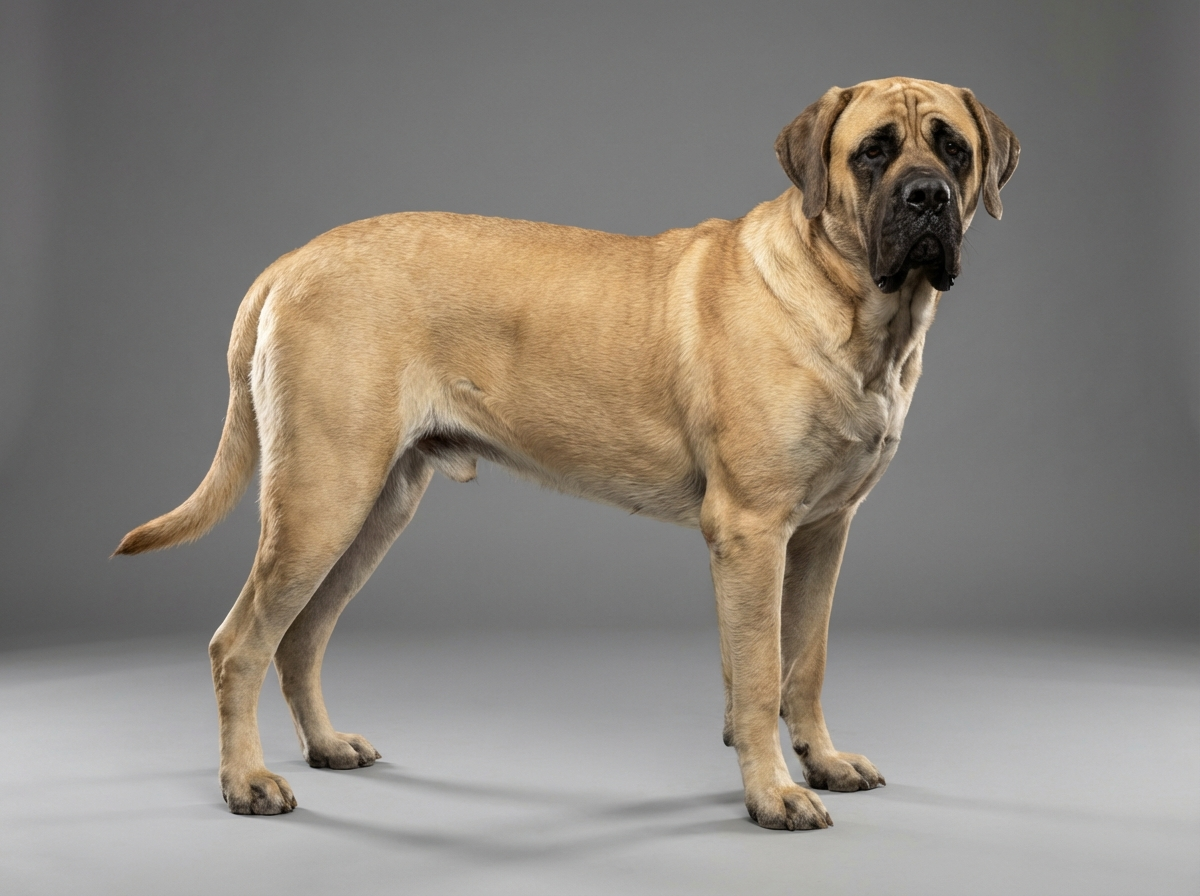
This breed's characteristic loose facial skin and heavy jowls, part of its physical standard, create folds that trap moisture against the skin far more than a tighter-skinned breed's face would. Combined with a documented tendency to drool, the lower face in particular stays damp for extended periods, setting up the exact conditions bacteria and yeast need to overgrow.
Warm or humid climates increase overall moisture retention in facial folds. Households without an established daily cleaning routine, or with limited time for the kind of consistent maintenance this facial structure requires, see infections recur more frequently than those with a set routine.
See a vet if redness is spreading beyond the fold, if there's significant odor or discharge, or if the dog shows pain when the area is touched. Recurring infections despite a consistent cleaning routine may need a prescribed topical or oral treatment rather than cleaning alone.
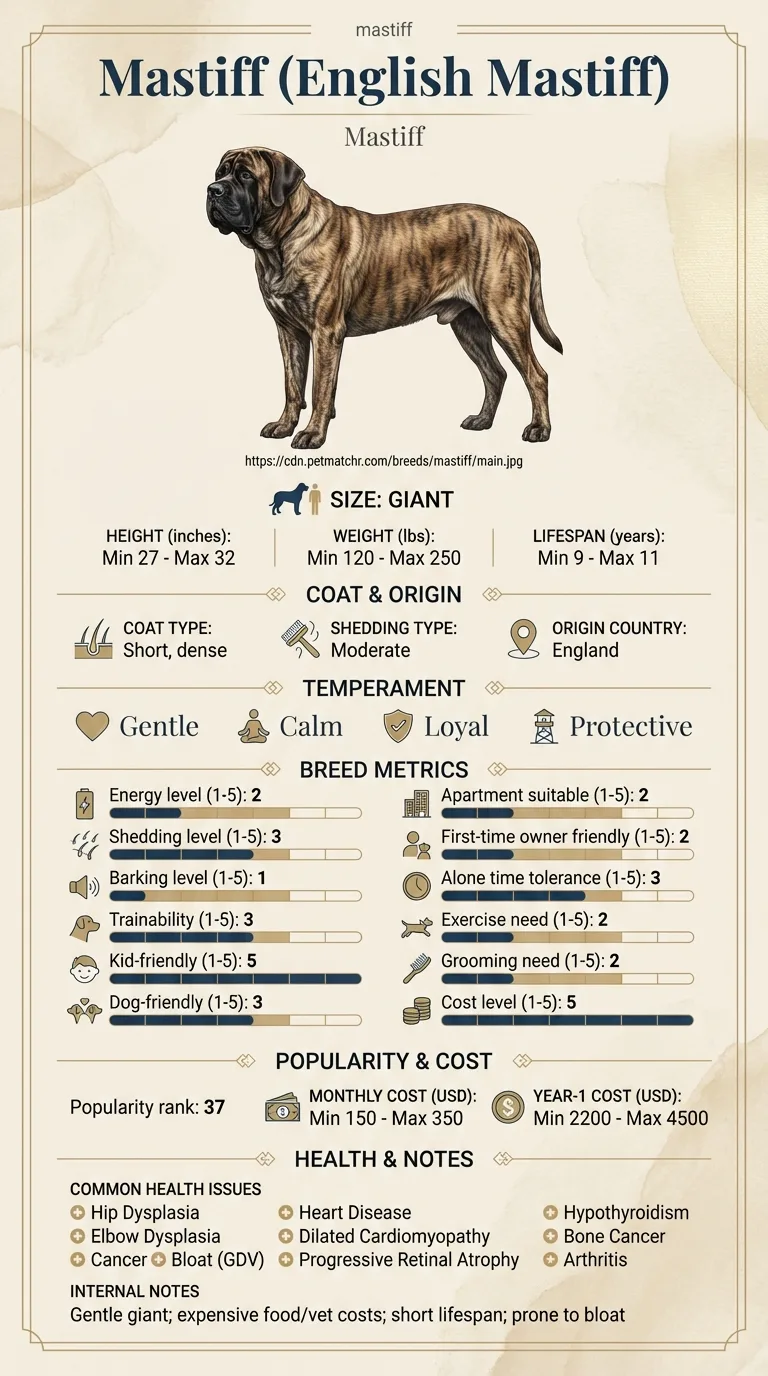
See all Mastiff health problems, which breeds are prone to skin infections, or the full Mastiff breed guide for temperament, exercise needs and ownership costs.
Mild fold infections typically improve within one to two weeks of consistent cleaning and any prescribed treatment. Because the underlying structure doesn't change, ongoing maintenance is needed indefinitely to prevent recurrence rather than a one-time fix.
Success looks like infrequent, mild flare-ups caught early through routine checks, not permanent elimination of the risk, since the facial structure that causes this doesn't go away.
Skin folds create a warm, dark, poorly ventilated microenvironment that's almost ideal for bacterial and yeast overgrowth. Add in a heavy-jowled breed's tendency to drool, and the folds around the mouth and lower face stay damp far more of the day than skin anywhere else on the body. Left unaddressed, that constant moisture breaks down the skin's surface, allowing normally low-level bacteria to multiply into a genuine infection.
This is why fold infections tend to recur in the same spots repeatedly rather than appearing randomly - the structural cause hasn't changed, so once one infection clears, the same fold is right back where it started unless the underlying moisture problem is addressed as part of ongoing care, not just treated reactively each time.
A consistent fold-cleaning routine prevents far more infections than treating them after the fact.

If you think your Mastiff has skin infections, the plan is three steps: write down what you have seen and when it started, book a veterinary appointment rather than waiting for the next flare, and take video of the behaviour or symptom before you go — the thing you are worried about rarely happens in the consulting room. Screening in the parents covers hip dysplasia, elbow dysplasia, cancer.
What the vet visit should produce is a diagnosis and a written plan, not just reassurance: what is being ruled out, what the monitoring interval is, and which signs mean you come back sooner. Ask what the treatment costs across a year rather than per visit, because that is the number that decides whether you are managing this condition or reacting to it.
Between appointments, keep a short log — dates, what you saw, what changed. It is the single most useful thing an owner brings to a follow-up, and for skin infections it is often what separates a clear pattern from a guess.
Ines had always accepted a certain amount of drool mess as part of life with her Mastiff Hank, wiping his face occasionally but not with any real routine. She noticed a persistent odor near his lower lip fold that didn't go away with a quick wipe, along with some redness when she looked closer. A vet visit confirmed a fold infection, treatable with a short course of topical medication, but the vet was direct about the bigger picture: without a consistent daily cleaning routine, the same fold was likely to get infected again, since nothing about its structure had changed. Ines built a simple daily habit - a damp cloth wipe after Hank's evening meal, followed by thorough drying, with an antiseptic wipe added if she noticed any early redness. It's been eight months without a repeat infection, and she considers it as routine now as brushing his coat.
Key takeaway: Facial fold infections respond better to a boring daily routine than to reactive treatment - the fold itself doesn't disappear, so ongoing moisture management is the real fix.
Facial fold infections recur in the same location because the structural cause, a fold that traps moisture, hasn't changed. Treating the infection without addressing ongoing moisture control means it's likely to return.
No. Allergic skin disease is an immune reaction that can appear anywhere on the body and often has seasonal or dietary triggers. Fold infections are a localized, structural issue driven by trapped moisture and friction, confined to the face.
Redness, a noticeable odor, discharge, or visible discomfort when the area is touched point toward an active infection rather than simple drool buildup, which typically doesn't cause pain or odor on its own.
Daily is a reasonable baseline for most dogs, with extra attention after meals and water breaks, though dogs with a history of recurring infections may need more frequent or more thorough cleaning.
Consistent daily cleaning significantly reduces frequency, but the underlying fold structure doesn't go away, so most dogs with deep facial folds need ongoing maintenance rather than a one-time fix.
See a vet if redness is spreading, if there's significant odor or discharge, or if the dog seems in pain when the area is touched, since these suggest the infection needs treatment beyond routine cleaning alone.
Loose facial skin traps moisture and drool, creating a warm, damp environment where bacteria can overgrow.
No - it's a localized, structural issue from trapped moisture, not an immune allergic reaction affecting the whole body.
Daily cleaning is a reasonable baseline, with extra attention right after meals and water breaks when folds are dampest.
Yes, often in the same spot, since the underlying fold structure that traps moisture doesn't change after one treatment.
Spreading redness, noticeable odor, discharge, or pain when the area is touched all point toward needing veterinary treatment.
A one-page prep sheet for this condition: the signs, the questions to ask, what to get priced. Unlocks here.
You get: Vet visit prep sheet
No spam. One-click unsubscribe. See our privacy policy.
Preview page 1 before you decide.