Health
How do I assess a Mastiff's body condition?
By hand. Ribs should be easy to feel under a thin layer without pressing. Check for a waist from above and a belly tuck from the side. Pounds alone mean nothing in a breed ranging 120 to 250.

Quick answer
How do I assess a Mastiff's body condition?
By hand. Ribs should be easy to feel under a thin layer without pressing. Check for a waist from above and a belly tuck from the side. Pounds alone mean nothing in a breed ranging 120 to 250.
Nobody looks at a Mastiff and thinks it should be smaller. That is precisely the problem.
Owners whose vet has raised weight and who are not sure what a lean Mastiff should look like, and owners managing joint or cardiac disease who have been told weight loss is the priority.
This guide is not medical advice. If your dog shows pain, sudden behavior change, or worsening symptoms, consult a licensed veterinarian.
Some links may be affiliate links. We may earn a commission at no extra cost to you. We only suggest products we believe are helpful for dog owners.
We research and check what we publish, but we do not warrant that any figure, date, price, or statement is accurate, complete, or current, and we accept no liability for any loss, cost, injury, or other harm arising from the use of this site. Use it as one reference among several. You remain responsible for your own decisions and for your dog's care - confirm anything that matters with a licensed veterinarian or another qualified professional before you act on it. Full disclaimer.
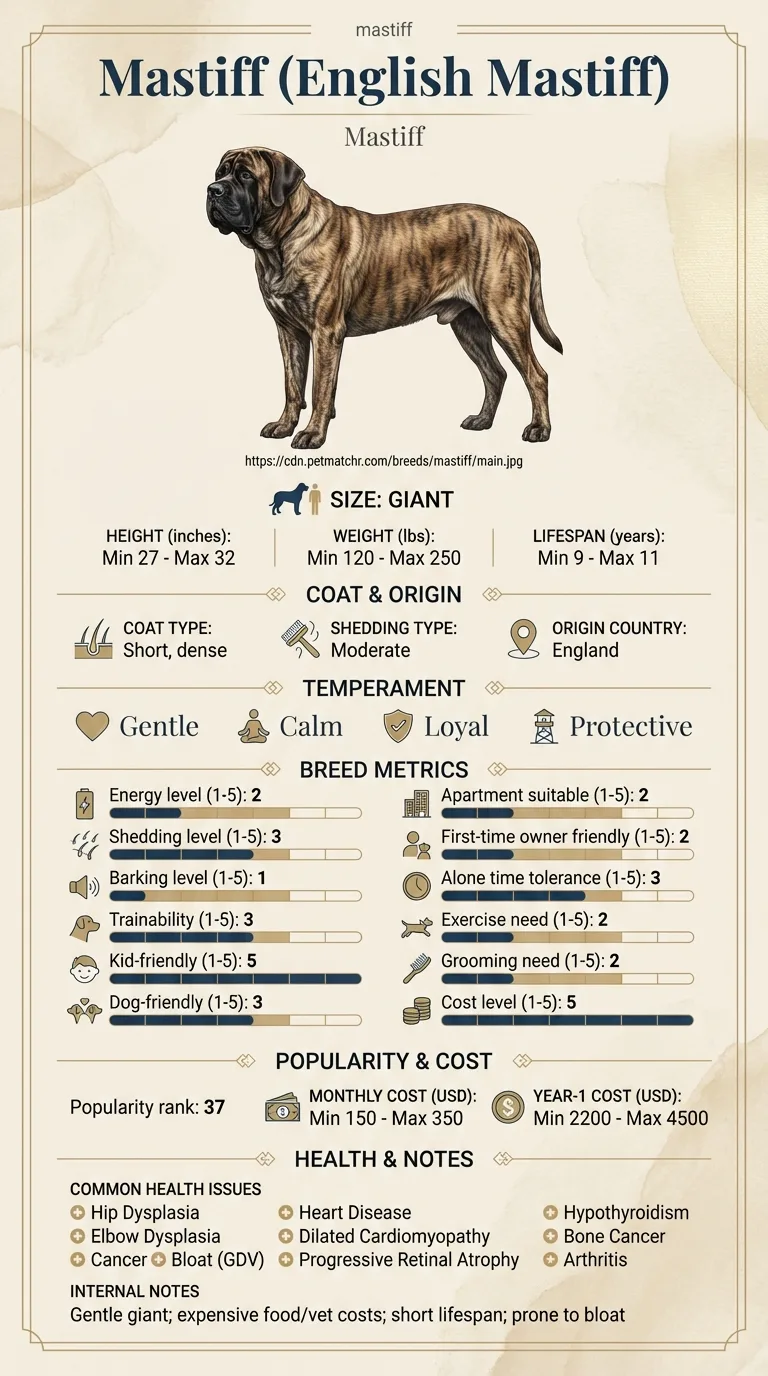
Excess weight in a Mastiff is unusually easy to miss and unusually damaging. The breed's healthy weight spans 120 to 250 pounds, so a scale reading tells an owner almost nothing, and a bulky build makes fat visually unremarkable. Meanwhile weight compounds nearly every condition documented for the breed, from hip and elbow dysplasia to heart disease and heat intolerance, and it is the one major risk factor an owner can change directly.
Excess weight is one of the most common health problems in pet dogs generally, and giant breeds are not exempt. In this breed it is likely under-recognised rather than over-diagnosed, because a Mastiff carrying an extra twenty percent still looks like a Mastiff to anyone who is not running their hands along its ribs.
Three breed features conspire here. First, the enormous natural weight range means owners have no intuitive sense of what their individual dog should weigh. Second, the Mastiff's exercise need is low and its energy level is at the bottom of the scale, so the calorie budget is smaller than the dog's size suggests. Third, the breed's build is genuinely bulky, so fat does not read as fat. Add the documented joint conditions that make an overweight dog move less, which makes it gain more, and the cycle becomes self-reinforcing.
Household feeding practice is the dominant factor. Scooping food by eye into a large bowl is imprecise at any size, and imprecision scales with portion size, so a casual overestimate in a giant breed is a large number of surplus calories. Multiple people feeding the same dog without coordination is a common cause of accidental double meals. Treats, chews and table scraps add up quickly in a household that finds a huge dog hard to refuse. Long winters with fewer walks, and a breed that cannot exercise through summer heat, leave a narrow window each year in which activity is genuinely comfortable.
Ask your vet to set a target weight and a rate before you begin, since guessing is how owners either give up or strip muscle off a dog with bad joints. Book an appointment if weight has climbed without a change in feeding, if your dog seems constantly ravenous where it previously was not, or if weight loss stalls despite genuine adherence, as thyroid disease is documented in this breed and can cause both. Seek prompt care if your Mastiff is losing weight rather than gaining it without a diet change, or if excess weight is accompanied by laboured breathing at rest, since that combination needs assessment rather than a diet plan.
See all Mastiff health problems, which breeds are prone to obesity, or the full Mastiff breed guide for temperament, exercise needs and ownership costs.
Plan in months. At a safe rate of one to two percent of body weight per week, a Mastiff needing to lose thirty pounds is looking at six to nine months, and a larger target longer still. Expect a visible improvement in how the dog rises and moves well before the target is reached, often within eight to twelve weeks. Expect plateaus, and expect to recalculate the ration as the dog gets lighter and needs less.
Success is a dog whose ribs you can feel without pressing, who has a visible waist from above, and who rises from its bed without a struggle. It is not a thin Mastiff, and it should never look like one. Maintenance is the harder half: most dogs regain the weight because the household reverts to old habits once the target is hit. The measure that matters is the weight two years later, not the weight on the day the diet ends.
Weight in pounds is nearly useless for judging a Mastiff, because the healthy range spans 120 to 250 pounds. A 200-pound dog might be lean or might be carrying forty pounds too much depending entirely on the individual's frame. Body condition scoring solves this by assessing the dog rather than the number.
Run your hands flat along the ribcage with light pressure. On a dog in good condition you should feel the ribs easily, with a thin covering over them — similar to the back of your hand. If you have to press to find them, there is excess fat. If they are sharply prominent, the dog is too thin.
Look down at your dog from above. There should be a discernible narrowing behind the ribcage. On an overweight Mastiff the body runs straight from chest to hips, or bulges outward.
Look from the side. The belly should tuck upward from the ribcage toward the hind legs. A line that runs level, or sags, indicates excess.
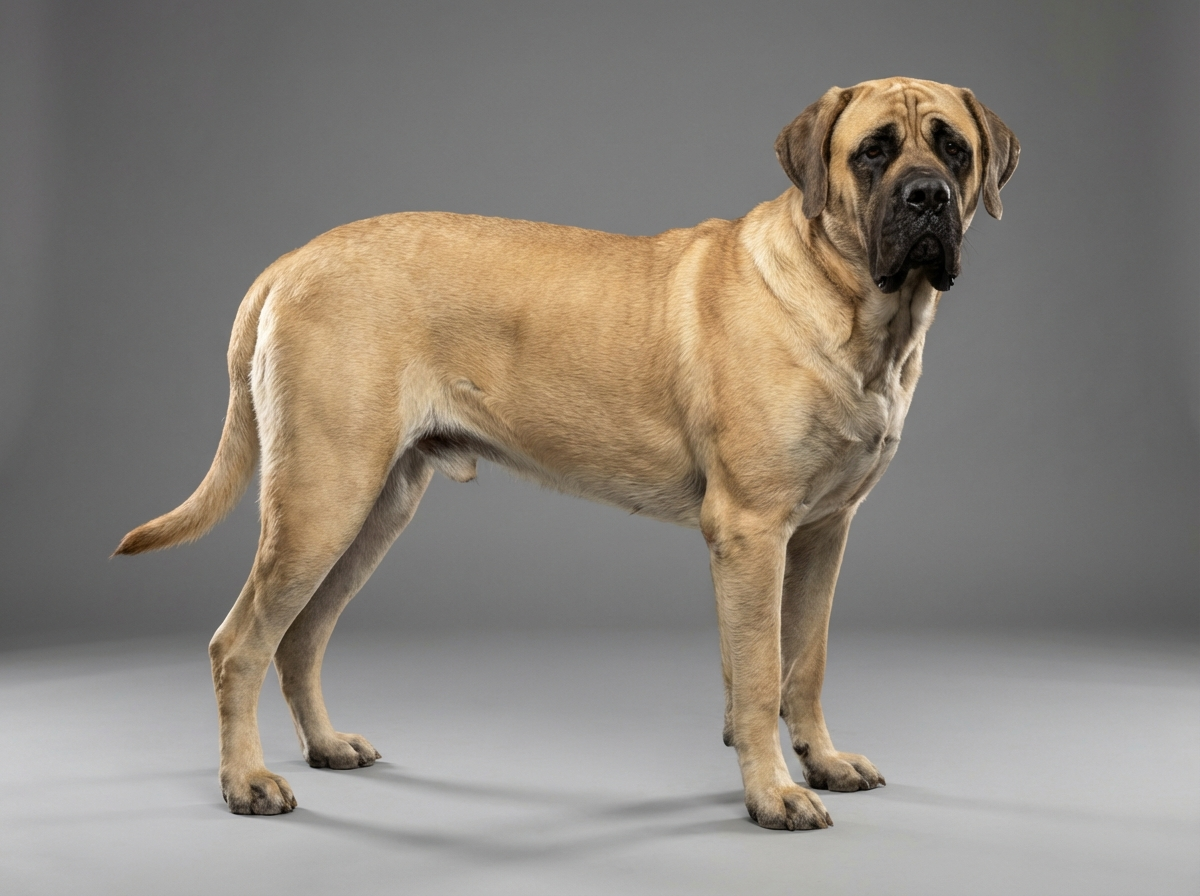
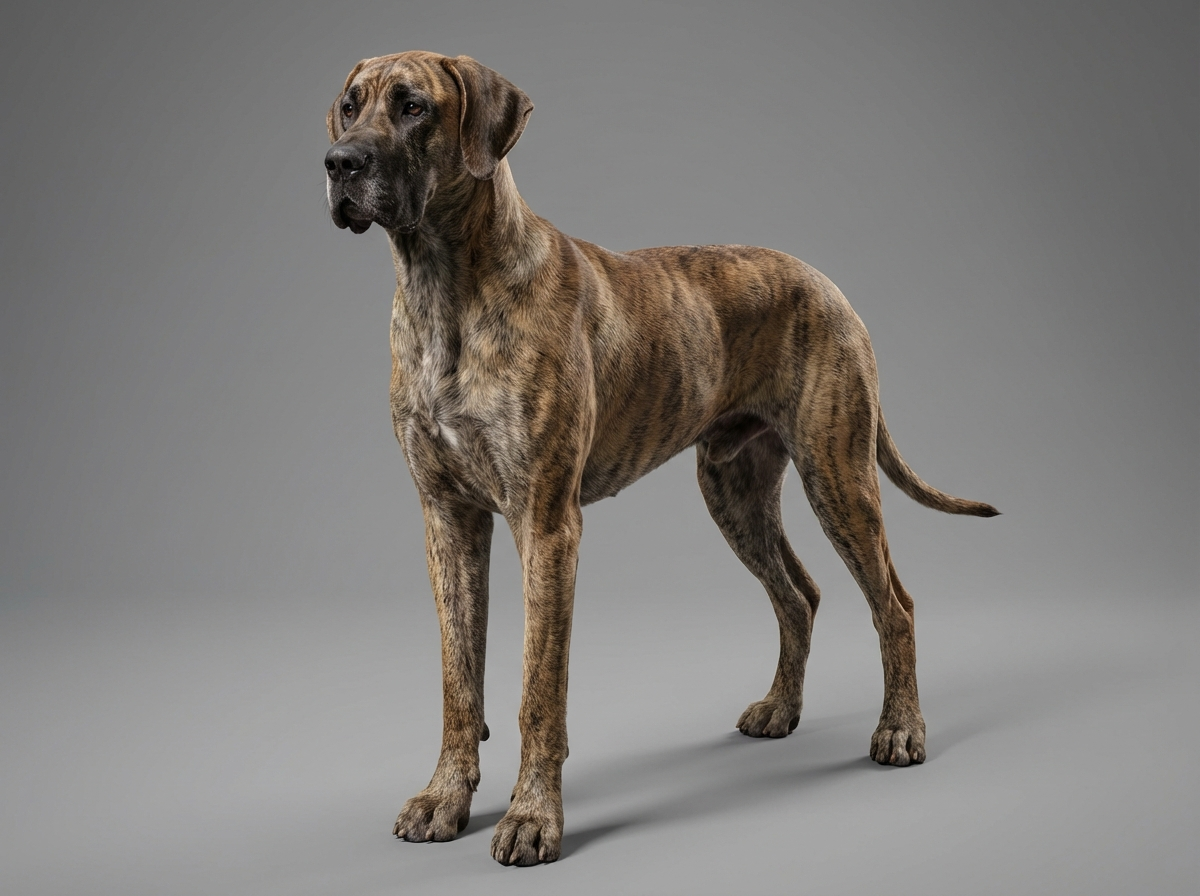
The short, dense coat this breed carries hides shape less than a fluffy coat would, which helps. What does not help is a wrinkled, heavily built body plan that makes almost any Mastiff look substantial. Trust your hands. If you cannot feel ribs, the dog is overweight regardless of how normal it looks.
Weight is not a cosmetic issue in a Mastiff. It sits at the intersection of nearly every condition documented for the breed.

If you think your Mastiff has obesity, the plan is three steps: write down what you have seen and when it started, book a veterinary appointment rather than waiting for the next flare, and take video of the behaviour or symptom before you go — the thing you are worried about rarely happens in the consulting room. Screening in the parents covers hip dysplasia, elbow dysplasia, cancer.
What the vet visit should produce is a diagnosis and a written plan, not just reassurance: what is being ruled out, what the monitoring interval is, and which signs mean you come back sooner. Ask what the treatment costs across a year rather than per visit, because that is the number that decides whether you are managing this condition or reacting to it.
Between appointments, keep a short log — dates, what you saw, what changed. It is the single most useful thing an owner brings to a follow-up, and for obesity it is often what separates a clear pattern from a guess.
Ottilie's Mastiff, Grover, was seven when a locum vet described him as obese. Ottilie was taken aback. He was a Mastiff, he weighed 214 pounds, and her regular vet had never raised it. The locum took her hand and put it on his ribs. She could not find them without pushing. That was the moment it landed. Grover's target was 185. Ottilie switched from a scoop to kitchen scales, took his training treats out of the daily ration, and asked her husband to stop giving him the ends of sandwiches. Nothing else changed; his walks stayed exactly the same because his hips would not tolerate more. It took just over eight months. What surprised her most was not the number but that he began going upstairs again, something he had stopped doing about eighteen months earlier and which she had put down to age. He stayed under 190 for the rest of his life.
Key takeaway: Nobody could see twenty-nine pounds on a dog that size, including two people who saw him every day. The rib test found it in ten seconds, and the change that shifted it was measuring food rather than adding exercise a dog with bad hips could not have done anyway.
Ignore the number and use your hands. Feel along the ribcage with flat palms and light pressure. Ribs should be easy to find under a thin layer. Then check for a waist from above and an abdominal tuck from the side. If you have to press to feel ribs, the dog is carrying too much, regardless of how the dog looks.
Slowly. A rate of around one to two percent of body weight per week is the general guidance, and your vet should set a specific target. On a giant breed, taking off thirty pounds is a project measured in six to nine months, not weeks. Rapid weight loss risks muscle loss, which is exactly what a dog with bad joints cannot afford.
Often it helps, because these diets keep protein and micronutrients up while reducing calories, so the dog loses fat rather than muscle. Simply feeding less of a normal food can leave a dog underfed on nutrients and very hungry. Discuss it with your vet, and change food gradually given this breed's bloat risk.
Many large dogs are highly food motivated, and a genuinely appetite-driven dog is harder to manage than an indifferent one. Bulk the meal with vet-approved low-calorie additions, split the daily ration into more meals, and use part of the daily food as training rewards rather than adding treats on top. If hunger is new and extreme, mention it, since some medical conditions increase appetite.
Most owners cannot, which is why the clinic scale matters. Ask whether you can drop in to use it without an appointment; many practices are happy for this and it makes monthly weighing realistic. Use the same scale every time, since different scales disagree and you are tracking a trend rather than an absolute.
Not really, and attempting it can hurt. Mastiffs have low exercise needs, poor heat tolerance and frequently compromised joints, so the amount of activity required to create a meaningful calorie deficit is unsafe. Weight loss in this breed is achieved primarily through measured food, with exercise supporting muscle rather than driving the loss.
By hand. Ribs should be easy to feel under a thin layer without pressing. Check for a waist from above and a belly tuck from the side. Pounds alone mean nothing in a breed ranging 120 to 250.
Around one to two percent of body weight per week, set by your vet. Removing thirty pounds from a giant breed takes six to nine months, not weeks.
It compounds documented issues: hip and elbow dysplasia, arthritis, heart disease and poor heat tolerance, and it raises anaesthetic risk in a breed prone to emergency bloat surgery.
No. This breed has low exercise needs, poor heat tolerance and often sore joints. Weight loss comes from measured food; exercise preserves muscle.
Ask your vet practice if you can use the clinic scale without an appointment, and use the same scale each month to track the trend.
A one-page prep sheet for this condition: the signs, the questions to ask, what to get priced. Unlocks here.
You get: Vet visit prep sheet
No spam. One-click unsubscribe. See our privacy policy.
Preview page 1 before you decide.