Health
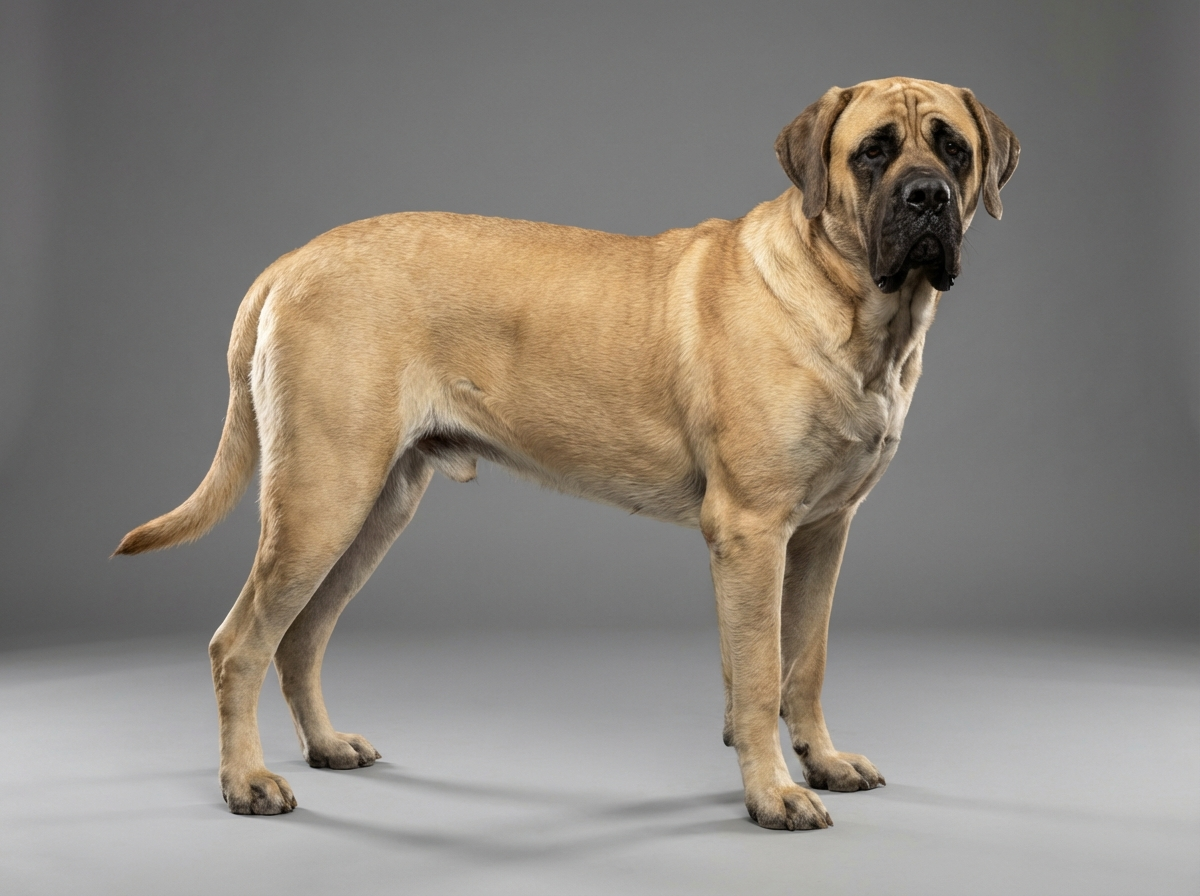
Is exercise-induced collapse the same in Mastiffs as in Labradors?
No - the genetic form documented in Labradors hasn't been shown in Mastiffs. Collapse here is usually heat, heart, or joint-related instead.

Quick answer
Is exercise-induced collapse the same in Mastiffs as in Labradors?
No - the genetic form documented in Labradors hasn't been shown in Mastiffs. Collapse here is usually heat, heart, or joint-related instead.
A collapsing Mastiff isn't a smaller version of the Labrador condition with the same name - it's usually a giant-breed body reaching its physical limits.
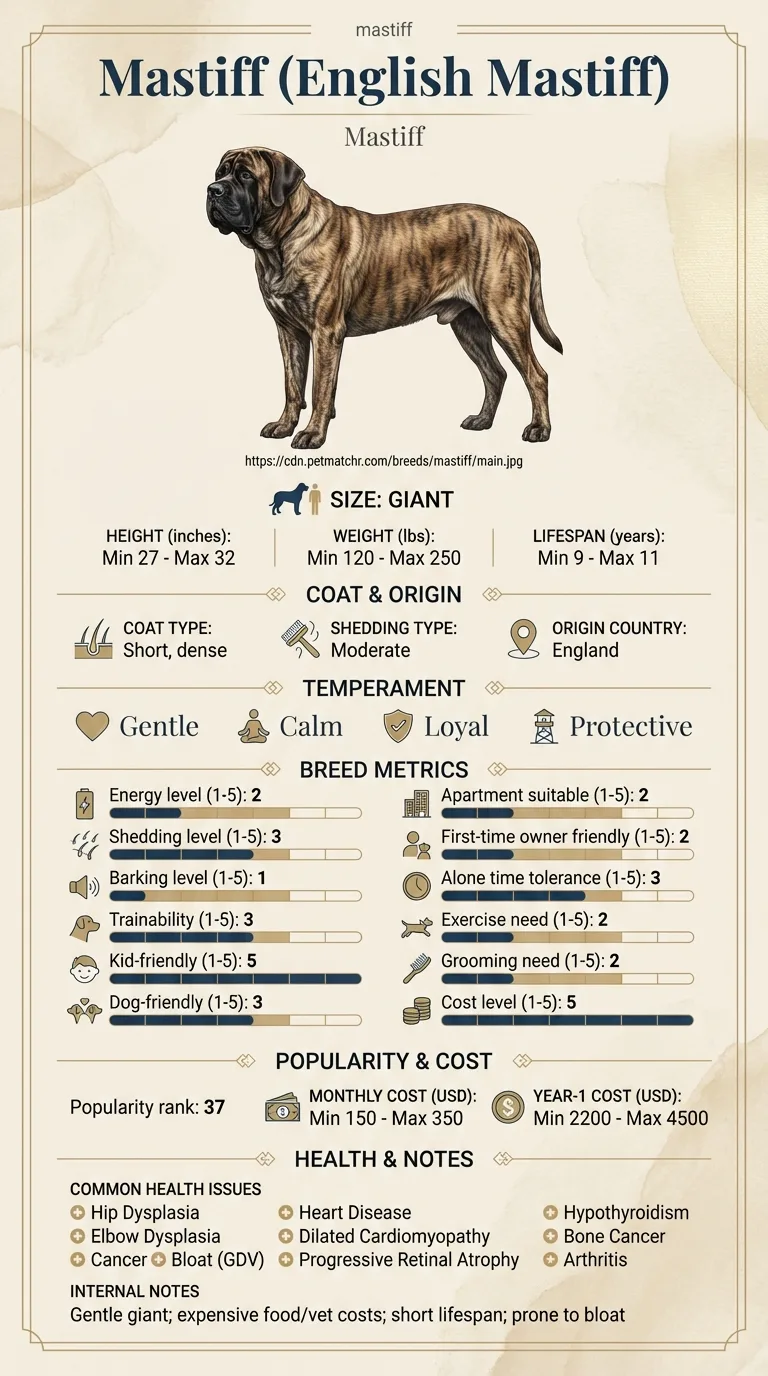
This affects owners who've seen their Mastiff wobble, stagger, or go down partway through a walk or play session, especially in warm weather, and are trying to work out whether it's overheating, a heart problem, joint pain, or something urgent.
This guide is not medical advice. If your dog shows pain, sudden behavior change, or worsening symptoms, consult a licensed veterinarian.
Some links may be affiliate links. We may earn a commission at no extra cost to you. We only suggest products we believe are helpful for dog owners.
We research and check what we publish, but we do not warrant that any figure, date, price, or statement is accurate, complete, or current, and we accept no liability for any loss, cost, injury, or other harm arising from the use of this site. Use it as one reference among several. You remain responsible for your own decisions and for your dog's care - confirm anything that matters with a licensed veterinarian or another qualified professional before you act on it. Full disclaimer.
Collapse during or shortly after exercise looks alarming in any dog, and in a Mastiff it usually reflects the physical reality of a very large body rather than the specific inherited condition the term EIC describes in other breeds. Heat load, cardiac strain, and joint pain are the more likely explanations here, and each has a different management path once identified.
Collapse itself is not a routine occurrence, but milder versions - stopping, refusing to continue, or heavy open-mouth panting well before real collapse - are common enough in this breed that many owners eventually cap how far or how fast they let their Mastiff go, especially in warmer months.
A body in the 120 to 250 pound range generates substantial metabolic heat during exertion, and a short, dense coat does little to insulate against overheating the way it might protect against cold. Add in this breed's documented risk for heart disease, dilated cardiomyopathy, hip dysplasia, and elbow dysplasia, and there are several independent physical reasons exertion could push a Mastiff past its limit, none of which require an inherited neuromuscular trigger to explain what's happening.
Warm climates, activity scheduled in the heat of the day, hard or hot pavement, and exercise routines built around a more athletic housemate or owner all raise the demand on a body that is naturally built for lower energy output. Even moderate exertion under the wrong conditions can be enough to trigger a genuine physical limit in this breed.
Call a vet the same day for any collapse, staggering, or fainting during or after exercise, especially with pale or blue-tinged gums, prolonged recovery, or disorientation. This combination in a breed with known cardiac risk should never be treated as something to monitor at home first.
See all Mastiff health problems, which breeds are prone to exercise induced collapse eic, or the full Mastiff breed guide for temperament, exercise needs and ownership costs.
Once an underlying cause is identified, most owners can rebuild a safe activity routine within a few weeks by adjusting timing, duration, and intensity. Cardiac causes may require ongoing monitoring rather than a fixed timeline.
Success looks like activity the dog can complete without heavy distress, staggering, or recovery time afterward - not necessarily more exercise, but exercise matched to what this dog's body can actually handle.
Because the labeled genetic EIC isn't a documented issue in this breed, collapse in a Mastiff is more often one of the following.
Any collapse during or shortly after exercise should be treated as an emergency until proven otherwise, not a wait-and-see situation. Get the dog into shade or air conditioning immediately, offer water once breathing has settled, and call an emergency vet while you do it.
The details matter for diagnosis: how long the dog was active, the temperature, whether the collapse was sudden or gradual, whether the tongue or gums looked pale or blue, and how quickly the dog recovered. A dog that bounces back within a minute and one that stays down or seems disoriented afterward point to very different levels of urgency, but both need a same-day vet call given this breed's cardiac and heat-related risk.

Tom's Mastiff Moose had always been a slow, steady walker, so when he suddenly stopped, swayed, and sat down hard on a warm afternoon, Tom knew something was wrong. Moose's tongue looked pale, and he seemed unsteady getting back up. Tom carried what water he had, guided Moose into the shade of a nearby tree, and called his vet's emergency line while waiting for him to recover enough to move. At the clinic, an exam and echocardiogram found early signs of heart disease that hadn't been picked up before, compounded by the day's heat. The vet's plan wasn't to stop walking Moose altogether, but to rebuild his routine around cooler mornings, much shorter distances, and regular cardiac rechecks. A year later Moose still gets his walks - just shorter ones, earlier in the day, with Tom watching his breathing more closely than he used to.
Key takeaway: In this breed, exercise collapse is rarely about a single genetic switch - it's usually the heart, the heat, or the joints reaching a real limit, and identifying which one changes the entire management plan.
The specific inherited gene mutation behind EIC in Labradors and related breeds has not been documented in Mastiffs. Collapse during exercise in this breed usually has a different cause, most often heat, cardiac strain, or joint pain.
In a giant breed, this is most often heat buildup, since a large body generates more heat than panting can dissipate, combined with real risk for underlying heart or joint disease that lowers exertion tolerance.
Yes. Treat any collapse during or after activity as urgent. Move the dog to a cool area, contact an emergency vet, and be ready to describe how long it lasted and how the dog recovered.
Yes. Heart disease and dilated cardiomyopathy are both documented concerns in this breed, and either can reduce the heart's ability to keep up with the demands of exertion, leading to weakness or fainting.
This is a lower-energy breed suited to shorter, calmer activity rather than sustained high-intensity exercise. Short, cool-weather walks with breaks are generally safer than long or fast sessions, especially in heat.
Expect a physical exam, heart auscultation, likely bloodwork, and possibly an ECG or echocardiogram to check heart function, along with questions about the conditions and duration of the activity that triggered it.
No - the genetic form documented in Labradors hasn't been shown in Mastiffs. Collapse here is usually heat, heart, or joint-related instead.
Get the dog into shade or cool air right away and call an emergency vet - do not wait to see if it resolves on its own.
Their large body mass produces more heat than panting can shed efficiently, especially in warm weather or after sustained activity.
Short, low-intensity sessions suit this breed better than long or vigorous exercise, given its lower energy level and joint and heart risks.
Yes - hip or elbow dysplasia can cause a dog's gait to fail under exertion in a way that can resemble collapse.
A one-page prep sheet for this condition: the signs, the questions to ask, what to get priced. Unlocks here.
You get: Vet visit prep sheet
No spam. One-click unsubscribe. See our privacy policy.
Preview page 1 before you decide.