Health
Why does this breed's coat make allergies worse?
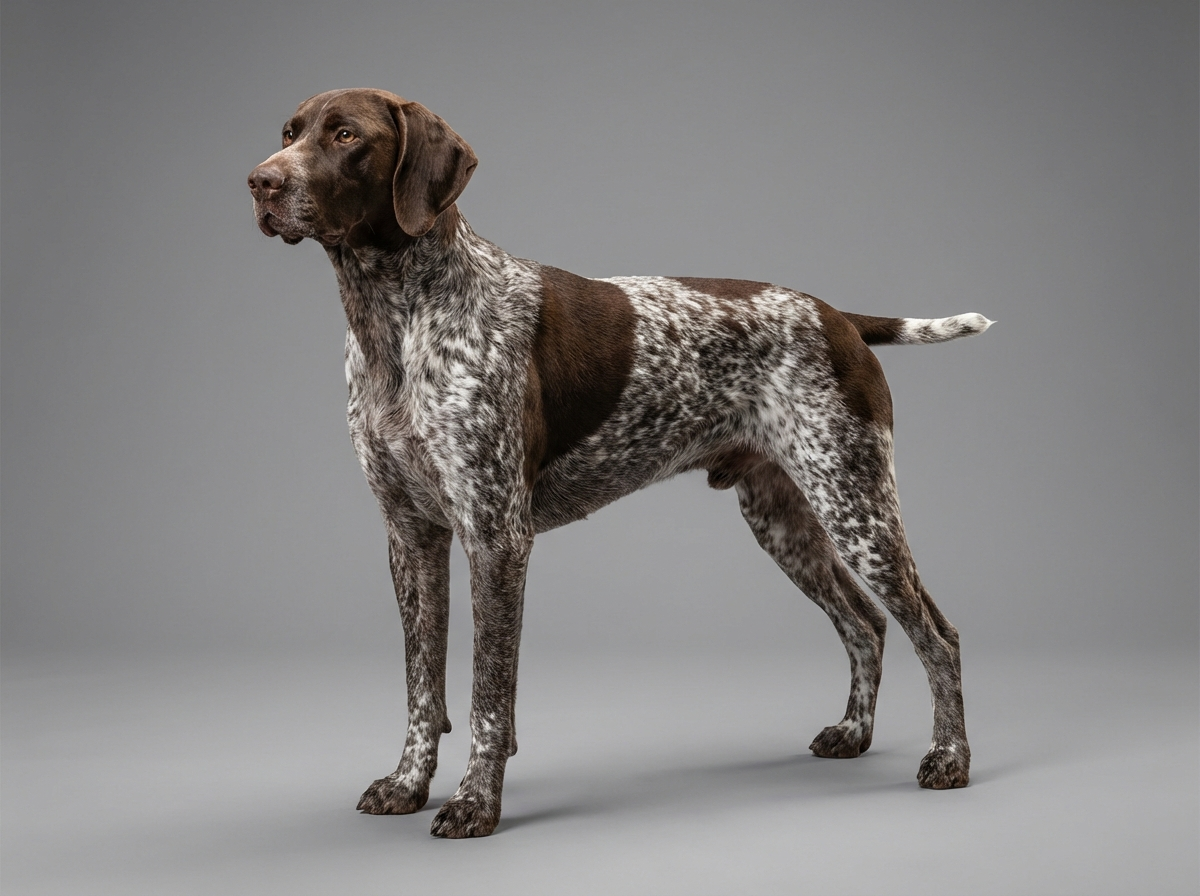
Its short, close coat offers little barrier between skin and environment, so pollen, dust and grass make more direct skin contact.

Quick answer
Why does this breed's coat make allergies worse?
Its short, close coat offers little barrier between skin and environment, so pollen, dust and grass make more direct skin contact.
The same coat that makes this breed easy to groom is the reason its skin meets the world more directly than a heavily coated breed's does.
Owners who notice their GSP scratching, licking its paws, or developing red patches, especially around the same time each year or after specific outings.
This guide is not medical advice. If your dog shows pain, sudden behavior change, or worsening symptoms, consult a licensed veterinarian.
Some links may be affiliate links. We may earn a commission at no extra cost to you. We only suggest products we believe are helpful for dog owners.
We research and check what we publish, but we do not warrant that any figure, date, price, or statement is accurate, complete, or current, and we accept no liability for any loss, cost, injury, or other harm arising from the use of this site. Use it as one reference among several. You remain responsible for your own decisions and for your dog's care - confirm anything that matters with a licensed veterinarian or another qualified professional before you act on it. Full disclaimer.
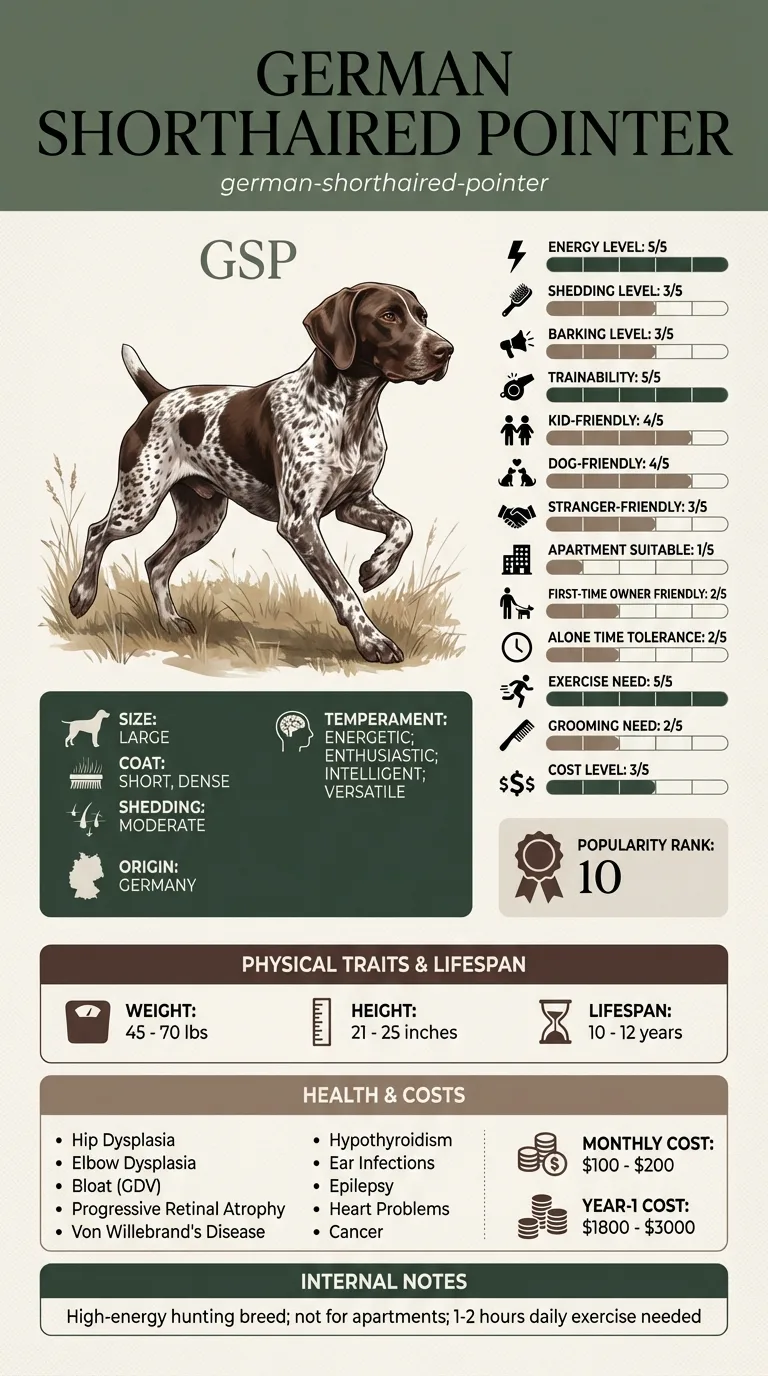
This breed's short, dense but thin coat gives allergens more direct access to the skin than a heavily coated breed's would, and combined with a high volume of time spent working through vegetation, that makes environmental skin allergy a common practical complaint even though it is not a named item on the documented health list.
Not documented as a named breed-specific condition, but skin allergy generally is common across dog breeds, and this breed's thin coat and heavy field exposure make it a frequent practical concern regardless of formal documentation.
The breed's short, dense coat and moderate shedding rating provide minimal physical barrier between skin and environment compared with a thicker-coated breed. Combined with an exercise need rated five out of five and one to two hours of daily activity typically spent in cover, this describes a dog whose skin logs substantially more direct environmental contact time than most companion breeds.
Seasonal pollen counts, dusty or humid home environments, and inconsistent flea prevention all contribute directly. A household that does not rinse or check the coat after outings in dense vegetation misses the simplest opportunity to reduce ongoing exposure.
Book an appointment for itching that is frequent, spreading, or accompanied by hair loss, redness or a change in skin smell. See a vet promptly for signs of secondary infection such as pustules, thick discharge or a strong odour, and for any swelling of the face or difficulty breathing, which suggests a more acute allergic reaction rather than routine skin allergy.
See all German Shorthaired Pointer health problems, which breeds are prone to skin allergies, or the full German Shorthaired Pointer breed guide for temperament, exercise needs and ownership costs.
Improvement from rinsing routines and flea control can be noticeable within a couple of weeks. A proper food trial needs eight to twelve weeks to give a reliable answer. Environmental allergy is generally a lifelong, seasonal pattern to manage rather than a condition that resolves permanently.
Fewer and milder flare-ups, particularly during previously difficult seasons, and a clear enough pattern that an owner can anticipate and prepare for the worst months rather than being surprised by them each year.
Environmental, seasonal allergy tends to follow the calendar: worse in spring and summer when pollen counts rise, better in winter, and often concentrated on the paws, belly and armpits where a thin coat gives the least protection during a low, close pass through grass and brush. It frequently gets worse specifically after outings in vegetation, which fits this breed's typical exposure pattern closely.
Food allergy does not follow a season. It tends to be present year-round, often affects the ears and rear end as much as the paws and belly, and does not track with time spent in the field. A dog whose itching is roughly constant regardless of season or outing is pointing toward diet rather than environment, and an elimination diet trial, done properly over several weeks under veterinary guidance, is the only reliable way to confirm it.
None of this changes the underlying allergic mechanism, but it changes how much exposure the skin actually gets.

Callum noticed Thistle scratching her belly and chewing her paws every summer, starting almost exactly in June and easing off by October. He had assumed it was something in her food, since he had switched brands a couple of times without much change. A vet pointed out the strict seasonal pattern did not fit a food allergy, which should have been present year-round regardless of brand. Environmental testing supported a grass and pollen allergy consistent with the timing Callum described. He started rinsing Thistle's paws and belly after every walk from May onward and added an omega-3 supplement recommended by his vet to support her skin barrier. The following summer's flare-up was noticeably milder, though not entirely gone.
Key takeaway: The calendar was the clue the whole time. A pattern this consistent pointed toward the environment rather than the food bowl, and testing confirmed what the timing had already suggested.
Skin allergies are not a named item on this breed's documented health list, but the combination of a thin coat and heavy field exposure means allergic skin reactions are a common practical complaint among owners, whatever the formal documentation says.
Seasonal allergy tends to track with the calendar and worsen after time in vegetation, often concentrated on paws and belly. Food allergy tends to be constant year-round and can affect the ears and rear end as much as the paws.
Yes, rinsing paws and belly after time in grass or brush removes surface pollen and allergens before they have as much time to trigger a reaction, and is one of the simplest, lowest-cost interventions available.
If itching does not track with season or outings, yes. A properly run elimination diet trial, typically eight to twelve weeks on a single novel or hydrolysed protein source with no other treats or table food, is the standard way to confirm or rule out a food allergy.
Yes, constant scratching and licking breaks down the skin's surface and lets bacteria or yeast take hold secondarily, which is often what turns a manageable itch into a smellier, more painful problem needing its own treatment.
Environmental allergies typically do not resolve with age and are usually managed rather than cured. Some dogs' symptoms shift in severity from year to year depending on exposure and general health.
Its short, close coat offers little barrier between skin and environment, so pollen, dust and grass make more direct skin contact.
Seasonal tends to track with spring and summer and worsen after outings; food allergy tends to stay constant year-round.
Yes, it removes surface allergens before they sit against the skin long enough to trigger a reaction.
Typically eight to twelve weeks on a single controlled diet with no other treats, done under veterinary guidance.
Shampoos, occasional vet visits and any prescribed medication add up as a recurring rather than one-time cost.
A one-page prep sheet for this condition: the signs, the questions to ask, what to get priced. Unlocks here.
You get: Vet visit prep sheet
No spam. One-click unsubscribe. See our privacy policy.
See a sample page before you decide.
Early access list
The free prep sheet covers the same-day warning signs, a symptom log and the questions to ask. We are considering a fuller kit that adds a cost worksheet for the usual tests and treatments (US price ranges with their sources) and a plain-English guide to ways of covering the bill. It is not built yet; this list tells us whether it is worth building.
One email, no spam, unsubscribe anytime. Information only, not veterinary advice.