Health
How does pancreatitis cause diabetes in dogs?
Repeated inflammation replaces functioning pancreatic tissue with scar, and if enough insulin-producing cells are lost the dog can no longer regulate blood glucose.

Quick answer
How does pancreatitis cause diabetes in dogs?
Repeated inflammation replaces functioning pancreatic tissue with scar, and if enough insulin-producing cells are lost the dog can no longer regulate blood glucose.
Repeated inflammation does not just hurt. It removes tissue, and some of the tissue it removes is the tissue that makes insulin.
Owners of an older dog with a history of pancreatic flare-ups who have been told to watch for diabetes, and people trying to make sense of a senior GSP that is drinking more, eating well and still losing weight.
This guide is not medical advice. If your dog shows pain, sudden behavior change, or worsening symptoms, consult a licensed veterinarian.
Some links may be affiliate links. We may earn a commission at no extra cost to you. We only suggest products we believe are helpful for dog owners.
We research and check what we publish, but we do not warrant that any figure, date, price, or statement is accurate, complete, or current, and we accept no liability for any loss, cost, injury, or other harm arising from the use of this site. Use it as one reference among several. You remain responsible for your own decisions and for your dog's care - confirm anything that matters with a licensed veterinarian or another qualified professional before you act on it. Full disclaimer.
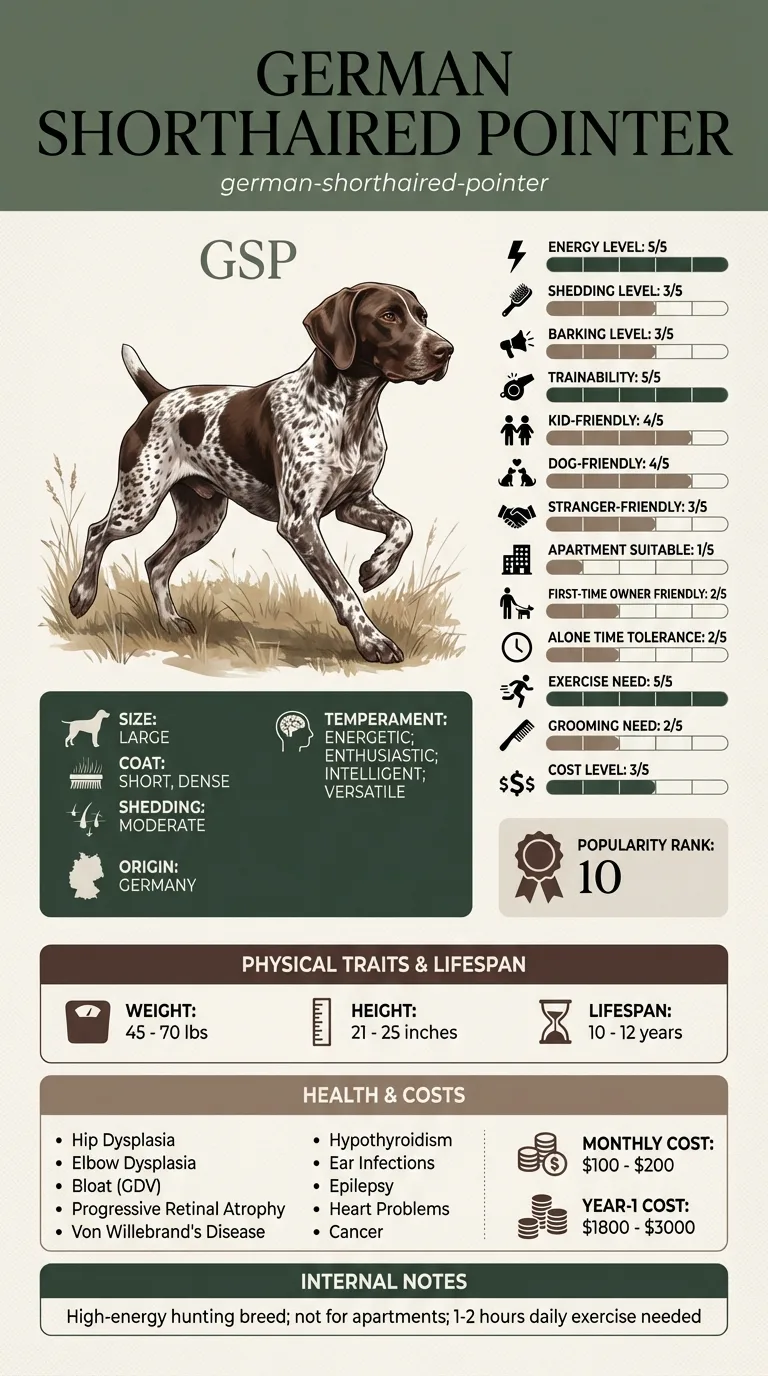
The pancreas produces both digestive enzymes and insulin, and chronic inflammation destroys both kinds of tissue indiscriminately. Repeated pancreatic episodes across months or years can therefore leave a dog unable to regulate blood glucose, while poorly controlled diabetes in turn raises the risk of further inflammation. In senior German Shorthaired Pointers, a breed living roughly 10 to 12 years, this pairing typically emerges in the last third of life and presents as a confusing mix of good appetite, weight loss and increased thirst.
Neither condition appears on the German Shorthaired Pointer's documented health list. Diabetes is a recognised disease of middle-aged and older dogs generally, and the subset that develops it as a consequence of chronic pancreatic damage is smaller still. For most GSP owners this is a senior-years possibility to be aware of rather than a likely outcome, but the combination is worth understanding because its signs are easily attributed to ageing.
There is no documented pancreatic or diabetic predisposition in this breed, and owners should not assume one. Breed traits shape the picture in other ways. A lifespan of 10 to 12 years means the senior window arrives earlier than in smaller breeds, so an eight-year-old German Shorthaired Pointer is already well into the age band where endocrine disease appears. High food drive and a scavenging habit in a working dog increase the likelihood of repeated dietary pancreatic episodes in the first place. And a lean, muscular, short-coated dog shows weight loss earlier than a heavy-coated breed, which is a genuine detection advantage if owners are weighing rather than looking.
Diet and routine dominate. Recurrent access to fatty scraps, bins and scavenged material drives the repeated inflammation that underlies the link. Excess body weight from an exercise routine below the breed's one to two hour requirement raises risk for both conditions. Once diabetes is established, the environment becomes the treatment: irregular meal times, inconsistent food, and an unpredictable exercise pattern of quiet weekdays followed by all-day hunting are the main practical obstacles to stable regulation.
Seek emergency care for a known or suspected diabetic that becomes weak, vomits repeatedly, breathes rapidly, or has a sweet or acetone smell to the breath, which suggests a dangerous metabolic crisis. Also treat sudden weakness, trembling, disorientation or collapse in a dog receiving insulin as an emergency, since it may indicate blood glucose has fallen too low. Book promptly for increased thirst and urination, weight loss with a good appetite, new cloudiness in both eyes, or repeated bouts of vomiting and inappetence. Ask for a senior wellness panel from around seven years, and never adjust an insulin dose without veterinary instruction.
See all German Shorthaired Pointer health problems, which breeds are prone to pancreatitis diabetes, or the full German Shorthaired Pointer breed guide for temperament, exercise needs and ownership costs.
Achieving stable glucose regulation after a diabetes diagnosis typically takes one to three months of dose adjustment and repeated monitoring, and it is a frustrating period. Once stable, most dogs settle into a routine reviewed every three to six months. Chronic pancreatic disease is managed indefinitely with dietary control. Cataracts, if they develop, can appear within weeks rather than months and are assessed separately.
Success is a stable, comfortable senior dog: weight holding steady, thirst back to normal, an owner who has absorbed the routine into daily life, and monitoring results that stay consistent. Many diabetic dogs live years of good quality with well-managed disease. Success is not a cure, does not mean coming off insulin, and does not restore the pancreatic tissue that was lost.
Chronic pancreatitis is not a series of separate events. Each episode leaves scar tissue behind, and across months and years functioning tissue is progressively replaced. If enough insulin-producing islands are lost in that process, the dog can no longer regulate blood glucose and becomes diabetic.
The relationship also runs the other way. Poorly regulated diabetes disturbs fat metabolism, raising circulating fat levels, and elevated blood fats are themselves a recognised risk factor for pancreatic inflammation. So a diabetic dog is more prone to pancreatitis, and a dog with pancreatitis is harder to regulate because its appetite, absorption and inflammatory state keep shifting.
There is a third possible consequence. If enough enzyme-producing tissue is destroyed, the dog cannot digest food properly at all, a condition that produces voluminous pale greasy stools and dramatic weight loss despite a large appetite.
A senior German Shorthaired Pointer can therefore present with a confusing mixture: eating enthusiastically, drinking a great deal, losing condition, and having intermittent bouts of abdominal discomfort. Pulling those threads apart requires bloodwork rather than deduction.
With a breed lifespan of 10 to 12 years, the window for these problems opens earlier than owners of smaller breeds expect.

If you think your GSP has pancreatitis & diabetes, the plan is three steps: write down what you have seen and when it started, book a veterinary appointment rather than waiting for the next flare, and take video of the behaviour or symptom before you go — the thing you are worried about rarely happens in the consulting room. Screening in the parents covers hip dysplasia, elbow dysplasia, bloat (gdv).
What the vet visit should produce is a diagnosis and a written plan, not just reassurance: what is being ruled out, what the monitoring interval is, and which signs mean you come back sooner. Ask what the treatment costs across a year rather than per visit, because that is the number that decides whether you are managing this condition or reacting to it.
Between appointments, keep a short log — dates, what you saw, what changed. It is the single most useful thing an owner brings to a follow-up, and for pancreatitis & diabetes it is often what separates a clear pattern from a guess.
Bram's GSP, Ilka, had three separate bouts of vomiting and abdominal pain between the ages of seven and ten, each treated and each resolved. He put them down to a dog that ate rubbish. At eleven she started emptying her water bowl twice a day and asking to go out at three in the morning. She was also, Bram noticed, eating like she had never been fed, and yet her ribs were showing in a way they had not the previous spring. He weighed her against the note in his phone from her last annual visit. She had lost seven pounds in five months while eating more than ever. The bloodwork showed diabetes. Ilka went onto twice-daily insulin, a fixed feeding schedule and a set walk time, and Bram says the hardest adjustment was not the needle but never again being able to decide on a whim to stay out an extra two hours.
Key takeaway: Eating well and losing weight is not a contradiction, it is a diagnosis waiting to be made. In a dog with a history of pancreatic episodes, that combination points straight at the second job the pancreas does.
No, and most do not. A single acute episode rarely destroys enough insulin-producing tissue to matter. The risk belongs to dogs with chronic or repeated inflammation over a long period, which is why preventing recurrence matters beyond simply avoiding the discomfort of each episode.
Increased thirst and urination, and weight loss despite a normal or increased appetite. Many owners notice the drinking first, often as a dog needing to go out during the night. Sudden cataract formation is another common route to diagnosis, and it can develop over a strikingly short period.
No. Dogs with diabetes essentially always require injected insulin, because the canine form of the disease involves loss of insulin production rather than resistance to it. Oral medications used in human type two diabetes do not work. The good news is that owners generally find the injections far easier than they expect.
In dogs, essentially not. Once insulin-producing cells are destroyed they do not regenerate, and treatment is lifelong. This is genuinely different from the situation in cats, where remission does occur, and owners who have read about feline diabetes are sometimes given false hope by that comparison.
Twice-daily insulin injections at consistent times, meals given on a fixed schedule with consistent content, monitoring of water intake and weight, and periodic blood glucose assessment. The single hardest part for most owners is not the injections but the loss of flexibility, since the routine cannot drift by hours.
Yes, and exercise helps regulation, but consistency becomes critical. Exercise lowers blood glucose, so a sudden unusually long day can cause a dangerous drop. The rule is regular, predictable activity rather than a big weekend followed by a quiet week, which is exactly the pattern many working dogs otherwise follow.
Repeated inflammation replaces functioning pancreatic tissue with scar, and if enough insulin-producing cells are lost the dog can no longer regulate blood glucose.
Increased drinking and urination combined with weight loss despite a good appetite. That combination is specific enough to warrant bloodwork promptly.
Yes, essentially always, twice daily at consistent times. Oral medications used for human type two diabetes are not effective in dogs.
Meals, injections and exercise all need to happen on a consistent schedule. The loss of flexibility is usually harder for owners than the injections themselves.
Insulin, syringes, a prescription diet and regular monitoring bloodwork make this a substantial recurring cost on top of typical GSP expenses of 100 to 200 dollars monthly.
A one-page prep sheet for this condition: the signs, the questions to ask, what to get priced. Unlocks here.
You get: Vet visit prep sheet
No spam. One-click unsubscribe. See our privacy policy.
Preview page 1 before you decide.