Costs
German Shorthaired Pointer cost in Phoenix
About $115–$225/month, $1,700–$2,900 for year one — average pricing, where real desert hazards like rattlesnakes and cactus spines need genuine attention for this athletic breed.

See German Shorthaired Pointer price across all cities →
Quick answer
German Shorthaired Pointer cost in Phoenix
About $115–$225/month, $1,700–$2,900 for year one — average pricing, where real desert hazards like rattlesnakes and cactus spines need genuine attention for this athletic breed.
A German Shorthaired Pointer in Phoenix costs about $115–$225 a month, with the first year around $1,700–$2,900 — close to the national average, in a desert environment where real hazards beyond heat, cactus spines and rattlesnakes among them, deserve genuine attention for this athletic, field-driven breed.
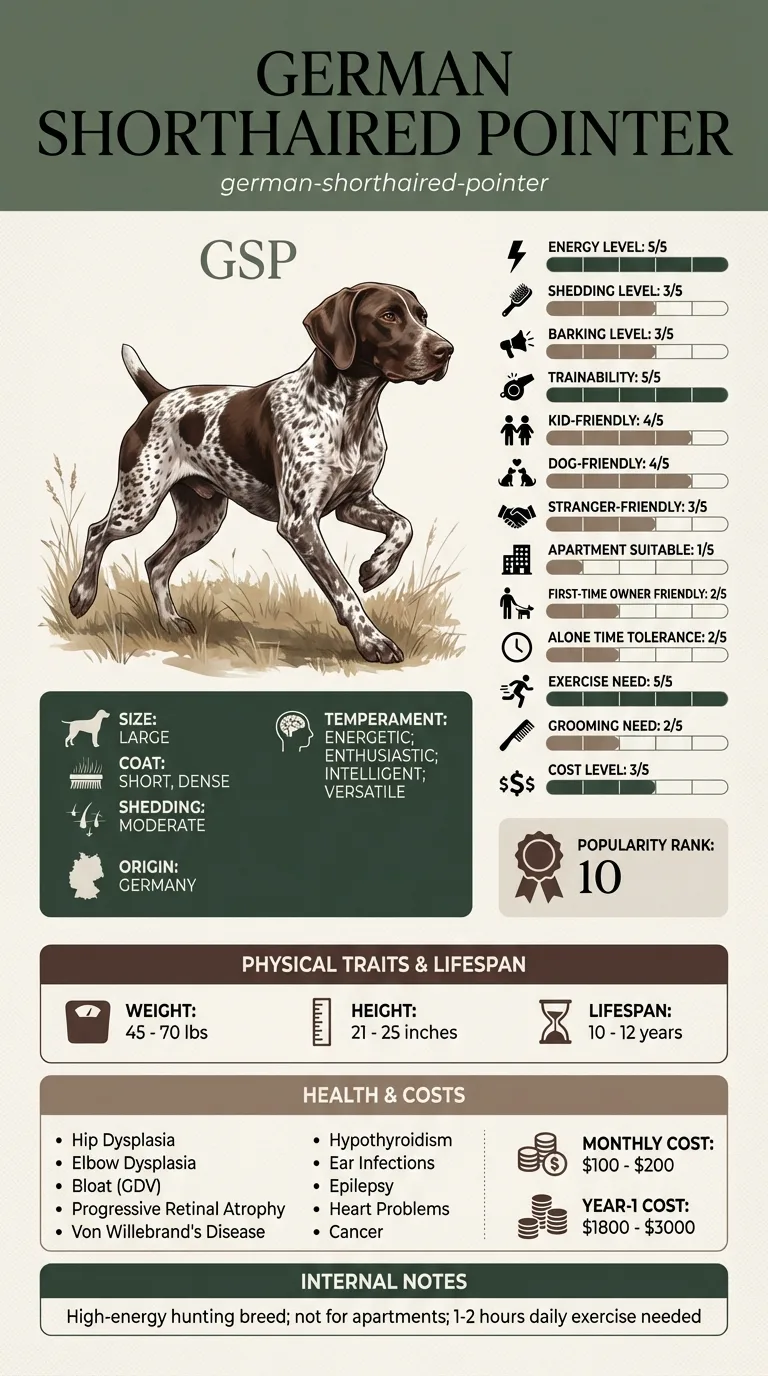
Bloat is a sudden emergency risk given this breed's deep chest — no warning, immediate surgery needed. Hip and elbow dysplasia are the separate, ongoing joint risks worth budgeting real, recurring vet attention for.
These figures reflect Phoenix's genuinely average general pricing, with real desert-hazard precautions priced in given this breed's real drive to investigate brush.
Estimate · source: estimation · confidence: medium · updated 2026-09-05 · not a quote
| Item | Cost range |
|---|---|
Rattlesnake-avoidance training A genuinely worthwhile investment given this breed's real drive to investigate desert brush where rattlesnakes are a documented presence. | $85 - $200 |
One-time setup (initial vet visit, spay/neuter, gear) Covers the first exam, vaccinations, spay/neuter if needed, and gear sized for this breed's large adult weight. | $365 - $620 |
| Item | Cost range |
|---|---|
Food Close to the national average for a large, highly active breed, consistent with Phoenix's general cost of living. | $62 - $98 |
Cooling gear and extra water access A genuinely necessary cost given Phoenix's real desert summer heat. | $14 - $28 |
Each range starts from a national baseline for this breed's size class and is then adjusted for local cost of living and veterinary pricing. The baselines, and the source each one came from, are listed on our sources page (dataset 2026.09). Two inputs, the purchase price and the emergency reserve, have no published national figure we could verify, so we leave them to you rather than invent them.
These are planning estimates, not quotes. Your own numbers will move with the individual dog, your vet and your insurer. Build a budget with your own figures.
For a German Shorthaired Pointer in Phoenix, insurance is worth taking seriously given the breed's documented bloat and joint risk, made more relevant here by the region's genuine desert hazards.
This breed's well-documented bloat and joint risk makes insurance worth locking in early — a policy bought before any diagnosis covers costs a self-funded emergency fund alone often can't stretch to match.
Skipping coverage is a reasonable call for an owner who's already set aside a meaningful cash reserve and is comfortable managing a serious diagnosis without monthly premiums.
Phoenix's costs run close to average overall, but real rattlesnake-avoidance training is worth prioritizing given this breed's genuine drive to explore desert brush.
This breed's real hunting drive and enthusiasm for pushing through cover mean it's genuinely more likely than a lower-drive breed to investigate desert brush at the edges of Phoenix's urban development, terrain that carries real, specific hazards beyond the well-known heat risk. Cholla and other cactus spines are a common, painful encounter requiring careful removal, and rattlesnakes are a genuine, documented presence in the area, making rattlesnake-avoidance training a real, worthwhile investment for a breed this likely to explore.
Desert summer heat is also a genuine cost driver here, real pavement and heat-stress vet visits worth budgeting for even though the region's dry climate keeps some parasite pressure lower than a humid city.
Phoenix's general cost of living runs close to the national average, and this breed's genuinely substantial food needs are a real, consistent monthly cost regardless of climate.

A Phoenix German Shorthaired Pointer owner let their dog off-leash on what seemed like a routine desert trail, only to watch it dart into thick brush chasing a scent and return limping, its face full of cholla spines that required a careful, painful removal session at home. A follow-up conversation with their vet led to enrolling the dog in a real rattlesnake-avoidance course before the next season, a step the family wished they'd taken from the start.
Key takeaway: In Phoenix specifically, this breed's real drive to investigate desert terrain means genuine hazard-avoidance training is worth doing before, not after, a painful first encounter.
About $115–$225, close to the national average, consistent with Phoenix's broader cost-of-living profile.
Roughly $1,700–$2,900, including the initial vet exam, spay/neuter if needed, and gear on top of ongoing monthly costs.
Genuinely, yes — this breed's real hunting drive makes it more likely than a lower-energy breed to investigate desert brush where rattlesnakes are a documented presence, making avoidance training a real, worthwhile investment.
Cholla and other cactus spines are a common, painful encounter for a dog pushing through brush, worth knowing how to safely remove before it happens.
Worth pricing out given the breed's documented bloat and joint risk, bought while the dog is young and before anything is on record.
Around $800 covers a typical significant vet visit in this market, reflecting Phoenix's genuinely average general pricing.
About $115–$225/month, $1,700–$2,900 for year one — average pricing, where real desert hazards like rattlesnakes and cactus spines need genuine attention for this athletic breed.
This guide is not medical advice. If your dog shows pain, sudden behavior change, or worsening symptoms, consult a licensed veterinarian.
Some links may be affiliate links. We may earn a commission at no extra cost to you. We only suggest products we believe are helpful for dog owners.
We research and check what we publish, but we do not warrant that any figure, date, price, or statement is accurate, complete, or current, and we accept no liability for any loss, cost, injury, or other harm arising from the use of this site. Use it as one reference among several. You remain responsible for your own decisions and for your dog's care - confirm anything that matters with a licensed veterinarian or another qualified professional before you act on it. Full disclaimer.
One sheet with every line item, the emergency fund and when insurance pays off - unlocks on this page.
You get: 12-month budget sheet
No spam. One-click unsubscribe. See our privacy policy.
Preview page 1 before you decide.