Health
Do Bichon Frises get BOAS?
No. They are not a flat-faced breed and airway syndrome is not among their documented health issues.

Quick answer
Do Bichon Frises get BOAS?
No. They are not a flat-faced breed and airway syndrome is not among their documented health issues.
Whether this syndrome applies to your dog is not a matter of opinion, it is a matter of skull measurement, and the Bichon Frise does not measure into the group that gets it.
Owners who have heard their Bichon snore or snuffle and have gone looking for an explanation, landing on a condition described in pugs and French bulldogs. It is also for anyone comparing breeds and trying to understand which small dogs carry airway risk and which do not.
This guide is not medical advice. If your dog shows pain, sudden behavior change, or worsening symptoms, consult a licensed veterinarian.
Some links may be affiliate links. We may earn a commission at no extra cost to you. We only suggest products we believe are helpful for dog owners.
We research and check what we publish, but we do not warrant that any figure, date, price, or statement is accurate, complete, or current, and we accept no liability for any loss, cost, injury, or other harm arising from the use of this site. Use it as one reference among several. You remain responsible for your own decisions and for your dog's care - confirm anything that matters with a licensed veterinarian or another qualified professional before you act on it. Full disclaimer.
Brachycephalic airway syndrome is a combination of narrowed nostrils, an overlong soft palate, everted laryngeal pouches and often a narrow windpipe, all resulting from a skull shortened without a matching reduction in soft tissue. Affected dogs work hard to breathe at rest, overheat easily and can collapse. The Bichon Frise is not a flat-faced breed and does not carry this anatomy, so the syndrome does not apply to it.
Extremely common in the flat-faced breeds, to the point that veterinary bodies and breed clubs run formal grading schemes for it. Effectively absent as a breed problem in the Bichon Frise, which does not appear in the risk group and whose documented health issues lie entirely elsewhere. Individual Bichons can of course develop unrelated respiratory problems, and those deserve investigation on their own terms.
The mechanism is purely geometric. Selective breeding for a shortened face reduces the length of the bones of the skull, but the tongue, the soft palate and the lining of the throat retain close to their original volume. The result is crowding, and crowding in an airway means resistance. A Bichon Frise has not been bred for a shortened face. Its skull sits in the middle of the range with a functional muzzle and open nostrils, so no crowding occurs. The traits that shape this breed's medical life run through the skin, the kneecaps, the bladder, the lens of the eye and the teeth instead.
For breeds that do have the syndrome, environment determines how dangerous it becomes: heat, humidity, exertion and weight all convert a chronic difficulty into an acute crisis. For a Bichon Frise, those same environmental factors still matter, but through ordinary routes rather than through a compromised airway. A dense curly double coat holds heat, which makes shade, timing and water genuinely important in summer. Excess weight in a dog with an exercise requirement of only two out of five reduces stamina and makes any dog breathe harder than it should.
Book an appointment for any breathing noise that is new, that is getting worse over weeks, or that is present at rest rather than only during excitement. Also book for nasal discharge from one nostril, repeated nosebleeds, or a change in the sound of your dog's bark, since those point at the nose or larynx rather than at the chest. Treat as an emergency, meaning go now: breathing with obvious effort, an extended neck and open mouth at rest, gums that look pale, grey or blue, choking or gagging that does not stop, or collapse. Overheating with heavy panting and unsteadiness is also an emergency, in any breed, and cooling should begin on the way.
See all Bichon Frise health problems, which breeds are prone to brachycephalic airway syndrome boas, or the full Bichon Frise breed guide for temperament, exercise needs and ownership costs.
If you came here worried, the useful timeline is a single veterinary appointment with a video on your phone, which will usually settle the question quickly. Where a treatable cause of noisy breathing is found, such as dental infection or nasal inflammation, improvement typically follows treatment within a few weeks. Weight-related breathing effort improves gradually over two to four months of controlled feeding, and the difference in a small dog is more noticeable than owners expect.
Success is knowing that your Bichon's breathing noise has been assessed and explained rather than assumed. A healthy adult Bichon should breathe quietly at rest, pant appropriately after exercise and settle within a few minutes, tolerate a summer walk taken at a sensible hour, and sleep without struggling. That is the normal baseline for this breed, and it is a reasonable expectation for most of its fourteen to fifteen years.
Understanding the parts makes it obvious why the syndrome is tied to a particular head shape rather than to small size. Each component is a consequence of compressing a normal amount of tissue into a shortened skull.
Dog skulls are classified by the ratio of width to length. Long-nosed breeds sit at one end, the flat-faced breeds at the other, and the large middle group has a muzzle in normal proportion to the head.
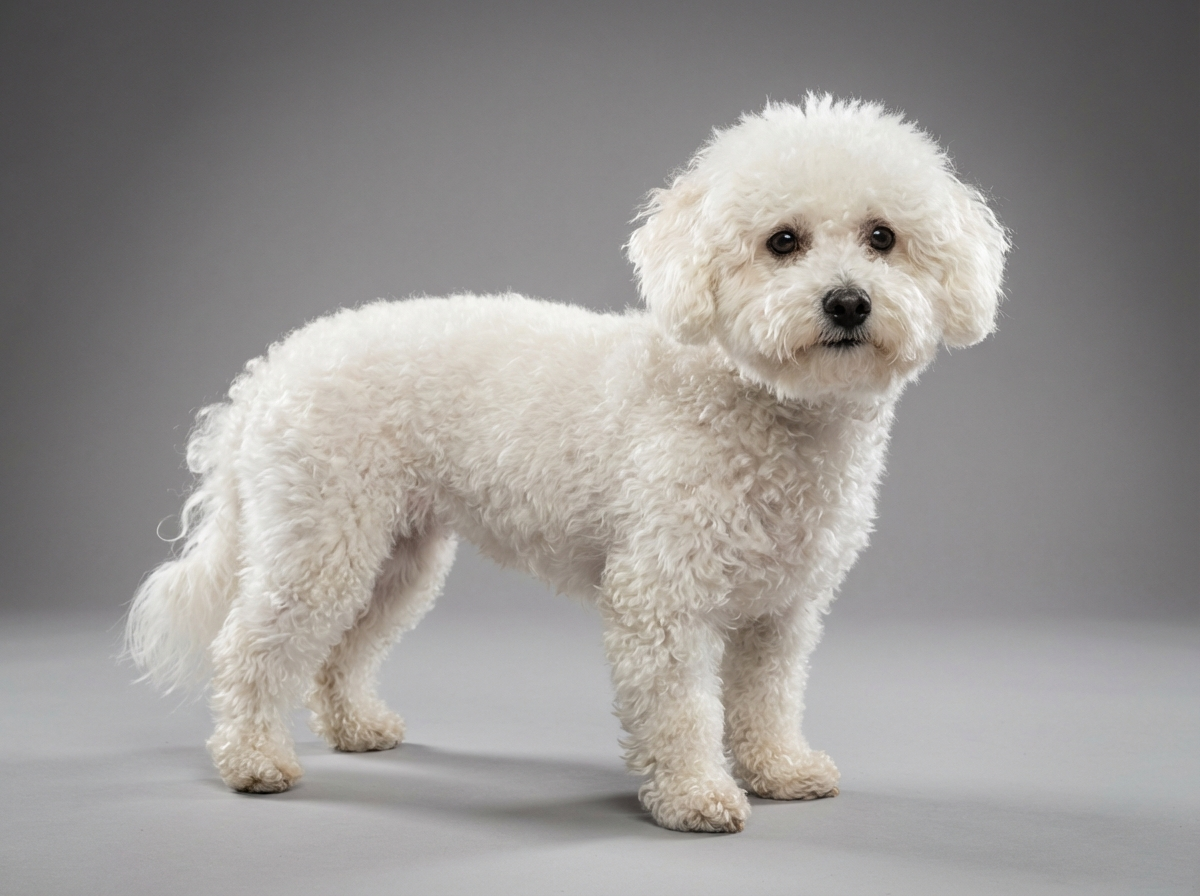
The Bichon Frise sits in that middle group. It has a face that is short by the standards of a collie but entirely functional, with a defined muzzle, an open nose and a normal jaw length. It is not a breed whose skull has been shortened to the point that the soft tissue no longer fits.
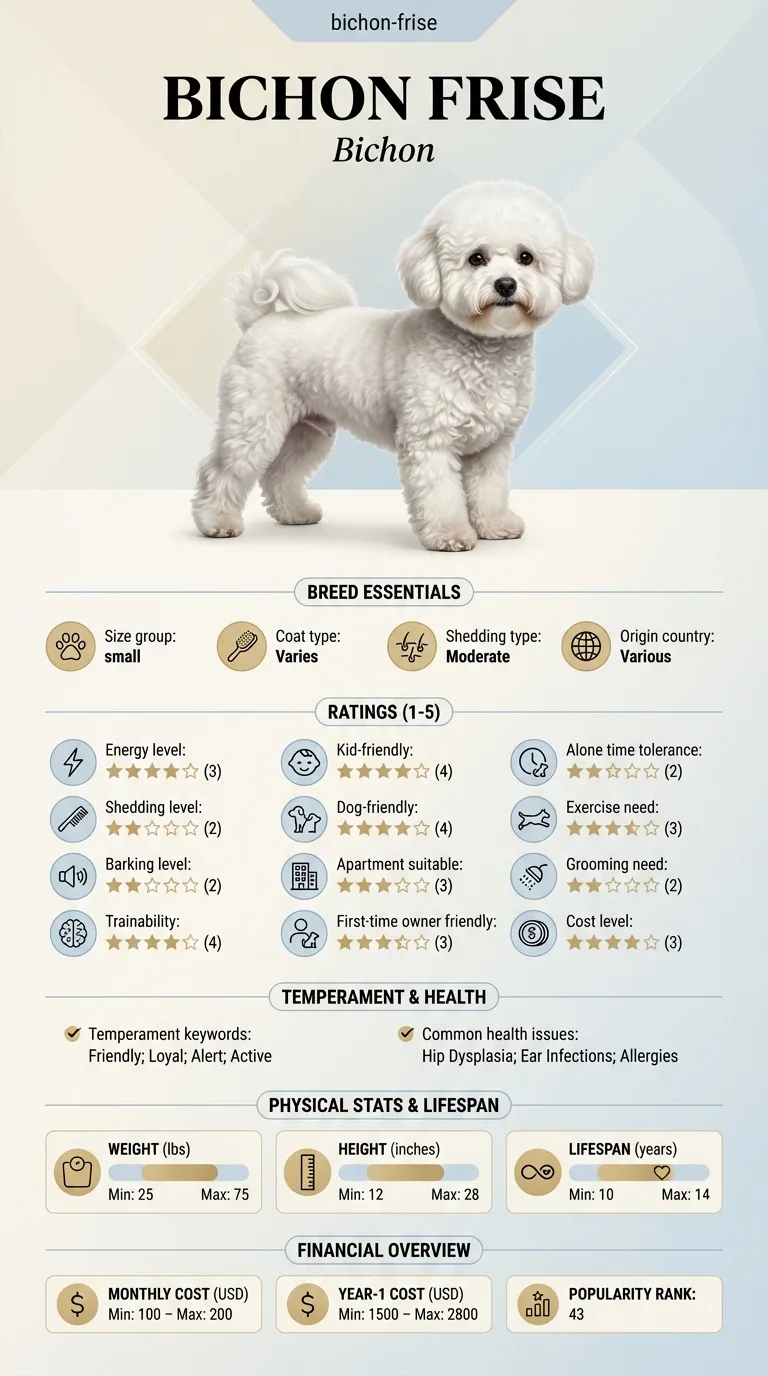
The health issues documented for the Bichon Frise are skin allergies, patellar luxation, bladder stones, cataracts and dental disease. No airway condition appears on that list.
That is a genuinely good thing to know, and it should change what you expect. A Bichon does not need the heat protocols, the harness-only rule for airway reasons, or the surgical assessment that a flat-faced breed sensibly gets. If your Bichon is making noise when it breathes, the explanation is somewhere else, and finding it is a better use of your time than reading about palates.

Alfie was nine, a Bichon Frise who had begun snoring loudly enough to wake his owner Ruth through a closed door. She had read about airway syndrome and arrived at the clinic expecting a discussion about surgery. The examination went somewhere else entirely. Alfie had open nostrils, a normal muzzle and quiet breathing when awake. What he did have was severe disease around an upper premolar, with the gum receded and a discharge from the left nostril that Ruth had been wiping away for months without connecting the two. Dental radiographs under anaesthetic showed the root had broken down the thin bone separating it from the nasal cavity. The tooth was removed and the defect closed. The nasal discharge stopped within a fortnight. The snoring stopped with it. Ruth's comment afterwards was that she had spent six weeks researching the wrong end of the dog.
Key takeaway: In a breed with no airway problem but a documented dental one, noisy breathing is far more likely to start in the mouth than in the throat.
No. Its muzzle is short relative to a sighthound but sits within normal proportions, and it is not grouped with the flat-faced breeds where airway syndrome occurs. Small size and a short face are different things, and it is the face, not the size, that produces this syndrome.
Snoring in a non-flat-faced dog usually comes from sleeping position, excess weight narrowing the soft tissue around the throat, or nasal irritation and inflammation. Dental disease, documented in this breed, can also affect the nasal passages. Persistent new snoring in a dog that never snored is worth a veterinary look.
That description usually fits reverse sneezing, which is very common in small dogs. The dog extends its neck, makes rapid forceful inward snorts for ten to thirty seconds, then stops completely and behaves normally. It looks alarming and is generally harmless, though frequent episodes are worth mentioning to your vet.
Almost certainly not, because it does not have the anatomy that surgery addresses. Corrective airway surgery is for dogs with measurably narrowed nostrils and an overlong palate. If a vet raises it for your individual dog, ask specifically which of the components they have identified and how.
Yes, but for ordinary reasons rather than airway reasons. Every dog can overheat, and a dense curly double coat is an insulator that works both ways. Walk in the cooler parts of the day, provide shade and water, and never leave your dog in a parked car. That is standard care, not a brachycephalic protocol.
The flat-faced group: pugs, French bulldogs, English bulldogs, Boston terriers, shih tzus and Pekingese among others. If you are comparing a Bichon Frise against one of these, the airway difference is one of the more consequential distinctions between them across a lifetime.
No. They are not a flat-faced breed and airway syndrome is not among their documented health issues.
Reverse sneezing episodes, nasal irritation, or excess weight. Each is worth investigating rather than assuming a structural airway fault.
A harness is better for any small dog that pulls, but for neck and spine reasons rather than for airway reasons.
Yes. Fat around the chest and throat narrows the airway and reduces lung expansion, and it is the most reversible breathing factor you control.
No. Budget instead for the dental work and skin care that this breed genuinely needs across a fourteen to fifteen year life.
A one-page prep sheet for this condition: the signs, the questions to ask, what to get priced. Unlocks here.
You get: Vet visit prep sheet
No spam. One-click unsubscribe. See our privacy policy.
Preview page 1 before you decide.