Health
What is the prayer position in a dog?
Chest and front legs down with the rear raised. It relieves abdominal pain and is a strong sign of pancreatitis.

Quick answer
What is the prayer position in a dog?
Chest and front legs down with the rear raised. It relieves abdominal pain and is a strong sign of pancreatitis.
The classic history is a dog that was fine yesterday, got hold of something rich, and this morning will not stand up straight. In a dog weighing 15 pounds, that something can be a very small amount of food.
Owners in the aftermath of a holiday, a barbecue or a bin raid whose dog is now vomiting, and owners of a Bichon that has had one episode and been told to avoid fat permanently.
This guide is not medical advice. If your dog shows pain, sudden behavior change, or worsening symptoms, consult a licensed veterinarian.
Some links may be affiliate links. We may earn a commission at no extra cost to you. We only suggest products we believe are helpful for dog owners.
We research and check what we publish, but we do not warrant that any figure, date, price, or statement is accurate, complete, or current, and we accept no liability for any loss, cost, injury, or other harm arising from the use of this site. Use it as one reference among several. You remain responsible for your own decisions and for your dog's care - confirm anything that matters with a licensed veterinarian or another qualified professional before you act on it. Full disclaimer.
Pancreatitis is inflammation of the pancreas caused by its own digestive enzymes activating prematurely. It presents acutely with vomiting, abdominal pain and food refusal, and it ranges from a mild self-limiting episode to a life-threatening illness requiring days of intensive care. For a small companion dog the dominant trigger is a single fatty meal, which makes it one of the more preventable emergencies an owner will face.
Pancreatitis is a routine emergency presentation in small animal practice, with a well-documented spike around human holidays. Small dogs feature heavily, partly because their size makes a modest quantity of fat a large dose. It is not listed as a Bichon Frise breed concern, and most cases in this breed are dietary events rather than expressions of breed predisposition.
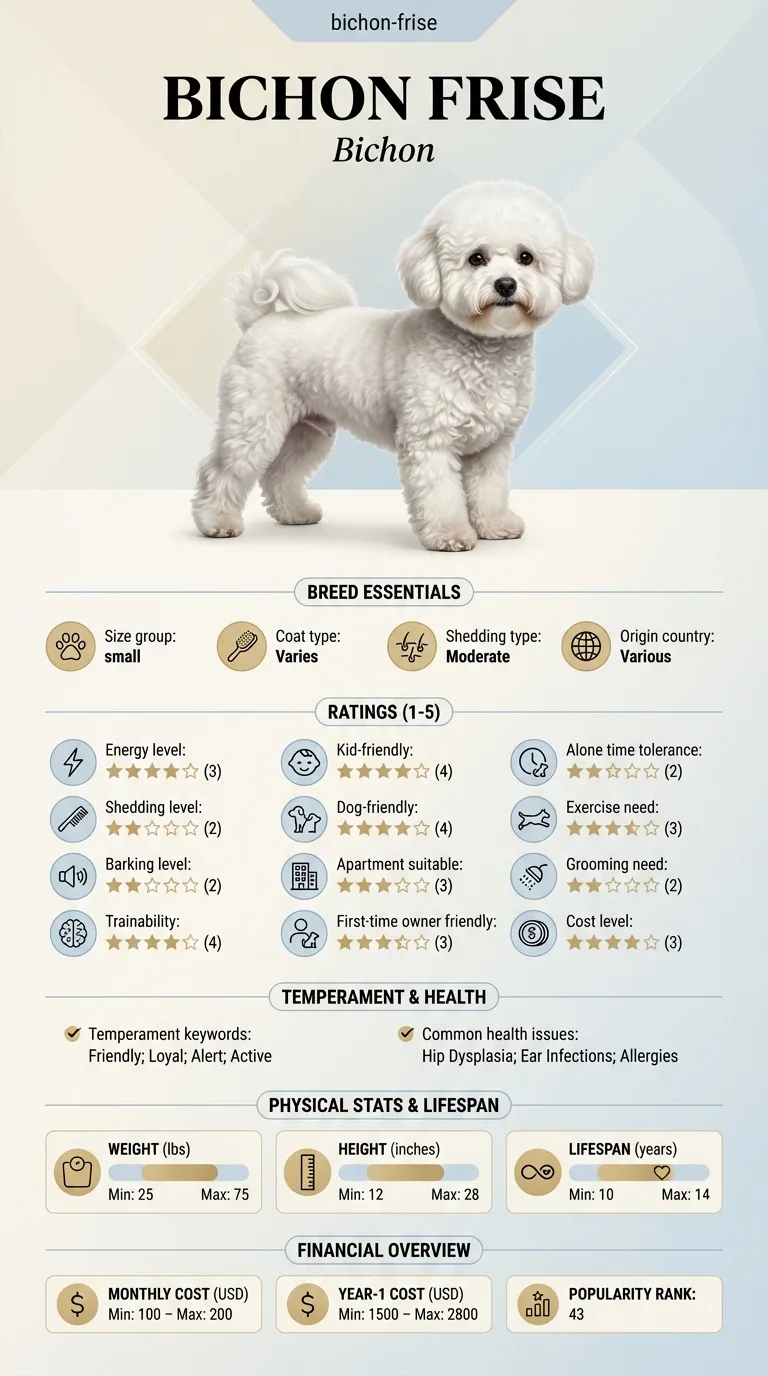
There is no documented Bichon predisposition to pancreatic inflammation, and it would be misleading to invent one. What the breed contributes is scale and temperament. At 12 to 18 pounds, the dose of fat needed to overwhelm the system is small. The Bichon is also a cheerful, affectionate, people-oriented dog that positions itself close to human food and is very effective at soliciting it, which is a behavioural risk factor rather than a physiological one.
This is a condition largely created by household arrangements. An open kitchen bin, a family that shares food from the table, visiting relatives who do not know the rules, and holiday meals where several people each give the dog something all point in the same direction. Weight gain in a coated breed compounds the risk quietly, because nobody realises the dog is carrying extra until it is weighed.
Seek same-day veterinary care for repeated vomiting, the prayer position, a tense or painful abdomen, refusal of food combined with lethargy, or any collapse. Pancreatitis can progress rapidly and dehydration from persistent vomiting is itself dangerous in a small dog. Do not withhold water in an attempt to settle the stomach and do not give human anti-sickness or pain medication. If your dog has eaten something fatty and is not yet unwell, phone for advice rather than waiting to see what happens overnight.
See all Bichon Frise health problems, which breeds are prone to pancreatitis, or the full Bichon Frise breed guide for temperament, exercise needs and ownership costs.
Mild episodes settle within two to four days with treatment. Severe cases require several days of hospitalisation and a recovery of one to two weeks afterwards. Dietary changes are typically maintained for at least several weeks and often permanently, with a gradual reintroduction only under veterinary guidance.
A dog eating normally, comfortable in the abdomen, back to its usual weight and energy, and above all no second episode. Since the trigger is usually within the household's control, success here is genuinely measured by what does not happen next Christmas.
Pancreatitis produces a fairly recognisable combination, and knowing it prevents the delay that turns a manageable episode into a hospitalisation.
A high-fat meal is the classic trigger, and the reason a Bichon is vulnerable is proportion rather than any breed-specific weakness of the pancreas.
A 15-pound dog's entire daily energy requirement is a few hundred calories. A single strip of bacon, a spoonful of gravy, a corner of a butter-rich pastry or the fat trimmed off a chop can represent a substantial fraction of that in one go, and it arrives as almost pure fat rather than as part of a balanced ration. The same item given to a Labrador is diluted into a much larger daily intake.
This is why episodes cluster around human events rather than around dog food. Holidays, barbecues, roast dinners and Christmas are the recognised peak times, and the source is usually a well-meaning family member or an accessible bin rather than the dog's own diet.
The second contributor is body condition. Excess weight is associated with increased risk, and this breed's dense coat hides weight gain so effectively that many Bichons carrying extra pounds are not recognised as doing so.
The practical implication is a household rule rather than a dietary science project: nothing from the table, and a bin the dog cannot open.

If you think your Bichon has pancreatitis, the plan is three steps: write down what you have seen and when it started, book a veterinary appointment rather than waiting for the next flare, and take video of the behaviour or symptom before you go — the thing you are worried about rarely happens in the consulting room. Screening in the parents covers skin allergies, patellar luxation, bladder stones.
What the vet visit should produce is a diagnosis and a written plan, not just reassurance: what is being ruled out, what the monitoring interval is, and which signs mean you come back sooner. Ask what the treatment costs across a year rather than per visit, because that is the number that decides whether you are managing this condition or reacting to it.
Between appointments, keep a short log — dates, what you saw, what changed. It is the single most useful thing an owner brings to a follow-up, and for pancreatitis it is often what separates a clear pattern from a guess.
Suki spent Christmas Day being adored by a house full of relatives. Nobody gave her a meal, but by her owner Rosa's later reckoning at least five people had passed her something, and someone had tipped the fat from the joint into a bowl that was left on the floor. On Boxing Day morning Suki vomited four times, refused breakfast, and stood in the kitchen with her chest on the tiles and her rear in the air. She spent two nights on fluids and pain relief. The following Christmas Rosa put a laminated card on the fridge with Suki's own treat portion in a jar beside it, and told everyone before they took their coats off.
Key takeaway: The danger is not one person deciding to feed the dog. It is five people each deciding independently, none of whom knows about the others.
It is not among the breed's documented health concerns, which are skin allergies, patellar luxation, bladder stones, cataracts and dental disease. Certain other small breeds are more strongly associated with it. Any dog can develop pancreatitis, and small dogs are disproportionately affected by dietary indiscretion simply because of scale.
Through a combination of history, physical examination, a specific pancreatic blood test and often abdominal ultrasound. No single test is perfect, which is why vets weigh several together. Bloodwork also checks for the complications that determine how intensively the dog needs treating.
Supportive care rather than a cure: intravenous fluids, effective pain relief, anti-nausea medication and early reintroduction of food once vomiting is controlled. Severe cases need several days of hospitalisation. Mild cases are sometimes managed at home with medication and a controlled diet.
Often yes after a significant episode, because recurrence is common and fat is the main dietary trigger. Your vet will advise whether a therapeutic low-fat diet is warranted permanently or whether a return to a normal diet with strict avoidance of table food is reasonable.
It can. Repeated or severe inflammation damages pancreatic tissue, including the cells that produce insulin, so a history of pancreatitis raises the risk of diabetes later. It can also reduce enzyme production enough to impair digestion long term.
Recurrence is common, particularly if the original trigger is not removed. The dogs that do best are those whose households actually change: the bin gets a lid, the table scraps stop, and the dog's weight is brought under control.
Chest and front legs down with the rear raised. It relieves abdominal pain and is a strong sign of pancreatitis.
In a 12 to 18 pound dog, remarkably little. A single rasher or a spoonful of gravy can be enough.
A mild outpatient case is modest; several days of hospitalisation with fluids and monitoring runs into four figures.
Ask your vet first. Home-cooked bland diets vary in fat content and are not a substitute for a prescribed low-fat food.
Give everyone an agreed portion of the dog's own ration to hand out, so nobody feels they are refusing the dog anything.
A one-page prep sheet for this condition: the signs, the questions to ask, what to get priced. Unlocks here.
You get: Vet visit prep sheet
No spam. One-click unsubscribe. See our privacy policy.
Preview page 1 before you decide.