Health
Is a Bichon Frise a high-risk breed for disc disease?
No. Its square build and normal cartilage development place it well outside the classic long-backed risk group.

Quick answer
Is a Bichon Frise a high-risk breed for disc disease?
No. Its square build and normal cartilage development place it well outside the classic long-backed risk group.
IVDD is a breed-shape disease, and the Bichon does not have the shape most associated with it. That lowers the odds without removing them, and knowing the signs still matters.
Owners who have read about Dachshund back problems and want to know whether the same rules apply to their Bichon, and anyone whose small dog has suddenly become reluctant to move.
This guide is not medical advice. If your dog shows pain, sudden behavior change, or worsening symptoms, consult a licensed veterinarian.
Some links may be affiliate links. We may earn a commission at no extra cost to you. We only suggest products we believe are helpful for dog owners.
We research and check what we publish, but we do not warrant that any figure, date, price, or statement is accurate, complete, or current, and we accept no liability for any loss, cost, injury, or other harm arising from the use of this site. Use it as one reference among several. You remain responsible for your own decisions and for your dog's care - confirm anything that matters with a licensed veterinarian or another qualified professional before you act on it. Full disclaimer.
Intervertebral disc disease covers a spectrum from mild back pain to complete hind-limb paralysis, all caused by disc material pressing on the spinal cord. For the Bichon Frise the honest position is that this is a low-probability condition attached to a high-stakes outcome, which means the right posture is calm awareness rather than either anxiety or dismissal.
Disc disease is heavily concentrated in a small number of breeds with a specific skeletal type, where it accounts for a large share of spinal referrals. Outside that group it is uncommon, appears later in life, and tends to be less severe. The Bichon Frise falls firmly outside the high-risk group, and back problems are not part of its recognised health picture.
The relevant Bichon trait is one it does not have. High-risk breeds carry a cartilage development variant that produces short legs, a long back, and discs that mineralise and become brittle early. The Bichon is a compact companion breed with normal limb proportions and no such trait, so its discs age at an ordinary pace. Its long lifespan of 14 to 15 years does mean a fair number of Bichons reach an age where degenerative change of some kind exists in the spine.
The household does most of the work in this category. Slippery flooring forces constant micro-slips, high furniture creates repeated impact landings, and being lifted badly puts leverage through the spine. Excess weight amplifies all three. In a Bichon these same factors are already worth controlling for kneecap protection, so the effort is not wasted even though the spinal risk itself is modest.
Any hind-limb weakness, wobbliness, knuckling of the paws, dragging of a foot, or loss of bladder or bowel control is an emergency and needs veterinary attention within hours, not days. Sudden severe back or neck pain, a hunched posture with trembling, or crying out when picked up also warrants same-day assessment. Book promptly for a dog that has stopped jumping onto furniture it always used, or that seems stiff and reluctant in a way that has persisted beyond a day or two.
See all Bichon Frise health problems, which breeds are prone to intervertebral disc disease ivdd, or the full Bichon Frise breed guide for temperament, exercise needs and ownership costs.
Conservatively managed pain-only cases usually need four to six weeks of genuinely restricted activity, which feels far longer than it sounds. Surgical cases involve a similar or longer rehabilitation period. Dogs that lose the ability to walk have outcomes that depend heavily on how quickly they were treated, which is why hours matter.
For a Bichon, success is almost always prevention: a dog that reaches fourteen with an unremarkable spine, a house set up with ramps and rugs, and an owner who would recognise the emergency signs immediately if they ever appeared.
The breeds most associated with disc disease share a specific body plan: a long back on short legs, produced by a genetic change to cartilage development. Dachshunds, Corgis, Basset Hounds and French Bulldogs sit at the top of the list for this reason, and their discs degenerate early, sometimes within the first few years of life.
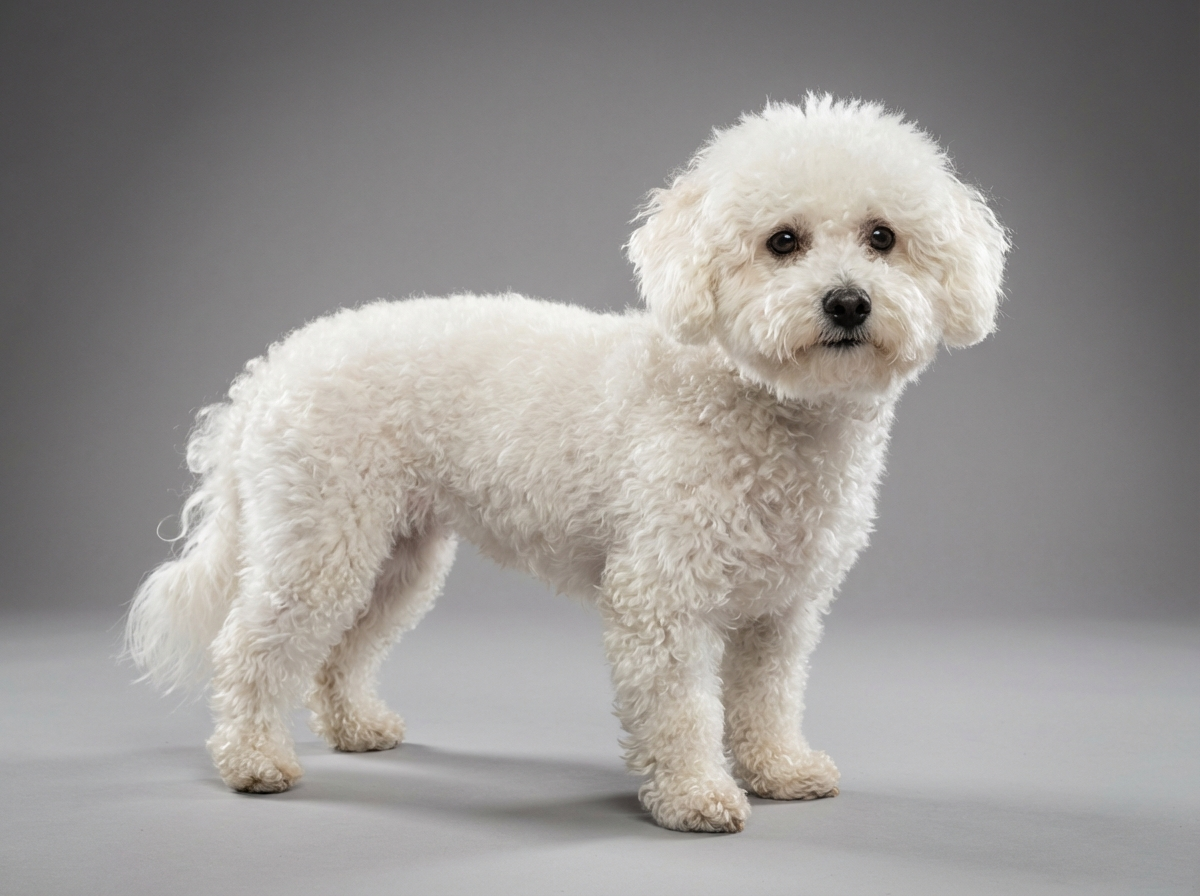
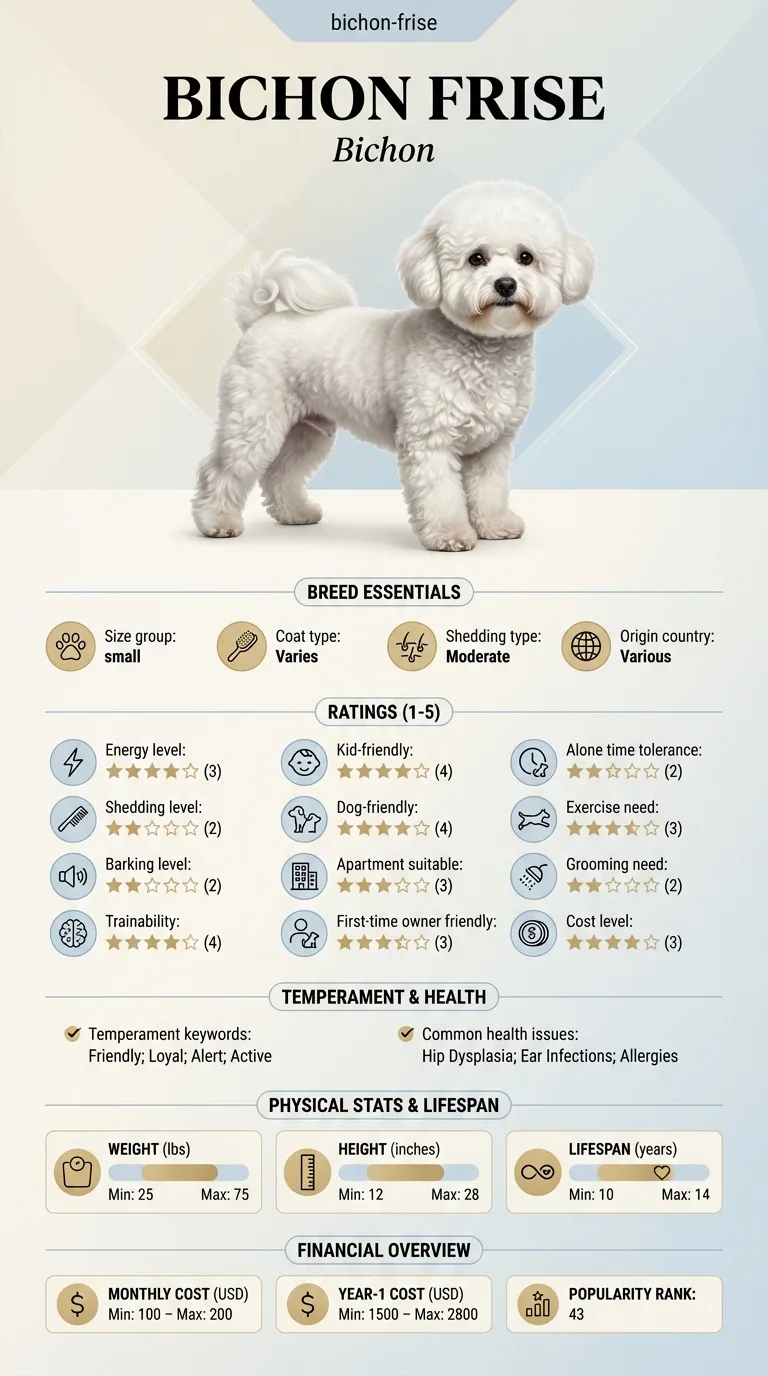
The Bichon Frise has a different build. It stands nine to twelve inches tall and is roughly square in proportion rather than long-backed, and it is not one of the breeds defined by the dwarfing cartilage trait. Its documented health concerns are skin allergies, patellar luxation, bladder stones, cataracts and dental disease. Spinal disc disease does not appear among them.
That is genuinely reassuring, but it should not be read as immunity. Any dog can develop the slower, age-related form of disc degeneration, and any dog can injure a back through trauma. What changes with breed is the probability and the typical age, not the possibility.
The practical implication is that a Bichon with sudden back pain deserves the same urgency as a Dachshund with the same signs. Rarity affects how likely a diagnosis is, not how fast you should act once the signs appear.

None of these are onerous, and all of them also protect the kneecaps and hips of a small dog, which is where this breed's documented orthopaedic risk actually lies.
Winnie was ten when she missed the bottom two steps chasing a visitor to the door. She yelped, then seemed fine, and her owner Colin decided to watch her overnight. By morning she was walking with her back legs crossing over each other. Colin took her straight in. Imaging showed disc material compressing the cord, and she was referred that afternoon for surgery. She recovered well over three months of rehabilitation, though she never fully regained her previous speed. Her surgeon's comment was that the overnight wait had probably not changed the outcome, but only because Colin acted first thing rather than waiting a second night.
Key takeaway: A dog that seems fine after a fall can deteriorate overnight. Any hind-limb weakness the next morning is not a wait-and-see situation, whatever the breed.
No. They lack the long-backed short-legged build that defines the high-risk breeds, and disc disease is not listed among their documented health concerns. Age-related disc degeneration can still occur in any breed, so the condition belongs on a differential list rather than at the top of it.
A hunched or tense posture, reluctance to jump or climb stairs, a yelp when picked up or when turning, shivering, and a general unwillingness to move. Owners often describe the dog as suddenly grumpy, which is a pain response rather than a temperament change.
Very quickly. Some dogs go from pain only to dragging their hind legs within hours. That speed is the reason back pain is treated as urgent rather than as something to sleep on, even in a breed where the diagnosis is uncommon.
A single jump rarely causes disc extrusion in a dog without underlying degeneration, but repeated high-impact landings over years are worth avoiding. The more common injury from sofa jumping in this breed is to the knee, which is where the documented weakness lies.
It depends on severity. Dogs with pain only and no loss of function are often managed with strict rest and veterinary pain relief. Dogs with weakness, incoordination or loss of bladder control usually need imaging and surgical decompression, and delay reduces the chance of recovery.
When prescribed, yes, and it is the part owners most often undermine. Confinement gives the damaged area a chance to stabilise, and a dog that feels better because of pain relief will happily reinjure itself. Rest means genuinely restricted movement, not just fewer walks.
No. Its square build and normal cartilage development place it well outside the classic long-backed risk group.
Treat it as an emergency. Keep the dog still, support it as one unit, and get to a vet the same hour.
Imaging plus surgery at a referral centre typically runs into several thousand, varying widely by region and clinic.
Not routinely. Reduce repetitive jumping from height and add traction, but keeping a small dog mobile matters more.
Yes, in a few short sessions with treats placed along the ramp. Do it before you need it, not during recovery.
A one-page prep sheet for this condition: the signs, the questions to ask, what to get priced. Unlocks here.
You get: Vet visit prep sheet
No spam. One-click unsubscribe. See our privacy policy.
Preview page 1 before you decide.